
SHIGEKI ENGLISH STORYEN
Japanese history in English
Hojo Masako: The Nun Shogun Who Sustained Kamakura After Yoritomo
Family, succession and the changing political role of Yoritomo's widow.
After Yoritomo's death, Hojo Masako remained involved through disputed succession, alliances within her family and the Jokyu crisis. Follow the changing relationships behind her remembered name, the nun shogun, and the later records and images through which her life is known.
At a glance
Before you enter the story
- When
- 1157–1225, with later manuscripts, representations and the present historic site considered separately.
- Where
- Izu and Kamakura, in Japan; Kyoto enters the story through the Kujo family and the Jokyu crisis.
- Key figures
- Hojo Masako, Minamoto Yoritomo, Hojo Tokimasa, Hojo Yoshitoki, Minamoto Yoriie, Minamoto Sanetomo
- What was at stake
- How succession and family relationships intersected with sustaining the government after its founder's death.
Why this story matters
The larger history behind the turning point
The name nun shogun can conceal the particular relationships through which Masako acted. Following the people she supported, the family members she opposed and the ties she invoked offers a more concrete view of political influence. Her story also invites us to distinguish an event from its later narration, and a familiar portrait from a likeness made during a person's life.
Historical context
What an international reader needs to know
Kamakura, Kyoto and the people around the shogun
Kamakura was the center of the warrior government established by Yoritomo. Kyoto was the setting of the imperial court and the Kujo family from which Mitora was brought. These were connected political centers; the 1221 order from retired Emperor Go-Toba against Yoshitoki shows the stakes of their relationship.
A shogunate is the government associated with a shogun, rather than a name for one household alone. In this account, gokenin means the warrior retainers attached to the Kamakura government. Masako's relation to them, the shogunal household and the Hojo helps explain how she could act politically without herself holding the shogun's office.
Widowhood, Buddhist vows and remembrance
Midaidokoro designates Masako's position as the shogun's wife. After she took Buddhist vows, she was called ama-midaidokoro. The museum explains her role as a widow through exercising authority in place of a household head. Taking vows did not mark the end of her involvement in political affairs.
The name ama-shogun, rendered here as nun shogun, expresses the role for which she is remembered. It should not be read as a formal appointment to sei-i taishogun. Buddhist commemoration also enters her later life and the history of the memorial halls: political action and remembrance appear together in the surviving account.
Watch the film
See the story in motion
The film currently uses Japanese audio. This English article provides the context and source trail; it does not imply that an English subtitle track is available.
Chapter 01
The nun shogun and the office she never held
Yoritomo died. Yoriie was removed. Sanetomo, too, lost his life. As the people at the center of Kamakura changed, Hojo Masako remained involved in its politics. The name by which she became widely remembered was ama-shogun: the nun shogun.
Masako was never appointed to the formal office of sei-i taishogun. Her familiar name expresses the growing role of Yoritomo's wife, who had taken Buddhist vows, in sustaining the shogunal household and the government around it. The official title and the work she performed were different things.
Following the relationships behind that work reveals a Kamakura that one heroic figure cannot explain alone. There were her father Tokimasa, her younger brother Yoshitoki, her Minamoto children and the gokenin, the shogunate's warrior retainers. Her decisions belong at points where those relationships changed.
How could she remain politically active after her husband's death? Where did being a mother overlap with decisions concerning the government's survival, and where did the two diverge? To follow these questions, we return to Izu, before the name nun shogun belonged to her story.
Chapter 02
A relationship beginning in Izu
Masako was born in 1157 in Hojo, in Izu Province. Her father was Hojo Tokimasa; Yoshitoki, who would later play a central part in the government, was her younger brother. When she met Yoritomo, he was living in exile in Izu. Becoming the wife of a shogun was no assured future.
Their marriage also became a connection through which the Hojo family entered the foreground of political history. That is an outcome visible afterward. We cannot write as though everyone understood it at the moment of marriage, or work backward from later events to supply the young couple's private thoughts.
A story tells of Masako running through the rain to reach Yoritomo. A guide produced by Ferris University's medieval literature seminar introduces this as a tale from Genpei Seisuiki. Its memorable narrative and a firmly established record of action need to be received differently. The rain belongs here as a literary tradition.
In 1180, Yoritomo took up arms and eventually entered Kamakura. Masako also moved there from Izu. A change in where the couple lived accompanied a change in the political setting around Yoritomo and the Hojo. The relationship that began in Izu led into Kamakura, where warriors gathered around the new center.
Chapter 03
A household, and a line of succession
As Yoritomo's wife, Masako occupied the position known as midaidokoro. They had two daughters and two sons: their eldest daughter Ohime, eldest son Yoriie, second daughter Sanman and second son Sanetomo. The family's genealogy was also tied to succession in the shogunal household.
This was a home in which children grew up and a household from which Kamakura's next lord would emerge. An event within the family could affect relations among the gokenin and the government's future. Reading Masako's life requires keeping both of these consequences in view.
Ohime and Sanman died young. The Kamakura Museum of History and Culture's account also discusses Masako's later prayers for deceased children. Acts of Buddhist commemoration bring into view a part of her life that the word politician does not fully describe.
Yet imagining the depth of her losses cannot explain all her later decisions as grief or anger. The events that are recorded and the emotions that readers find in them are different. Leaving that boundary visible helps us approach a person who was both a mother and an actor in politics.
Chapter 04
After Yoritomo: the authority of a widow
Yoritomo died in 1199. Masako took Buddhist vows and came to be called ama-midaidokoro, the nun who had been the shogun's wife. Yoriie succeeded his father. Her husband's death, however, did not end Masako's part in the affairs of Kamakura.
The Museum of History and Culture explains her position after Yoritomo through the role of a widow acting in place of a household head. Reading widowhood only through an assumption that a woman who lost her spouse stood outside politics would make this role easy to miss.
Masako possessed more than a past connection as Yoritomo's wife. She had a position from which to support the remaining shogunal household, and she continued to participate in the politics surrounding Yoriie. Questions about the family's succession were also questions about succession at Kamakura's center.
This does not mean that she decided everything alone. Her position operated amid the intersecting power of the Hojo and the gokenin. The politics of filling Yoritomo's absence involved more than exchanging one successor for another. The household and the government around it had to continue together.
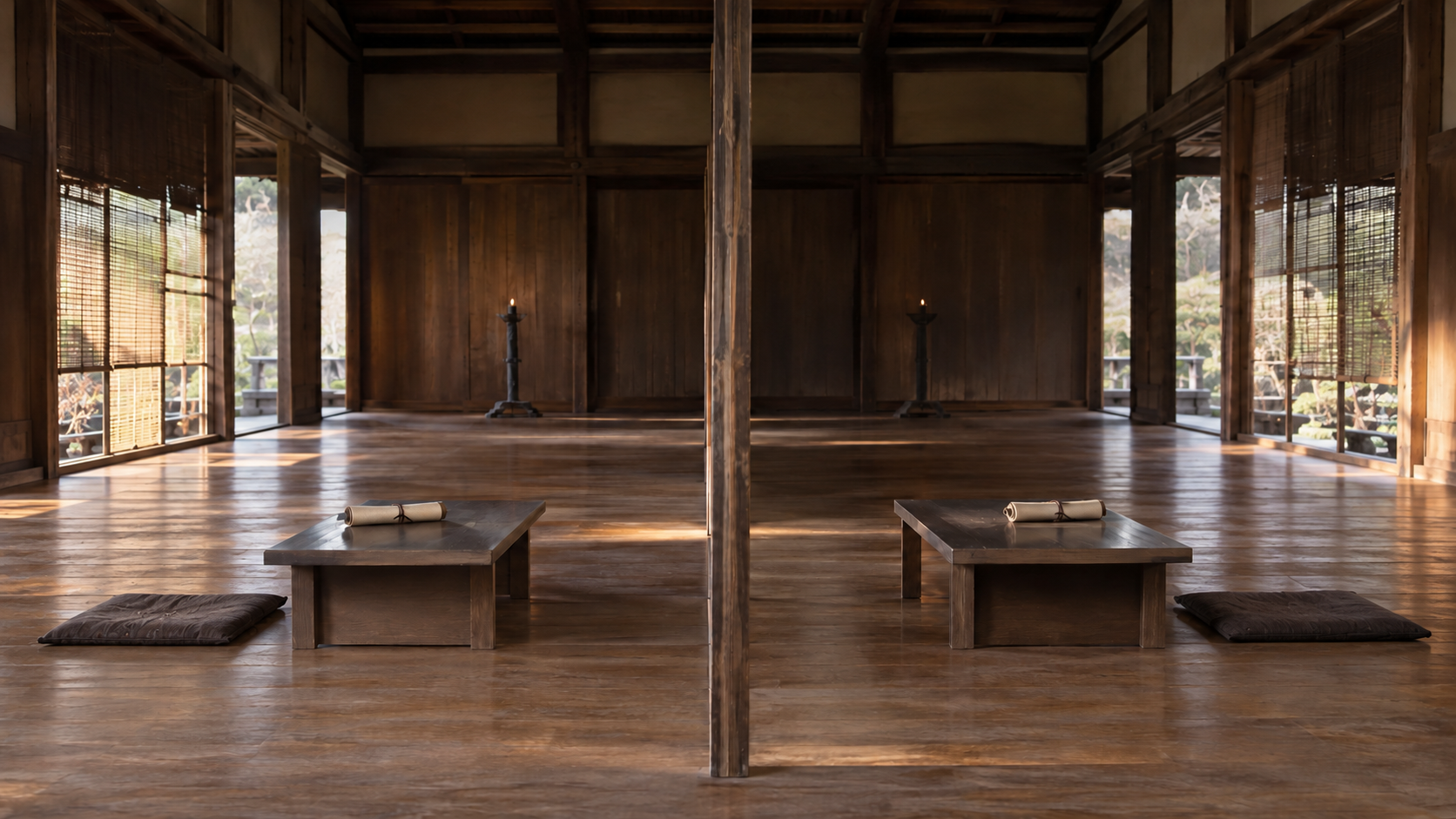
Chapter 05
Two sons, competing successors
In 1203, Yoriie fell ill. The question of who should become Kamakura's next lord became bound up with conflict between the Hiki and Hojo families. The Hiki supported Yoriie's son Ichiman; the Hojo supported Yoriie's younger brother Sanetomo.
Masako cooperated with her father Tokimasa, taking the side that destroyed the Hiki and installed Sanetomo. A short account in which a mother simply protects her child cannot encompass this scene. Yoriie and Sanetomo were both her children, and Ichiman belonged to the next generation of the same family.
Which line would carry the succession? The choice intersected with the balance of power among families connected to the shogunal household. Deciding the order within a family and deciding the center of the government had become inseparable. A succession dispute reached beyond the people within the home.
The surviving sequence allows us to follow Masako's cooperation with Tokimasa and her involvement in the decision to bring Sanetomo to power. It does not provide grounds here to invent what she feared or the words with which she justified the decision to herself. Nor did this alliance with her father remain fixed.
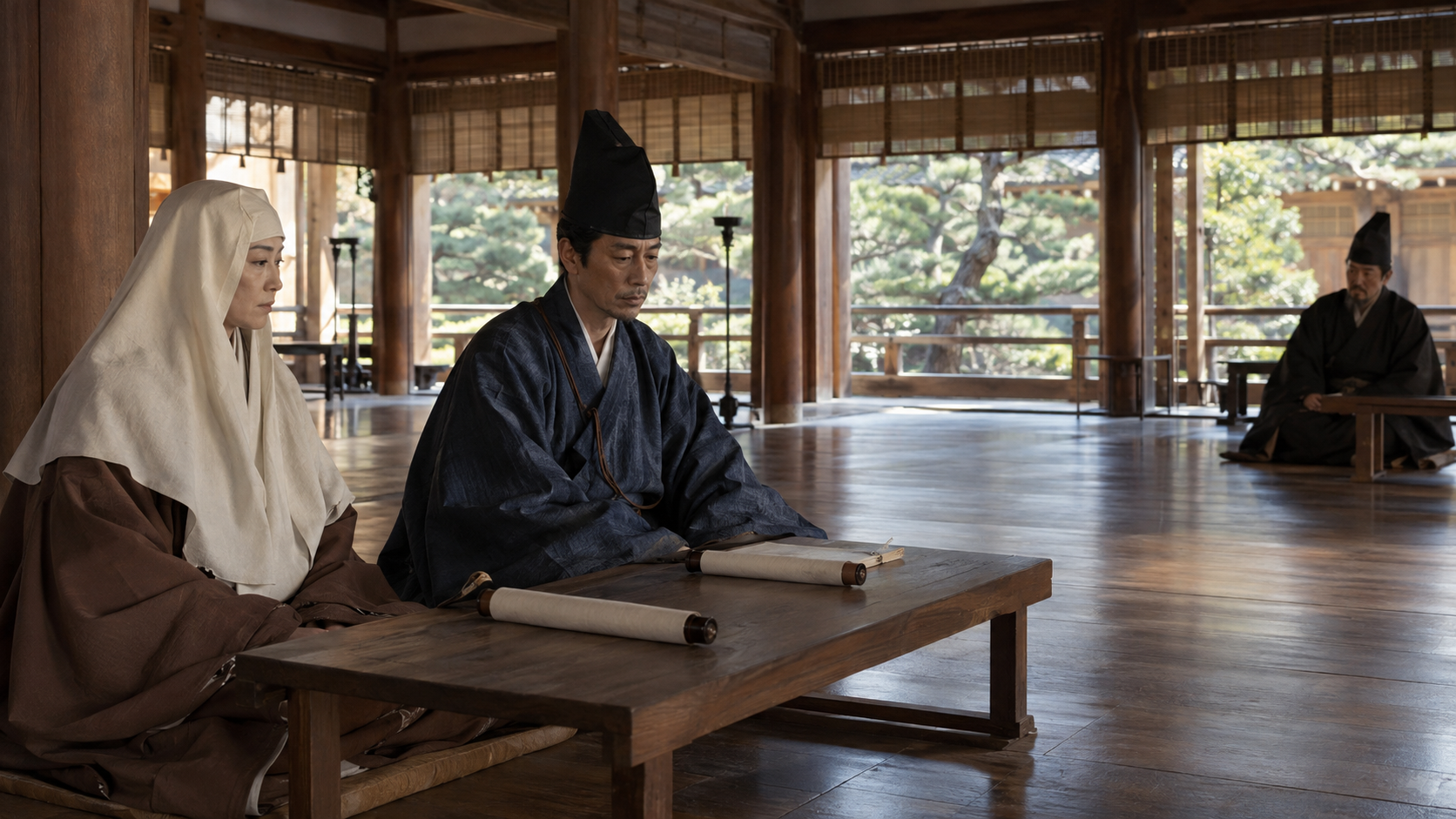
Chapter 06
When cooperation with her father ended
In 1205, it was Tokimasa who sought to remove Sanetomo. The father and daughter who had acted together two years earlier now stood on different sides of a question concerning the same shogun. Their relationship had not guaranteed a continuing political agreement.
Masako and her younger brother Yoshitoki pressed Tokimasa to retire. The bond of kinship remained, but it did not require them to support the same course. Within the single name Hojo lay differences in the choices made by its members.
Explaining this turn only as rebellion against a father or trust in a brother would obscure Sanetomo's position and the government's succession. The question of whom to cooperate with was connected to the question of whom to place at Kamakura's center.
The sequence through which Masako and Yoshitoki came to exercise political power contains cooperation with family followed by opposition to family. The path toward the role remembered as nun shogun was not made secure simply by belonging to the right household. Its relationships needed to be considered as they changed.
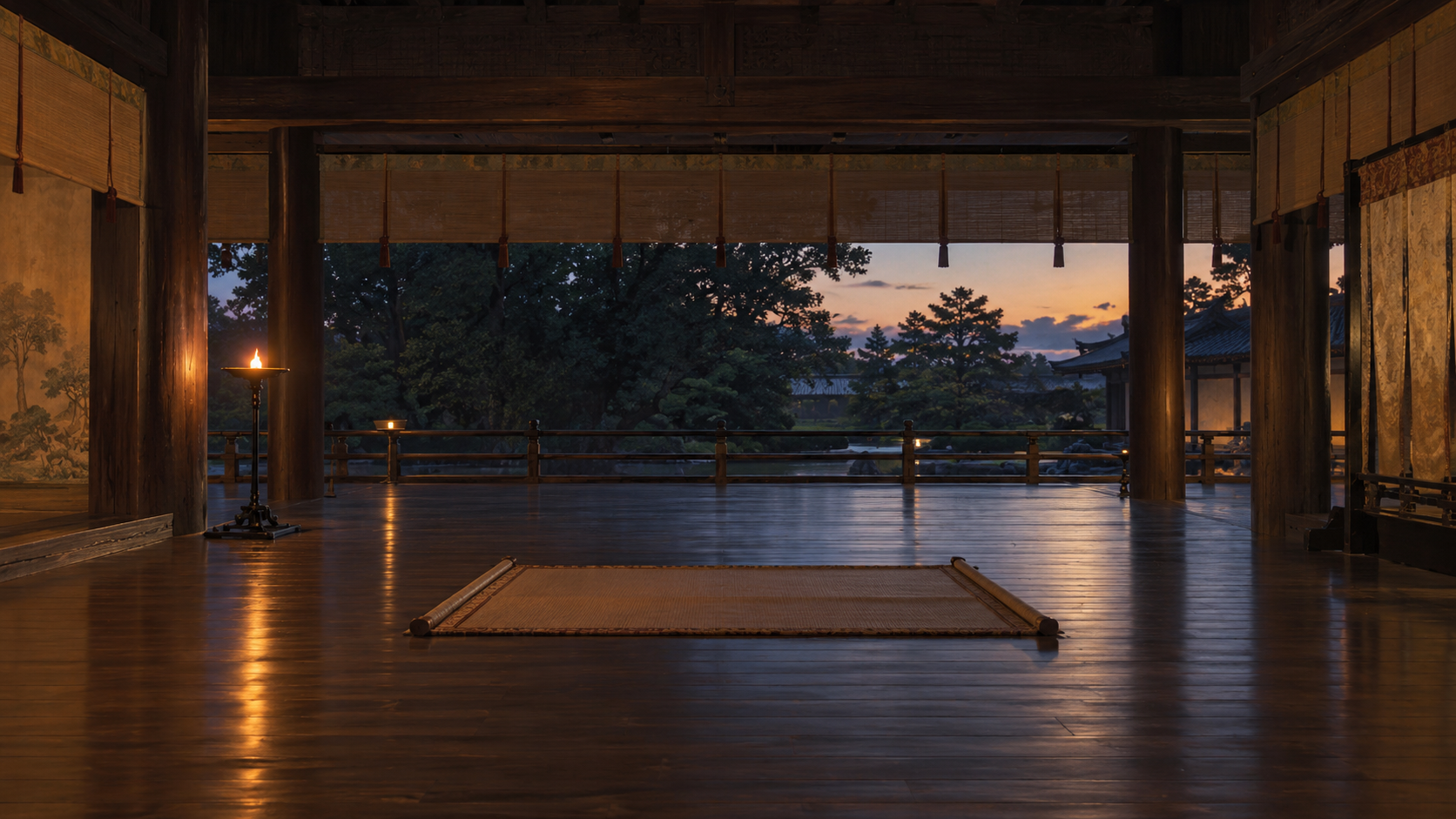
Chapter 07
A child from Kyoto
In 1219, Sanetomo was assassinated. Masako had now outlived both of her sons. The succession of Minamoto shoguns that had run from Yoritomo through Yoriie to Sanetomo ended, and Kamakura would receive its next central figure from outside that line.
The person brought from the Kujo family in Kyoto was the young Mitora, later Kujo Yoritsune. Installing a child as Kamakura's lord and having that child conduct government personally were different matters. The work of supporting the shogunal household and carrying politics forward acquired still greater weight.
The city curator's account identifies this stage, when Masako took the political lead, with the emergence of the figure called ama-shogun. Reading the name as an appointment of a woman to the formal shogunal office would misrepresent the relationships through which she acted.
Yoritomo's wife and the mother of shoguns remained at Kamakura after the Minamoto shogunal line had ended. Her presence connected Yoritomo's time with the government that followed it. Meanwhile, the relationship with Kyoto was approaching another crisis.
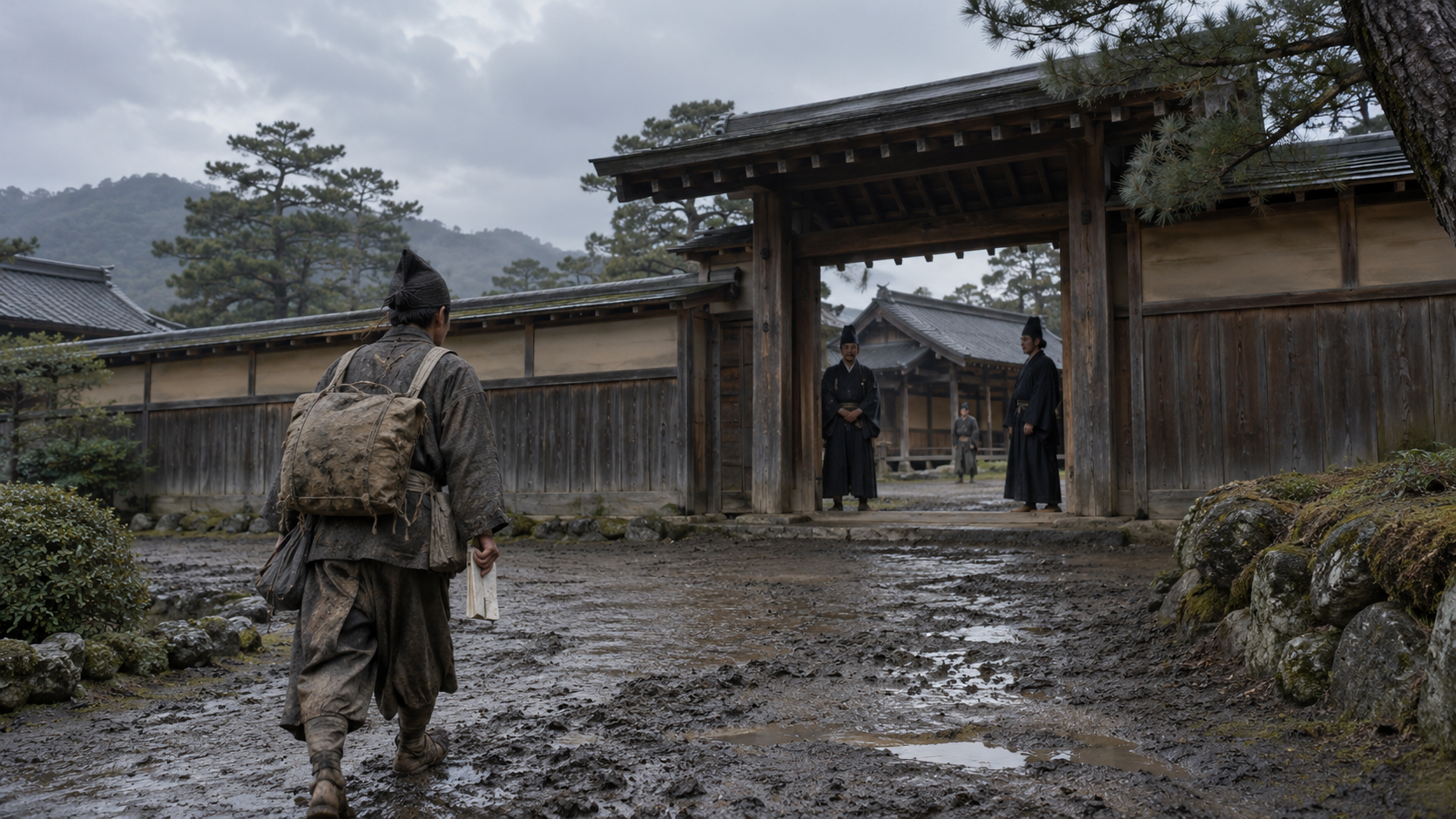
Chapter 08
An appeal during the Jokyu crisis
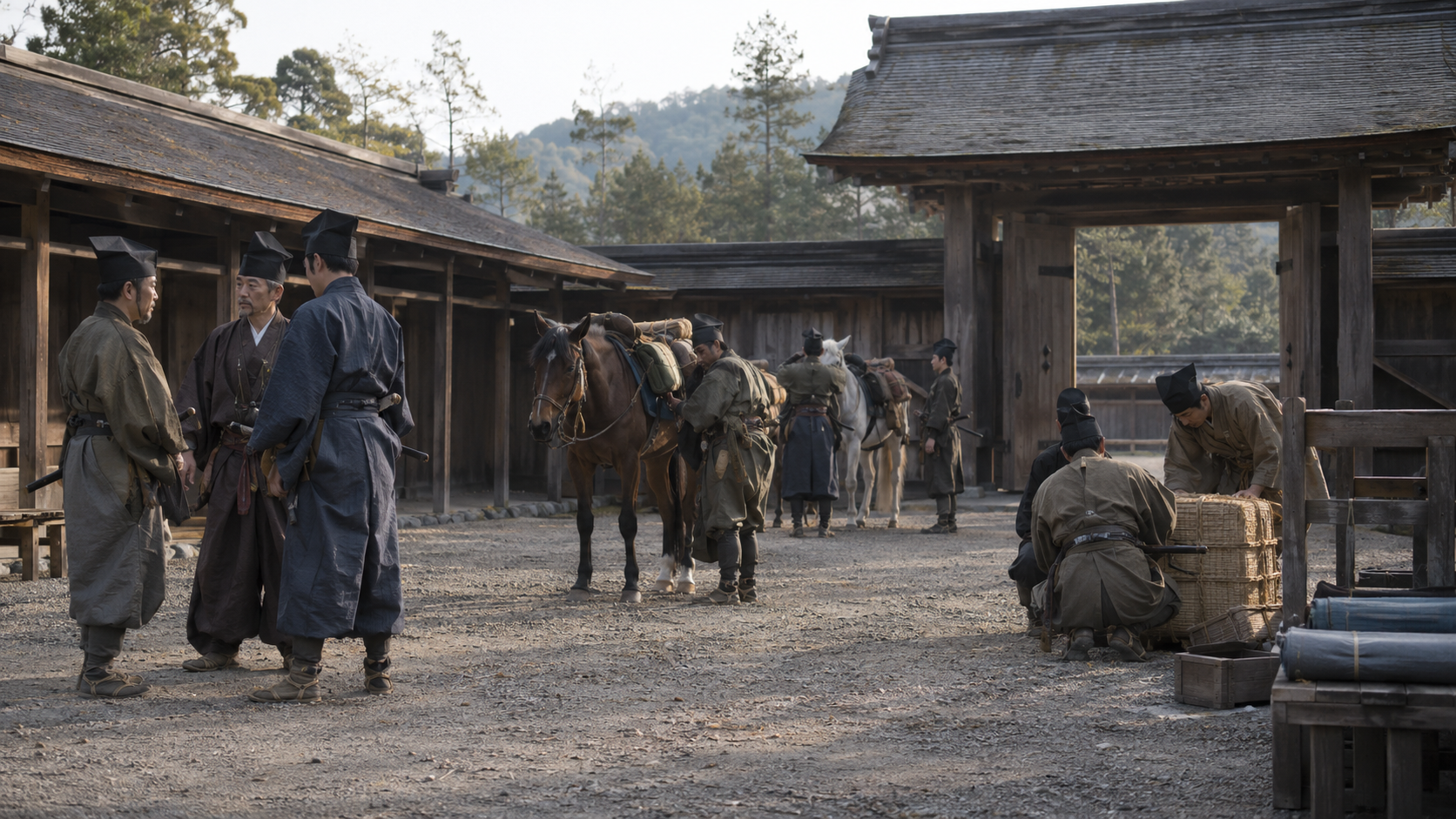
The Jokyu War broke out in 1221. Retired Emperor Go-Toba ordered an attack on Hojo Yoshitoki. From Kyoto, an order was directed against the man exercising political power in Kamakura. The gokenin faced the question of which side to follow.
At this moment, Masako is reported to have reminded them of the benefits they had received from Yoritomo and urged them to stand together. The name of a man who had already died was brought into an appeal concerning the choice now before them. A connection to the past became relevant to an immediate political decision.
This famous appeal should not be treated as if its voice had been recorded on the day. The article follows its substance as introduced in public historical explanations. It supplies neither an extended speech nor details about a speaker's tone or what listeners privately felt.
Masako's role cannot be measured only through scenes of someone carrying a sword and leading troops. She pointed toward reasons for the gokenin to remain attached to Kamakura and called on their political ties. We can read that effort as part of the work required before the fighting, while keeping that reading distinct from a complete account of the war.
Chapter 09
Yoritomo remembered in politics
Yoritomo's memory was more than a family's recollection. Used in an appeal to the gokenin, it became a shared past supporting Kamakura's politics. Masako's position as the woman who had lost her husband and the government's connection to Yoritomo meet at this point in the story.
The existence of an appeal does not establish that Masako alone determined the Jokyu War's outcome. Gokenin made decisions and acted; other people conducted political and military affairs. Encouraging solidarity and directing the entire course of a war remain different roles.
Making this distinction still leaves Masako's position significant. A person linked to the deceased Yoritomo could speak about the connection between his retainers and the government. Her ability to occupy that position provides material for considering the nature of her political influence.
When we encounter the name nun shogun, this is one of the activities that a title alone cannot explain. Relationships within the household reached into the choices of the gokenin. Masako's continuing part in sustaining Kamakura lay at that meeting point.
Chapter 10
Memorial halls and what remains
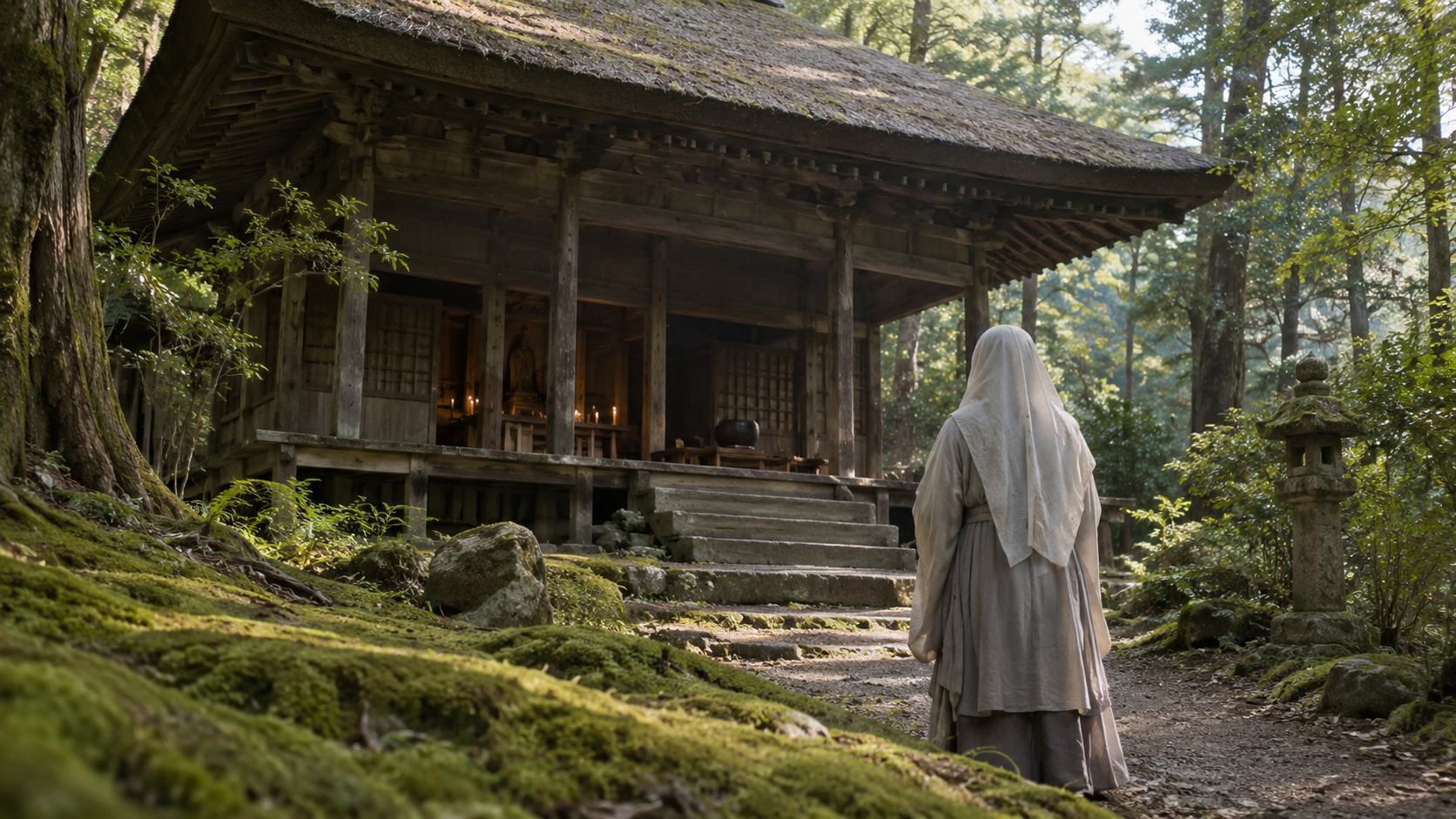
Yoshitoki died in 1224. Masako is said to have built his Hokkedo beside Yoritomo's. The place for commemorating the brother with whom she had exercised political power was set near the place associated with her husband. Masako herself died the following year, in 1225.
Hokkedo here refers to a building for honoring and commemorating a deceased person. The Japan Heritage explanation introduces the site through buildings associated with prayers for Yoritomo and Yoshitoki after their deaths. The record of politics is connected with places of Buddhist commemoration.
At the present historic site, Yoritomo's tomb tower stands on the western side, while the remains identified with Yoshitoki's Hokkedo are preserved underground to the east. Kamakura City explains that remains found in 2005 match the direction and terrain described in Azuma Kagami. On that basis, their identification as Yoshitoki's memorial hall is presumed.
The appearance of the site today cannot simply be transported back into Masako's time. Yoritomo's burial place also underwent later changes. Keeping the events described in texts, buried structural remains and the present landscape distinct reveals something of the long interval through which these traces of Kamakura have survived.
Chapter 11
The dates behind a familiar image
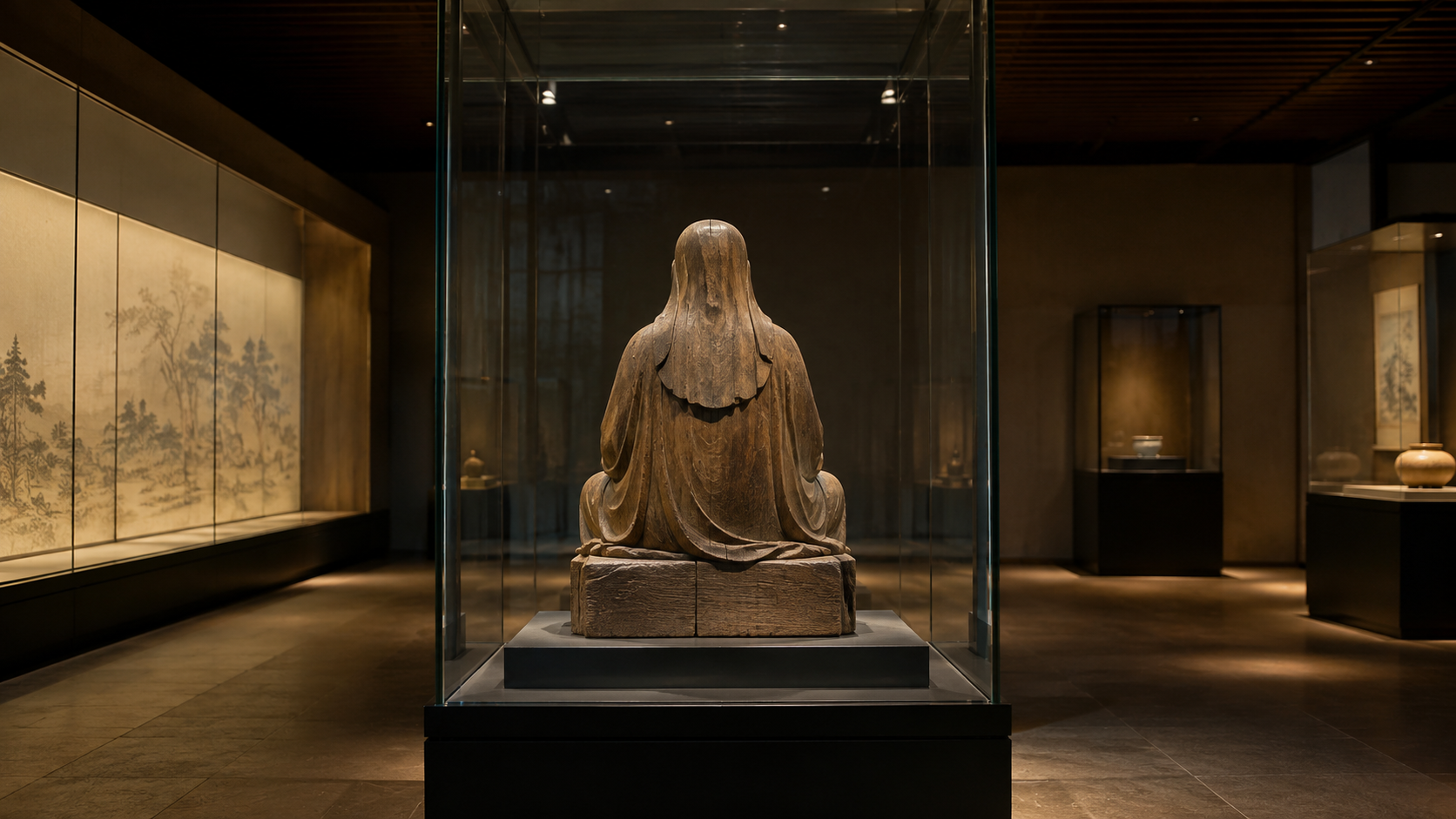
When we picture Masako's face, later sculptures and stories also shape what we imagine. The Museum of History and Culture's exhibition catalog lists the seated statue of Hojo Masako held by Anyo-in as a work of the Taisho period. That places it centuries after her lifetime, rather than among portraits made while she lived.
The same catalog includes a facsimile of the Hojo manuscript of Azuma Kagami. Although the events it recounts belong to the Kamakura period, the catalog dates the original manuscript to the Muromachi period. The date of an event and the date of the book that transmits it are different.
The National Archives of Japan explains that Azuma Kagami's compiler and date of completion are unknown, with its compilation presumed to have taken place around 1300. An important source for Masako's time was therefore not a completed account produced in the midst of all the events it describes.
The catalog also lists works from the Edo, Meiji and Showa periods. These entries indicate the time over which Masako continued to be represented and retold. When an impression of a strong woman meets us, we can also ask which period and which work supplied it. Her historical role and the later development of her image both contribute to the Masako remembered today.
Chapter 12
What did sustaining Kamakura require?
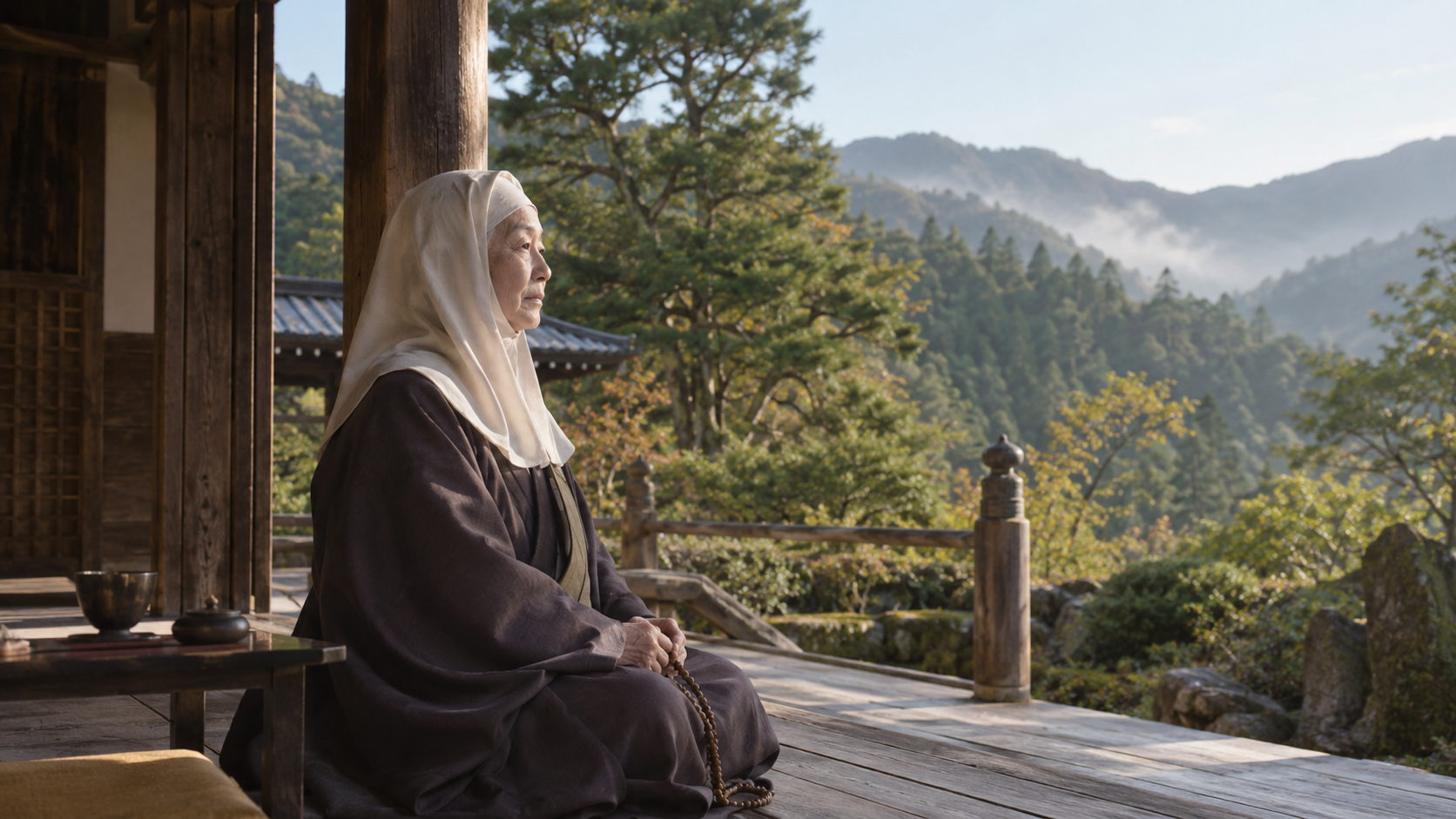
The woman who formed a relationship with Yoritomo in Izu became midaidokoro, then remained politically involved as ama-midaidokoro after his death. She cooperated with her father to install Sanetomo, pressed that father to retire and supported a young lord after Sanetomo's death. Both her position and her partners changed with time.
These episodes include moments when caring about a family and protecting every family member's political position could not mean the same thing. Yoriie and Sanetomo, Tokimasa and Yoshitoki: following Masako's choices brings us into relationships that the single word family cannot organize on its own.
We cannot answer what she sought to preserve by writing her inner thoughts for her. We can, however, follow whom she helped bring to power, whom she acted with and when she urged the gokenin toward solidarity. These actions reveal the range of affairs into which her decisions reached.
Sustaining Kamakura, on this reading, involved more than remaining in an unchanging place. As the work she performed changed, she helped connect the government to its next central figure. From that sequence emerged the remembered name nun shogun, a role distinct from appointment to the formal shogunal office.
How to read this work
History, interpretation, and reconstruction
Masako's continuing political role becomes clearer through changing relationships among the shogunal household, the Hojo and the gokenin, while formal office, later stories and surviving evidence remain distinct.
This work is grounded in published sources and historical research. Interior thoughts, dialogue, and some visual details are cinematic reconstructions. Where historians disagree, the article presents the point as debated rather than settled fact.
Timeline
The story in time
-
Masako is born into the Hojo family in Izu.
Sources: s02 -
Yoritomo enters Kamakura after taking up arms; Masako moves there from Izu.
Sources: s02 -
Yoritomo dies; Masako takes Buddhist vows and remains involved in Yoriie's politics.
Sources: s02 -
During the succession dispute after Yoriie falls ill, Masako cooperates with Tokimasa to install Sanetomo.
Sources: s02 -
Masako and Yoshitoki press Tokimasa to retire after his plan to remove Sanetomo.
Sources: s02 -
Sanetomo is assassinated; the young Mitora is brought to Kamakura from the Kujo family.
Sources: s02 -
During the Jokyu War, Masako is reported to remind the gokenin of Yoritomo's benefits and call for unity.
Sources: s02 -
Yoshitoki dies; Masako is said to establish his memorial hall beside Yoritomo's.
Sources: s02
People & terms
A guide for new readers
Key figures
- Hojo Masako
- Yoritomo's wife and widow, known as the nun shogun for her political role; she did not hold the formal shogunal office.
- Minamoto Yoritomo
- Masako's husband and the founder of the Kamakura shogunate; he died in 1199.
- Hojo Tokimasa
- Masako and Yoshitoki's father, who cooperated with Masako in 1203 and was pressed to retire in 1205.
- Hojo Yoshitoki
- Masako's younger brother, with whom she exercised political power; he died in 1224.
- Minamoto Yoriie
- Masako's eldest son and the second shogun, whose illness brought succession into dispute in 1203.
- Minamoto Sanetomo
- Masako's second son and the third shogun, assassinated in 1219.
Glossary
- Ama-shogun 尼将軍
- Nun shogun: the remembered name expressing Masako's political role, not appointment to the formal shogunal office.
- Sei-i taishogun 征夷大将軍
- The formal shogunal office to which Masako was not appointed.
- Bakufu 幕府
- The warrior government, referred to in English here as the shogunate.
- Gokenin 御家人
- Warrior retainers attached to the Kamakura government, whom Masako is reported to have urged toward solidarity in 1221.
- Midaidokoro 御台所
- The designation for the shogun's wife used for Masako in this account.
- Ama-midaidokoro 尼御台所
- The designation used after Yoritomo's widow took Buddhist vows; ama refers to a Buddhist nun.
- Kamakura-dono 鎌倉殿
- Lord of Kamakura: the central figure whose succession connects household relationships with government in this narrative.
- Jokyu War 承久の乱
- The 1221 crisis in which retired Emperor Go-Toba ordered an attack on Yoshitoki and Masako appealed to the gokenin.
- Hokkedo 法華堂
- In this article, a hall for commemorating a deceased person; the sites associated with Yoritomo and Yoshitoki are distinguished from their present appearance.
- Azuma Kagami 吾妻鏡
- A historical compilation important for the Kamakura government. Its completion is presumed to date around 1300; the dates of events, compilation and surviving copies differ.
- Tsuifuku 追福
- Buddhist prayers or acts of commemoration for deceased people, discussed in the museum's account of Masako's later life.
Sources & method
How this article was built
This English article translates the fixed, publicly verified Japanese manuscript and preserves its twelve chapters, people and timeline. The adopted institutional explanations were checked, both exhibition catalog pages were visually read, and PDF pages 39–40 of the Ferris seminar guide were read from the existing local copy. Source titles are editorial English translations.
The Ferris text is a student-produced secondary guide hosted on a city website. It is used for the literary attribution of the rain tale, not promoted into a primary historical record. The main chronology and political actions follow the city curator's explanation. The 1221 appeal is given in reported paraphrase; neither a complete original speech nor a full original reading of Gukansho or individual Azuma Kagami entries is claimed.
The Taisho statue and later works are distinguished from Masako's lifetime. A manuscript copy's period differs from the events it transmits; Azuma Kagami's estimated compilation around 1300 is also distinct. The 2005 structural remains are described with the city's presumed identification. Modern tomb arrangements are not exact reconstructions of the medieval site.
All twelve distinct canonical AI-generated illustrations were viewed individually and matched by SHA to the Japanese article review and its cleared rights. Fictional figures, the sculpture, buildings and papers are illustrative concepts. They are not authenticated portraits, the actual Anyo-in statue, reproduced institutional artworks or documentary photographs of the sites. The linked film has Japanese audio; an English subtitle track has not been verified.
Sources
References and further reading
- Hojo Masako: Women Who Lived in Kamakura, 800 Years After Her Death 没後800年 北条政子―鎌倉を生きた女性たち― Title translated editorially for reader convenience. Kamakura City / Kamakura Museum of History and Culture 鎌倉市・鎌倉歴史文化交流館 Explains her position as a widow and her later commemoration of deceased children. The exhibition ran from December 2025 to February 2026 and has ended. Accessed 2026-10-09
- Kamakura Lords Bulletin, Part 4: Hojo Masako 鎌倉殿通信 第4回 鎌倉の女傑・北条政子 Title translated editorially for reader convenience. Kamakura City / Yamamoto Minami, museum curator 鎌倉市・山本みなみ(鎌倉歴史文化交流館学芸員) Principal chronological and political explanation, checked against the fixed Japanese manuscript. No private thoughts or complete speech are supplied. Accessed 2026-10-09
- Exhibition catalog: Hojo Masako, 800 Years After Her Death 企画展「没後800年 北条政子」出品目録 Title translated editorially for reader convenience. Kamakura City / Kamakura Museum of History and Culture 鎌倉市・鎌倉歴史文化交流館 Both pages and their title and period columns read: the Taisho statue, facsimile of a Muromachi manuscript and later works are distinguished. No catalog artwork is reproduced. Accessed 2026-10-09
- Dictionary of Medieval Kamakura Cultural Figures: Hojo Masako 中世鎌倉文化人物事典 北条政子 Title translated editorially for reader convenience. Ferris University medieval literature seminar, hosted by Kamakura City フェリス女学院大学中世文学ゼミ(鎌倉市掲載) Student-produced secondary guide, PDF pages 39–40. Used to identify the rain and elopement tale as a story from Genpei Seisuiki; principal chronology follows the curator. Accessed 2026-10-09
- Hokkedo Historic Site: Yoritomo and Yoshitoki 史跡法華堂跡(源頼朝墓・北条義時墓) Title translated editorially for reader convenience. Kamakura City 鎌倉市 The 2005 excavation, presumed identification through textual direction and terrain, and later changes to Yoritomo's burial place. Accessed 2026-10-09
- Cultural Properties of Kamakura, the Ancient Capital of the Warriors 「武家の古都・鎌倉」を構成した文化財 Title translated editorially for reader convenience. Kanagawa Prefecture 神奈川県 The Hokkedo entry distinguishes the western tomb tower from remains preserved underground to the east. This is not a claim of World Heritage inscription. Accessed 2026-10-09
- Hokkedo Site: Yoritomo and Yoshitoki 法華堂跡(源頼朝墓・北条義時墓) Title translated editorially for reader convenience. Agency for Cultural Affairs, Japan Heritage portal / Kamakura City Tourism Division 文化庁 日本遺産ポータル(文責:鎌倉市観光課) The official description of commemorative buildings and their remains was read after a web-reader error. Source-site photographs are not reproduced. Accessed 2026-10-09
- History and Stories, 8: Azuma Kagami 歴史と物語 8.吾妻鏡 Title translated editorially for reader convenience. National Archives of Japan 国立公文書館 Institutional explanation of unknown compilation details, the presumed date around 1300, copying and the Hojo manuscript. No full reading of individual original entries is claimed. Accessed 2026-10-09
Continue reading
More stories from Shigeki
Shigeki English
Sakai’s Merchant City: Trade, Self-Government and Survival
A port, a merchant council and town communities—from changing authority to rebuilding after fire.
- When From the later fifteenth century through the Sengoku period, the fire of 1615 and early Edo-period reconstruction.
- Where Sakai, in present-day Osaka Prefecture, where maritime routes met roads on land.
Shigeki English
The Aburanokōji Incident: After Leaving the Shinsengumi
A separation in spring, a new base in summer, and two successive attacks.
- When Kyoto in Keiō 3 (1867). The incident’s historical date corresponds to December 13, 1867.
- Where Kyoto: the guards’ successive bases, the Aburanokōji attack site and the later place of remembrance.