
SHIGEKI ENGLISH STORYEN
Japanese history in English
Sekigahara: When Did a One-Day Victory Become Rule over Japan?
Beyond the battlefield, negotiations, trade and the imperial court shaped the road into the Tokugawa era.
The Eastern Army won at Sekigahara in 1600; Ieyasu's appointment as shogun followed in 1603. Trace the Toyotomi succession, the Shimazu retreat and settlement, overseas merchant ships and relations with the imperial court to read the battle alongside the political work that followed.
At a glance
Before you enter the story
- When
- 1598–1615; the battle date is 21 October 1600 Gregorian. A historical compilation completed in 1842 is considered separately.
- Where
- Sekigahara in present-day Gifu Prefecture, Japan, with Kyoto, the Shimazu territories and overseas correspondence entering the later political account.
- Key figures
- Tokugawa Ieyasu, Toyotomi Hideyoshi, Toyotomi Hideyori, Ishida Mitsunari, Mori Terumoto, Kobayakawa Hideaki, Shimazu Yoshihiro
- What was at stake
- How a military victory developed into wider political authority through subsequent relationships and institutions.
Why this story matters
The larger history behind the turning point
A famous battle can compress a long political transition into a single date. Following the years after Sekigahara preserves the work of negotiating with a defeated house, stating conditions for trade and obtaining an office from the imperial court. The sequence also asks how a contemporary diary and later compilations give different views of the same remembered turning point.
Historical context
What an international reader needs to know
The government before the opposing armies
Hideyoshi's regime is called the Toyotomi regime in this article. Daimyo were powerful territorial warrior lords; several sat among the Five Elders, while Mitsunari held a place among the Five Commissioners. These bodies conducted affairs after Hideyoshi died, when his successor Hideyori was still too young to do so.
Eastern Army and Western Army are names for the opposing coalitions. They should not be read as two separate countries or as a complete description of every participant's position. Mori's overall command of the Western camp and Mitsunari's role in organizing opposition are kept distinct.
Calendars, places and political documents
The battle's Japanese date is the fifteenth day of the ninth month of Keicho 5. The official Gifu explanation gives its Gregorian equivalent as 21 October 1600. This article keeps both expressions visible; the ninth month is not simply September in the modern calendar. Sekigahara lies in present-day Gifu Prefecture, while Kyoto is the setting of the imperial court and the court diary.
Sei-i taishogun is the formal office translated here as shogun; bakufu means the associated warrior government, or shogunate. Ieyasu's appointment in 1603 belongs to a later stage than the battle. Red-seal documents, or shuinjo, authorized merchant voyages in the cited account. Annam is identified by the National Archives with northern Vietnam. The province name Hyuga appears in the settlement with the Shimazu, but recognition there concerned Morokata district rather than the whole province.
Watch the film
See the story in motion
The film currently uses Japanese audio. This English article provides the context and source trail; it does not imply that an English subtitle track is available.
Chapter 01
What one day settled, and what remained
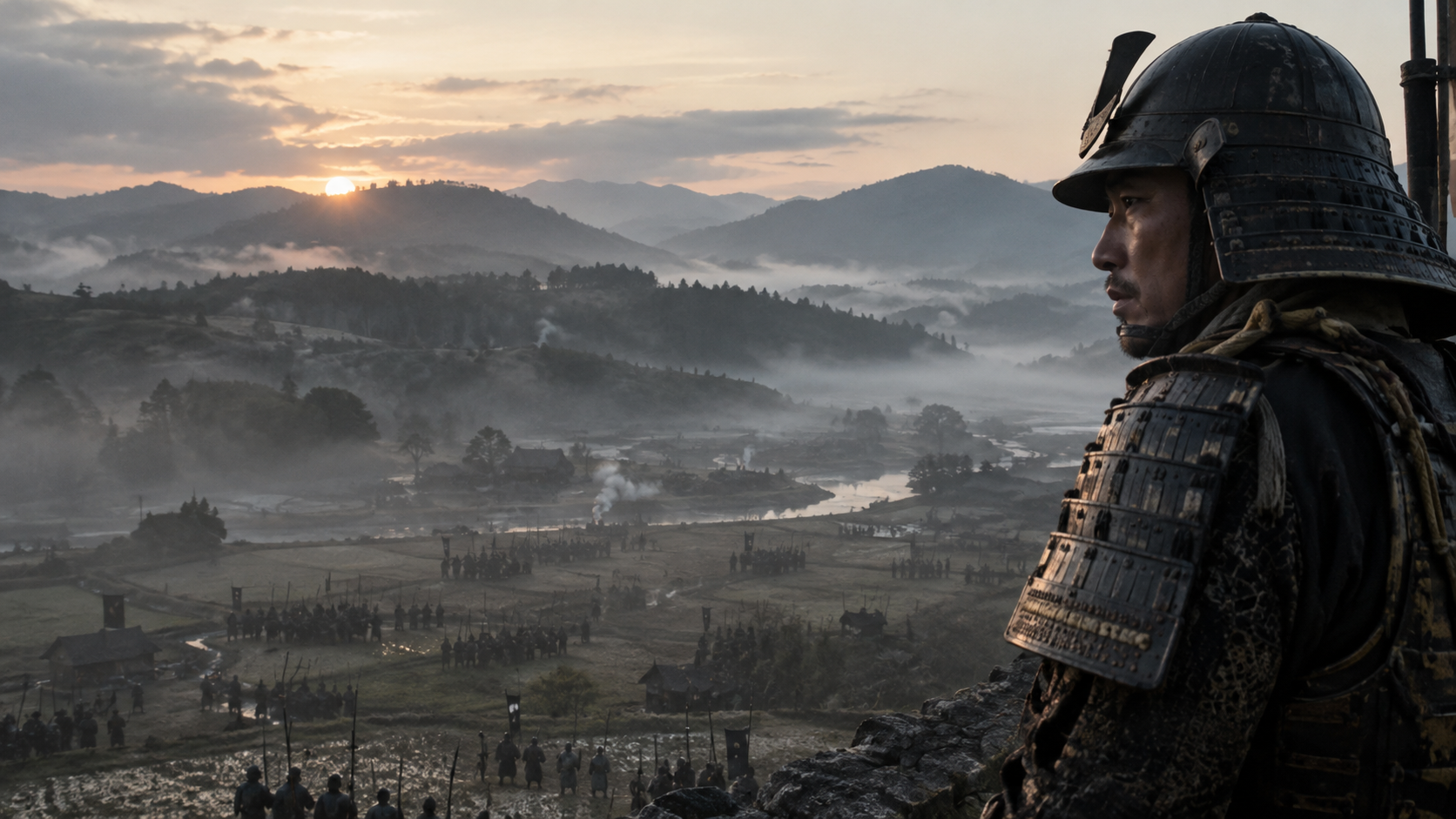
In 1600, the Eastern Army won at Sekigahara. The battle, remembered alongside the name of Tokugawa Ieyasu, is often treated as the contest that divided Japan's destiny. A battlefield among the mountains offers a compelling place to draw a line between historical eras.
Yet the victorious Ieyasu was appointed sei-i taishogun in 1603. The outcome at Sekigahara and the establishment of the Edo shogunate belong to a connected sequence. When we place both within a single day's events, the time between them disappears from view.
Look into that interval and the Shimazu appear on the road of retreat. Negotiations seek to repair relations after defeat; documents concern merchant ships and trade; Ieyasu's relationship with the imperial court enters the account. An advantage won on the battlefield acquired political force in other places.
What changed at Sekigahara, and what work still had to follow? Before tracing the result of one day's fighting, we need to return to the government that Toyotomi Hideyoshi left behind. The circumstances after his death help explain how the armies that met there came into being.
Chapter 02
The place left vacant by Hideyoshi
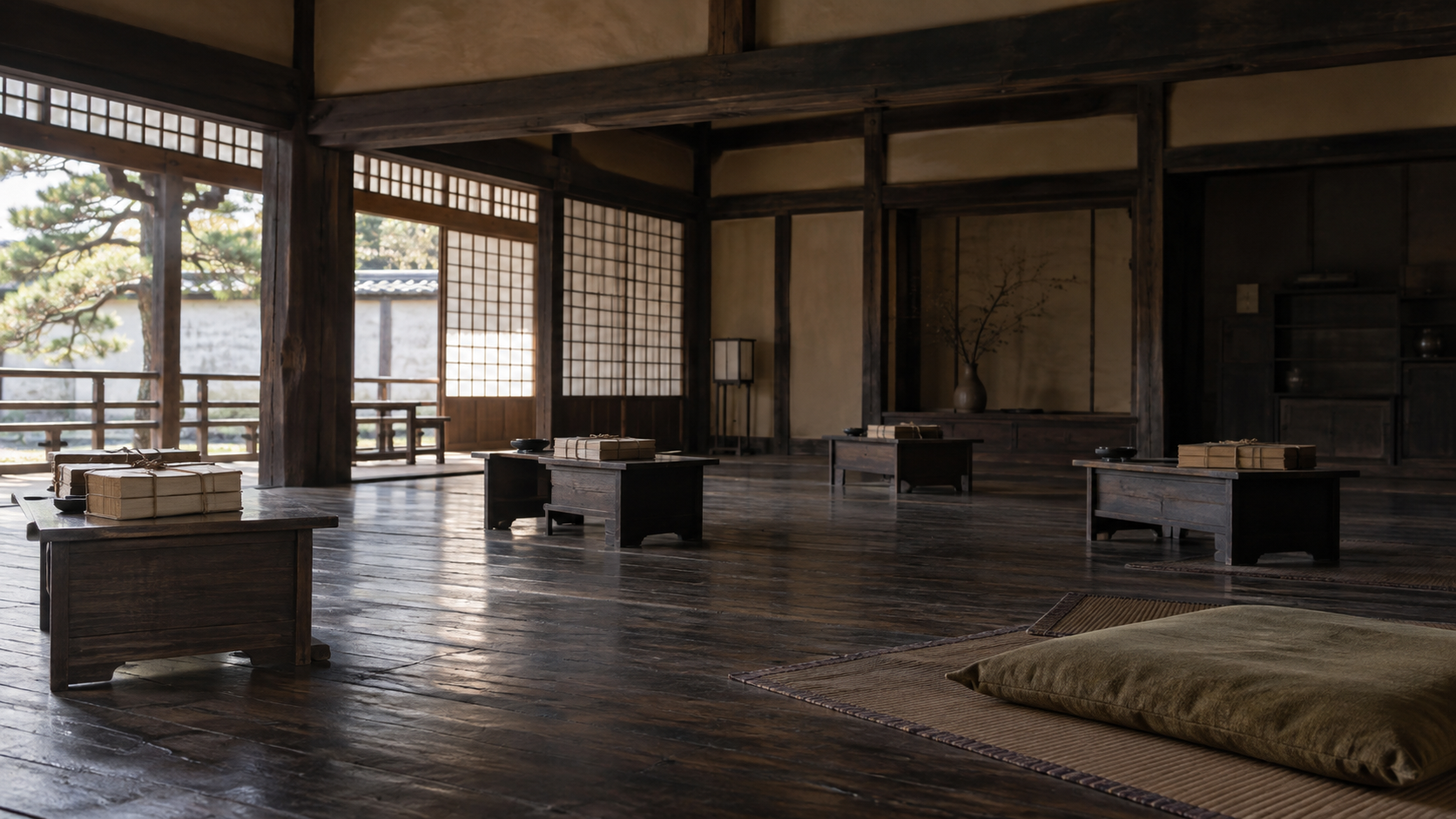
Toyotomi Hideyoshi died in 1598. His successor, Hideyori, was still a child. The Council of Five Elders and the Five Commissioners were entrusted with government in the absence of Hideyoshi. Ieyasu was one of those elders, participating in the political arrangements of the Toyotomi regime.
The elders also included powerful lords such as Mori Terumoto, Maeda Toshiie, Ukita Hideie and Uesugi Kagekatsu. Ishida Mitsunari was among the commissioners. Authority that had gathered around Hideyoshi now had to be supported through several people, with different positions within the same government.
The National Archives of Japan describes how the balance shifted following Toshiie's death and how Ieyasu gradually took the lead in conducting the regime's affairs. Listing five names in each body does not show that the relations among them continued unchanged. An arrangement could survive in name while its balance of power altered.
The Eastern and Western armies did not suddenly arrive as two countries from outside this government. Who would conduct politics after Hideyoshi? That question developed into conflict among the people who had sustained the Toyotomi regime. Their dispute forms the setting in which the later opposing camps took shape.
Chapter 03
A conflict larger than Ieyasu and Mitsunari
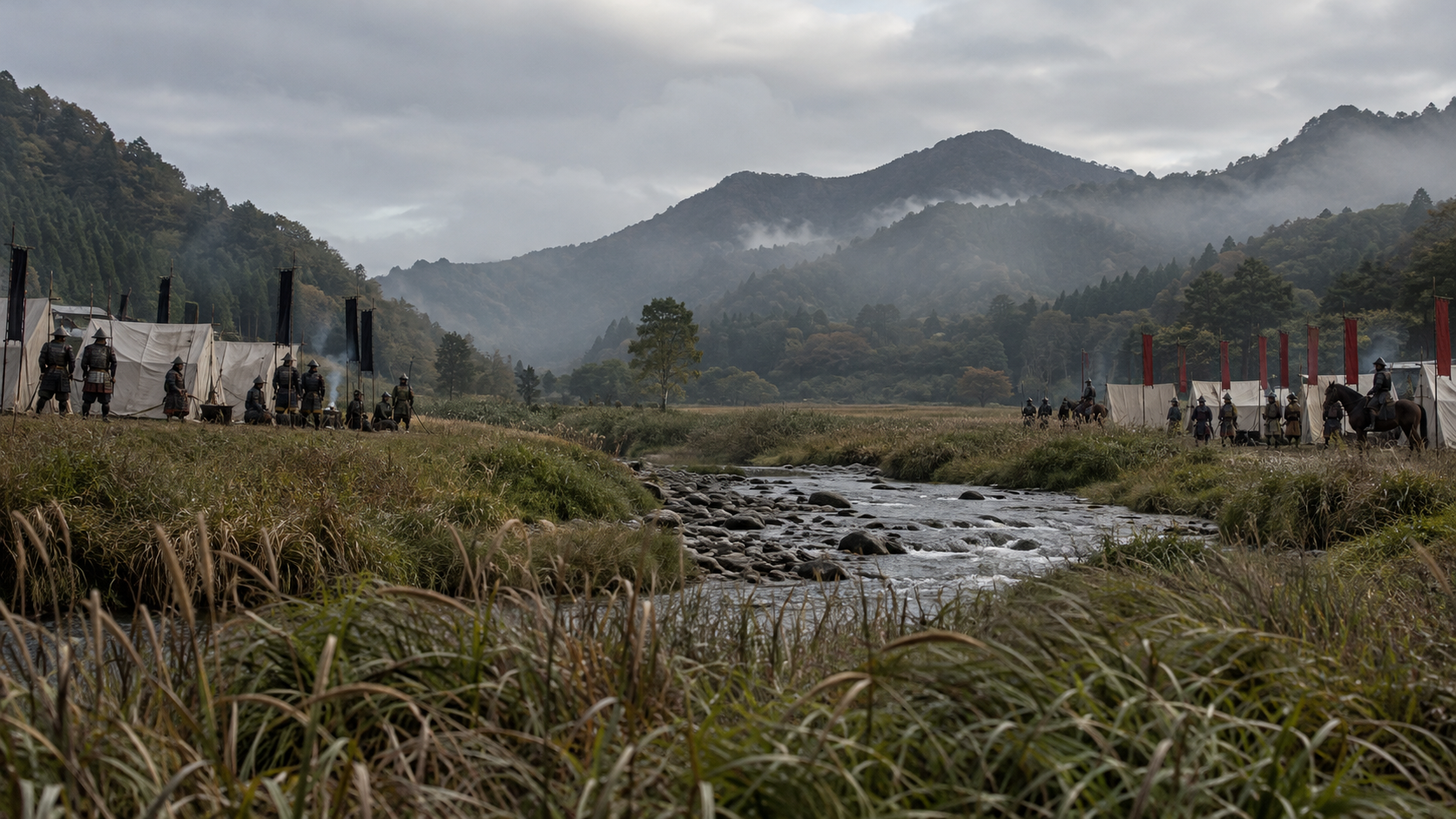
In response to Ieyasu's growing influence, Mitsunari involved Otani Yoshitsugu and other commissioners in forming an opposition. Mori Terumoto became the commander-in-chief of the camp later called the Western Army. Bringing together opposition and holding overall command were distinct roles within that coalition.
An account built around a contest between Ieyasu and Mitsunari gives the conflict an easily grasped outline. Within it, however, stood many daimyo and different political positions. Mitsunari's work in organizing forces against Ieyasu cannot simply be substituted for Mori's position as their overall commander.
For readers who know the outcome, Eastern and Western appear to be clear categories. On the way to the battle, people made choices about whom to join and with whom to act. If an individual is understood only through the eventual name of a camp, those movements become harder to see.
Explaining victory through the personalities of two men leaves too much out of view. A dispute over the conduct of government expanded into a military collision involving many forces. Sekigahara lay at the end of that widening conflict, and its significance becomes clearer when the other participants remain in the story.
Chapter 04
The battlefields on the way to Sekigahara
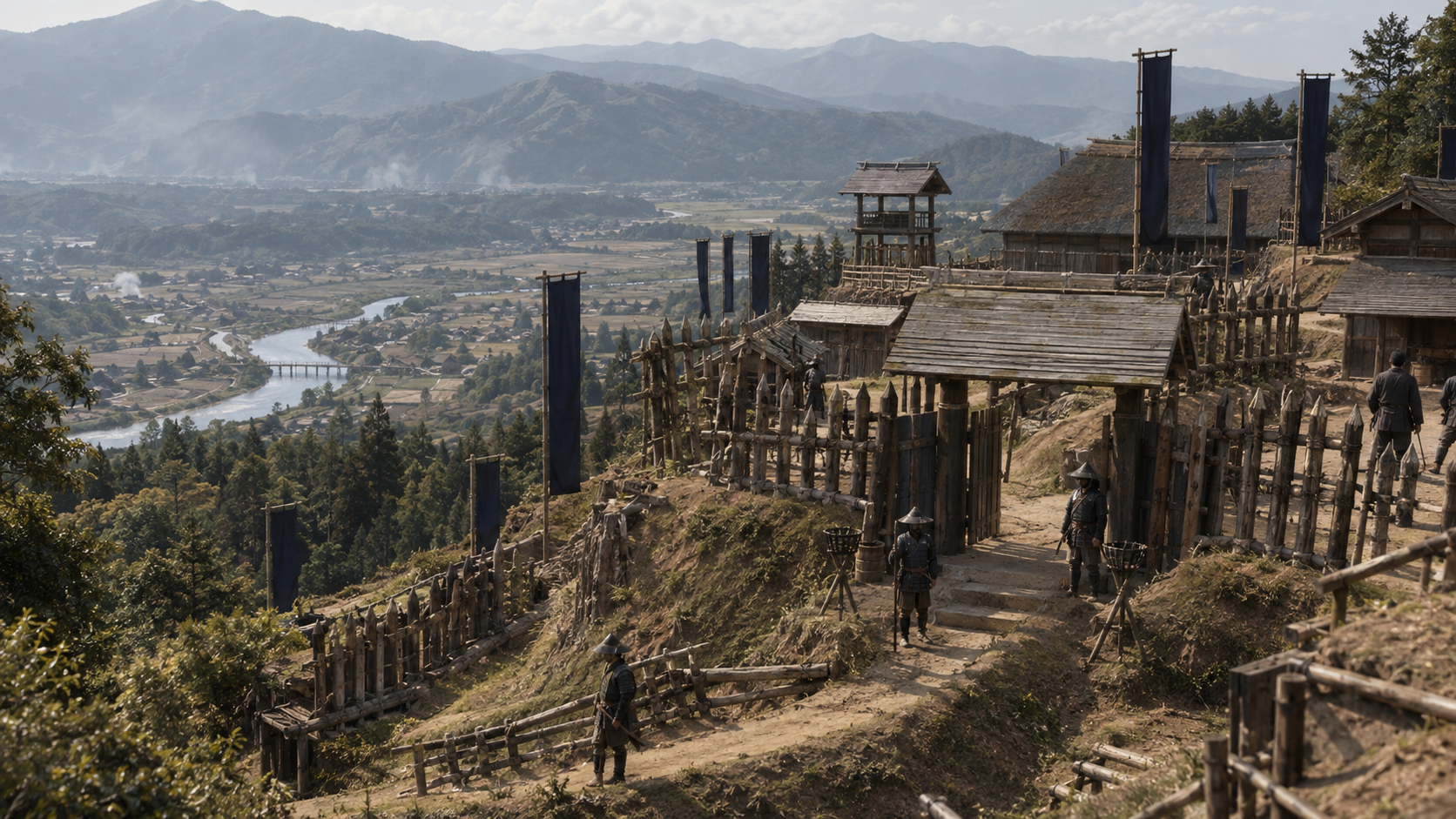
A deployment map encourages us to imagine the whole conflict inside one basin. Before the armies gathered there, battles and movements in other places had already formed part of the sequence. The final battlefield represents a moment within a broader course of events.
The Gifu tourism federation's official account describes fighting before the decisive encounter across a wider area. Following names such as Gifu Castle and Ogaki Castle brings into view a conflict that extended beyond the place where the main battle would be decided. These other locations belong within its history.
Movements around castles and armies facing each other in the open were connected parts of that course. A single battlefield plan shows one scene from it. Outside the frame, people moved, messages arrived and time passed before another course of action was chosen.
We can recognize Sekigahara as a major turning point while preserving the roads that led to it. The decisive encounter emerged from linked movements in different places. Looking beyond the basin helps prevent one famous day from obscuring the sequence through which the forces came to meet there.
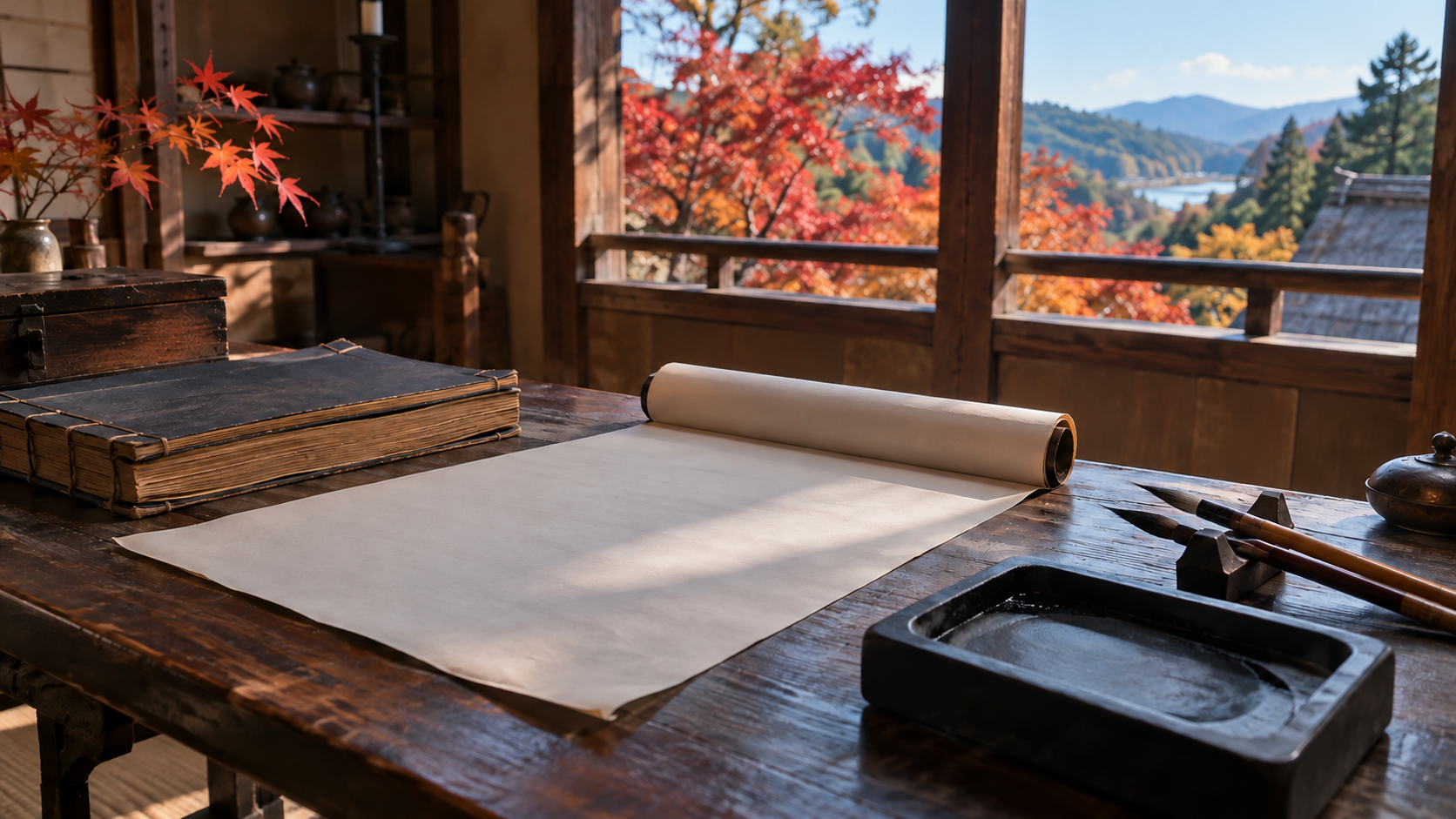
Chapter 05
The fifteenth day, and the twenty-first
The fifteenth day of the ninth month of Keicho 5 corresponds to 21 October 1600 in the Gregorian calendar. September and October do not indicate two battles. They are different calendar expressions for the same day, and the older date should be read within its own system.
Placing the familiar ninth-month date directly into September on a modern calendar changes even our sense of the season. Reading a date again can alter our distance from the battlefield we carry in memory. A conversion matters before we begin to imagine the conditions surrounding an event.
On that day, the opposing armies fought at Sekigahara and the outcome was decided. This article does not present troop totals or the movements of individual units as a single definitive set of numbers and times. It follows the sequence established in the Japanese manuscript and the institutional explanations cited there.
Without filling every gap in a timetable, we can still follow an action that helped turn the battle. Kobayakawa Hideaki, who had belonged to the Western side, moved to the Eastern side. That change formed a major turning point within the fighting.
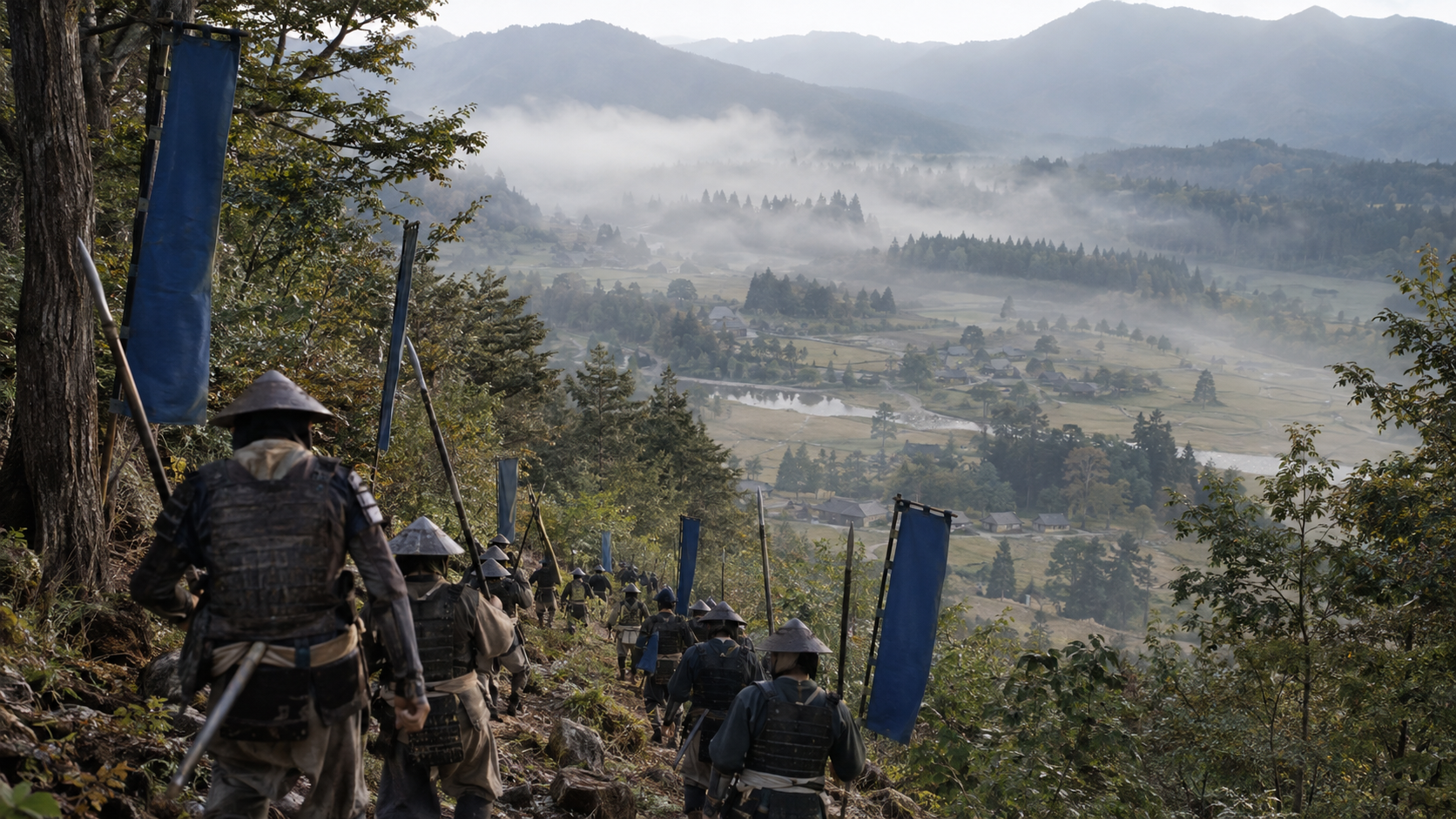
Chapter 06
When Kobayakawa Hideaki moved
After Kobayakawa Hideaki joined the Eastern side, the Western Army collapsed and the Eastern Army won. The National Archives of Japan describes this movement as a crucial moment in the outcome. The action and its consequence can be followed without supplying the thoughts that lay behind them.
When did Hideaki decide? What did he fear, and which words influenced him? In a dramatic retelling, those questions can generate a tense scene. Knowing how the battle ended does not give us direct access to his inner thoughts or permit us to write them in his place.
The familiar tale that Ieyasu had shots fired to force Hideaki's decision, known as toi-deppo, is not adopted here as a verified event. This account follows the action that can be established and its consequences, leaving that vivid episode outside its statements of fact.
An action that ends the fighting does not bring the same ending to everyone involved. As the Western Army broke apart, people sought a way to leave the field and return alive. Shimazu Yoshihiro's retreat opens a route into the time that continued after military defeat.
Chapter 07
The Shimazu on the road of retreat
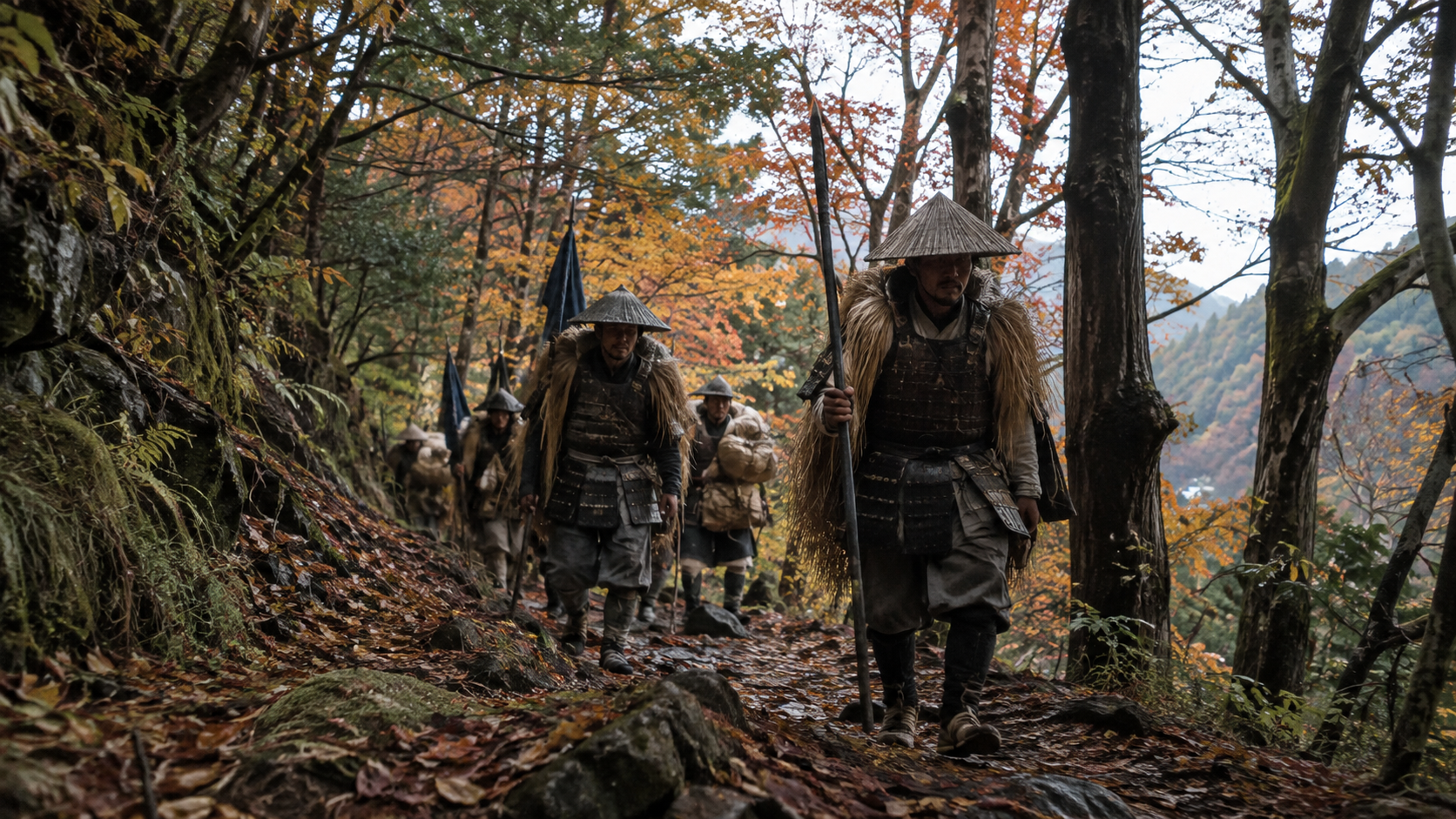
Shimazu Yoshihiro had joined the Western side. Facing defeat, he attempted to withdraw. Reimeikan, Kagoshima Prefecture's historical museum, describes an attempt to break through the front of Ieyasu's headquarters and a successful retreat by way of the Ise route. This is the institutional account followed here.
In a narrative that follows the victors, the retreat can become a striking final scene. From the Shimazu side, time continued after leaving the field. Reaching home did not by itself settle the political questions created by participation in the losing camp.
This article does not fix a precise survivor count or a detailed single path of escape. Its illustration imagines people traveling along difficult ground. The image is neither a map reconstructing the actual retreat nor a documentary photograph of the route described in the historical account.
The fact that the Shimazu stood with the Western Army begins the story of their postwar position. It cannot, by itself, tell us what happened to their house and its territories. Outside the battlefield, further decisions and dealings still had to shape their relationship with the victor.
Chapter 08
Time to negotiate after defeat
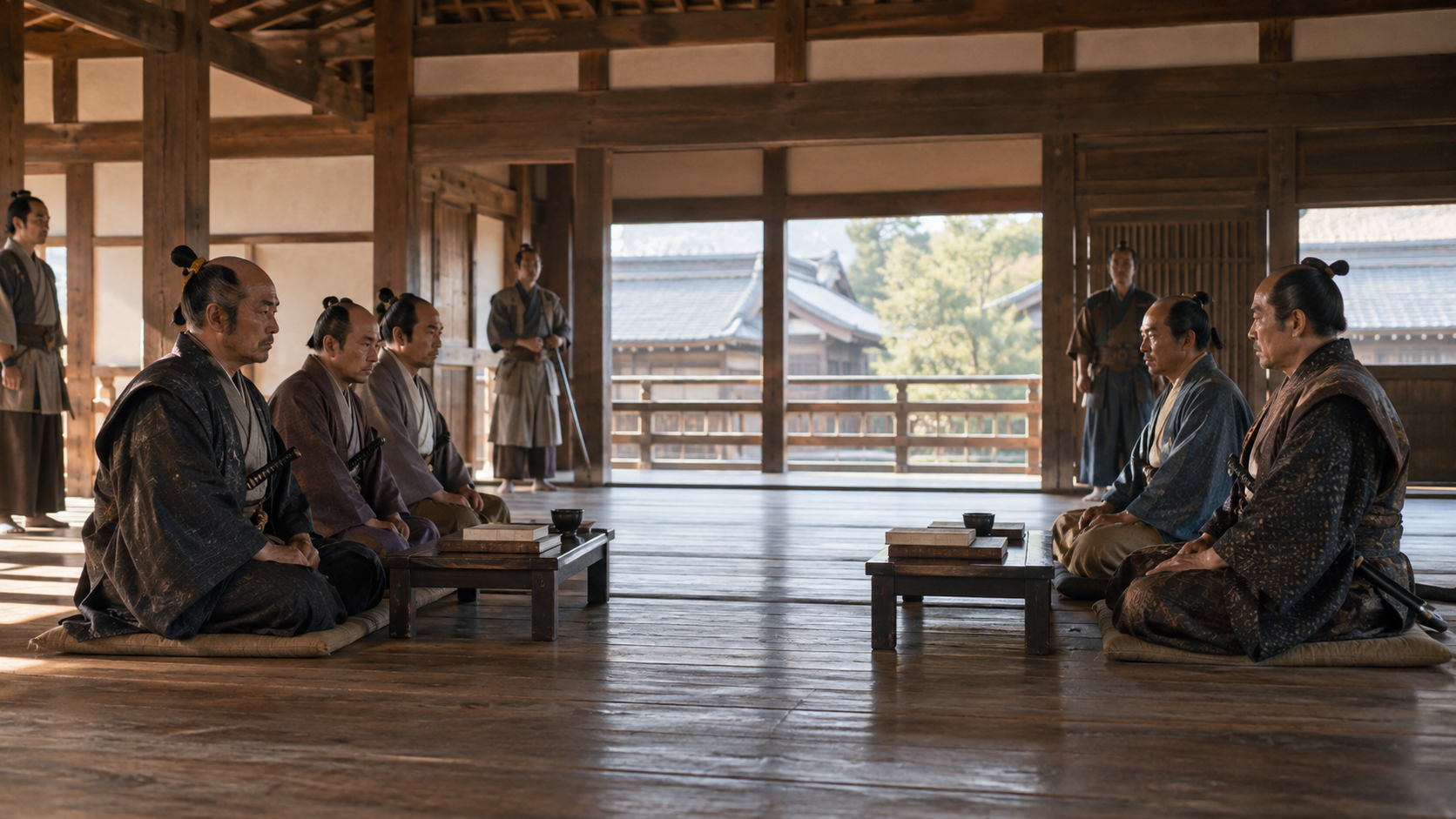
The Shimazu worked to repair relations with Ieyasu after the battle. Reimeikan describes a response that kept both peace and further fighting in view. Defeat had not immediately removed every possibility of negotiation, even though the outcome had changed the circumstances in which it would take place.
In 1602, Shimazu control over Satsuma, Osumi and Morokata district in Hyuga was recognized. The last place is a district within Hyuga; it should not be enlarged into control over that entire province. Two years after Sekigahara, the recognition marked one point reached in the settlement of their postwar position.
Between victory or defeat on the battlefield and the conditions under which a daimyo house continued stood the work of rebuilding relationships. Asking only who won cannot fully account for the arrangements that emerged afterward. The political map required dealings beyond the immediate result of combat.
Following the Shimazu shows how Ieyasu's advantage became a capacity to reshape relations with other lords. What followed victory included decisions about recognizing territorial control. The settlement of a defeated house belongs within the longer process through which the consequences of Sekigahara took political form.
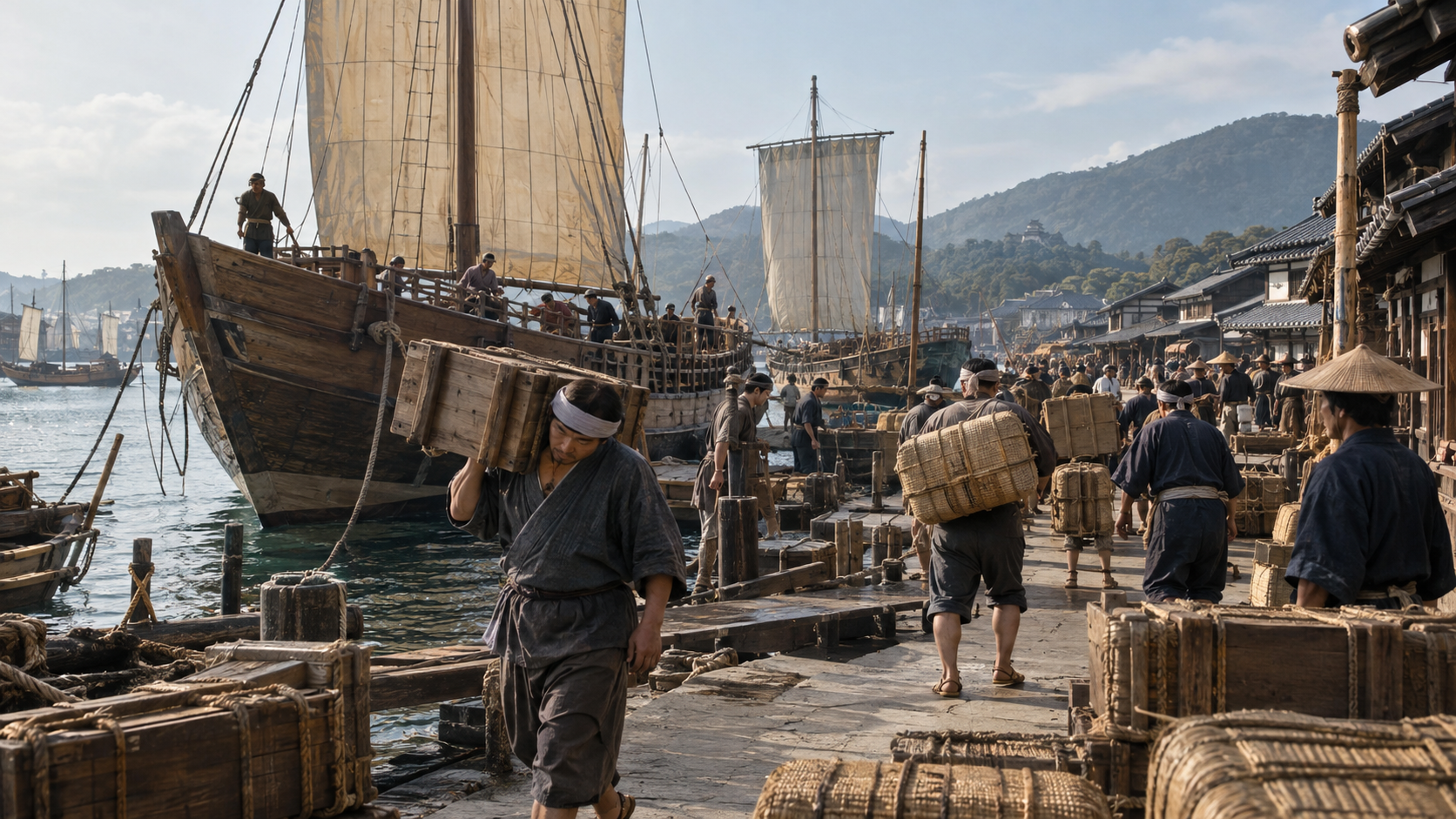
Chapter 09
The following year, authority looked toward the sea
In 1601, the year after Sekigahara, Ieyasu issued red-seal documents to merchant ships bound for East and Southeast Asia. Moving our attention from the mountain battlefield to a harbor brings another setting for political action into view. Authority also reached toward people and goods traveling across the sea.
In a reply to Annam that year, Ieyasu guaranteed the safety of merchant ships coming to Japan and requested a ban on trade with Japanese ships lacking his red-seal documents. The National Archives of Japan's explanation identifies a specific intervention in overseas relations, involving a particular correspondent and stated conditions.
Providing a basis for a ship's voyage and communicating conditions of safety and trade were forms of action different from directing an army. We can read them as work to extend political authority into the movements of people and goods. That connection is an interpretation of the documented actions.
One reply does not establish that Ieyasu immediately controlled all maritime trade. What can be identified is the presentation of conditions to a particular counterpart. The path toward wider rule included approaches across the sea as well as the recognition of control over land.
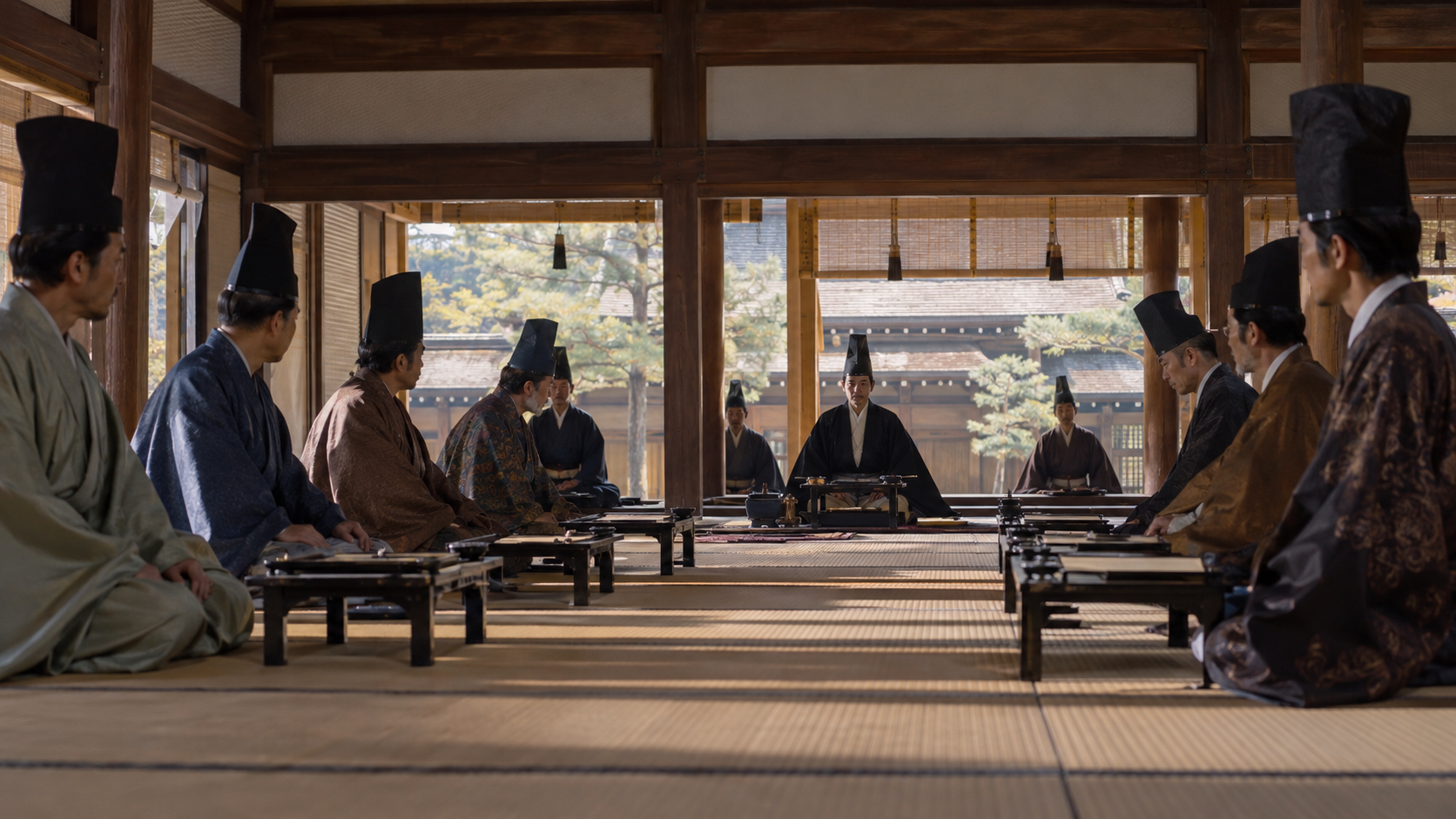
Chapter 10
Three years after victory, appointment as shogun
Ieyasu was appointed sei-i taishogun in 1603, three years after the victory at Sekigahara. This year, associated with the establishment of the Edo shogunate, was a political milestone in its own right. Its connection to the battle does not make the two events simultaneous.
The National Archives of Japan presents Todaiki, a record describing Ieyasu's visit to the imperial court that year to give thanks for his appointment. Its explanation recounts a procession from Nijo in Kyoto to the court. A figure who had directed armies now appears within a relationship involving court and office.
Establishing an advantage through military force and obtaining an office occurred in different settings. We can connect them within a sequence without treating either moment as the completion of the whole process. The interval between 1600 and 1603 helps us keep those stages distinct.
Sekigahara was a major turning point. Reading it also as the beginning of subsequent political work makes the course toward the shogunal appointment more visible. Through what relationships and arrangements did the victor give form to his authority? The question continues beyond the battlefield.
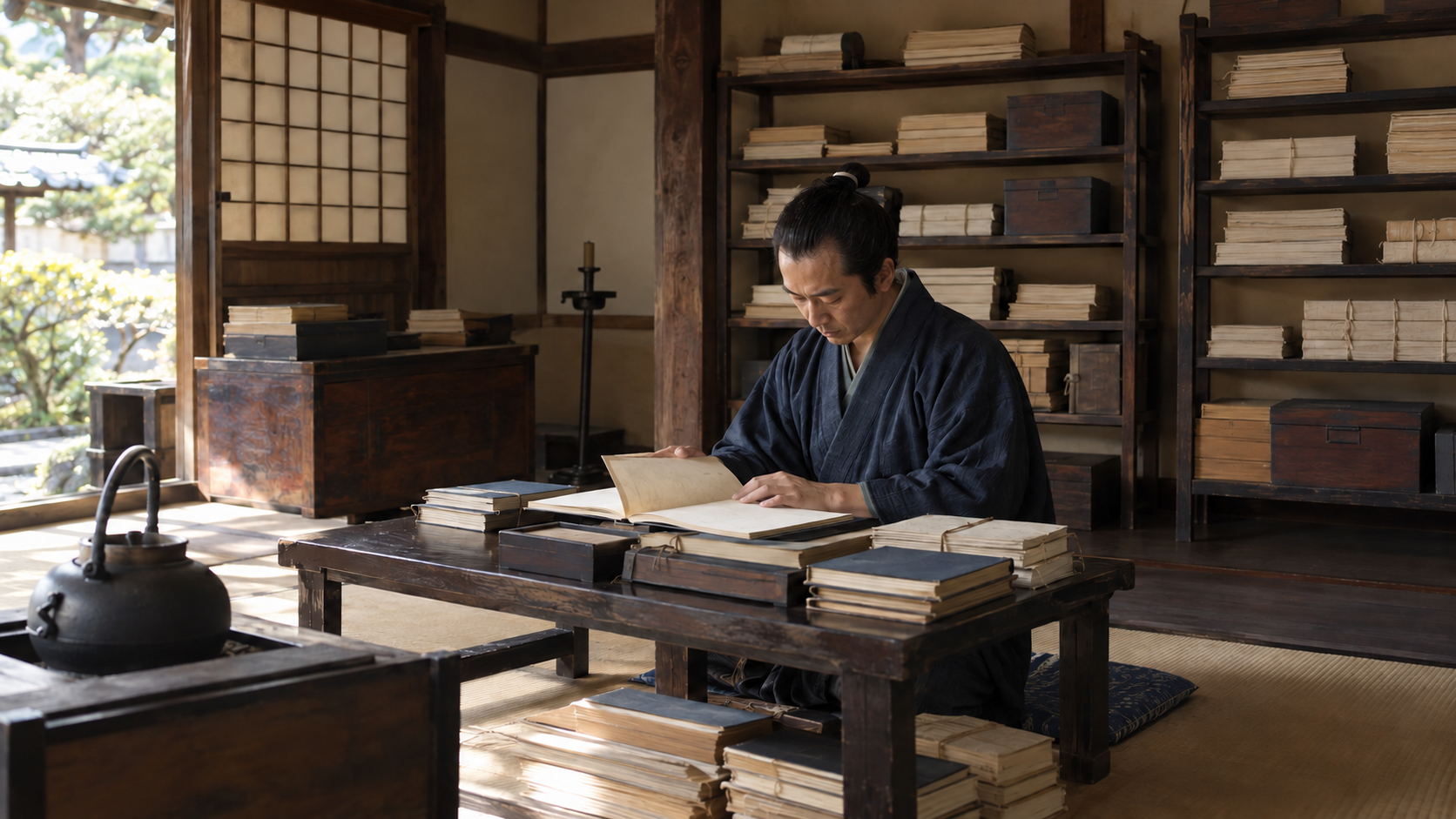
Chapter 11
Who wrote the battle, and when?
Through whose eyes has Sekigahara been recorded? Tokiyoshi Kyoki, the diary of the court noble Nishinotoin Tokiyoshi, discusses Kobayakawa's change of side and Otani Yoshitsugu's death. The National Archives also notes concern about unrest around the imperial palace. Here the battle is encountered from Kyoto, not through a battlefield eyewitness account.
Ochiboshu, written by the Edo-period military thinker Daidoji Yuzan, transmits stories including passwords used to distinguish friends from enemies. A diary responding to events within contemporary life and a later work preserving accounts handed down belong to different circumstances of writing. Their positions in time should remain visible.
Choya Kyubun Hoko, a compilation of records concerning the Tokugawa house, was completed in 1842. More than two centuries after the battle, it brought material together through a lengthy process of compilation. Sources about the year 1600 were not all written in 1600. The date of an event is different from the date of its account.
This article refers to the National Archives' explanations introducing those works. It does not claim a direct reading of the complete original texts. Asking when something was written and where its writer stood helps us understand the position from which an event became visible.
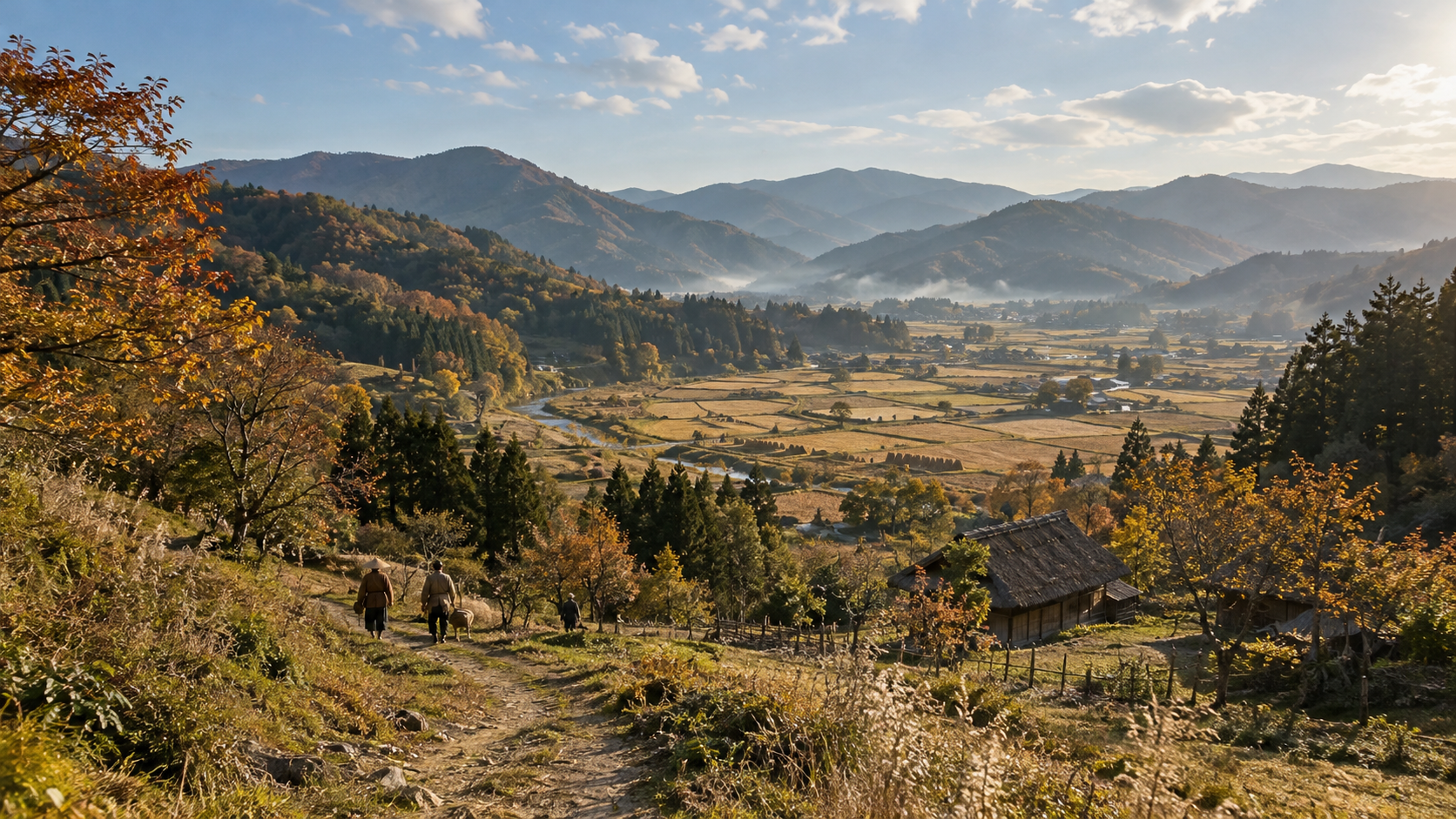
Chapter 12
The road to rule lasted longer than a day
Victory in 1600, red-seal documents for merchant ships in 1601, recognition of Shimazu control in 1602 and appointment as shogun in 1603: placed along one timeline, these events lead beyond the day of battle. The settings in which Ieyasu's authority operated grow wider as the sequence unfolds.
In 1615, the Toyotomi house fell and the Laws for the Military Houses and Laws for the Imperial Court and Court Nobles were issued. The later order was not already complete in every detail at Sekigahara in 1600. Even within the era of the shogunate, time continued to be spent shaping relationships and institutions.
The battle's remembered place as a contest dividing Japan's destiny need not close its story at the result. Who left the field, with whom were relations repaired, and toward which places did authority reach? Following those developments lengthens the road that led into the Tokugawa era.
The fighting could be decided in one day while work still remained beyond it. When the account of Sekigahara ends, our attention can move outside the battlefield. Turning victory into a wider framework of rule continued in negotiations, documents and relationships elsewhere.
How to read this work
History, interpretation, and reconstruction
Reading Sekigahara alongside postwar negotiations, overseas trade and shogunal appointment distinguishes one day's military outcome from the longer formation of Tokugawa rule.
This work is grounded in published sources and historical research. Interior thoughts, dialogue, and some visual details are cinematic reconstructions. Where historians disagree, the article presents the point as debated rather than settled fact.
Timeline
The story in time
-
Hideyoshi dies. The Five Elders and Five Commissioners conduct affairs while Hideyori is still a child.
Sources: s01 -
Shimazu Yoshihiro retreats by the Ise route; the Shimazu then work to repair relations with Ieyasu.
Sources: s02 -
Ieyasu issues red-seal documents for overseas merchant ships and sends a reply to Annam.
Sources: s08 -
Shimazu control over Satsuma, Osumi and Morokata district in Hyuga is recognized.
Sources: s02 -
The Toyotomi house falls; laws for the military houses and for the imperial court and court nobles are issued.
Sources: s08 -
Choya Kyubun Hoko, compiling records of the Tokugawa house, is completed.
Sources: s07
People & terms
A guide for new readers
Key figures
- Tokugawa Ieyasu
- One of the Toyotomi regime's Five Elders. His Eastern Army won at Sekigahara; he was appointed sei-i taishogun in 1603.
- Toyotomi Hideyoshi
- Died in 1598, leaving his young successor Hideyori.
- Toyotomi Hideyori
- Hideyoshi's successor, still a child when his father died.
- Ishida Mitsunari
- One of the Five Commissioners; involved in forming opposition to Ieyasu.
- Mori Terumoto
- One of the Five Elders and commander-in-chief of the Western Army.
- Kobayakawa Hideaki
- Moved to the Eastern side during the battle, a crucial action in its outcome.
- Shimazu Yoshihiro
- Joined the Western side and retreated by way of the Ise route after defeat.
Glossary
- Daimyo 大名
- A territorial warrior lord; the political and military coalitions in this account included many daimyo.
- Five Elders 五大老
- The group of senior lords, including Ieyasu and Mori, entrusted with government after Hideyoshi's death.
- Five Commissioners 五奉行
- The commissioners of the Toyotomi government, including Ishida Mitsunari.
- Sei-i taishogun 征夷大将軍
- The formal shogunal office to which Ieyasu was appointed in 1603.
- Bakufu 幕府
- A warrior government, translated as shogunate. The Edo shogunate is associated here with the 1603 appointment.
- Shuinjo 朱印状
- A document carrying a red seal; the account concerns those Ieyasu issued to overseas merchant ships in 1601.
- Tenka 天下
- Literally all under heaven; in this article, a way of speaking about rule over Japan rather than the result of fighting alone.
- Tokiyoshi Kyoki 時慶卿記
- The diary of Nishinotoin Tokiyoshi, a court noble who received and recorded the battle from Kyoto.
- Ochiboshu 落穂集
- A later work by Daidoji Yuzan transmitting accounts including traditions of identifying friends and enemies.
- Todaiki 当代記
- A historical record introduced by the National Archives for its account of Ieyasu's court visit after appointment.
- Choya Kyubun Hoko 朝野旧聞裒藁
- A compilation of records concerning the Tokugawa house completed in 1842, more than two centuries after Sekigahara.
Sources & method
How this article was built
This article translates the fixed, publicly verified Japanese manuscript, retaining its twelve chapters, seven people and eight timeline entries. The relevant explanations on all eight linked institutional pages were actually read. English source titles are editorial translations; historical text images and deployment diagrams are not reproduced.
The Gifu tourism account is used for the older-calendar and Gregorian correspondence and the spread of preliminary fighting. It is not promoted into primary evidence for exact troop counts or precise battlefield timing. Kobayakawa's movement follows the National Archives explanation, while the toi-deppo tale is excluded from verified events.
Reimeikan's explanation supplies the retreat and postwar settlement of the Shimazu. Detailed survivor counts, a precisely reconstructed route and additional family relationships are not introduced. The 1602 recognition is limited to the territories stated, including Morokata district in Hyuga. The 1601 reply to Annam supports specific trade conditions, not an inference of immediate control over every sea route.
The descriptions of Tokiyoshi Kyoki, Ochiboshu, Todaiki and Choya Kyubun Hoko come from the National Archives' introductions. No reading of their complete original manuscripts is claimed. A court diary is not treated as eyewitness reporting from the field; later writing and the compilation completed in 1842 remain distinct from the battle. A suggested author and a tradition about Yoshiaki's testament are not made certain.
All twelve distinct canonical AI-generated illustrations were actually viewed and matched by SHA and article rights to the Japanese review. Figures, landscapes, rooms, ships and books are fictional illustrations, not authentic portraits, exact deployments, reconstructed retreat maps or copied archival artifacts. The linked film has Japanese audio; an English subtitle track has not been verified.
Sources
References and further reading
- The Life of Ieyasu: The Battle of Sekigahara 家康の生涯:関ヶ原の戦い Title translated editorially for reader convenience. National Archives of Japan 国立公文書館 Institutional overview of the Toyotomi political conflict, Mori's overall command, Kobayakawa's change of side and the 1603 appointment. Exact troop totals and private thoughts are not adopted. Accessed 2026-10-10
- Sekigahara and the Shimazu 関ヶ原の戦いと島津氏 Title translated editorially for reader convenience. Kagoshima Prefecture / Reimeikan 鹿児島県・黎明館 Institutional explanation of the retreat, subsequent relations and recognition in 1602. Hyuga's Morokata district is distinguished from the whole province. Accessed 2026-10-10
- Sekigahara 1600 関ケ原1600 Title translated editorially for reader convenience. Gifu Tourism Federation 岐阜県観光連盟 Official tourism explanation used for the calendar correspondence and wider preliminary fighting. Its deployment diagram, precise times and troop totals are not treated as primary proof or reproduced. Accessed 2026-10-10
- Tokiyoshi Kyoki 時慶卿記 Title translated editorially for reader convenience. National Archives of Japan 国立公文書館 Institutional explanation of Nishinotoin Tokiyoshi's diary and concern about Kyoto. No battlefield eyewitness status or direct reading of the complete original diary is claimed. Accessed 2026-10-10
- Ochiboshu 落穂集 Title translated editorially for reader convenience. National Archives of Japan 国立公文書館 Institutional explanation of Daidoji Yuzan's later writing and traditions of recognition between opposing forces. The full passwords and archival images are not reproduced. Accessed 2026-10-10
- Todaiki 当代記 Title translated editorially for reader convenience. National Archives of Japan 国立公文書館 Institutional explanation of Ieyasu's court visit and procession in 1603. The suggested author is not asserted as certain; the complete original is not directly read. Accessed 2026-10-10
- Choya Kyubun Hoko 朝野旧聞裒藁 Title translated editorially for reader convenience. National Archives of Japan 国立公文書館 The date of completion, 1842, is distinguished from the events described. A tradition about Ashikaga Yoshiaki's testament is not adopted as the established cause of Ieyasu's appointment. Accessed 2026-10-10
- The Life of Ieyasu: Domestic and Foreign Affairs 家康の生涯:家康の内政・外交 Title translated editorially for reader convenience. National Archives of Japan 国立公文書館 Institutional explanation of the 1601 red-seal documents and reply to Annam, and the laws of 1615. Immediate command of all maritime trade is not inferred. Accessed 2026-10-10
Continue reading
More stories from Shigeki
Shigeki English
Sakai’s Merchant City: Trade, Self-Government and Survival
A port, a merchant council and town communities—from changing authority to rebuilding after fire.
- When From the later fifteenth century through the Sengoku period, the fire of 1615 and early Edo-period reconstruction.
- Where Sakai, in present-day Osaka Prefecture, where maritime routes met roads on land.
Shigeki English
The Aburanokōji Incident: After Leaving the Shinsengumi
A separation in spring, a new base in summer, and two successive attacks.
- When Kyoto in Keiō 3 (1867). The incident’s historical date corresponds to December 13, 1867.
- Where Kyoto: the guards’ successive bases, the Aburanokōji attack site and the later place of remembrance.