
SHIGEKI ENGLISH STORYEN
Japanese history in English
When Did the Battle of Okinawa End? Civilians and the Dates in the Records
Reading combat, the end of an operation, surrender and remembrance on their own terms.
Follow the retreat from Shuri, civilian harm and the dates marking different endings of the Battle of Okinawa. Prefectural and archival accounts distinguish military assessments, Operation Iceberg, surrender and June 23 remembrance.
At a glance
Before you enter the story
- When
- The Battle of Okinawa in 1945, and postwar remembrance including the 1965 date change
- Where
- Okinawa Island, from Shuri toward its southern area; the surrender record also concerns Japanese forces in the Nansei Islands
- Key figures
- Okinawan civilians, The Japanese Thirty-second Army, The U.S. Tenth Army
- What was at stake
- What do the different military and commemorative dates establish, and what remains to be understood about civilian danger?
Why this story matters
The larger history behind the turning point
June 23 is central to remembrance in Okinawa. A reader encountering other dates in military records may reasonably ask how they fit together. Naming the institution, action and scope behind each date allows commemoration and documentary chronology to be read with the meaning each carries.
The question also concerns civilian life. Military assessments organize the course of a campaign, while residents faced the loss of shelter, food and possible routes to survival. Following the dates alongside those losses opens a history whose time cannot be contained within a declaration alone.
Historical context
What an international reader needs to know
Places and institutions in this account
Shuri and the southern part of Okinawa Island locate the retreat discussed here. The Thirty-second Army refers to the Japanese force; the Tenth Army refers to the U.S. force. These names identify military organizations and locations in the source account. They do not define the route taken by every civilian.
The Japanese term Nansei-shoto is rendered as Nansei Islands where the surrender account names the region represented. Okinawa Island and that larger regional designation serve different geographical purposes. The scope of a military statement should remain attached to the territory it actually names.
Military records and the history of remembrance
An assessment of organized resistance, a declaration that an island has been secured, an announcement ending an operation and a signed surrender document record different acts. The G-2 Summary belongs to military intelligence documentation. In this edition its contents are discussed through the Archives explanation, without a claim to have collated the whole original record independently.
Irei-no-hi is rendered here as the day of remembrance for the war dead. Its calendar date also has a postwar history: the Archives chronology describes a change from June 22 to June 23 in 1965. Understanding an observance means reading that history alongside the wartime events, while preserving its purpose of mourning.
Watch the film
See the story in motion
The film currently uses Japanese audio. This English article provides the context and source trail; it does not imply that an English subtitle track is available.
Scene 01
Before choosing a date
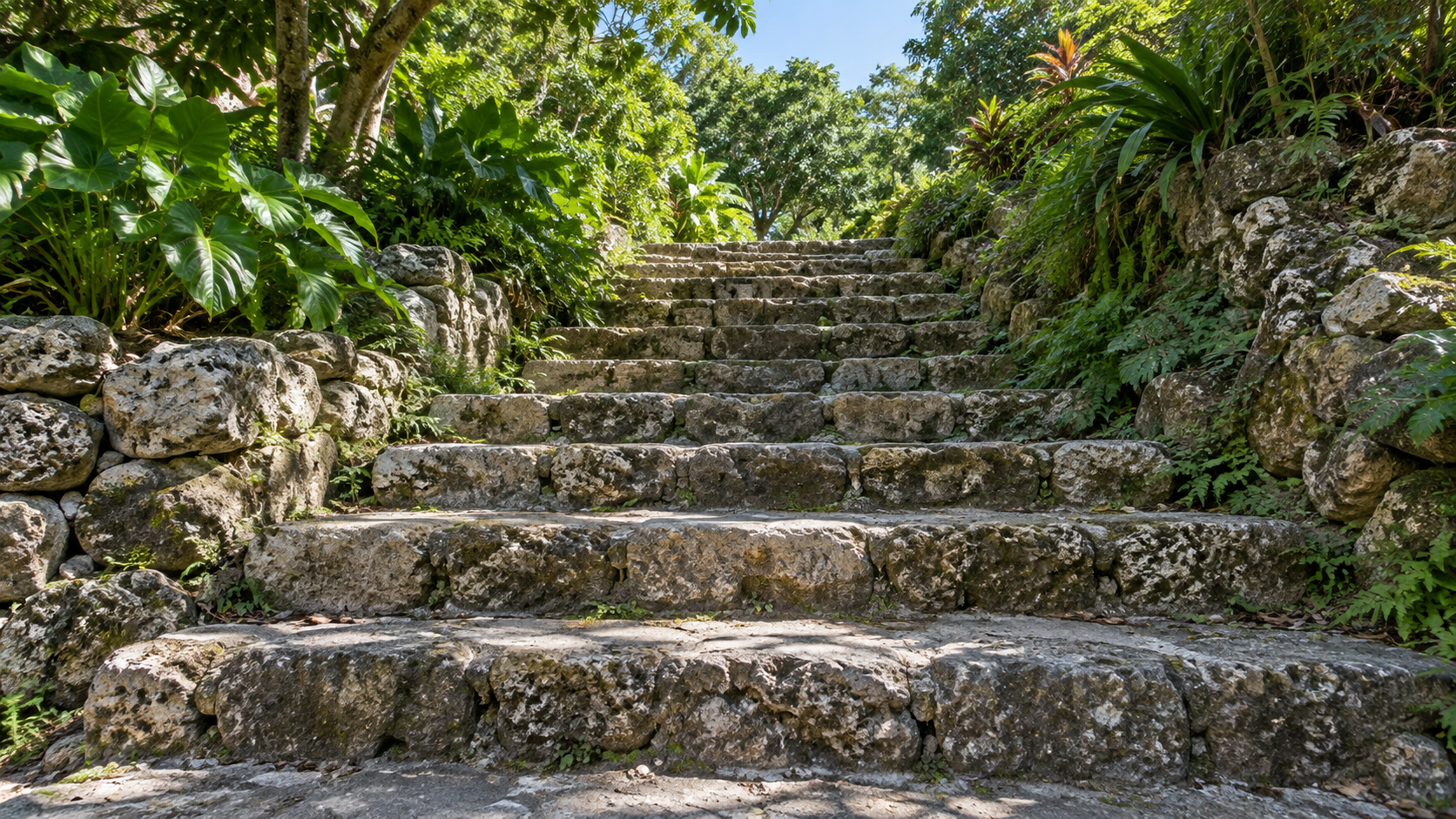
On June 23, Okinawa observes a day of remembrance for those who died in the war. This date is an important starting point for learning about the Battle of Okinawa. Yet a military assessment that resistance had ended, a declaration that an operation was complete and the signing of a surrender document refer to different events. A date needs the name of the event it marks.
U.S. military records introduced by the Okinawa Prefectural Archives distinguish June 21 and June 22. A declaration ending the operation followed on July 2. The Archives describes the signing on September 7 as the battle's formal conclusion. These dates should not be arranged as though they were merely conflicting answers to a question about one identical event.
The institutions and people establishing each boundary also differ. Military records address resistance and control of territory; the surrender document records an agreement involving military representatives. The day of remembrance was established to mourn lives lost in the war. Reading each term requires asking what it includes and what lies outside its scope.
We begin that reading with civilians. A military turning point does not by itself show that bombardment, the loss of shelter and the danger of clearing operations ended simultaneously. Understanding the dates helps us follow the people who lived through the intervals between them, as well as the language in which military developments were recorded.
Scene 02
The land people lived on becomes a battlefield
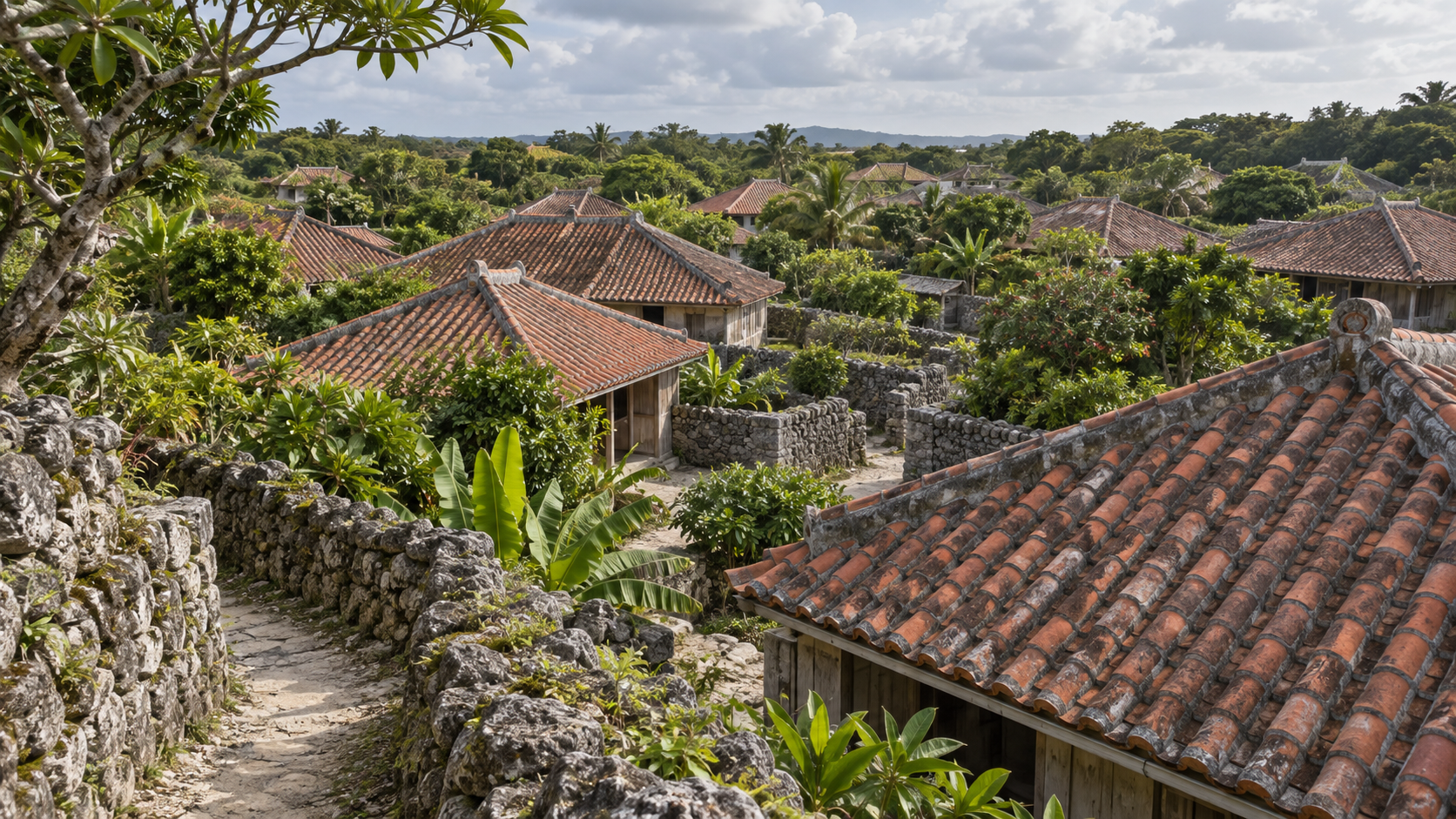
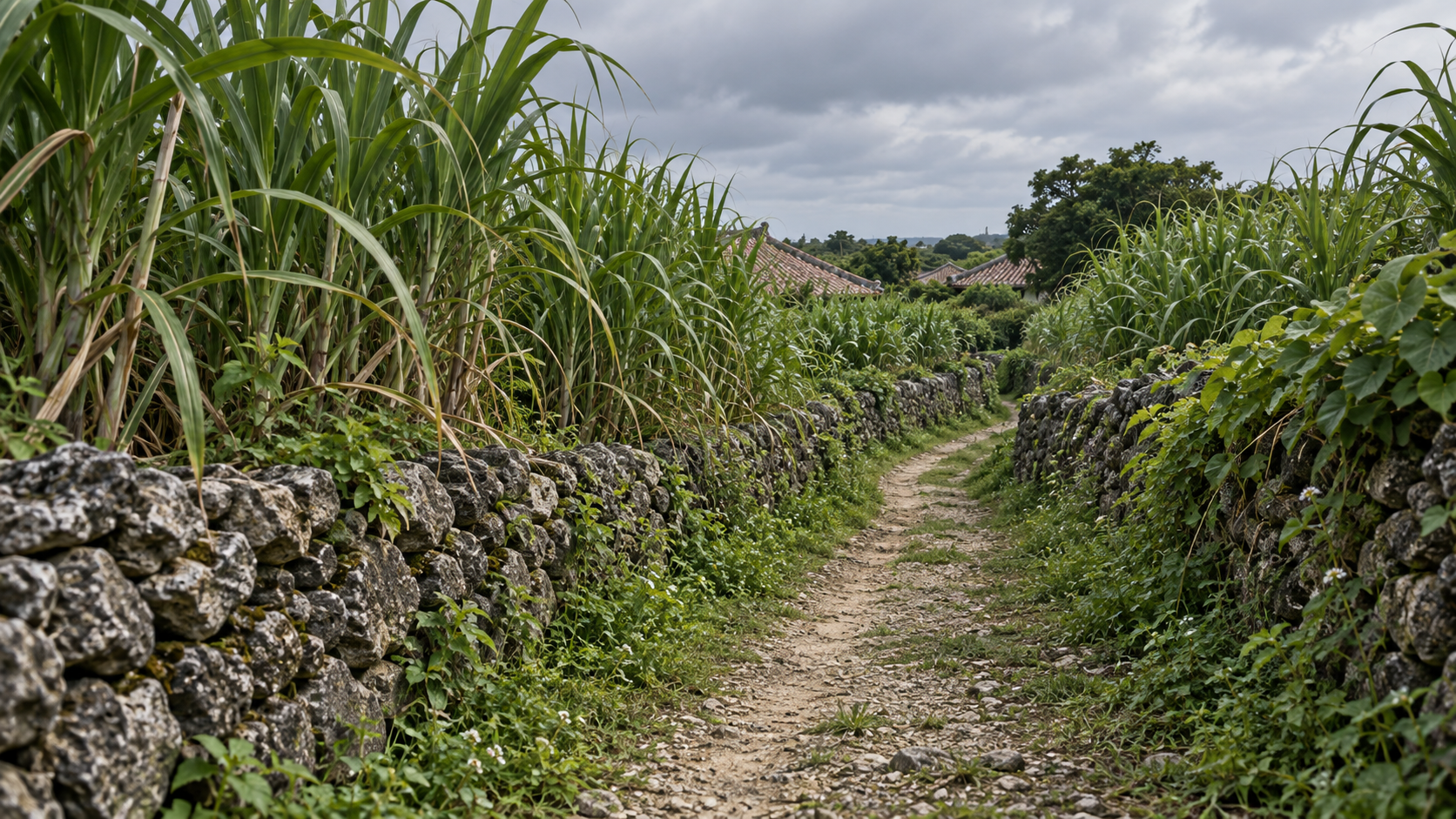
In 1945, Japanese and U.S. forces fought a ground battle in Okinawa. Okinawa Prefecture's overview describes more than three months of fighting that involved the civilian population. The battlefield was also inhabited land: places where people had lived became defensive positions, routes of escape and targets of attack.
A map of the fighting can show where a front lay. It cannot, on its own, tell us who remained in a nearby house or shelter at a particular time. Bringing the southward movement of the front into relation with civilian movement requires attention to both location and date. The experiences around a line drawn on a map extend beyond the line itself.
Among civilians, some could move, some stayed where they were and others lost a place of refuge along the way. The broad sequence described in the prefecture's overview cannot be condensed into the experience of one representative family. Different experiences remain attached to different places, including ones a military map does not reveal.
Tracing the overlap between military movement and places of refuge shows how a change in the campaign could also change civilian life. Beyond Shuri, in the southern area toward which Japanese forces withdrew, people were already sheltering. That overlap gives the retreat a significance extending beyond the movement of troops alone.
Scene 03
From Shuri to the south: two movements overlap
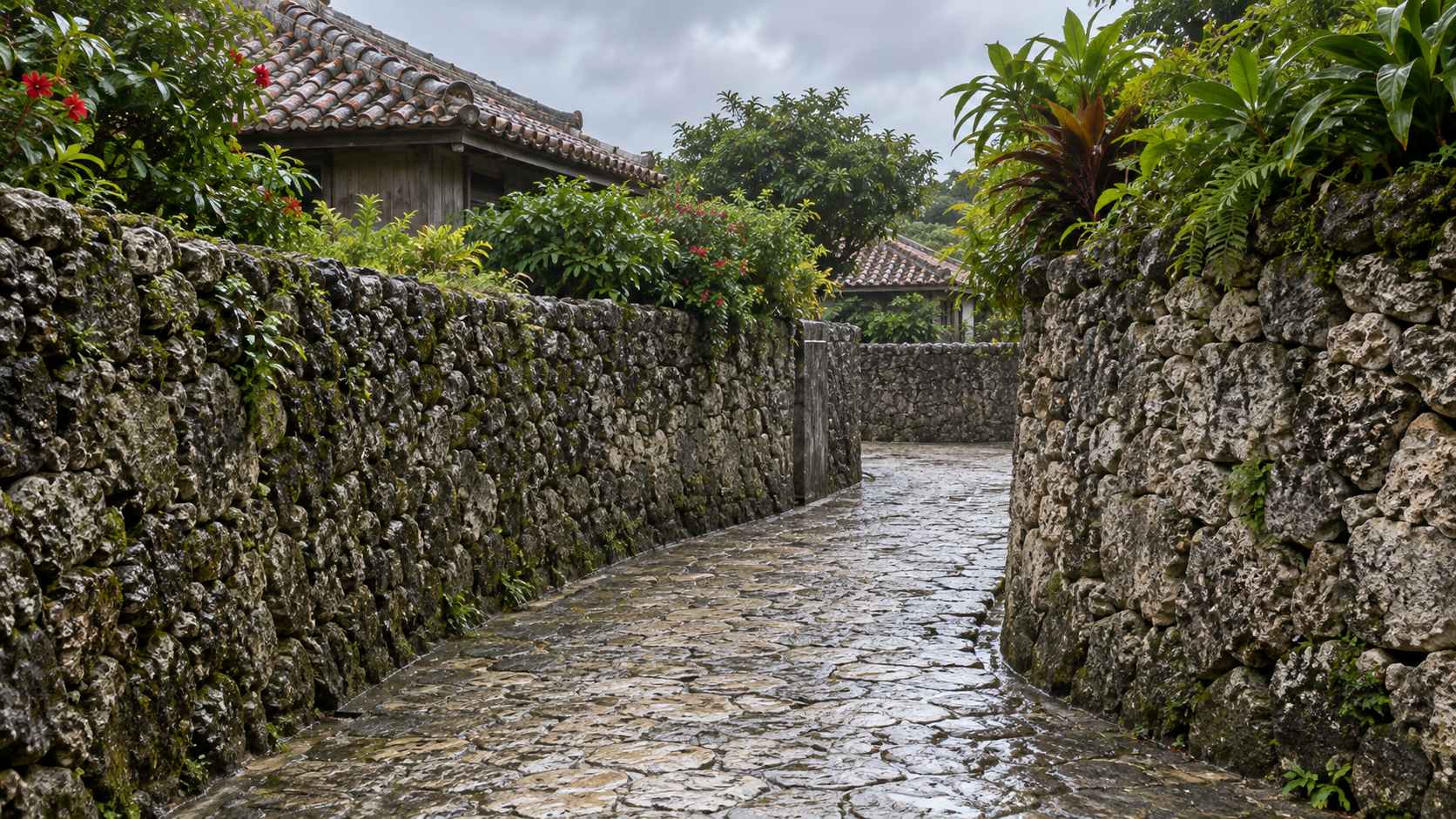
After the fighting around Shuri, Japan's Thirty-second Army withdrew south. The Okinawa Prefectural Archives dates the beginning of that retreat to May 27. On a military map, its direction can be represented by an arrow. The space at the arrow's destination, however, already included civilian places of refuge.
Some civilians had fled to the southern part of the island before the army withdrew there. Troops moving back in search of defensive positions and people trying to escape danger came to occupy the same land. The arrival of the army consequently mattered to the safety of people who had been using the area as a refuge.
An account of an army's retreat and a record of one civilian's journey establish different things. A document showing the military route cannot demonstrate that every resident took that route or moved on the same day. Identifying a person's companions or temporary lodging requires records connected to that person or locality.
Following the retreat therefore involves reading evidence for military operations alongside evidence for civilian flight. Their presence on the same map does not establish a shared purpose. Keeping their purposes and sources in view helps explain why caves and tombs, considered next, became places where the needs of troops and civilians collided.
Scene 04
Losing a place to shelter
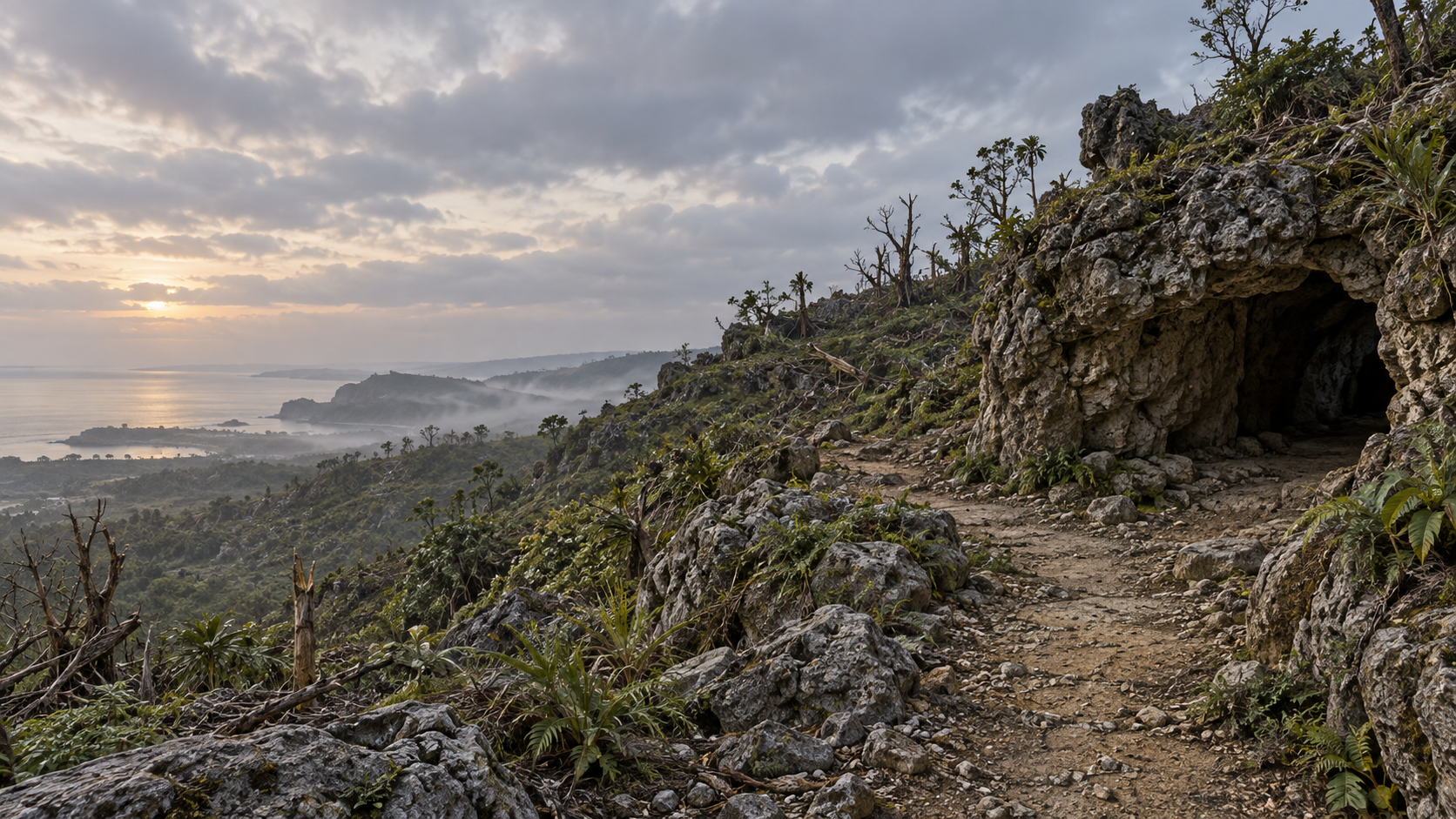
During the bombardment, caves, shelters and tombs provided places for civilians to hide. Okinawa Prefecture's account of the Peace Memorial Museum displays describes instances in which Japanese troops retreating south seized such spaces for military positions. A change in the army's deployment meant the loss of a place to stay for the people already sheltering there.
Those driven out had to emerge into ground exposed to attack. The military term 'retreat' captures only part of this sequence. We also need to ask who had been using a position before troops occupied it, and what happened to people who could no longer remain there. Those questions bring the military movement into relation with its civilian consequences.
The prefecture's display text connects these losses to the retreat south. Establishing which shelter was involved, who was expelled and when it happened requires records or testimony for the particular place. A sentence in an overview cannot make the experiences of every refuge identical.
Securing a military position could mean taking away a civilian refuge. The meaning of the same space changed according to who needed it. The prefecture's account describes a specific kind of action and harm that can be difficult to see when attention remains solely on the position of the front.
Scene 05
Reading the actions that caused harm
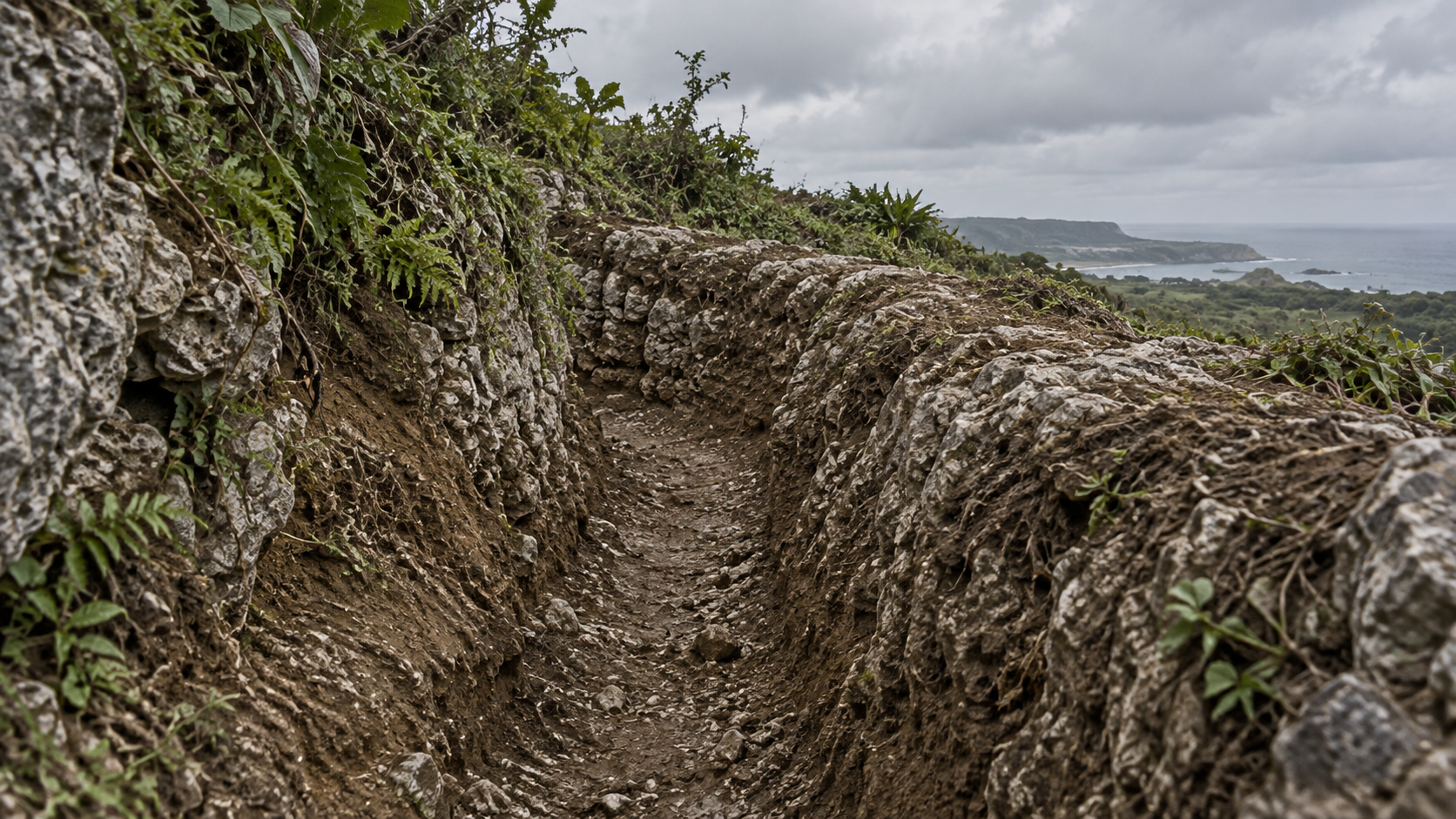
The harm experienced by civilians cannot be fully conveyed by saying that they were caught in the fighting. Okinawa Prefecture describes deaths from U.S. and British bombardment alongside killings of residents by Japanese troops in various places. Distinguishing the actions helps make clear how different kinds of harm occurred.
The prefecture's account includes killings of people suspected of spying, the loss of food and shelter, and experiences of being forced toward death. These categories do not uniformly describe every person present. Examining a locality means asking which action occurred there and under what conditions.
An explanation organizing types of harm does not itself tell each individual's story. Bombardment, killing, the seizure of food and the loss of a refuge are separate actions. Keeping them distinct allows us to read the account in greater detail than a single general description of civilians being involved in battle would provide.
Attribution gives readers a way to follow the description back to its evidence. Identifying the relevant part of the prefecture's account also makes the next questions clearer when we turn to local records or individual testimony. The seriousness of the harm and the need to establish the grounds for each statement belong together.
Scene 06
The narrowing of possible choices
Okinawa Prefecture's display account describes group deaths brought about through orders, coercion and inducement under a policy that did not permit surrender. Describing only the outcome can remove the pressures that preceded it and the options people were denied. Reading the context of the actions is part of understanding the deaths.
The circumstances described also included the loss of food and refuge. Being driven from shelter and being prevented from surrendering were different forms of pressure, but both could restrict the available means of survival. The prefecture addresses a battlefield in which military forces and civilians occupied overlapping spaces.
Local and individual circumstances still require separate examination. Where a particular order or inducement occurred is a question for records connected to that place. The overview does not permit a conclusion about every person's motives, or a shared inner state inferred from one imagined gesture.
Before imagining a victim's final words or expression, we can examine the actions that narrowed the possibility of survival and the conditions behind them. The prefecture's discussion of orders, coercion and the loss of food and shelter provides grounds for reading civilian deaths through what preceded them.

Scene 07
The perspective of those who left records
The quantity of surviving documents does not necessarily reflect the quantity of human experience. The Okinawa Prefectural Archives explains that much of Okinawa's wartime documentation did not survive the disruption of war and its aftermath, while large collections of documents and photographs were preserved in the United States. That difference shapes the material available to readers today.
U.S. military records provide important evidence for the fighting and the course of operations. The Archives also draws attention to their perspective as records of the victorious side. A document made to assess military conditions and a record concerning civilian daily life or flight may examine different subjects and serve different purposes.
A military document dating the end of resistance is organizing a military situation. Establishing that all civilians were safe on that date would require other evidence. Retaining the military institution as the subject of the statement prevents its assessment from becoming an explanation of every aspect of civilian life.
Recognizing a source's perspective helps determine what it can establish and where another kind of record is needed. The June dates examined next are accordingly presented as U.S. military records introduced by the Archives. Their distinction between an assessment and a declaration remains part of how we read them.

Scene 08
June 21 and June 22
The U.S. military G-2 Summary introduced in the Archives exhibition records June 21 as the end of organized Japanese resistance on Okinawa Island. This is a military assessment within the document. Naming whose record it is, and what kind of resistance it addresses, defines the scope of the date.
For the following day, June 22, the exhibition describes the U.S. Tenth Army commander's declaration that the island had been secured. The assessment concerning resistance on the twenty-first and the declaration on the twenty-second use different terms and mark different acts. Combining them into a single undifferentiated end date would erase that distinction.
The exhibition also introduces an English translation of a Japanese military document ordering guerrilla fighting to continue after organized combat ended. That document is preserved within the U.S. records. A summary describing the end of organized resistance can therefore coexist with evidence concerning further action.
This article follows the Archives introduction of the two boundaries. It does not claim independent examination and collation of the complete original documents. Estimates of numbers or language directed at the enemy in those records are not adopted as unconditional descriptions. The extent of continued civilian danger must be considered alongside the other material.

Scene 09
June 23 as a day of remembrance
June 23 is Okinawa's day of remembrance for the war dead. According to the Archives chronology, the observance was initially set on June 22 and was moved to the twenty-third in 1965. The date now placed in the calendar has a postwar history of its own, shaped by the establishment of commemoration.
That history can be read as part of the history of wartime memory. Events occurred during the war; afterward, a day was established to mourn its victims. Distinguishing those times allows the commemorative date to retain its purpose without making it a statement that all fighting ceased at once.
The prefecture's overview explains the battle's ending in relation to the Japanese commander's death while also describing resistance that continued in various places afterward. Even within that account, an ending is followed by further events. Reading the surrounding explanation preserves a fuller sense of the time it describes.
Remembrance can be observed alongside an understanding of the dates of military declarations and the surrender document. Each can retain its own meaning while lives lost are mourned. Knowing how the commemorative date was established helps us read it as a day of mourning with a history, rather than reduce it to an exact time at which battle stopped.
Scene 10
The end of an operation, and the signing of surrender
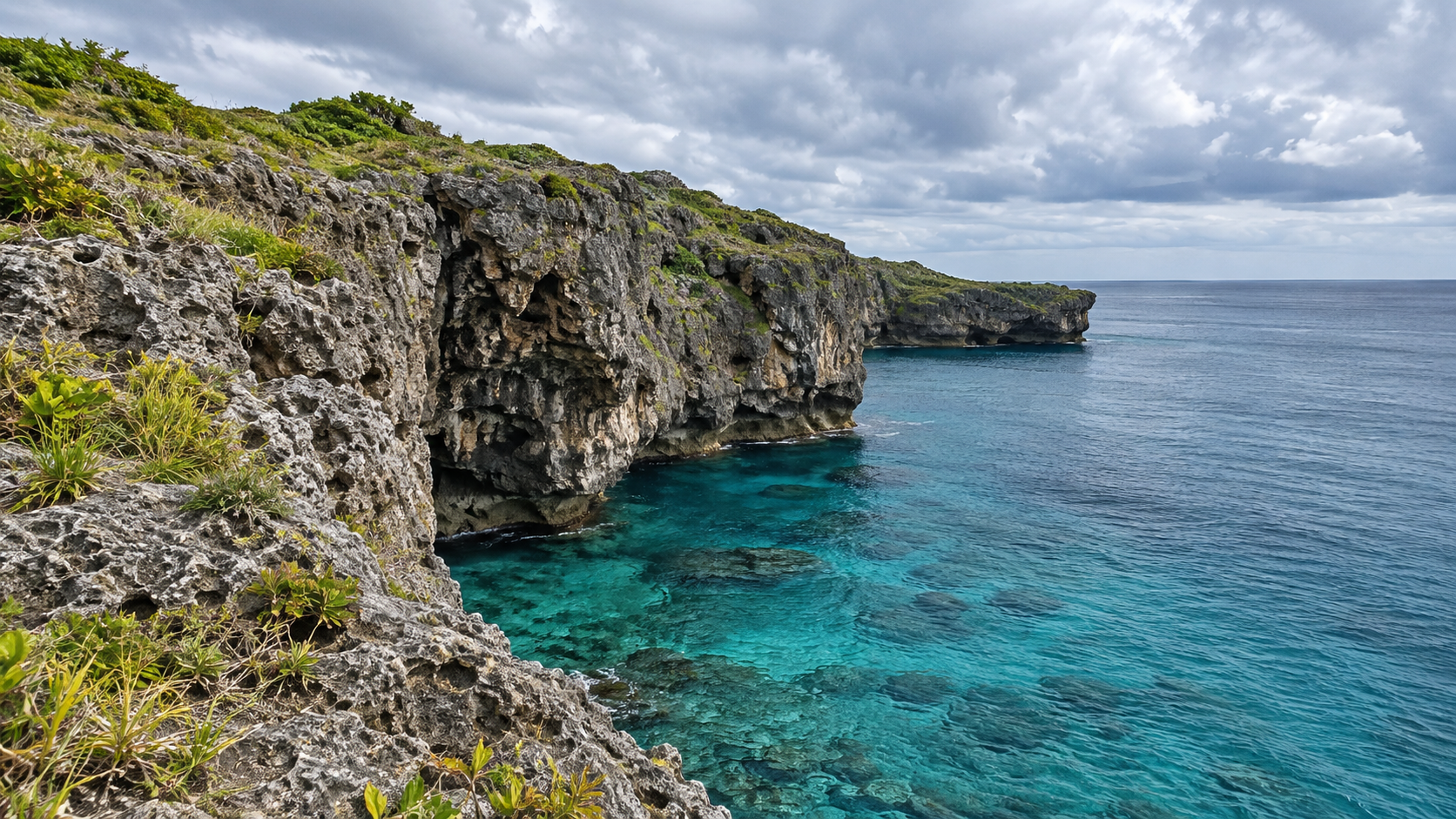
After the June boundaries, U.S. forces declared Operation Iceberg, the invasion operation against Okinawa, complete on July 2. The Archives exhibition includes this date. Ending an operation, assessing the end of organized resistance and establishing that civilian harm has stopped are different propositions.
On September 7, officers representing Japanese forces in the Nansei Islands signed a surrender document. The Okinawa Prefectural Archives describes this signing as the battle's formal conclusion. It was a documented act by military representatives, distinguished from the assessments made during June.
The local signing on September 7 must also be distinguished from Japan's signing of the Instrument of Surrender aboard USS Missouri in Tokyo Bay on September 2. The National Diet Library describes the September 2 signing, while the Japan Center for Asian Historical Records explains that the local surrender document was signed in Okinawa five days later. This comparison draws on the institutions' commentary; it does not claim an independent collation of the original documents.
The sequence now includes an assessment of organized resistance, a declaration that the island had been secured, an announcement ending the operation and the signing of surrender. Before selecting a date, we need to establish which event the question concerns. Naming the ending determines the scope of the answer.
Each row in the timeline retains the institution or source recording the boundary. This makes it possible to follow a date back to the material supporting it. The existence of a signed surrender document cannot itself establish that every civilian's life returned to its earlier condition on the same day.

Scene 11
Harm after the military boundaries
Even after a military record marks a conclusion, the question of subsequent harm remains. The Archives explains that U.S. clearing operations after the end of organized combat in late June caused deaths among civilians as well as military personnel. Military categories of fighting alone cannot delimit the time during which residents faced danger.
The army withdrew south, people lost places of refuge, and harm continued after organized combat. Reading these developments together still requires preserving the scope of the source for each statement. Following one particular person's route would require records about that person in addition to these institutional overviews.
A casualty figure would need examination of its counting period, the people included and the treatment of possible duplication. Testimony also requires attention both to the experience described and to when it was recorded. A single total or representative account cannot exhaust the experiences of different places and times.
Those further tasks do not remove the civilian harm described in the material already considered. Examining events beyond the military boundary prompts us to ask for whom, and in what sense, the word 'end' is being used. The list of dates becomes a starting point for more detailed research.
Scene 12
The questions that remain
To investigate the Battle of Okinawa's ending, we need to name what ended. June 21 and June 22 belong to a military record and declaration; July 2 marks a declaration ending an operation; September 7 marks the signing of surrender. The remembrance day on June 23 has both a commemorative purpose and a history of establishment after the war.
Civilian experience remains within and beyond those distinctions: inhabited land turned into a battlefield, shelters taken away, surrender restricted and harm continuing after organized combat. The prefecture and Archives accounts reveal questions that knowing the military dates alone does not answer.
The sources followed here are concentrated in the explanations of Okinawa Prefecture and its Archives. The boundaries established in this article can guide further comparison of terms in original military records and local testimony read in its recorded context. Such a comparison must preserve what each kind of evidence can tell us.
Reading dates accurately leads back to the people whose time is not fully visible in a declaration of conclusion. Asking who called what an ending helps establish the next questions for individual records and the circumstances of their survival. The distinctions in this account provide a foundation for that continuing work.
Editorial note: Historical statements follow the public institutional explanations in the fixed Japanese article. This English edition does not claim complete independent collation of U.S. original documents or verification of individual testimonies. Bringing the sources together to consider civilian time is an interpretation. All thirteen illustrations are AI-generated conceptual images, not documentary photographs of particular 1945 places, victims, shelters, archives or memorials. Original document and exhibition images have not been reproduced. The accompanying film has Japanese audio; an English subtitle track is not asserted.
How to read this work
History, interpretation, and reconstruction
Identifying what a date calls an ending is a starting point for reading civilian harm that continued beyond military boundaries.
This work is grounded in published sources and historical research. Interior thoughts, dialogue, and some visual details are cinematic reconstructions. Where historians disagree, the article presents the point as debated rather than settled fact.
Timeline
The story in time
-
The Thirty-second Army begins its retreat from Shuri to the south. Military movement and individual civilian journeys are distinguished.
Sources: army-south -
The G-2 Summary records the end of organized Japanese resistance on Okinawa Island.
Sources: iceberg -
The U.S. Tenth Army commander declares the island secured.
Sources: iceberg -
Okinawa's day of remembrance for the war dead. This does not establish that all combat and harm ended simultaneously.
Sources: okinawa-outline, memorial-history -
U.S. forces declare Operation Iceberg complete.
Sources: iceberg -
Representatives of Japanese forces in the Nansei Islands sign the surrender document; the Archives describes the formal conclusion.
Sources: surrender -
The day of remembrance is changed from June 22 to June 23.
Sources: memorial-history
People & terms
A guide for new readers
Glossary
- Okinawa Island Okinawa-honto
- The main island named in the military assessment. References to it should not be expanded automatically to every island in the campaign.
- Shuri Shuri
- The area from which the Thirty-second Army withdrew toward southern Okinawa in the account discussed here.
- Thirty-second Army Dai-sanjuni-gun
- The Japanese army whose withdrawal south is described by the Okinawa Prefectural Archives.
- Tenth Army Dai-ju-gun
- The U.S. army whose commander issued the June 22 declaration in the Archives account.
- Operation Iceberg Iceberg
- The U.S. invasion operation against Okinawa, declared complete on July 2 in the source account.
- G-2 Summary G-2 Summary
- The military intelligence record introduced by the Archives exhibition; its assessment concerns organized resistance.
- Day of remembrance Irei-no-hi
- The observance mourning the war dead on June 23; its establishment is part of postwar commemorative history.
- Nansei Islands Nansei-shoto
- The island region named for the Japanese forces represented in the September 7 surrender signing.
- Clearing operations Soto-sen
- Military operations discussed in the Archives account of harm continuing after organized combat.
- Surrender document Kofuku-bunsho
- The signed military document distinguishing a formal act of surrender from an earlier assessment of combat conditions.
Sources & method
How this article was built
This English edition follows the verified Japanese article and its source supplement. The scene sequence, timeline and references remain aligned with that article. The account distinguishes military assessments, operational declarations, formal surrender and commemoration. English source titles are editorial translations.
The eight references include explanations from Okinawa Prefecture and its Prefectural Archives, supplemented by commentary from the Japan Center for Asian Historical Records and the National Diet Library. The Prefecture and its Archives count as one parent organization. These institutional introductions are distinct from independently collating complete original military records or verifying local testimony. Further work requires those more detailed comparisons.
Historical description, interpretation and conceptual illustration remain distinct. The article does not introduce unchecked casualty totals, invented family narratives, last words or individual motives. It does not claim complete original-document collation or verified individual testimony. The thirteen existing images inherit the Japanese article review and rights record; no archival or exhibition photographs are copied.
Sources
References and further reading
- The Battle of Okinawa 沖縄戦 Title translated editorially for reader convenience. Okinawa Prefecture 沖縄県 Overview of the fighting, its ending language and the subsequent resistance; these statements are read together. Accessed 2026-10-08
- The Prefecture's Position on the Comfort Women Issue and the Massacre of Residents 4.「慰安婦問題」「住民虐殺」に対する県の見解 Title translated editorially for reader convenience. Okinawa Prefecture 沖縄県 Prefectural explanation of museum displays. Civilian harm, loss of refuge and coercion are attributed to this account. Accessed 2026-10-08
- March 22, 1944: Establishment of the Thirty-second Army 1944年3月22日 大本営直轄の第32軍(沖縄守備軍)創設 Title translated editorially for reader convenience. Okinawa Prefectural Archives 沖縄県公文書館 The army's retreat beginning May 27 and subsequent civilian harm; not evidence for individual civilian itineraries. Accessed 2026-10-08
- Operation Iceberg アイスバーグ作戦 Title translated editorially for reader convenience. Okinawa Prefectural Archives 沖縄県公文書館 Exhibition explanation introducing the G-2 Summary and operation ending. This edition does not independently collate the complete original documents. Accessed 2026-10-08
- The Day of Remembrance Becomes June 23 「慰霊の日」が6月23日となる Title translated editorially for reader convenience. Okinawa Prefectural Archives 沖縄県公文書館 Chronology of the change from June 22 to June 23 in 1965. Accessed 2026-10-08
- Surrender Document for the Battle of Okinawa 沖縄戦降伏調印文書 Title translated editorially for reader convenience. Okinawa Prefectural Archives 沖縄県公文書館 The September 7 signing, described as the formal conclusion. Document images are not reproduced. Accessed 2026-10-08
- Chapter 2: Postwar Settlement and Demobilization in Okinawa and the Amami Islands 第2章 沖縄・奄美群島の戦後処理と復員 Title translated editorially for reader convenience. Japan Center for Asian Historical Records, National Archives of Japan 国立公文書館アジア歴史資料センター Institutional commentary distinguishes the local surrender signing on September 7 from the Japanese government signing on September 2. The linked original documents have not been independently collated. Accessed 2026-10-23
- Imperial Rescript on the Signing of the Instrument of Surrender, September 2, 1945 降伏文書調印に関する詔書 1945年9月2日 Title translated editorially for reader convenience. National Diet Library 国立国会図書館 The institutional introduction dates the signing aboard USS Missouri in Tokyo Bay to September 2, 1945. Its displayed archival item is the imperial rescript, not the surrender instrument itself. No document image is reproduced. Accessed 2026-10-23
Continue reading
More stories from Shigeki
Shigeki English
Sakai’s Merchant City: Trade, Self-Government and Survival
A port, a merchant council and town communities—from changing authority to rebuilding after fire.
- When From the later fifteenth century through the Sengoku period, the fire of 1615 and early Edo-period reconstruction.
- Where Sakai, in present-day Osaka Prefecture, where maritime routes met roads on land.
Shigeki English
The Aburanokōji Incident: After Leaving the Shinsengumi
A separation in spring, a new base in summer, and two successive attacks.
- When Kyoto in Keiō 3 (1867). The incident’s historical date corresponds to December 13, 1867.
- Where Kyoto: the guards’ successive bases, the Aburanokōji attack site and the later place of remembrance.