
SHIGEKI ENGLISH STORYEN
Japanese history in English
After the Anglo-Satsuma War: Why Satsuma Learned from Britain
Industrial experiments before the bombardment, negotiations in Yokohama and a voyage by nineteen people.
Satsuma fought Britain in Kagoshima Bay in 1863, then sent students and envoys there two years later. Following Shuseikan, the indemnity negotiations and purchases of ships and machinery shows how learning from a former opponent became practical work.
At a glance
Before you enter the story
- When
- 1851–1867, with the war in 1863 and the mission to Britain in 1865.
- Where
- Kagoshima and Hashima in southern Japan; Namamugi and Yokohama; London and Manchester in Britain.
- Key figures
- Shimazu Nariakira, Shimazu Hisamitsu, Shimazu Tadayoshi, Godai Tomoatsu
- What was at stake
- Rebuilding industrial capacity and connecting equipment, education and technical expertise after armed conflict.
Why this story matters
The larger history behind the turning point
The journey to Britain is easier to understand when placed beside work that began before the war and continued after it. Workshops, diplomatic negotiations and places of study reveal the effort needed to turn a changed relationship into usable knowledge.
Historical context
What an international reader needs to know
A domain, its lord and the shogunate
Satsuma was a domain whose political and industrial activity was centered on Kagoshima, in southern Japan. The shogunate, also called the bakufu, was the warrior government. In this account, Satsuma and the shogunate appear separately in British demands, while funds borrowed from the shogunate helped Satsuma settle its own indemnity.
The Shimazu names also refer to different roles across time. Nariakira began Shuseikan before the war. Hisamitsu led domain politics, and Tadayoshi was the domain lord during the conflict. Keeping those roles in view helps connect the earlier experiments with the later rebuilding.
The places behind the voyage
Kagoshima Bay was the scene of the fighting, and Iso in Kagoshima was the setting of Shuseikan. The peace negotiations were conducted in Yokohama. Hashima was the departure point described in the museum account. These places belong to different stages of the story.
In Britain, UCL in London appears in the account of study, while Manchester appears in the procurement of cotton-spinning machinery and arrangements for engineers. Studying, inspecting and purchasing were related activities. The party comprised fifteen students and four envoys, rather than nineteen people with an identical educational role.
Watch the film
See the story in motion
The film currently uses Japanese audio. This English article provides the context and source trail; it does not imply that an English subtitle track is available.
Chapter 01
To the country they had fought
In 1863, British warships and Satsuma's shore batteries exchanged fire in Kagoshima Bay. The fighting damaged the town and its facilities; the British also suffered deaths and injuries. Yet the relationship between the two sides continued after the fleet left the bay.
Two years later, in 1865, Satsuma sent a party of nineteen to Britain: fifteen students and four envoys. Their work included learning a language, studying technology and obtaining machinery. The destination was the country whose ships had so recently fought their domain.
An explanation confined to shock at foreign military strength leaves much of that change out of view. Satsuma had already been trying to turn knowledge from overseas into industrial work. After the bombardment, negotiations over compensation also opened discussion about acquiring ships.
Why did Satsuma seek to learn from Britain after fighting it? The question leads beyond the outcome of a naval engagement. Following the workshops, negotiating table, classroom and port gives the change a sequence, and brings the practical work behind it into focus.
Chapter 02
Industrial work before the battle
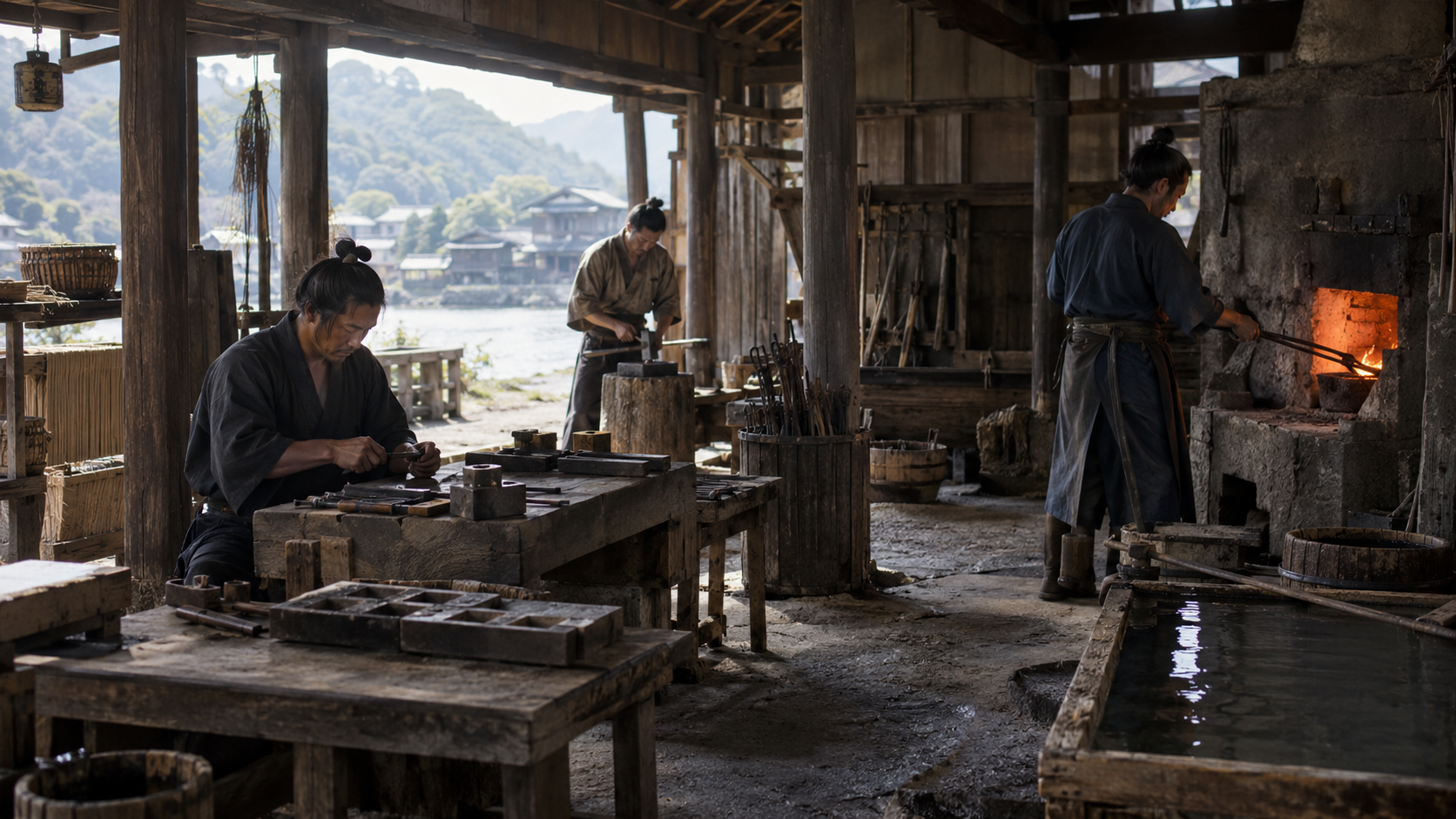
In 1851, twelve years before the fighting, Shimazu Nariakira began the Shuseikan industrial project at Iso in Kagoshima. Facilities associated with a reverberatory furnace, glassmaking and steam technology were developed there. Work with foreign knowledge was already part of the domain's industrial ambitions.
The reverberatory furnace was intended to melt iron for casting cannon. Its construction drew on translated Dutch technical books. A method described overseas had to become a working installation using the materials and skills available locally. Reading an explanation was one step; building usable equipment was another.
The Agency for Cultural Affairs describes the furnace remains as evidence of challenge and trial and error. They should not be taken to mean that every technical difficulty had already been mastered. The effort itself, however, shows that the search for methods from abroad began well before the war.
Nariakira died in 1858, and the project temporarily contracted. The rebuilding after 1863 consequently had a history behind it. Looking at what was restored and reorganized allows us to follow an existing undertaking through interruption and damage, alongside the new decisions made after the fighting.
Chapter 03
From Namamugi to Kagoshima Bay
In 1862, a group of British riders encountered Shimazu Hisamitsu's procession at Namamugi on the Tokaido road. Satsuma retainers killed and injured members of the group. The incident developed into a diplomatic dispute between Britain and the domain.
Britain demanded punishment of those responsible and an indemnity of £25,000 from Satsuma. Demands were also made of the shogunate, the warrior government often called the bakufu. The claims against the shogunate and those against Satsuma were separate, and the sum here refers specifically to Satsuma's indemnity.
Satsuma did not accept the demands, and in 1863 a British fleet of seven ships arrived in Kagoshima Bay. Diplomatic pressure now took the visible form of warships off the domain's coast. The unresolved question of responsibility and settlement formed the background to the confrontation.
This sequence connects the incident, the demands and the arrival of the fleet without inventing a private conversation or a single shared intention among the participants. Dates are given mainly by year: the adopted explanations use different calendar conventions, and their month and day labels cannot safely be mixed.
Chapter 04
Damage on both sides
The British fleet seized three Satsuma steamships. Satsuma's batteries opened fire, and the British ships returned it. The dispute became a battle between forces at sea and on shore, with consequences for the town as well as the vessels.
Reimeikan's introduction to Admiral Kuper's diary describes fighting in rough weather, British deaths and injuries, and the fleet's withdrawal. The losses on the British side belong in the account alongside those in Kagoshima. Damage to Satsuma alone cannot describe the whole encounter.
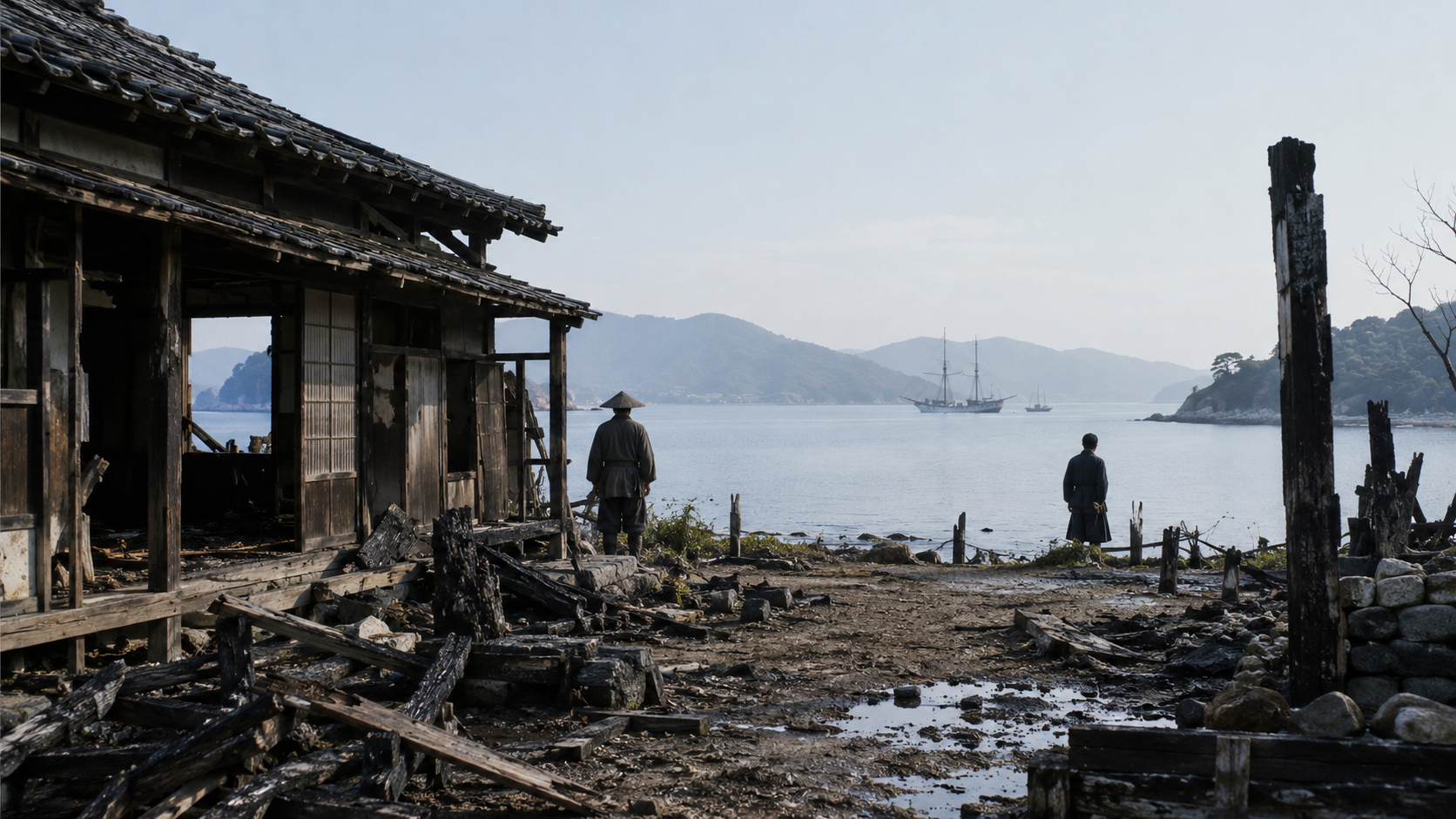
Withdrawal did not undo the destruction ashore. The Agency for Cultural Affairs places the burning of the Shuseikan facilities and their subsequent reconstruction in the same historical sequence. The aftermath therefore involved rebuilding as well as the continuing question of how to resolve the diplomatic dispute.
Both sides had encountered the other's force and suffered losses. When the firing stopped, the indemnity remained an issue, while Satsuma also faced damaged industrial facilities. Those continuing tasks help explain why the story extends beyond a declaration that one side had decisively won.
Chapter 05
Negotiating a new relationship in Yokohama
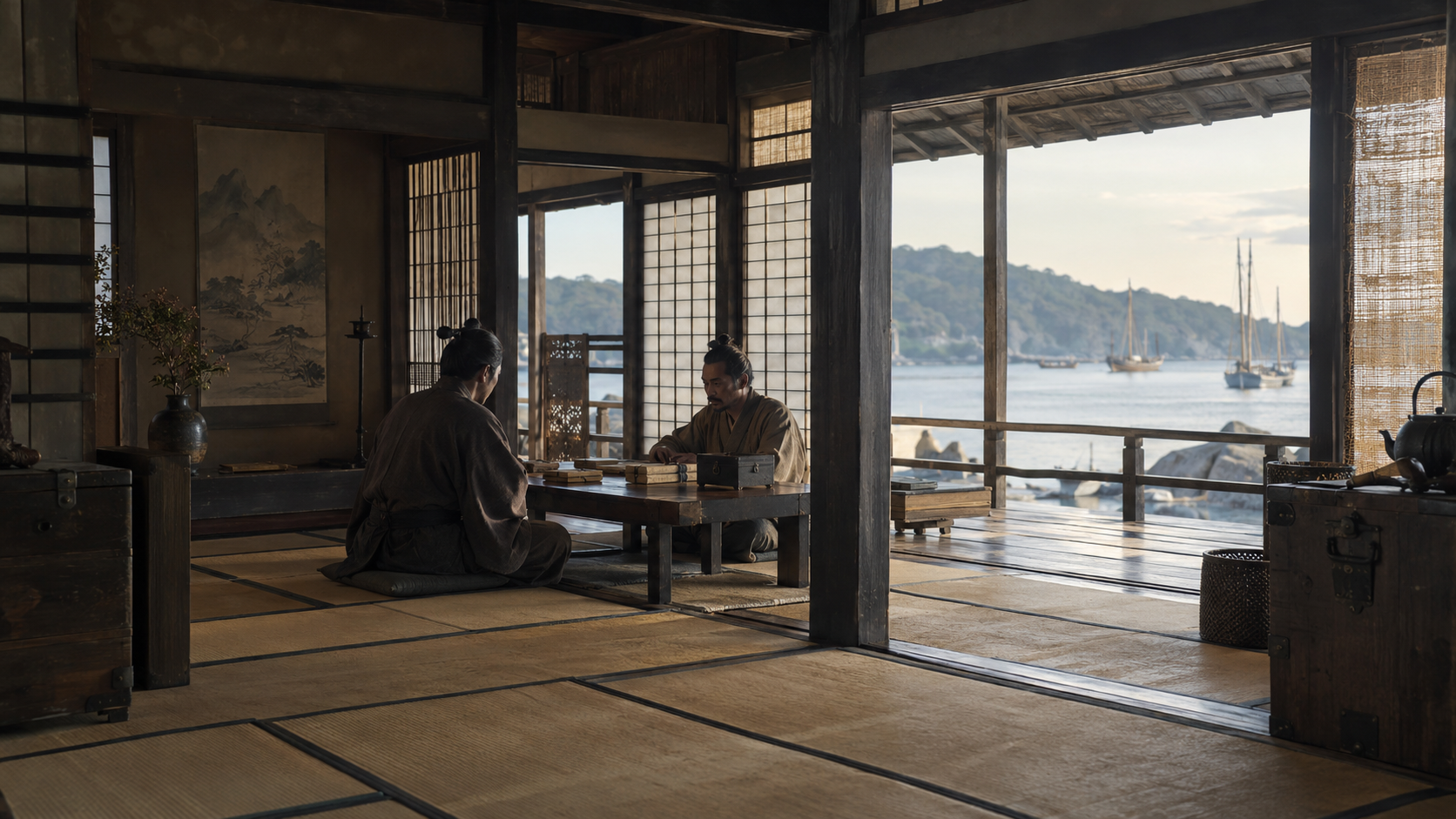
The battlefield was Kagoshima Bay; the subsequent peace negotiations took place in Yokohama. According to the Satsuma Students Museum, Satsuma borrowed funds from the shogunate, paid the £25,000 indemnity and reached a settlement. Ending the dispute required work away from the scene of the fighting.
During those negotiations, Satsuma asked the British side to help arrange the purchase of warships. A relationship marked by exchanged gunfire was becoming a route through which the domain could seek vessels. The request connects diplomacy with the practical question of obtaining equipment.
Paying compensation and purchasing ships served different purposes. Yet the two activities appeared within the same course of negotiation. While arranging terms to end the conflict, Satsuma was also looking for a way to acquire capabilities it wanted for the future.
The evidence here concerns concrete dealings: a payment, a settlement and a request for assistance with procurement. It does not establish that suspicion disappeared or that every participant suddenly felt friendship. A working relationship could be developed through these negotiations without such assumptions about private feelings.
Chapter 06
Machines, operators and teachers
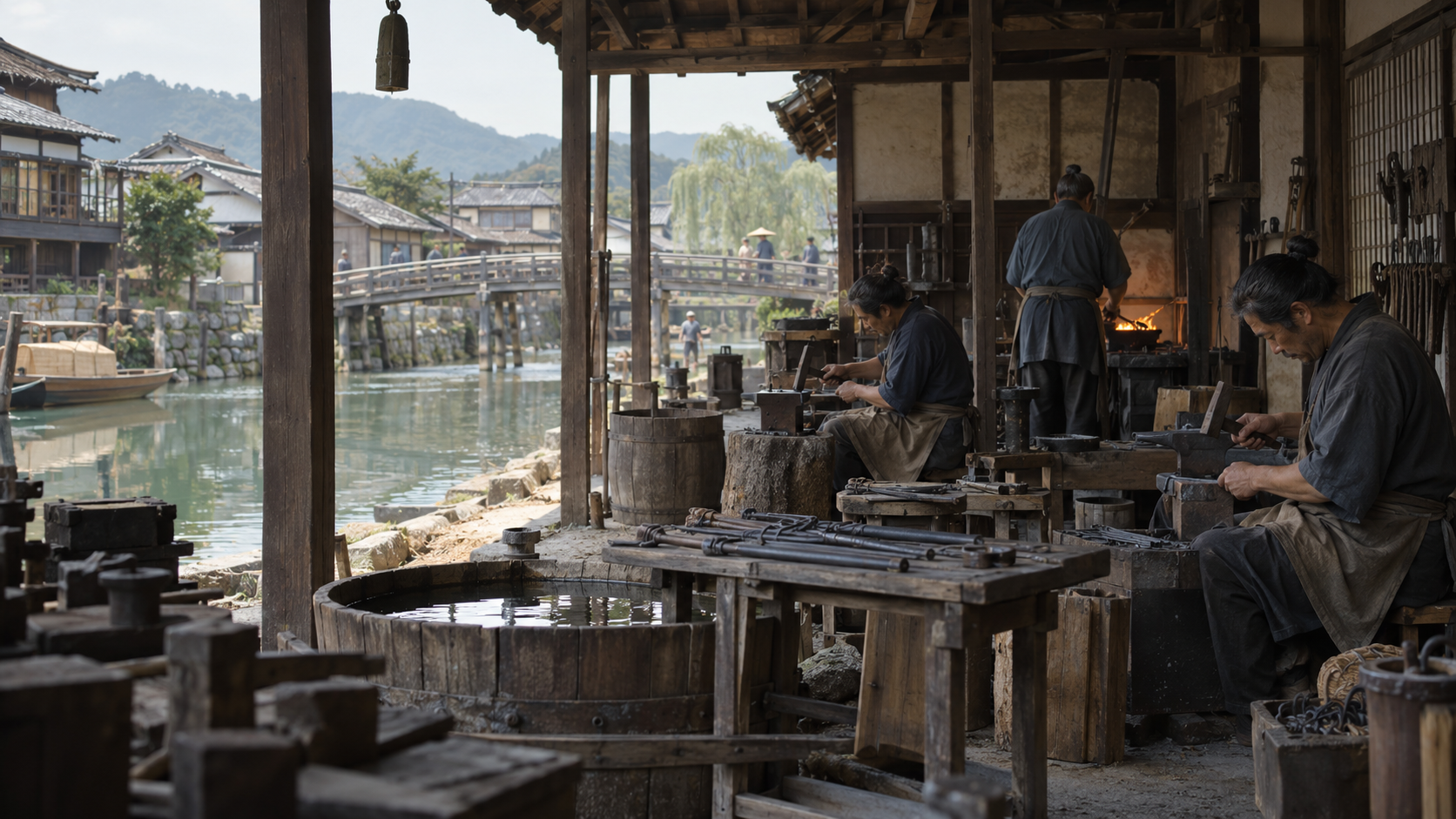
Buying a ship or a machine was an entry point to using new technology. Equipment still required people who understood its workings, people able to teach its use, and a workplace where that knowledge could be put into practice. Acquiring an object and developing an ability were connected tasks.
Kagoshima City describes Satsuma's purchases of Western machinery and steam engines after the war alongside the dispatch of students and the invitation of technical specialists. Equipment, learners and expert assistance formed parts of the response. Each supplied something the others alone could not provide.
Knowledge moved in more than one direction. People went abroad to learn, and people with expertise came to Kagoshima to teach. Workshops and places of study were needed to receive and use what those journeys brought. The movement of machines belonged within this wider movement of skills.
Learning from overseas consequently involved a set of practical questions: what to buy, who would operate it, and who could explain how it worked. Connecting these choices offers a way to read the changes after the war through preparation and implementation, rather than through a single moment of recognition.
Chapter 07
Godai's proposal for putting a plan into action
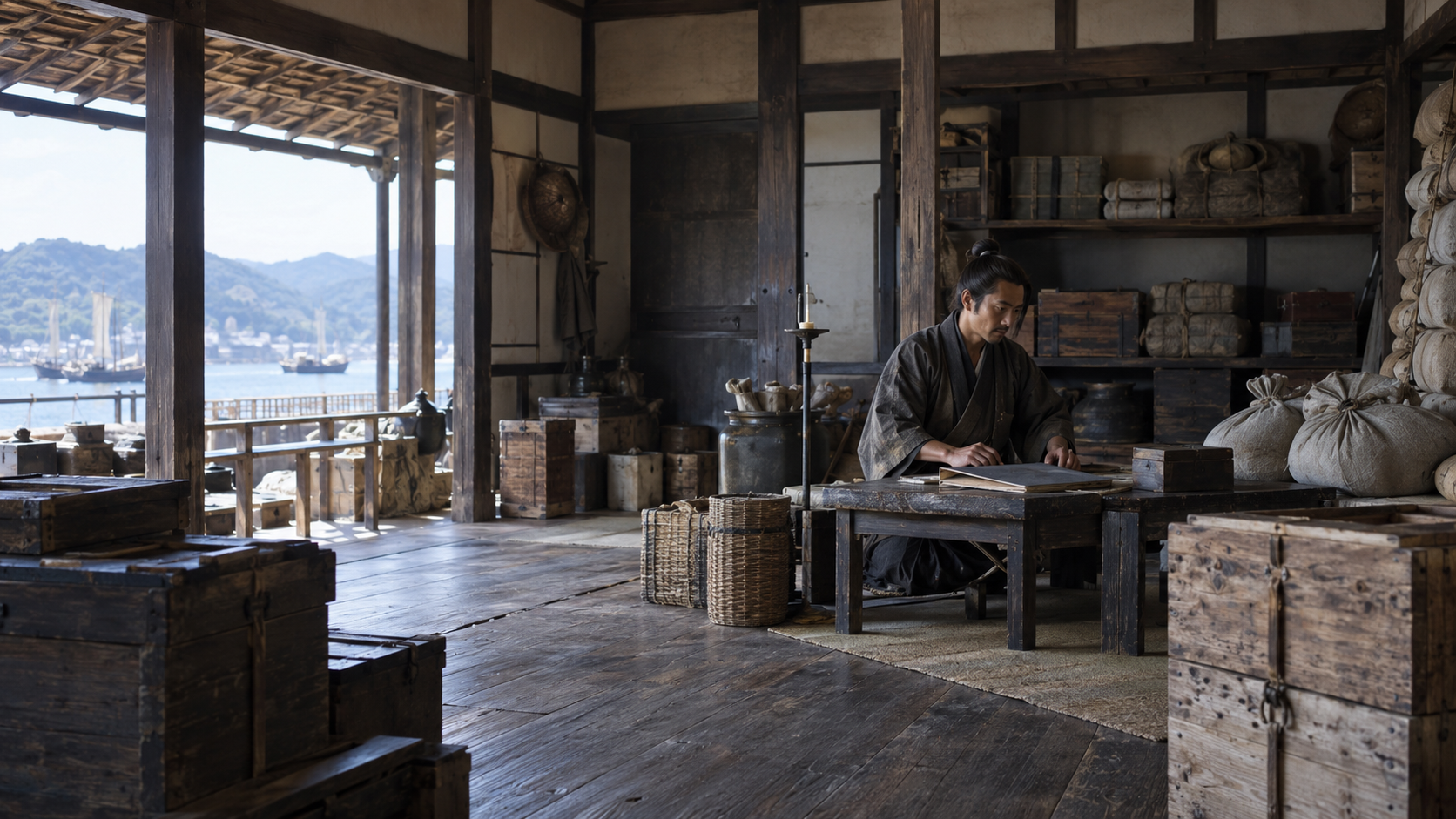
Godai Tomoatsu was one of the people who gave these plans a concrete form. The Satsuma Students Museum explains that his proposal of 1864 included purchasing machinery, sending people overseas and employing foreign engineers. Its scope reached across equipment, education and technical assistance.
The proposal was a joshinsho, a written submission to the domain authorities. It also included trade as a means of obtaining the necessary funds. Wanting machinery or knowledge had to lead to decisions about whom to send, what to acquire and how to pay for the undertaking.
The Shuseikan project already existed before the war. Godai's proposal can be understood as setting out ways to act on problems that the domain faced, with the experience of the conflict added to earlier industrial work. It does not require treating him as the sole creator of the entire undertaking.
The proposal is followed here through the museum's public explanation, rather than reproduced as a speech by Godai. Its described contents link travel and study with finance and production. That connection helps us see why sending people to Britain was part of an industrial plan as well as an educational one.
Chapter 08
From a classroom to a party of nineteen
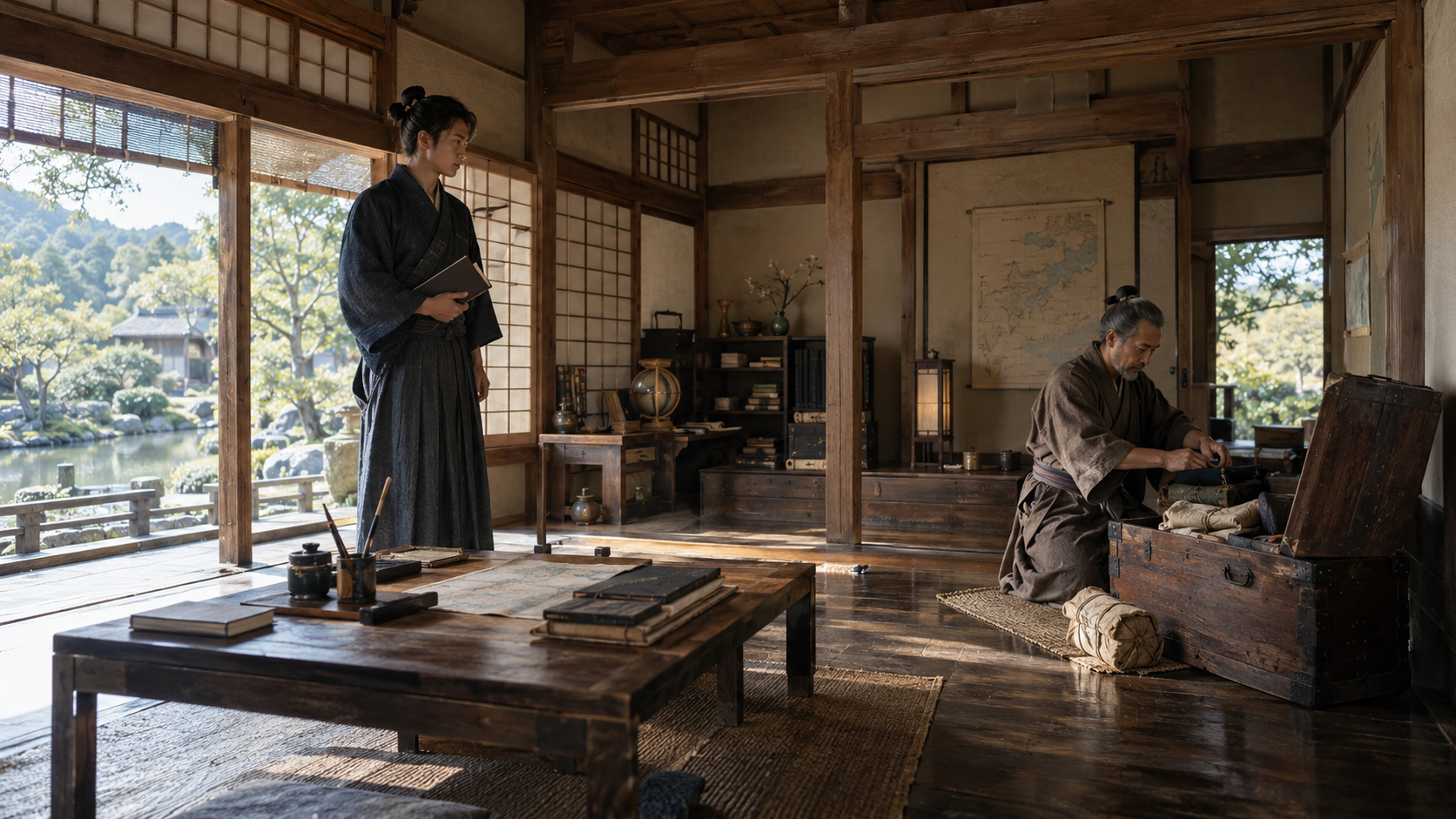
Before sending people overseas, Satsuma established a place to study at home. A Kagoshima Prefecture contribution published by Japan's Ministry of Foreign Affairs describes the Kaiseijo, founded in 1864, the year after the war. English and naval technology were subjects taught there.
Language mattered for listening to explanations, reading books and seeking the items needed abroad. Preparations for learning in another country therefore began before the travelers waited for a ship. The classroom and the port belonged to different stages of the same undertaking.
The party sent to Britain in 1865 consisted of fifteen students and four envoys, nineteen people in total. The total party and the student group are different counts. Educational study and work connected with inspection and procurement were included within the same dispatch.
Sending both learners and envoys shows the range of what Satsuma sought through its relationship with Britain. The voyage carried people preparing to study and people working on the domain's practical needs. It should not be read as nineteen students all following an identical course.
Chapter 09
Preparing to cross the sea
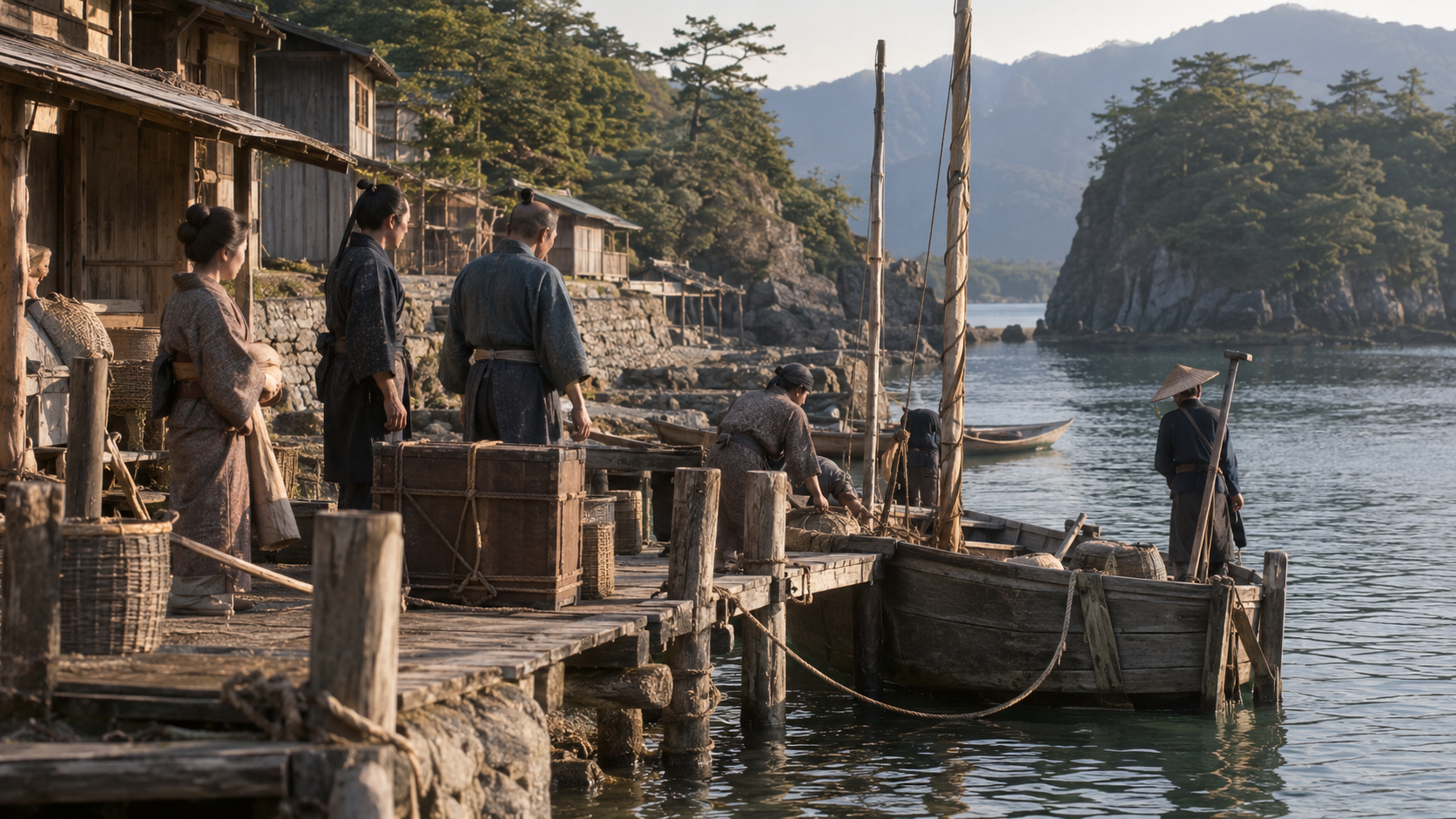
Overseas travel was subject to restrictions at the time. The party received survey orders as a cover for the undertaking, and its members were given assumed names. The journey required arrangements within those constraints alongside the preparation for study and procurement.
The Satsuma Students Museum describes the party waiting at Hashima and departing in 1865. Selection did not lead smoothly to an unchanged list: some people declined, and replacements were made. The progress of a domain plan should not be equated with every selected person having the same reasons for joining.
Moving from study at home to study overseas involved more than distance. Travel restrictions, expense, language and accommodation all belonged to the preparations. Looking at these requirements brings the work before departure into view, without supplying unrecorded individual fears or hopes.
The people who left the port had different roles within the undertaking. Attention to the conditions that made their journey possible gives it practical weight. A picturesque departure scene alone cannot convey the decisions and arrangements behind the voyage, and this article does not invent a farewell ceremony.
Chapter 10
Studying in London, buying in Manchester
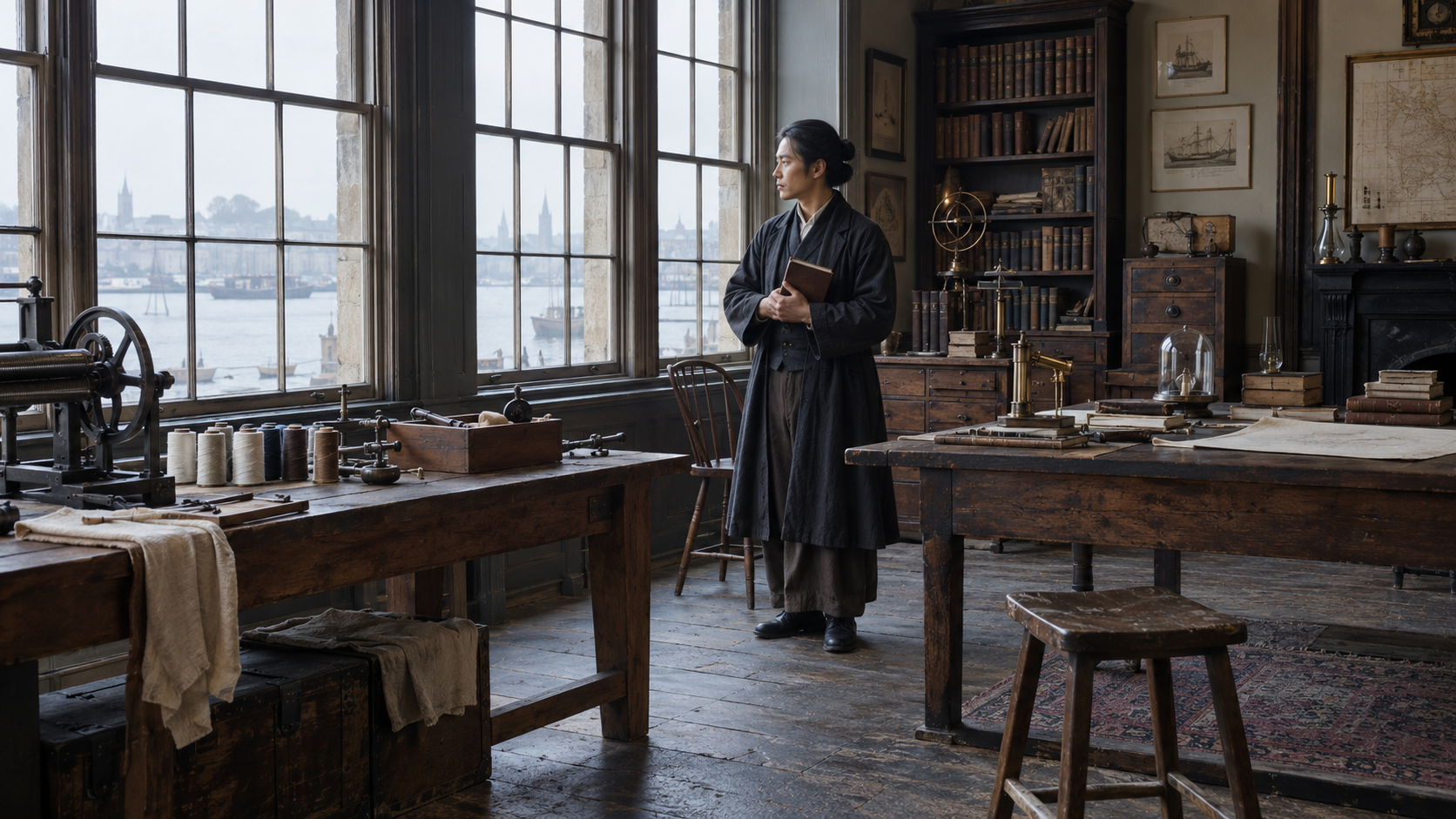
The party's work remained varied after arrival in Britain. Students studied at University College London, usually abbreviated to UCL. The envoys were involved in inspection and obtaining equipment. Education and procurement continued as related activities with different tasks and settings.
The Ministry of Foreign Affairs contribution describes Godai's involvement in purchasing cotton-spinning machinery in Manchester and contracting for spinning engineers to be sent to Japan. Selecting equipment and arranging technical assistance helped connect what could be acquired in Britain with its intended use in Kagoshima.
Reimeikan explains that the travelers sent reports of their learning and information about other countries from Europe. Knowledge did not have to wait until the day of their return to begin reaching the domain. Written information formed another connection between the journey and decisions at home.
UCL Library Services introduces images of records concerning the Satsuma students in its collections guide. A Japanese museum, an institutional account of the overseas mission and the receiving university offer different points of reference. Their evidence supports following the journey, without asserting that all nineteen pursued the same studies or graduated together.
Chapter 11
Connecting the journey with work in Kagoshima
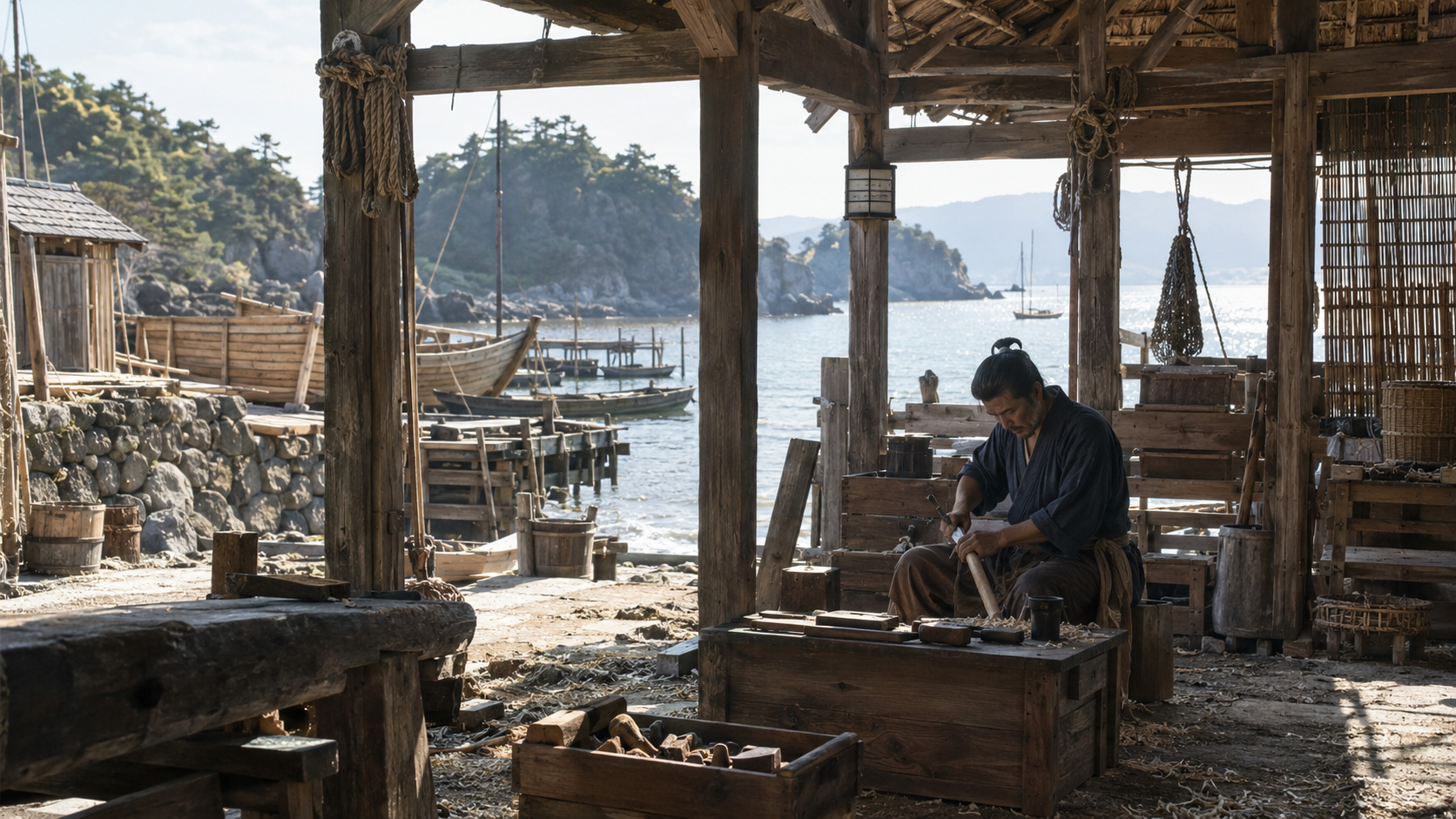
Reconstruction at Shuseikan proceeded alongside the overseas mission. The Agency for Cultural Affairs describes substantial rebuilding under Shimazu Hisamitsu and Shimazu Tadayoshi. Hisamitsu led domain politics; Tadayoshi was the domain lord during the war. Their roles should remain distinct from Nariakira's earlier establishment of the project.
The machine factory completed in 1865 used Western machinery and steam power to make items including parts for ships. The agency also identifies features and technology inherited from the shogunate's Nagasaki ironworks. This connection locates the rebuilding within industrial work already being pursued elsewhere in Japan.
Britain was therefore one part of a wider path through which technical knowledge reached Kagoshima. Domestic experience and knowledge acquired overseas met in the rebuilt facilities. Following both avoids treating every element of the factory as a direct result of learning from a single foreign country.
In 1867, lodgings were built for the British engineers who taught at the Kagoshima cotton-spinning mill. The dispatch of learners, purchases of machinery and arrival of specialists were separate movements, but their connections took shape in buildings and daily production. The history can be followed through those places of work as well as through the voyage.
Chapter 12
The time that followed the firing
Satsuma's route to learning from Britain was not completed at the instant the war ended. Industrial work had begun under Nariakira. The conflict and its losses were followed by peace negotiations and discussions of procurement. Each stage provided a different part of the subsequent change.
A place of study was established, people were selected and sent abroad, machinery was sought and engineers were invited. Through these activities, the relationship with a country Satsuma had fought became several routes toward acquiring knowledge and capabilities. The change had to be organized and carried out.
The war was a major turning point. Making the bombardment the only cause, however, removes the earlier experiments from the account and obscures the later work of arranging funds, language study and equipment. The longer sequence gives those efforts their place in the history.
Nineteen people crossed the sea; fifteen of them were students; work continued in rebuilt industrial facilities. Keeping those categories distinct reveals the rapprochement through specific actions. It also leaves room for differences among the travelers' tasks and between overseas study and production at home.
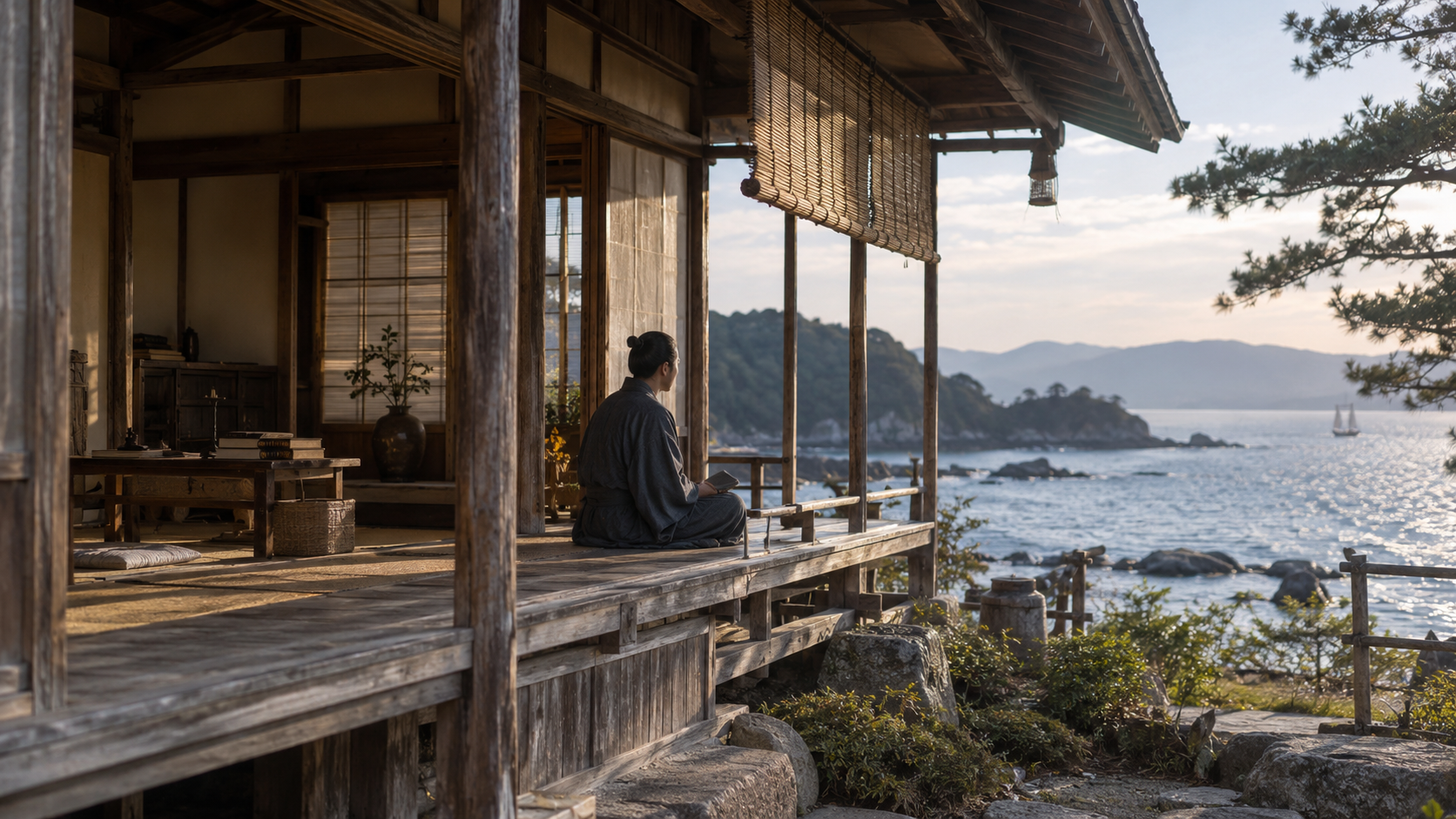
After facing force from across the sea, Satsuma sent people there to learn. The time after the firing was filled with negotiation, language study, purchases and the development of skills. These continuing activities help explain how a relationship changed and how the domain prepared for a new period.
Editorial note: years are used to avoid mixing historical and modern calendar dates. Kuper's diary and Godai's proposal are approached through institutional introductions, without claiming a complete reading of their original texts or reproducing personal dialogue. Connections among the actions are editorial interpretation. The illustrations are AI-generated scenes, not confirmed portraits, photographs of the battlefield or exact reconstructions of UCL, Shuseikan or the present landscape.
How to read this work
History, interpretation, and reconstruction
Connect industrial efforts before the war with diplomacy afterward, and read the changing relationship through study, procurement and the invitation of engineers.
This work is grounded in published sources and historical research. Interior thoughts, dialogue, and some visual details are cinematic reconstructions. Where historians disagree, the article presents the point as debated rather than settled fact.
Timeline
The story in time
People & terms
A guide for new readers
Key figures
- Shimazu Nariakira
- Satsuma domain lord who began the Shuseikan project; died in 1858.
- Shimazu Hisamitsu
- Political leader of Satsuma, involved with Tadayoshi in rebuilding Shuseikan after the war.
- Shimazu Tadayoshi
- Satsuma domain lord during the war, involved with Hisamitsu in rebuilding Shuseikan.
- Godai Tomoatsu
- Proposed overseas dispatch and equipment purchases; traveled to Britain as an envoy in 1865.
Glossary
- Satsuma domain 薩摩藩
- The domain centered on Kagoshima whose conflict with Britain and industrial efforts are followed here.
- Shogunate / bakufu 幕府
- The warrior government, distinguished from Satsuma in the indemnity demands and involved in lending funds for its settlement.
- Anglo-Satsuma War 薩英戦争
- The armed encounter between the British fleet and Satsuma in Kagoshima Bay in 1863.
- Namamugi Incident 生麦事件
- The 1862 encounter between British riders and Hisamitsu's procession that led to killings, injuries and diplomatic demands.
- Shuseikan 集成館
- The industrial project begun by Nariakira in 1851 and rebuilt after the war.
- Reverberatory furnace 反射炉
- A furnace used to melt iron for cannon casting; at Shuseikan, its construction drew on translated Dutch technical books.
- Kaiseijo 開成所
- The place of study established in 1864 where English and naval technology were taught.
- Joshinsho 上申書
- A written submission to authorities; Godai's 1864 proposal is followed through the museum's explanation.
- Indemnity 賠償金
- Compensation demanded in the diplomatic dispute. Satsuma's £25,000 payment is distinguished from the separate demands on the shogunate.
- Envoy 使節
- A member of the party with duties such as inspection and procurement, distinguished from the fifteen students.
- UCL ユニバーシティ・カレッジ・ロンドン
- University College London, the institution associated with the students' study in London.
Sources & method
How this article was built
This translation follows the fixed, publicly verified Japanese manuscript. Its ten adopted references were read as institutional explanations, including the detailed Shuseikan entry of the Agency for Cultural Affairs and the historical section of the Ministry of Foreign Affairs contribution. Source titles are editorial English translations where needed. The UCL collections guide was read; the underlying original records have not all been examined.
Kuper's diary and Godai's proposal are used through institutional introductions, without claiming new complete transcription, textual collation or personal dialogue. The nineteen-person party is distinguished from its fifteen students and four envoys. Years are used to keep historical and modern calendar dates from being combined.
The connection among prewar industry, diplomacy, procurement, education and visiting engineers is an editorial interpretation of documented activities. No new private thoughts, conversations or individual experiences are supplied. The article does not infer immediate universal friendship or identical courses and graduation for all travelers.
The hero and twelve chapter illustrations use twelve distinct AI-generated SHIGEKI images. Current file hashes and article rights are matched to the completed Japanese review. Anonymous figures are not authenticated portraits; images do not reconstruct a specific negotiation, battlefield, UCL room or Shuseikan installation. No source-site photographs are reproduced. The linked film has Japanese audio; an English subtitle track has not been verified.
Sources
References and further reading
- The Anglo-Satsuma War 薩英戦争 Title translated editorially for reader convenience. Reimeikan, Kagoshima Prefectural Museum of History and Fine Arts 鹿児島県歴史・美術センター黎明館 Explains Namamugi, the demands on Satsuma, the fleet and subsequent rapprochement. Historical month and day dates use the old calendar. Accessed 2026-10-09
- The Satsuma Students in Britain 薩摩藩英国留学生とは Title translated editorially for reader convenience. Satsuma Students Museum 薩摩藩英国留学生記念館 Museum account of the war, peace negotiations in Yokohama, Godai's proposal, selection and departure from Hashima. This is not a complete transcription of his proposal. Accessed 2026-10-09
- Former Shuseikan: detailed explanation 旧集成館(詳細解説) Title translated editorially for reader convenience. Agency for Cultural Affairs 文化庁 Detailed account of rebuilding, technology associated with the Nagasaki ironworks, and remains connected with British engineers and the cotton-spinning mill. Accessed 2026-10-09
- Sending young people from Kagoshima to Britain: the Satsuma Student Program 21世紀の鹿児島の若者を英国へ――薩摩スチューデント派遣事業 Title translated editorially for reader convenience. Ministry of Foreign Affairs of Japan, contribution by Kagoshima Prefecture's International Affairs Division 外務省(鹿児島県国際交流課の寄稿) The historical section covers the Kaiseijo, the mission, UCL and purchases in Manchester. Its contemporary exchange program is distinguished from the nineteenth-century journey. Accessed 2026-10-09
- Monument to the Young Satsuma Mission 若き薩摩の群像 Title translated editorially for reader convenience. Kagoshima Tourism Federation 鹿児島県観光連盟 Official explanation distinguishes fifteen students and four envoys, nineteen people in total. No photograph of the monument is reproduced. Accessed 2026-10-09
- Former Shuseikan: reverberatory furnace remains 旧集成館「反射炉跡」 Title translated editorially for reader convenience. Kagoshima Tourism Federation 鹿児島県観光連盟 Explains the project begun in 1851 and use of translated Dutch technical books. Current admission prices and opening hours are outside this article's scope. Accessed 2026-10-09
- Admiral Kuper's diary of the Anglo-Satsuma War クーパー提督薩英戦争日誌 Title translated editorially for reader convenience. Reimeikan, Kagoshima Prefectural Museum of History and Fine Arts 鹿児島県歴史・美術センター黎明館 Institutional introduction covers three seized steamships, rough weather, British losses and withdrawal. The complete original diary has not been read for this article. Accessed 2026-10-09
- Students in Britain and the Paris Exposition 英国留学生とパリ万国博覧会 Title translated editorially for reader convenience. Reimeikan, Kagoshima Prefectural Museum of History and Fine Arts 鹿児島県歴史・美術センター黎明館 Covers the mission and reports of learning and information sent from Europe. The collective label for nineteen travelers is read with the student/envoy breakdown in s05. Accessed 2026-10-09
- Component sites in the Kagoshima area 鹿児島エリアの構成資産 Title translated editorially for reader convenience. Kagoshima City 鹿児島市 Follows Shuseikan before and after the war, the machine factory completed in 1865 and engineers' lodgings built in 1867. Accessed 2026-10-09
- History of UCL History of UCL — College Archives Title translated editorially for reader convenience. University College London Library Services University College London Library Services Collections guide introducing images of records concerning students from Satsuma and Choshu. This article does not claim a complete reading of those original records or a common graduation history. Accessed 2026-10-09
Continue reading
More stories from Shigeki
Shigeki English
Sakai’s Merchant City: Trade, Self-Government and Survival
A port, a merchant council and town communities—from changing authority to rebuilding after fire.
- When From the later fifteenth century through the Sengoku period, the fire of 1615 and early Edo-period reconstruction.
- Where Sakai, in present-day Osaka Prefecture, where maritime routes met roads on land.
Shigeki English
The Aburanokōji Incident: After Leaving the Shinsengumi
A separation in spring, a new base in summer, and two successive attacks.
- When Kyoto in Keiō 3 (1867). The incident’s historical date corresponds to December 13, 1867.
- Where Kyoto: the guards’ successive bases, the Aburanokōji attack site and the later place of remembrance.