
SHIGEKI ENGLISH STORYEN
Japanese history in English
The Beginnings of the Shinsengumi: Why Some Roshigumi Stayed in Kyoto
Arrival, remaining, Aizu charge and a new name: following the organization through Mibu.
The men recruited in Edo did not all become the Shinsengumi. Follow the journey to Kyoto, the houses and temple of Mibu, a jointly signed letter and guard duty at the palace to see how those who remained acquired an affiliation, duties and a new name.
At a glance
Before you enter the story
- When
- Bunkyu 3 (1863), with background in 1862 and a distinction from Kondo's later status in 1867; month and day retain the contemporary calendar
- Where
- From Edo along the Nakasendo to Kyoto, especially the houses and temple of Mibu
- Key figures
- Kondo Isami, Hijikata Toshizo, Serizawa Kamo, Kiyokawa Hachiro, Matsudaira Katamori
- What was at stake
- How did part of a recruited traveling group acquire a base, institutional support and guard duties in Kyoto?
Why this story matters
The larger history behind the turning point
Recruitment, staying, institutional charge and naming each describe a different development. Following their order shows how the organization took shape through activity in Kyoto.
Houses, temple grounds and a letter make the beginning concrete. They also keep the limits of evidence visible: accommodation is not an exact floor plan, and a catalogue explanation is not a complete event reconstruction.
Historical context
What an international reader needs to know
Edo, Kyoto and the authorities in this account
Edo is the recruitment and return destination; Kyoto is the setting of the imperial court, the shogun's visit and the group's subsequent duties. The Nakasendo links the two cities by an inland route. Within Kyoto, Mibu provides the residential and temple spaces used by the remaining men.
The shogunate is the warrior government. Aizu is the domain ruled by Katamori, who also held the Kyoto shugoshoku office. The imperial court and warrior authorities were connected through offices such as the buke tenso. These institutional relationships help explain whose request could bring the group onto guard duty.
Names, stages and the calendar
Roshigumi identifies the recruitment into which Kondo, Serizawa and others entered. Mibu Roshigumi identifies the group that remained and operated under Aizu's charge; Shinsengumi is the later name. The English account keeps those stages in order. Japanese personal names generally place the family name first.
Bunkyu 3 corresponds to 1863, and Keio 3 to 1867. Month and day attached to events and the letter use the contemporary Japanese calendar. A numbered month is not silently translated into a Gregorian month name. Differing arrival days and remaining numbers are left unresolved rather than harmonized without evidence.
Watch the film
See the story in motion
The film currently uses Japanese audio. This English article provides the context and source trail; it does not imply that an English subtitle track is available.
Scene 01
Before there was a Shinsengumi
In 1863, a group established itself in Mibu, Kyoto. It would come to be called the Shinsengumi. Its beginnings become clearer when we follow the places where its members lived and worked, before starting with the familiar name of the later organization.
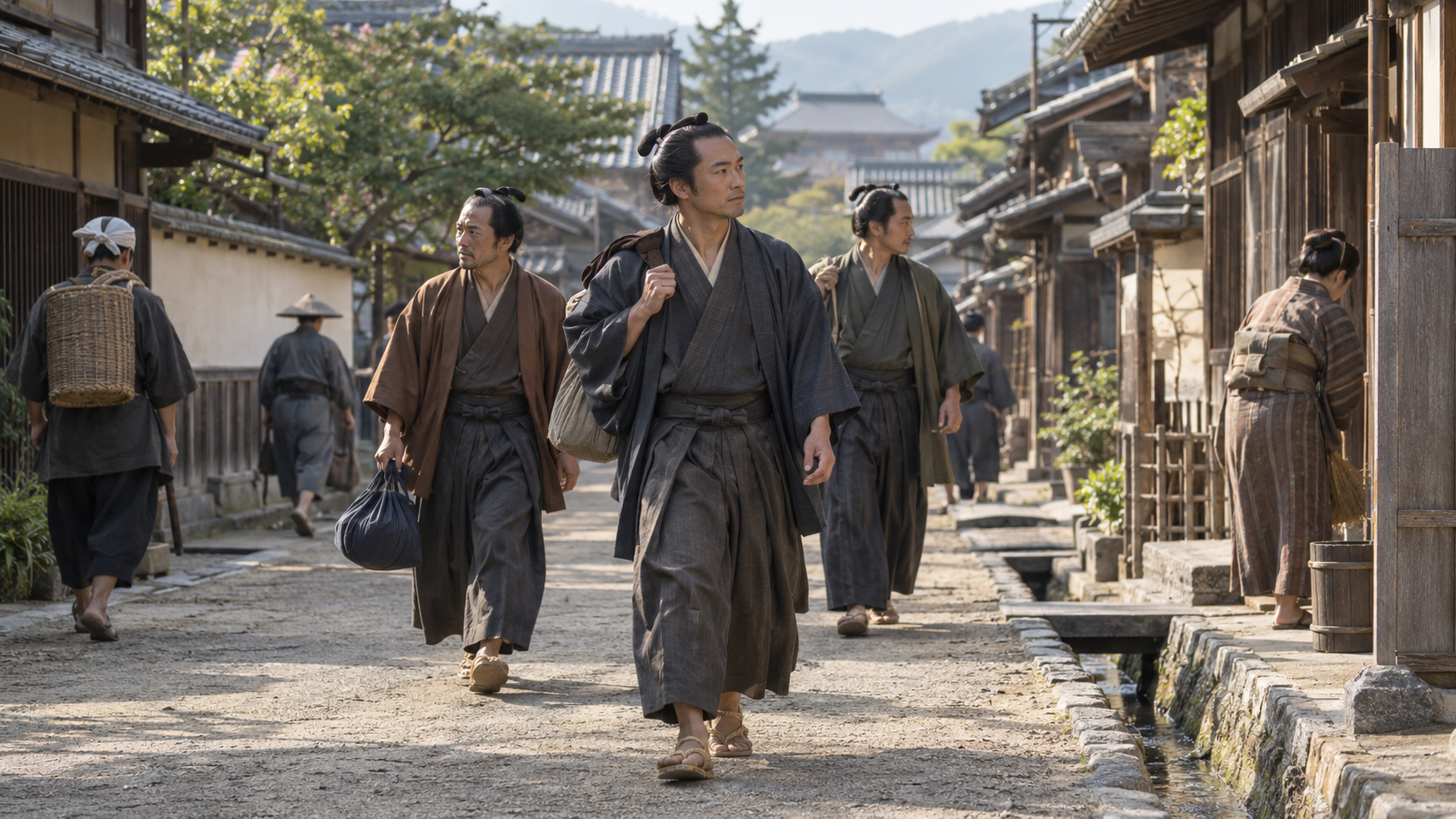
The men recruited in Edo for the Roshigumi did not all become members of the Shinsengumi. Most returned to Edo. Kondo Isami, Serizawa Kamo and others stayed in Kyoto, came under the charge of the Aizu domain, and took on guard duties in the city.
That sequence raises practical questions. Where did the remaining men lodge? Under whose authority did they act? What work did they undertake? The houses and temple of Mibu, a jointly signed letter and a deployment to the imperial palace help us follow these changes.
Gathering recruits, choosing to remain, acquiring an institutional affiliation and receiving a new name were distinct steps. Reading them separately avoids compressing the beginning into one naming ceremony or assuming that the later organization was already complete when the travelers arrived.
Scene 02
A shogun visits Kyoto, and ronin are recruited
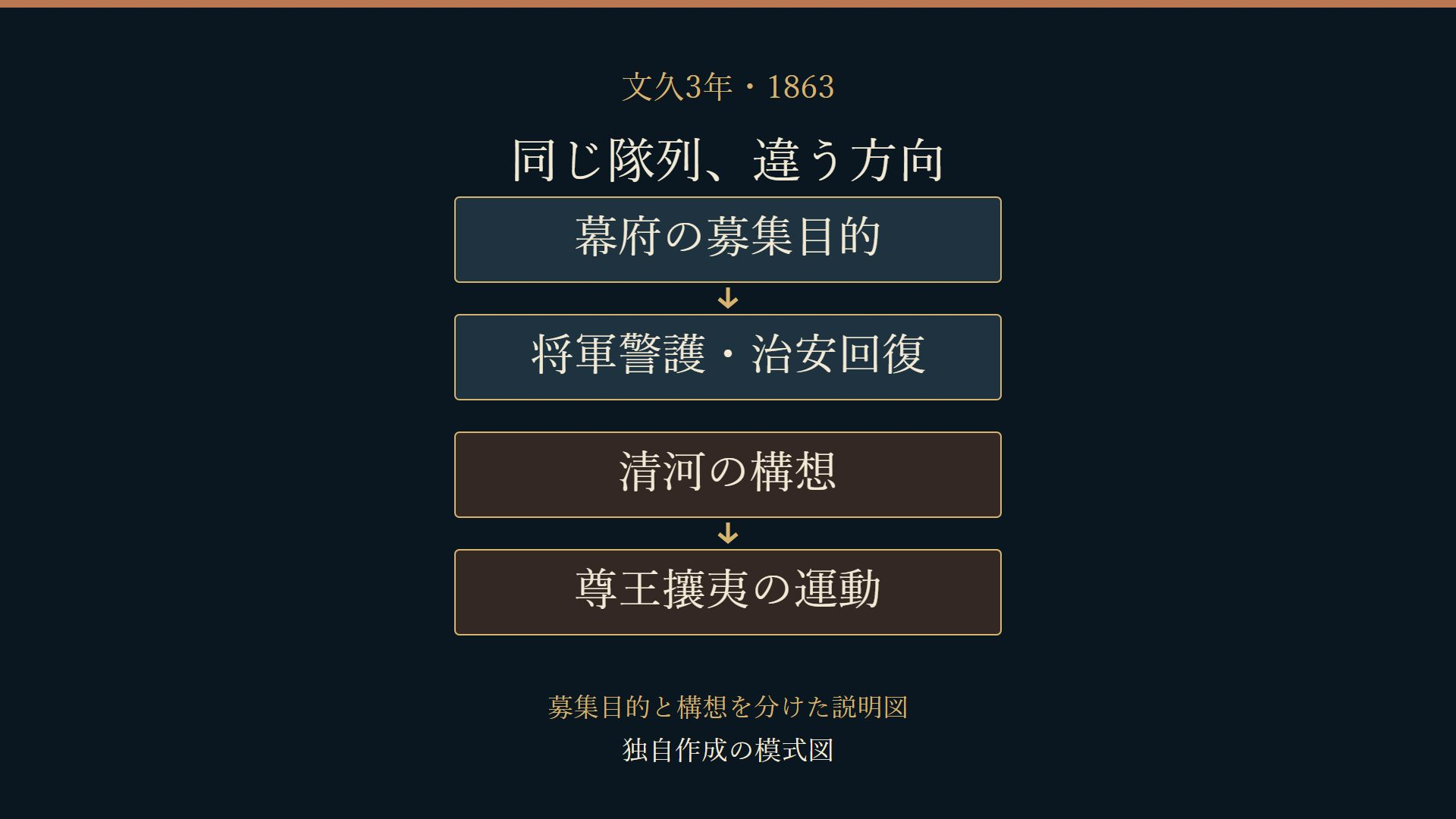
The recruitment was connected with Shogun Tokugawa Iemochi's journey to Kyoto. The shogunate planned to use ronin, warriors without a serving lord, to guard the shogun and help restore public order. Kiyokawa Hachiro had advanced the proposal to recruit them.
Kiyokawa's own political course needs to be distinguished from the recruitment purpose. He advocated sonno joi: revering the emperor and expelling foreigners. The National Diet Library's explanation describes how those ideas were also joined to criticism of the shogunate.
Traveling in one group did not settle whose purposes everyone would serve. Guarding the shogun and participating in the movement Kiyokawa favored could point in different directions. That difference helps explain the division after the group reached Kyoto, without inventing private thoughts or a conversation among the travelers.
The accompanying diagram separates the two purposes. Its upper branch connects shogunate recruitment with guarding the shogun and restoring order; its lower branch connects Kiyokawa's course with sonno joi. It is a schematic explanation, rather than a copy of a contemporary document.
Scene 03
Connections that preceded the journey
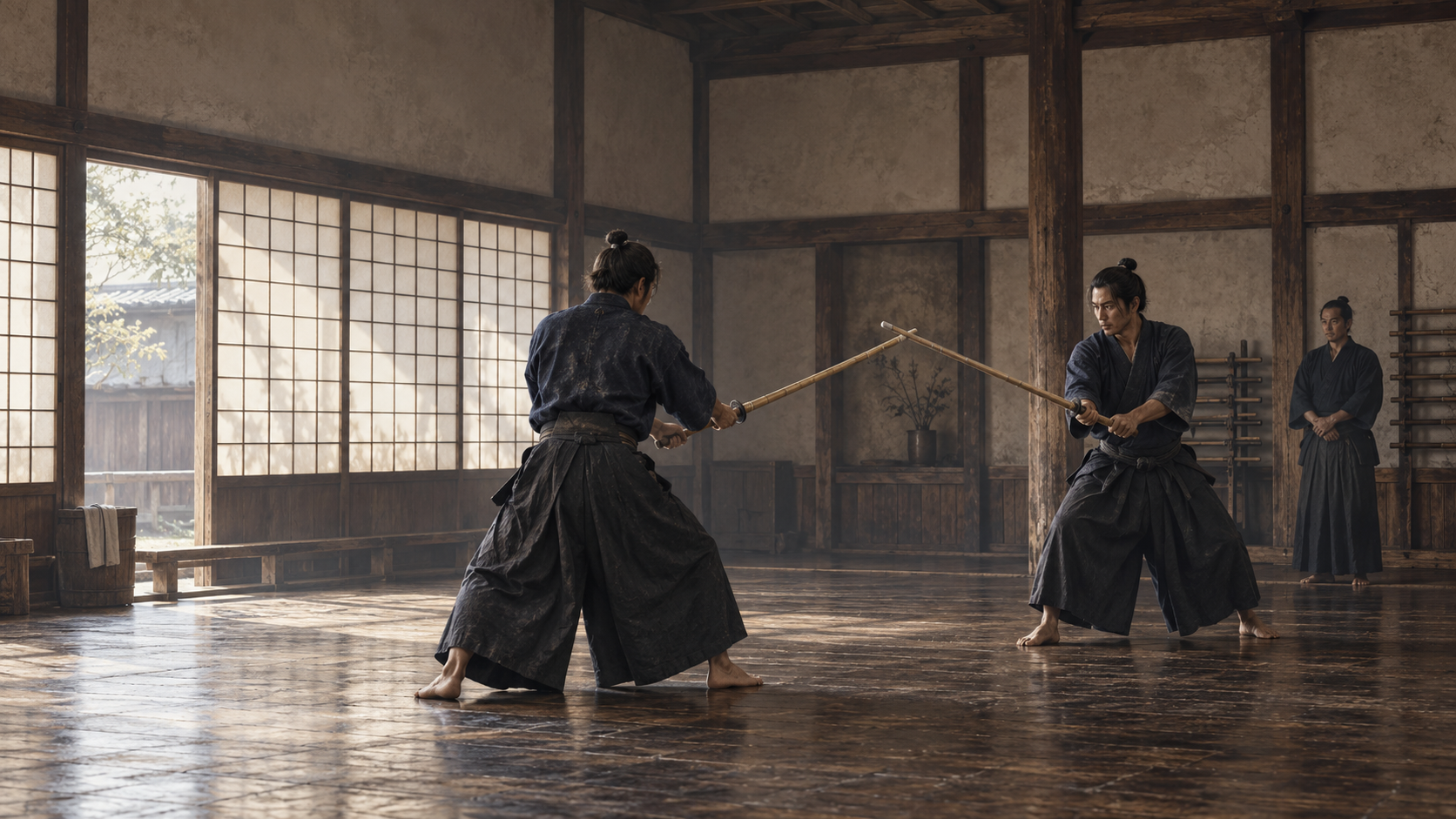
Kondo, Hijikata Toshizo and Serizawa joined the Roshigumi. Kondo had been born into a farming family, adopted by Kondo Shusuke of the Tennen Rishin-ryu sword school, and inherited the dojo in Edo. These details are given in the National Diet Library's biography.
Kondo's connections with others therefore preceded the arrival in Kyoto. Hino City's account introduces sword practice in the Hino and Tama setting, visits by Kondo and Okita, and the support of the village headman Sato Hikogoro after the journey to the capital.
These relationships give the recruitment a more concrete social setting. Some men entered the larger group with existing links formed around sword practice and local support. The beginning was more complicated than a gathering in which every participant first met every other participant in Kyoto.
The same evidence cannot be extended to the whole recruitment. It does not establish that everyone belonged to Kondo's circle or that he alone represented the organization from the outset. Keeping the known connections within their scope leaves room for the different people involved.
Scene 04
From Edo to the lodgings of Mibu
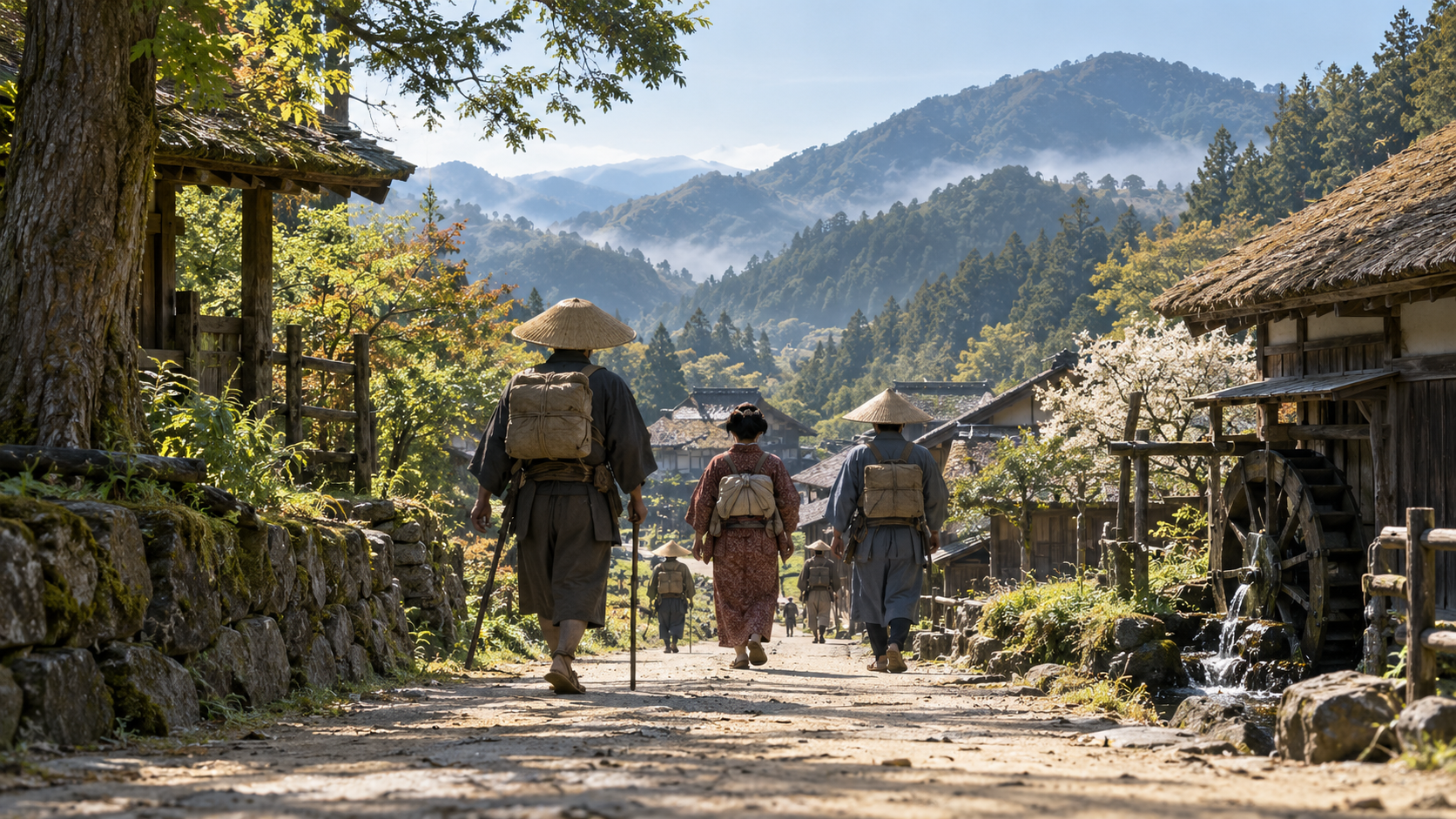
In the second month of Bunkyu 3, the era year corresponding to 1863, the Roshigumi traveled from Edo toward Kyoto along the Nakasendo. The month belongs to the contemporary Japanese calendar. The sources disagree about the precise arrival day, which this article leaves unresolved.
The Nakasendo was an inland route linking Edo and Kyoto through post towns and mountain passes. A table in material published by Hino City traces stages of the journey. Reading those stages makes movement along a route visible, rather than reducing the trip to an arrow between two cities.
The table does not authorize a narrative of the weather, meals or fatigue on a particular day. Nor do its modern date displays become an independently checked calendar conversion here. We use the route and itinerary within the limits adopted by the Japanese article.
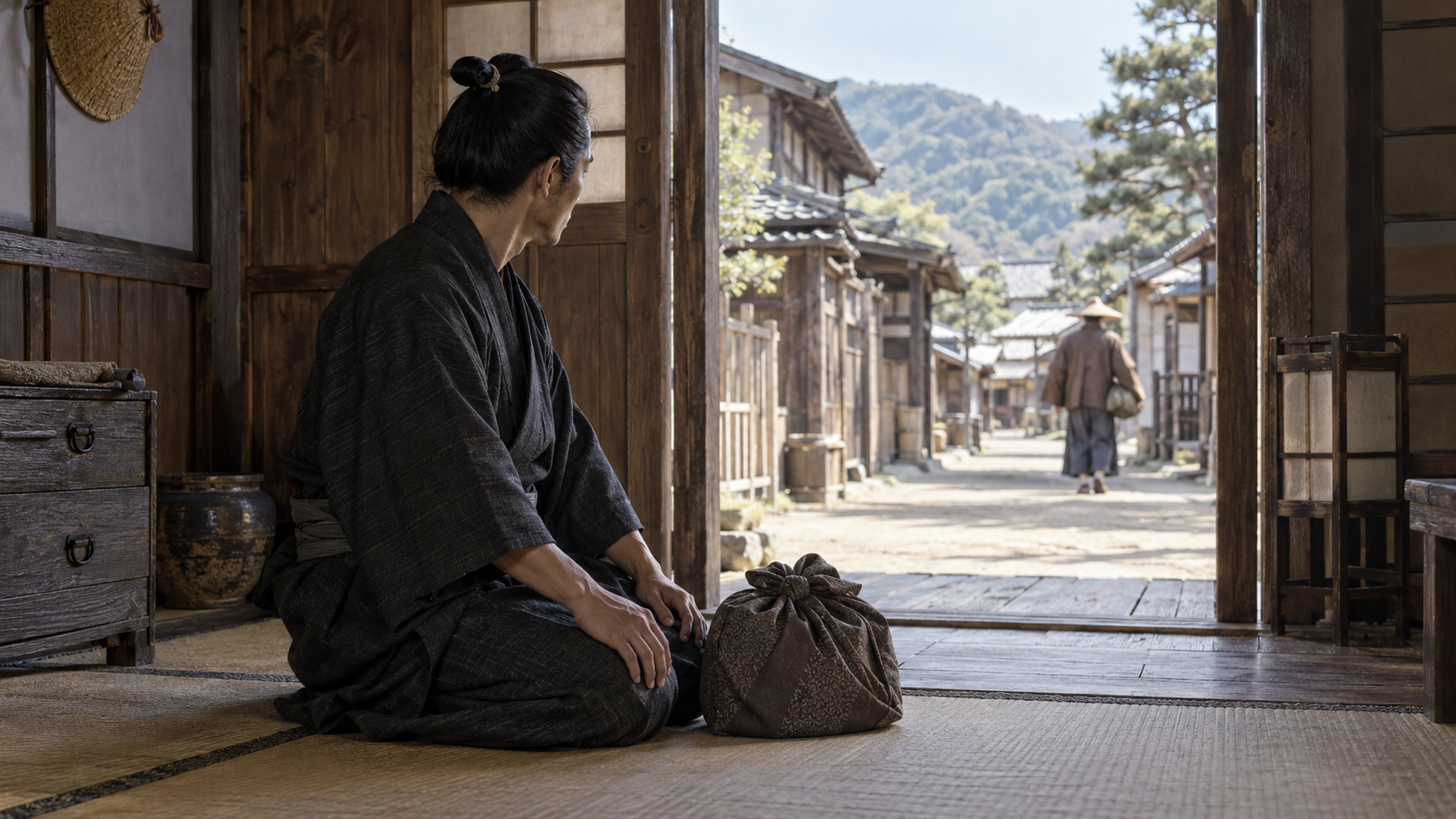
In Mibu, the travelers lodged in existing residences, including the Yagi and Maekawa houses. Their accommodation was distributed among houses; it was not a newly built barracks prepared specifically for the later Shinsengumi. For those who stayed, the lodgings would become the basis of continuing activity.
Scene 05
Returning to Edo or staying in Kyoto
At Shintokuji in Kyoto, Kiyokawa set out a course of sonno joi. The shogunate subsequently called for the group's return to Edo. Most went back, while Kondo, Serizawa and others wished to remain. The group gathered through recruitment now divided over what it would do next.
Aizu-Wakamatsu City's explanation associates the decision to stay with fulfilling the initial purpose of guarding the shogun. That is an account offered by the cited source. It does not give us independent access to the private thoughts of every man who remained.
The remaining men thus followed a different path from the larger group returning east. Their presence in Kyoto still needed a relationship with an authority and a role in the city. Choosing to stay was a step toward an organization, without by itself defining all its subsequent duties.
The city explanation also notes that the number of remaining men varies between publications. A single exact roster or total would give a false impression of agreement. This account preserves the division between return and remaining while leaving that numerical difference visible.
Scene 06
What coming under Aizu meant
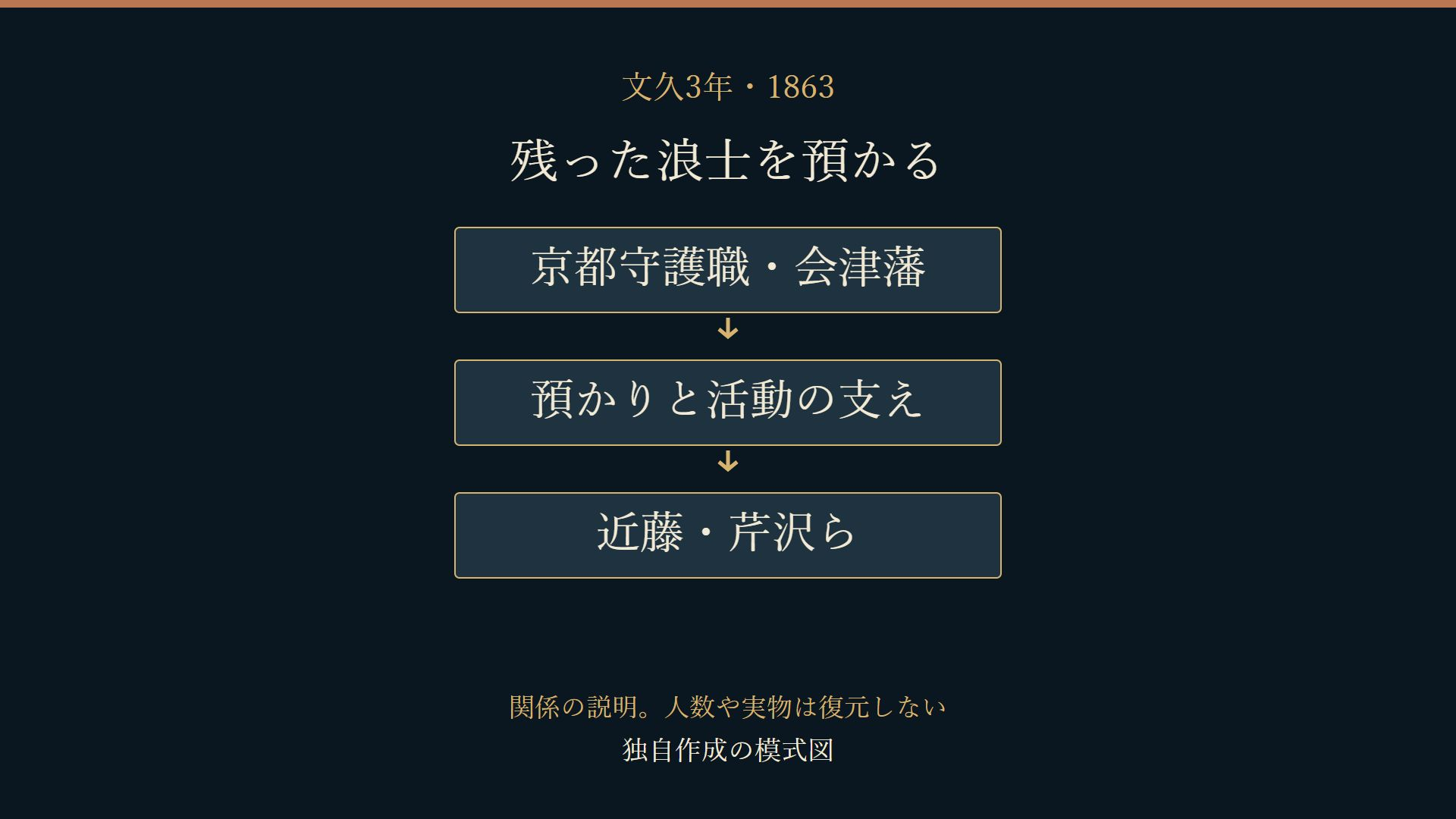
Remaining in Kyoto was different from having recognized duties there. The connection with Matsudaira Katamori, lord of Aizu and holder of the Kyoto shugoshoku office, gave the group a place within the city's arrangements for maintaining order.
The Kyoto shugoshoku was established in Bunkyu 2, corresponding to 1862. Kyoto City's explanation places the office above the Kyoto shoshidai and town magistrates in the shogunate's structure for preserving order. Katamori's Aizu connection therefore matters as an institutional relationship, beyond personal association with a famous lord.
Aizu-Wakamatsu City introduces records concerning the remaining men's request and continuing provision of expenses. This article follows that published explanation and its quotations; it does not claim a new complete reading or transcription of the underlying records. Coming under Aizu linked support and recognized activity.
The diagram places the Kyoto shugoshoku and Aizu above the remaining ronin, joined by the relationship of charge and support. Kondo, Serizawa and others appear in the lower group. This relationship should not be confused with the later status of a direct shogunate retainer: the stages belong to different points in time.
Scene 07
A residence becomes an operational base
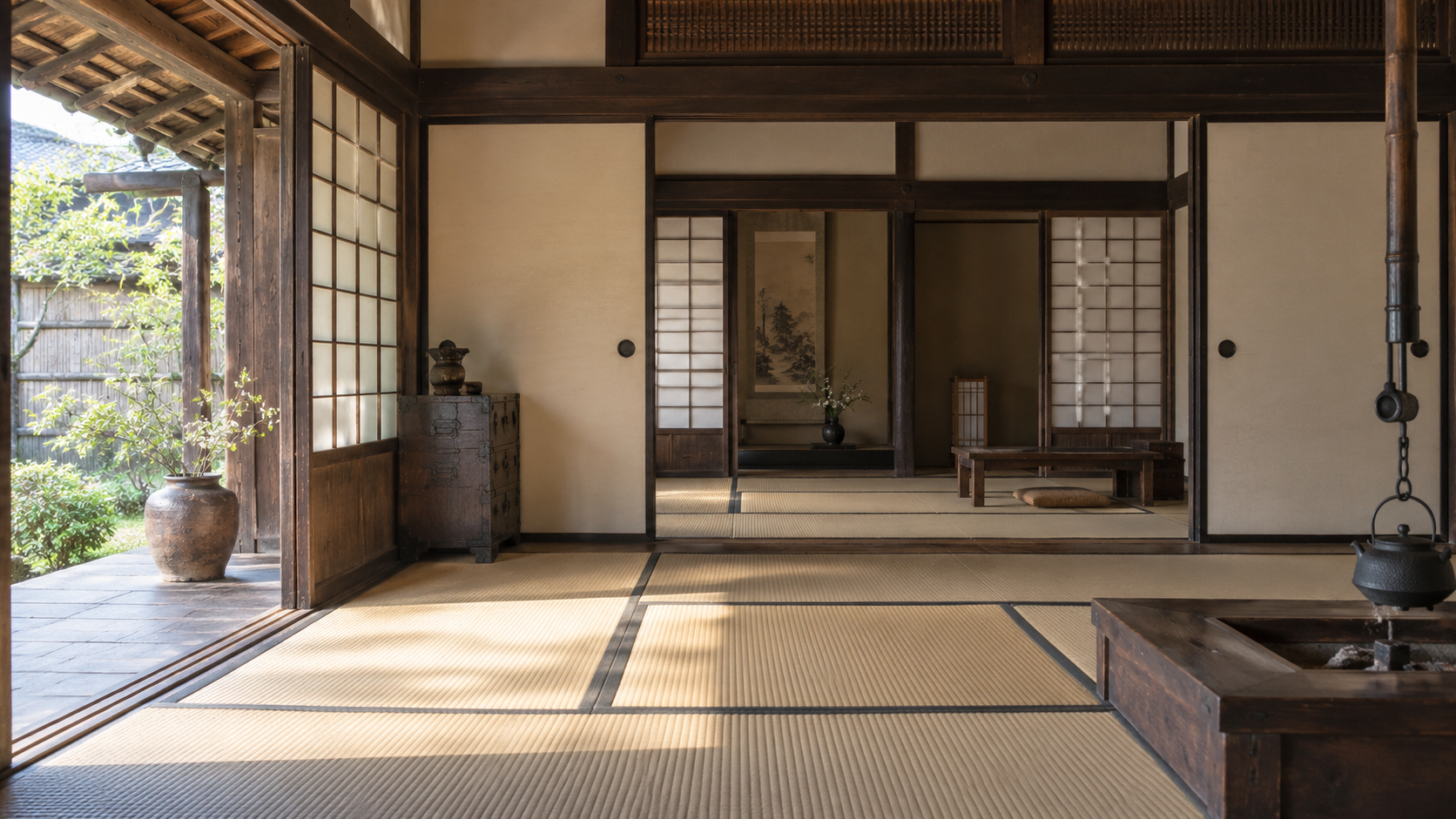
The lodgings at the Yagi and Maekawa residences became tonsho, bases from which the group operated. The change concerns how existing buildings were used. It does not mean that a purpose-built Shinsengumi headquarters appeared as soon as the travelers arrived.
Kyoto City's heritage explanation dates the main Yagi house to Bunka 6, corresponding to 1809. It describes a formal main entrance, a room with a Buddhist altar and formal rooms toward the rear. The house had its own history before it accommodated the men in 1863.
Mibudera's account likewise places the early bases among several residences. These explanations let us connect the organization with actual kinds of space: houses used for accommodation and activity, rather than a headquarters known only through the later reputation of the swordsmen.
The surviving description does not establish which person occupied every room, the furniture present at a particular moment or the terms of lodging. The conceptual interior supplies none of those as verified details. The useful connection is between a preexisting residence and its use as a base.
Scene 08
The temple grounds and training
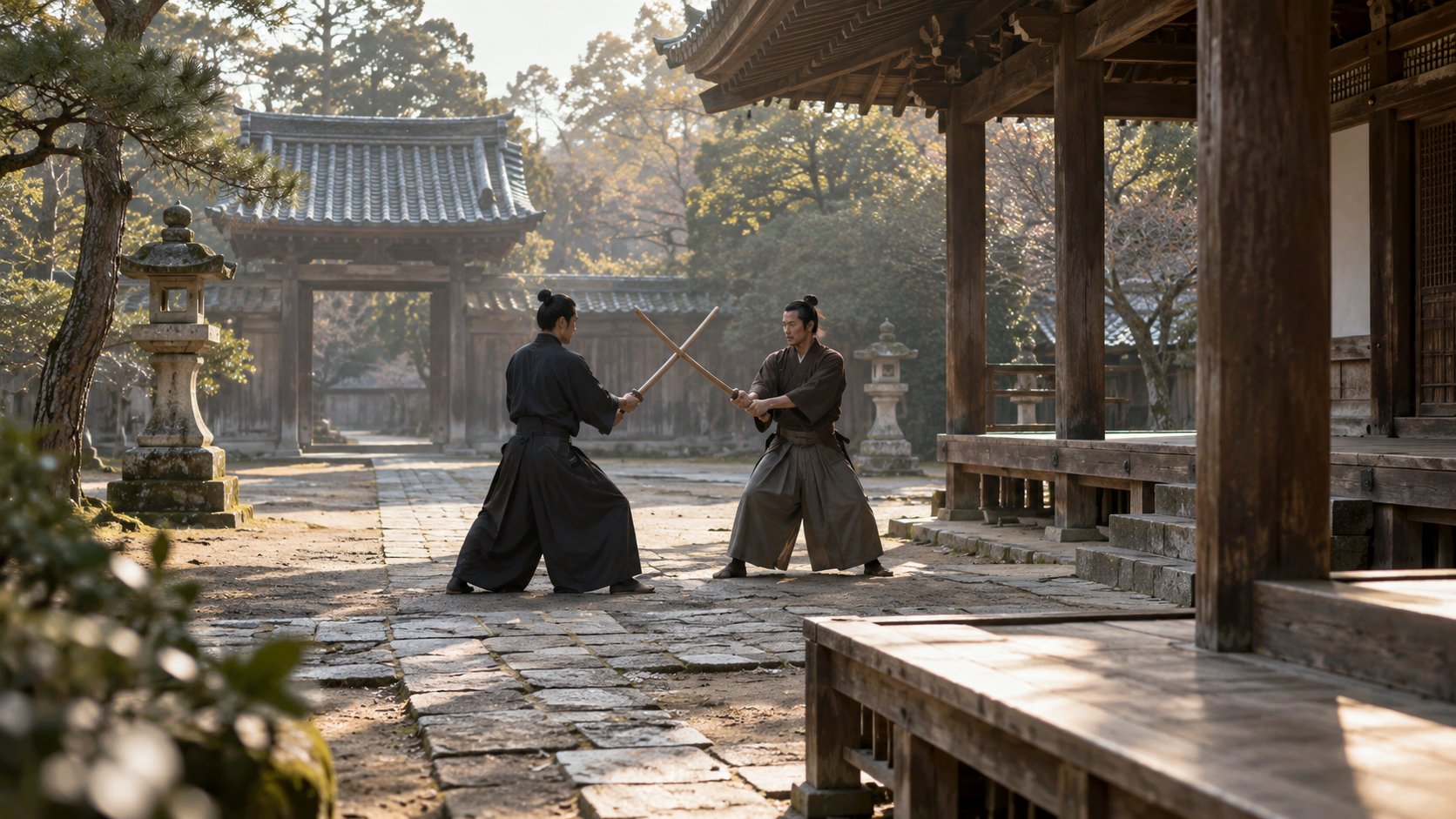
Mibudera explains that its grounds were used for martial training and cannon practice. The temple adds another setting to the houses of Mibu. Lodging, training and carrying out duties together make the early group's activity more tangible.
The explanation does not confirm every exercise on a particular day or identify all the equipment used. The accompanying scene of practice with wooden swords is conceptual. It should not be read as a record of specific participants, a documented lesson or a verified position within the temple grounds.
The Ryozen History Museum lecture published by Kyoto City describes guarding the shogun, patrolling the city and suppressing shishi, political activists associated with the period's political movement. These duties connect the Mibu base with activity beyond the place where the men slept.
Looking at home, training space and assigned work gives us several ways to understand the group. The selected evidence does not establish that every early member already wore an identical uniform. The organization's beginning can be followed through its activities without supplying that familiar visual image.
Scene 09
A letter bearing two names
A letter dated the third day of the sixth month of Bunkyu 3 offers another view of the early group. Preserved by the Kojima Museum, it bears the names of Kondo Isami and Serizawa Kamo. The catalogue explanation identifies Kondo as its writer.
Two names on one document make us cautious about treating Kondo as the sole representative from the beginning. They do not, by themselves, determine every relationship of seniority between the signatories or explain the motives behind a later assassination.
The catalogue describes reports concerning the arrest of ronin in Osaka and a brawl between members of the group and sumo wrestlers. It also explains that two attached reports of the brawl differ in content. Reporting the same event could thus produce different accounts.
A document is an important approach to the past, but its report cannot immediately become the entire event. Here we follow the catalogue and explanatory description, rather than claim a complete independent transcription of the original. Writer, signatories and accompanying reports each matter when asking how the Mibu organization communicated its activities.
Scene 10
Guard duty during the political coup
On the eighteenth day of the eighth month of Bunkyu 3, Kyoto's political situation changed. Aizu, Satsuma and others cooperated in a coup that removed the Choshu domain and court nobles aligned with it from the center of political affairs in Kyoto.
The month and day are those of the contemporary Japanese calendar; they should not silently become August 18 in the Gregorian calendar. At Aizu's request, the Mibu Roshigumi also deployed. The Ryozen History Museum's exhibition account describes its guard duty on the south side of the imperial palace.
The domains central to the coup and the guard duty assigned to this group had different roles. The account does not make the Mibu Roshigumi alone responsible for the political change. Nor does it establish an exact number of men, gunfire or a particular palace gate's architecture.
The deployment makes the institutional connection visible in action. A group that had remained in the spring could now be called out under Aizu's authority during a political event. Living at Mibu, coming under the Kyoto shugoshoku's charge and responding to a request for guard duty formed a sequence leading toward a new name.
Scene 11
Receiving the name Shinsengumi
After deploying during the eighth-month coup, the Mibu Roshigumi received the name Shinsengumi. The Ryozen explanations published by Kyoto City and the museum associate the naming with recognition of its service and attribute it to the buke tenso.
The buke tenso served as intermediaries between the imperial court and the warrior authorities. The name can be read as a milestone in the group's recognition in Kyoto. The seventeenth-century document catalogue used to explain that office's function is not direct evidence of the 1863 naming itself.
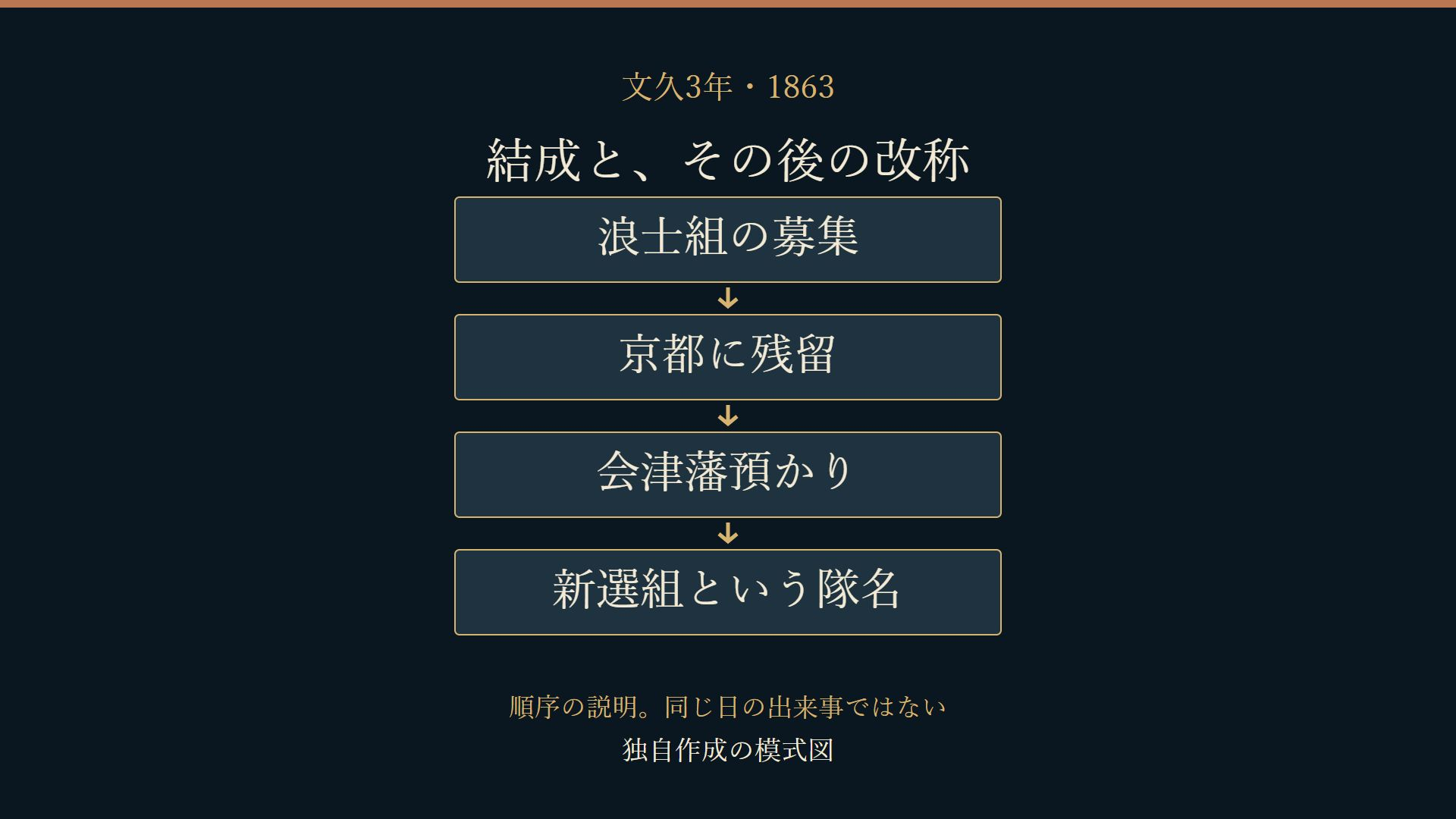
The sequence remains important: recruitment into the Roshigumi, remaining in Kyoto, the Mibu group under Aizu's charge, and receiving the name Shinsengumi. The diagram presents these four stages in order. It does not assert that they all occurred on one day, and this article does not fix an exact naming date.
Receiving a name was also distinct from becoming a direct retainer of the shogunate. The National Diet Library biography dates Kondo's acquisition of that later status to Keio 3, corresponding to 1867. His later standing should not be projected back onto the arrangements made in 1863.
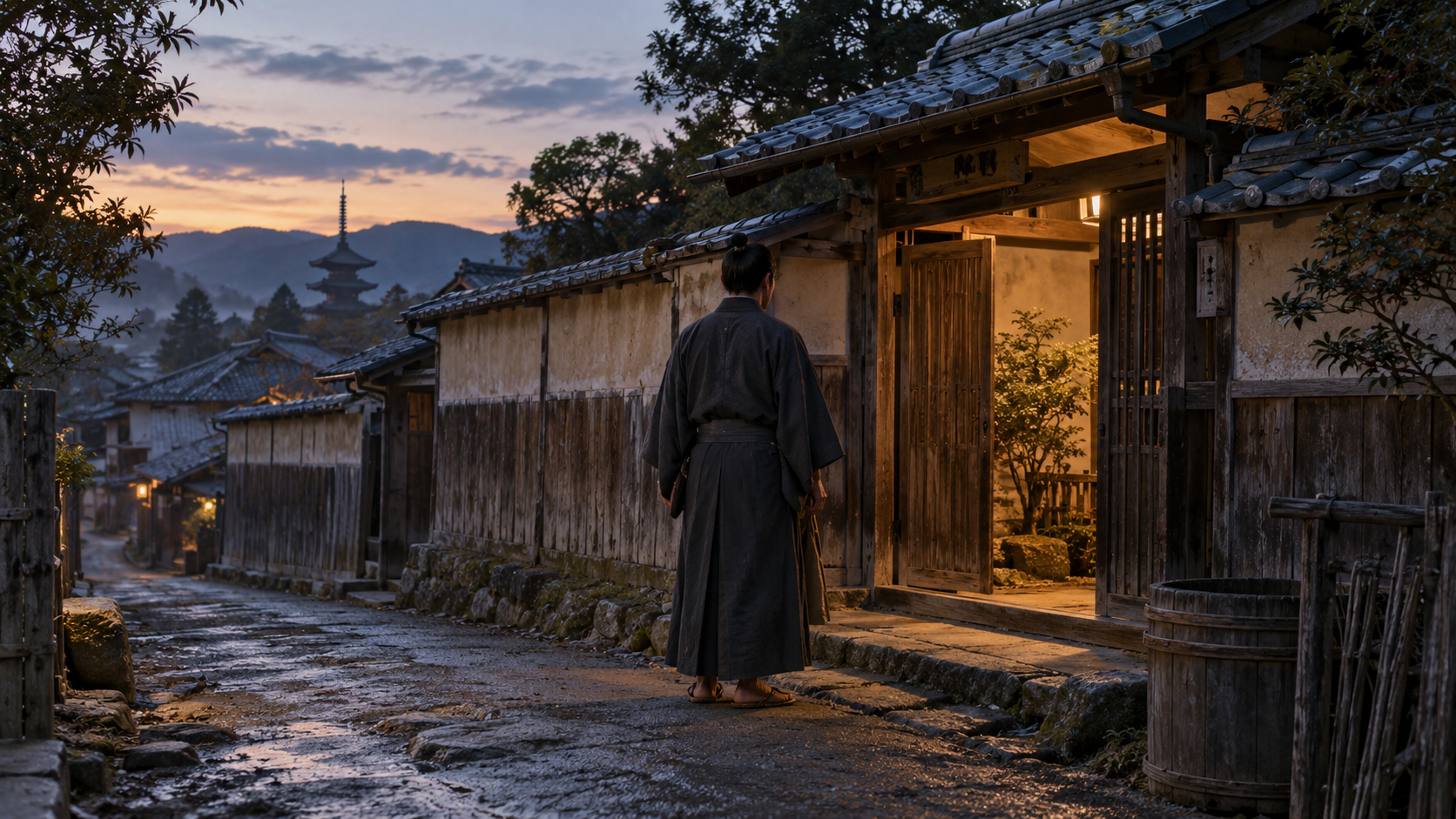
Scene 12
How Mibu supported the beginning
The organization continued to change after the naming. In the ninth month of Bunkyu 3, Serizawa and others were assassinated at the Yagi house. Their graves at Mibudera preserve a connection with events surrounding the early group.
The selected material does not determine who issued every order, precisely how all participants acted or what they said. It supplies no reconstructed weapons or bedroom arrangement. The later image of a group centered on Kondo cannot simply be placed back at the instant of arrival.
What we have followed is an accumulation of relationships and activities: staying in Kyoto, coming under Aizu, using houses and a temple, undertaking guard duty and receiving a new name. Mibu was the base where part of the recruitment from Edo acquired work and an institutional affiliation in Kyoto.
Reading the beginning through that place brings more into view than the strength of celebrated swordsmen. An organization needed people to stay, spaces to use, an authority to act under and duties to perform. The itinerary, residences, jointly signed letter and palace deployment each illuminate a different part of that development.
Editorial note: Historical statements follow the published explanations and catalogues of municipalities, temples, museums and holding institutions. Arrival days and remaining numbers differ, so neither is fixed to one answer. The letter is adopted through its catalogue, without a new full transcription. Month and day retain the contemporary Japanese calendar; bibliographic date displays are not treated as Gregorian conversions. Arrival, remaining, Aizu charge, naming and later direct retainer status remain distinct. The older buke tenso record explains an office, rather than proving the 1863 naming. Identical early uniforms, exact naming and assassination details are not reconstructed. The illustrations are AI-generated conceptual scenes and three original explanatory diagrams, rather than authenticated portraits, period photographs, source copies or precise architectural reconstructions.
How to read this work
History, interpretation, and reconstruction
Reading the beginning through Mibu reveals the distinct steps of gathering recruits, remaining in Kyoto, acquiring an affiliation and duties, and receiving the name Shinsengumi.
This work is grounded in published sources and historical research. Interior thoughts, dialogue, and some visual details are cinematic reconstructions. Where historians disagree, the article presents the point as debated rather than settled fact.
Timeline
The story in time
-
The Kyoto shugoshoku office is established and Katamori takes office.
Sources: s14 -
Most return to Edo; Kondo, Serizawa and others remain and come under Aizu's charge.
Sources: s03 -
Date of the jointly signed Kondo and Serizawa letter, adopted through catalogue and explanatory description.
Sources: s10 -
Serizawa and others are assassinated at the Yagi house; orders and operational details are not fixed.
Sources: s08 -
Kondo becomes a direct shogunate retainer, a later stage distinct from the 1863 arrangements.
Sources: s05
People & terms
A guide for new readers
Key figures
- Kondo Isami
- Roshigumi participant who remained in Kyoto; his earlier dojo connections and later retainer status retain their chronology
- Hijikata Toshizo
- Roshigumi participant with connections to Kondo before the Kyoto journey
- Serizawa Kamo
- Roshigumi participant who remained in Kyoto and figures in the early organization and jointly signed letter
- Kiyokawa Hachiro
- Advanced recruitment and set out a political course of sonno joi
- Matsudaira Katamori
- Lord of Aizu and Kyoto shugoshoku, under whose charge the remaining men came
Glossary
- Ronin 浪士
- A warrior without a serving lord. Here the word identifies those recruited for the Roshigumi, without assigning everyone one political purpose.
- Roshigumi 浪士組
- The recruitment associated with guarding the shogun on his Kyoto journey. Its whole membership did not become the later Shinsengumi.
- Mibu Roshigumi 壬生浪士組
- The group operating from Mibu after remaining in Kyoto and coming under Aizu's charge.
- Sonno joi 尊王攘夷
- Revere the emperor and expel foreigners. The cited library explanation connects the movement with criticism of the shogunate.
- Dojo 道場
- A place for martial practice. Kondo inherited an Edo dojo, and prior practice connections are part of the recruitment's background.
- Tonsho 屯所
- An operational base. In Mibu, existing residences became bases rather than being built specifically as Shinsengumi barracks.
- Kyoto shugoshoku 京都守護職
- The shogunate office established in 1862 for maintaining order in Kyoto, held by Katamori above the Kyoto shoshidai and town magistrates.
- Aizu charge 会津藩預かり
- The relationship of institutional charge and support under Aizu. It is distinct from becoming a direct shogunate retainer.
- Buke tenso 武家伝奏
- Court officials serving as intermediaries with warrior authorities. An older catalogue explains the function; the naming account comes from the Ryozen explanations.
- Shishi 志士
- Political activists of the period, mentioned in the city-published lecture's description of the group's duties.
- Bunkyu 3 文久三年
- The era year corresponding to 1863. Months and days in this article retain the contemporary Japanese calendar.
Sources & method
How this article was built
This English edition follows the fixed published Japanese manuscript, preserving twelve scene identities, fifteen source identities, five people and eight timeline entries. Geographical and institutional explanations remain within the selected sources.
The completed Japanese review records reading all fifteen institutional references and inspecting the relevant PDF page and thirteen cleared article images. The English review inherits that review only after checking the current source and image hashes; targeted additional readings are recorded separately and do not amount to a new complete transcription of original historical documents.
The Kyoto-published lecture and museum exhibition give different arrival days. The Aizu explanation notes differing remaining totals. Neither discrepancy is silently resolved. The letter's catalogue metadata does not become an independently verified Gregorian conversion, and an older buke tenso record does not prove the later naming.
The conceptual scenes are AI-generated and the three explanatory diagrams are original schematics. No archived photograph or document image is reproduced. The associated film has Japanese audio; an English subtitle track has not been verified. Historical claims, interpretation and visual reconstruction remain distinct.
Sources
References and further reading
- Lecture 2: From the Roshigumi to the Shinsengumi, by Kimura Yukihiko of the Ryozen History Museum 京都市公開・木村幸比古(霊山歴史館) 第2回 浪士組から新選組 Title translated editorially for reader convenience. Kyoto City 京都市 Recruitment, arrival, remaining, duties, coup deployment and naming. Its second-month arrival day differs from the museum exhibition account; no precise day is adopted. Accessed 2026-10-08
- Shinsengumi Historic Site, NA070 京都市歴史資料館・新選組遺蹟 NA070 Title translated editorially for reader convenience. Kyoto City 京都市 Shogunate recruitment, divided lodging in the Yagi and Maekawa residences, Kiyokawa's course, return to Edo and remaining in Kyoto. Accessed 2026-10-08
- Aizu and the Shinsengumi 会津若松市・会津と新選組 Title translated editorially for reader convenience. Aizu-Wakamatsu City 会津若松市 The explanation associates remaining with the initial shogun-guard purpose and introduces charge and expense records. Numerical differences are explicit; commemorative language is not independent proof of each person's private thoughts. Accessed 2026-10-08
- Hino, the hometown of the Shinsengumi 日野市・新選組のふるさと日野 Title translated editorially for reader convenience. Hino City 日野市 Sword practice, visits by Kondo and Okita, and Sato Hikogoro's support. These connections are not extended to the whole recruitment. Accessed 2026-10-08
- Kondo Isami: Portraits of Modern Japanese Historical Figures 国立国会図書館・近藤勇 近代日本人の肖像 Title translated editorially for reader convenience. National Diet Library 国立国会図書館 Origins, adoption, dojo inheritance, recruitment, remaining under Katamori and direct retainer status in Keio 3 (1867). The biography gives the reading Isami. Accessed 2026-10-08
- Physical capacities in the Edo period and today: images and reality, by Matsushita 日野市公開・松下尚 江戸時代人と現代人の体力差 イメージと実際 Title translated editorially for reader convenience. Hino City 日野市 Only the Roshigumi journey table on PDF page 10 is adopted. Fitness claims, distances as a daily performance calculation and unverified calendar conversions are not supplied. Accessed 2026-10-08
- The Nakasendo 瑞浪市・中山道 Title translated editorially for reader convenience. Mizunami City 瑞浪市 The inland route linking Edo and Kyoto, post towns and passes. This geographical explanation does not establish a particular traveler's daily experience. Accessed 2026-10-08
- The Shinsengumi at Mibudera 壬生寺・壬生寺と新選組 Title translated editorially for reader convenience. Mibudera 壬生寺 Residential bases, martial and cannon training in the temple grounds, and graves connected with the early group. Exact assassination procedures and particular training days are not reconstructed. Accessed 2026-10-08
- Yagi Residence: registered cultural property 京都市・指定登録文化財 建造物 八木家住宅 Title translated editorially for reader convenience. Kyoto City 京都市 The 1809 main house, formal entrance, altar room and formal rear rooms. A building description is not a room-by-room record of occupancy in 1863. Accessed 2026-10-08
- Joint letter of Kondo Isami and Serizawa Kamo: collection catalogue 小島資料館所蔵・近藤勇 芹沢鴨書簡 ADEAC目録 Title translated editorially for reader convenience. Kojima Museum, ADEAC 小島資料館(ADEAC目録) Bunkyu 3, sixth month, day 3; the catalogue identifies Kondo as writer and describes arrests, a sumo brawl and differing attached reports. Catalogue metadata is not a Gregorian conversion or a new transcription of the entire original. Accessed 2026-10-08
- Satsuma Domain Residence Site, KA006 京都市歴史資料館・薩摩藩邸跡 KA006 Title translated editorially for reader convenience. Kyoto City 京都市 Aizu and Satsuma's role in removing Choshu from the political center during the eighth-month coup. The group's guard duty is kept distinct from leadership of the coup. Accessed 2026-10-08
- 160 years since the Shinsengumi's formation: exhibition 霊山歴史館・結成160年 新選組奮戦録 Title translated editorially for reader convenience. Ryozen History Museum 霊山歴史館 Aizu's deployment request, guard duty south of the palace and naming by the buke tenso. The arrival day differs from the Kyoto-published lecture, and is not fixed here. Accessed 2026-10-08
- Kyoto Shugoshoku Residence Site, KA016 京都市歴史資料館・京都守護職屋敷址 KA016 Title translated editorially for reader convenience. Kyoto City 京都市 Establishment in 1862, Katamori and the office's position above the Kyoto shoshidai and town magistrates. Institutional charge is distinct from later direct retainer status. Accessed 2026-10-08
- The sonno joi movement 国立国会図書館国際子ども図書館・尊王攘夷運動 Title translated editorially for reader convenience. International Library of Children's Literature, National Diet Library 国立国会図書館 The meanings of revering the emperor and expelling foreigners, and their connection with criticism of the shogunate. Accessed 2026-10-08
- Letter of Itakura Katsushige: cultural heritage catalogue 文化遺産オンライン・東京国立博物館 板倉勝重書状 Title translated editorially for reader convenience. Cultural Heritage Online, Tokyo National Museum 文化遺産オンライン・東京国立博物館 Used only to explain the buke tenso's court-warrior liaison function through an older document. It is not direct proof of the 1863 naming. Accessed 2026-10-08
Continue reading
More stories from Shigeki
Shigeki English
Sakai’s Merchant City: Trade, Self-Government and Survival
A port, a merchant council and town communities—from changing authority to rebuilding after fire.
- When From the later fifteenth century through the Sengoku period, the fire of 1615 and early Edo-period reconstruction.
- Where Sakai, in present-day Osaka Prefecture, where maritime routes met roads on land.
Shigeki English
The Aburanokōji Incident: After Leaving the Shinsengumi
A separation in spring, a new base in summer, and two successive attacks.
- When Kyoto in Keiō 3 (1867). The incident’s historical date corresponds to December 13, 1867.
- Where Kyoto: the guards’ successive bases, the Aburanokōji attack site and the later place of remembrance.