
SHIGEKI ENGLISH STORYEN
Japanese history in English
Kuroda Kanbei: Ships, Linked Verse and People in His Later Letters
After handing over his house in 1589, he kept sending orders about ships and news about poetry. His letters trace the years until his death in 1604.
What did Kuroda Kanbei do after retiring as family head in 1589? Orders for war vessels, land assignments, a Roman-letter seal, news for fellow poets, corrections to his verse, a retreat at Dazaifu and his death at Fushimi reveal his later life through the people who received his letters.
At a glance
Before you enter the story
- When
- From the 1589 succession to Josui’s death in 1604 and the completion of Fukuoka Castle in 1607. Month-and-day dates follow the Japanese calendar of the time.
- Where
- Nakatsu, Chikuzen and the new town of Fukuoka, Dazaifu, Kyoto and Fushimi.
- Key figures
- Kuroda Kanbei (Yoshitaka; Josui), Kuroda Nagamasa, Matsumoto Katsushige, Satomura Shōshitsu, Satomura Shōtaku
- What was at stake
- How a famous strategist’s later years look when they are read through the working letters he sent to particular people.
Why this story matters
The larger history behind the turning point
Famous names can overshadow the people who received orders, carried them out or offered advice. Reading Kanbei through his letters restores those people to the story and shows how a retired lord could remain useful to a new domain.
The letters also caution against simple labels. Retirement, faith, poetry and military duty overlapped in one life, and the surviving papers let readers see that overlap in concrete detail.
Historical context
What an international reader needs to know
One life, several names
Kanbei, Yoshitaka and Josui all refer to the same person, and Simeon was his baptismal name. Nagamasa was his son and successor. The transfer of headship in 1589 and the use of the name Josui from 1593 or later were separate milestones.
Dates in the letters follow the lunar calendar in use at the time. Some letters can be dated only to a range of years, so this article keeps estimated dates distinct from dates that are stated in the documents.
Different papers, different evidence
Letters, land grants, sworn oaths, poems, portraits and later copies each preserve a different kind of information. A portrait made after Josui’s death, for example, cannot be read in the same way as a letter he sent while alive.
This article relies on museum explanations and published reference works. It does not offer a new reading of the original manuscripts, and it notes where sources disagree.
Watch the film
See the story in motion
The film currently uses Japanese audio. This English article provides the context and source trail; it does not imply that an English subtitle track is available.
Opening
Instructions from a retired strategist
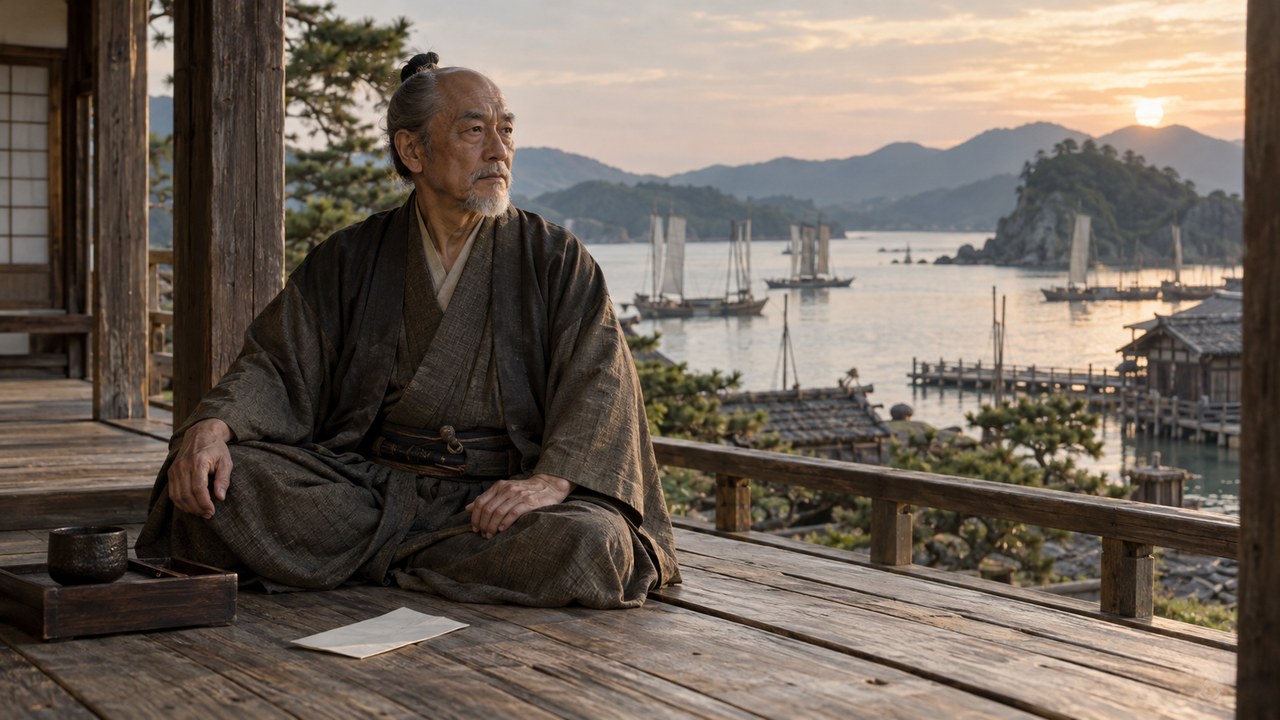
More than ten years after he handed the family headship to his son, Kuroda Kanbei was still sending out orders about ships. Between 1601 and 1603 he wrote to Matsumoto Katsushige, the officer in charge of the Kuroda fleet, about the handling of war vessels. Retirement, in his case, did not mean the end of work.
Another letter, written in the seventh month of 1603, reports the death of a master of linked verse and asks that the master's farewell poem be shown to friends at Dazaifu. One message went to a retainer who handled ships, another to companions in poetry. By changing his addressee and his business, Kanbei kept many relationships alive.
Kanbei was his common name, Yoshitaka his formal name and Josui the name he took later in life. This article follows him from the succession of 1589 to his death in 1604, using the recipients of his letters as a guide. Asking whom he wrote to, and what he entrusted to them, reveals a later life that the legend of the strategist tends to hide.
Chapter 1
Every letter had a reader
In 2014 Fukuoka City Museum displayed two newly acquired groups of Kanbei's letters, twenty items in all. All of them date from his final years, after the family moved to Fukuoka. Looking beyond the famous sender to the household that received each letter makes its business far easier to understand.
Documents also did different jobs. A letter conveyed an order, a land grant assigned income, and a sworn oath bound retainers who signed it together. An oath signed by Kuroda retainers on the fifth day of the eleventh month of 1578 was shown at a major 2014 exhibition in the section on Kanbei's imprisonment at Arioka Castle.
Dating varies from one document to the next. The museum's list includes letters assigned to a span of years, such as 1601 to 1603, and others marked only as probably from 1601. A surviving month and day does not always fix the year. Dates in this article follow the Japanese calendar of the time.
Chapter 2
After the succession of 1589
In 1587, after Toyotomi Hideyoshi brought Kyushu under his control, Kanbei received six districts of Buzen Province. He moved to Nakatsu in 1588, and in 1589, at the age of forty-four, he passed the headship to his son Nagamasa. Yet he went on to serve in the Odawara campaign and the invasions of Korea, so his military career continued.
Fukuoka City Museum places his tonsure and the adoption of the name Josui in 1593 or later. Tradition links the step to the Korean campaign, when he is said to have incurred Hideyoshi's anger and prepared himself for death. At least one reference work instead dates the shaving of his head to 1589, so the sources do not draw the line in the same place.
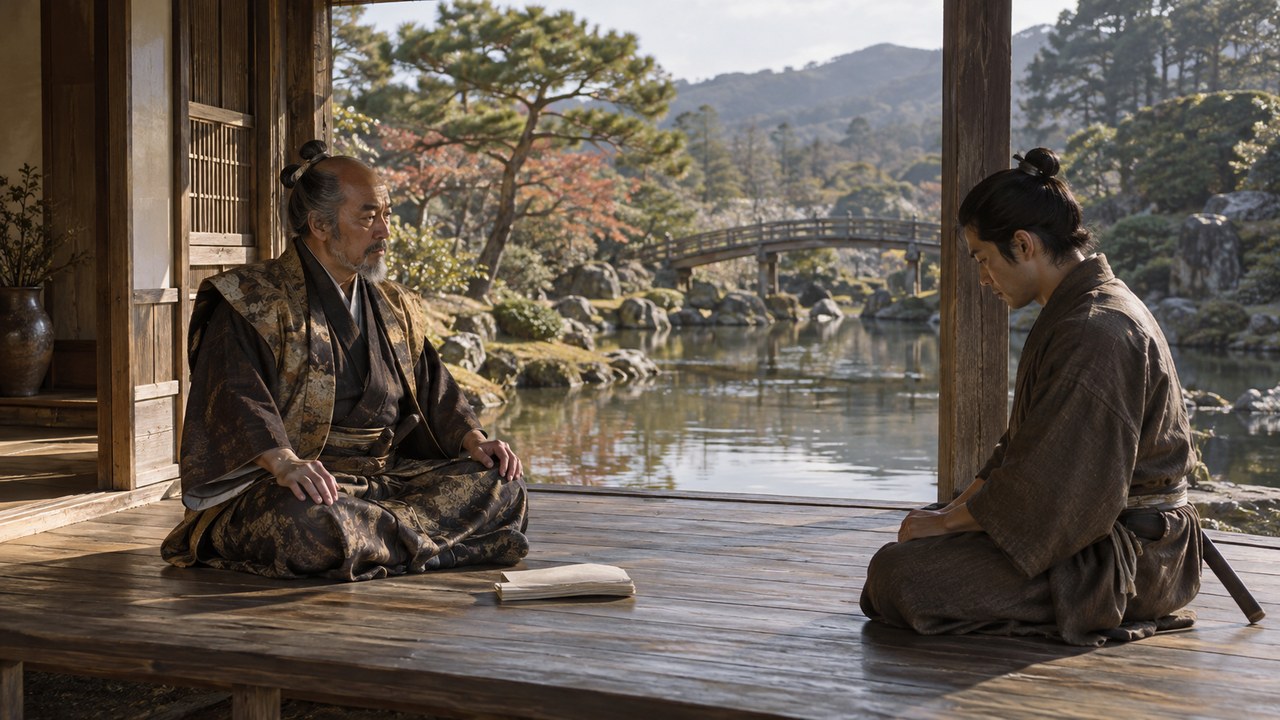
A change of family head did not mean that the father had stepped away from war or household affairs. The letters of his later years grew out of a working partnership in which father and son held different roles. That division of labor became especially clear during the conflict of 1600.
Chapter 3
Father and son at Sekigahara
At the Battle of Sekigahara in 1600, Nagamasa fought in the main engagement on the side of Tokugawa Ieyasu. In the sixth month, before the campaign, he had married Ieyasu's adopted daughter. The museum credits him with defeating the main force of Ishida Mitsunari and with working to win over the Mōri forces and Kobayakawa Hideaki.
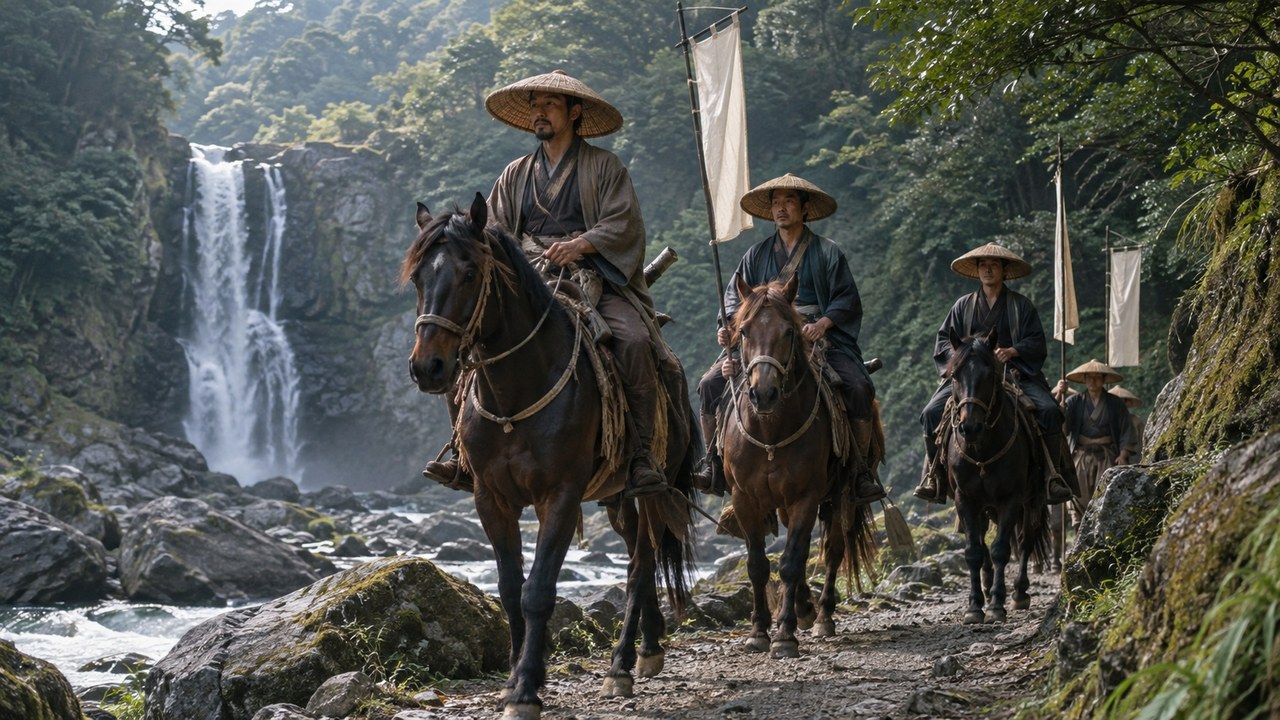
Josui, meanwhile, was in Kyushu. According to a standard encyclopedia, he defeated Ōtomo Yoshimune in Bungo, attacked Mōri Katsunobu at Kokura and advanced as far as Minamata with the aim of striking the Shimazu. Father and son were fighting far apart, but both were acting in support of Ieyasu.
After the war Nagamasa received Chikuzen Province, assessed at 523,000 koku, and became the first lord of the Fukuoka domain. Two days before his death in 1623 he dictated a testament claiming that Ieyasu's victory had rested on his father's efforts and his own. Those are the words of an interested party, not a neutral account of the whole campaign.
Chapter 4
From Fukusaki to Fukuoka
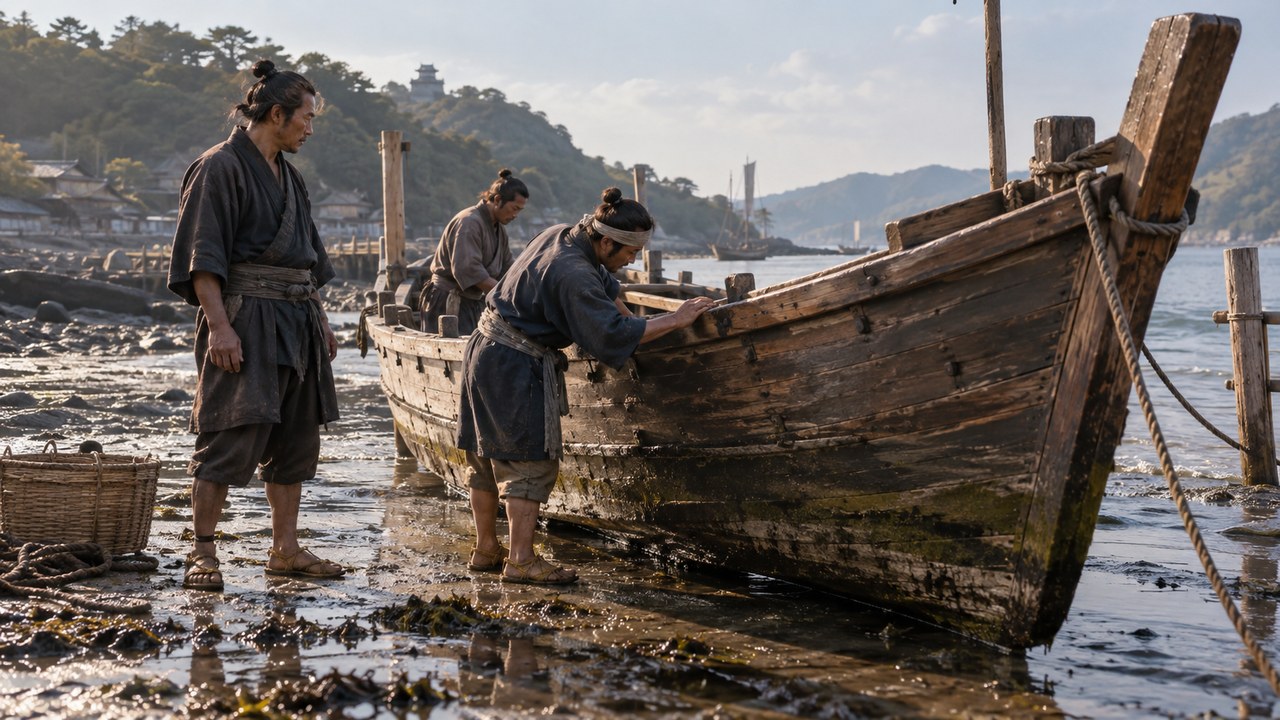
On arriving in Chikuzen the Kuroda first occupied Najima Castle, then in 1601 began building a new castle at a place called Fukusaki. The work is said to have been finished in 1607. The site was renamed Fukuoka after Fukuoka in Bizen Province, a place with old ties to the Kuroda family, and the modern city still carries that name.
Josui is said to have lived in a small retreat within the grounds of Dazaifu Tenmangū until his quarters at the new castle were ready. The shrine still preserves a well known as Josui's Well, which he is said to have used for the tea ceremony. He later moved to a residence in the castle's third enclosure and is said to have lived quietly there with his wife.
The castle was completed three years after Josui's death. What he saw in his last years, then, was not a finished fortress but a castle and town still taking shape. Letters from this period of building a new domain survived in the household of the family's ship officers, and they are the next stop in this story.
Chapter 5
Two sets of letters in one household
The Matsumoto family, who served as ship commanders for the Fukuoka domain, split into two branches early in the Edo period. The papers of the senior branch were not previously known to scholars. Of the seventy-five documents in the collection, nineteen are letters from Josui and nineteen are letters from Nagamasa, so father and son account for about half of the whole.
Most of Josui's letters date from 1601 to 1603, after the move to Chikuzen, and instruct Matsumoto Katsushige, also known as Mitsukatsu, on the operation of war vessels. The retired father and the reigning son were each writing to the same household about matters that required action, a pattern that is easy to miss if retirement is taken literally.
The nineteen surviving letters cannot represent all of the business that passed between them. Even so, they show that Josui was giving specific orders to a retainer who handled ships during these years. They offer a reliable way into his later working life, and they suggest that retirement on paper could coexist with a steady stream of practical duties.
Chapter 6
Two figures, two kinds of duty
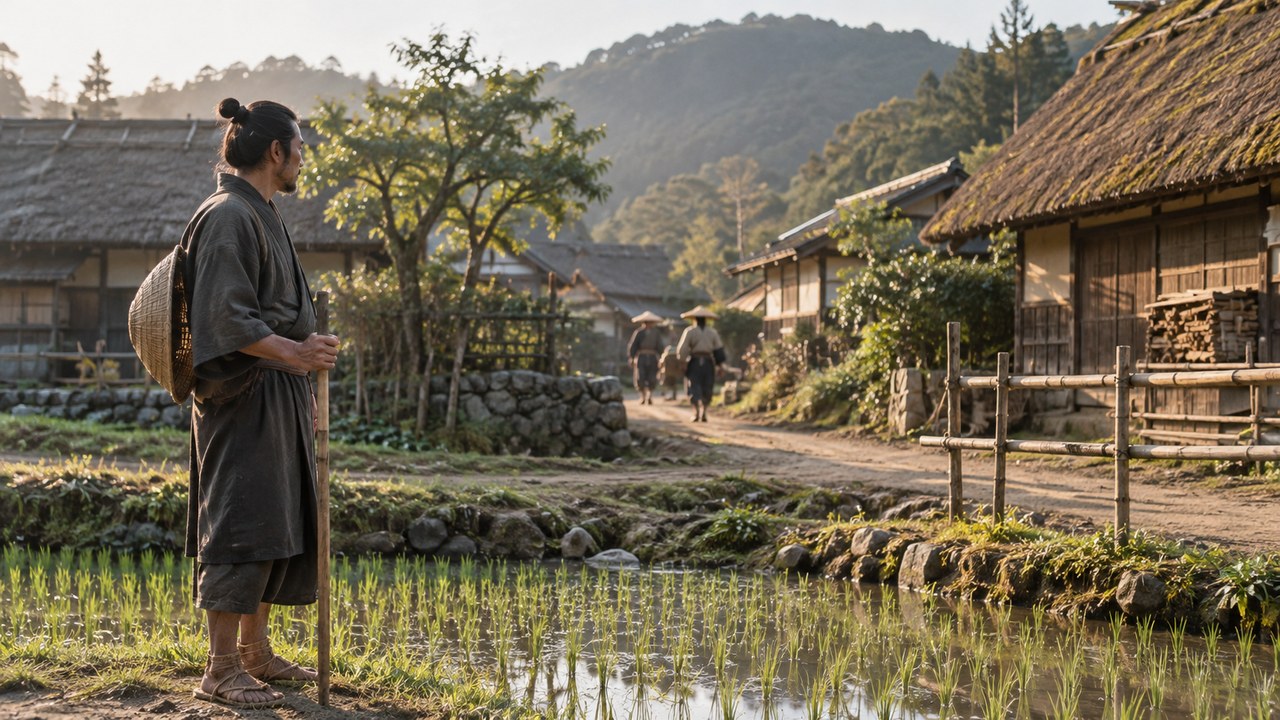
Katsushige received more than orders about ships. In the tenth month of 1601 he was granted a holding of 400 koku in Munakata District, together with a further 207 koku or so to administer as a deputy. The museum's list of exhibits includes a land-grant document dated the sixth day of the tenth month of that year.
Land granted as a holding and land administered on the lord's behalf are not the same thing. Adding the two figures together to produce a single reward would erase a distinction that the documents themselves preserve. Each number says something different about Katsushige's position and about what the Kuroda house expected him to do.
Such arrangements were part of the machinery of a new domain. A retainer responsible for moving ships was also given income and administrative responsibility on land. Shifting attention from the famous sender to the man who received these papers brings one small part of the building of Chikuzen into focus.
Chapter 7
Two names on one seal
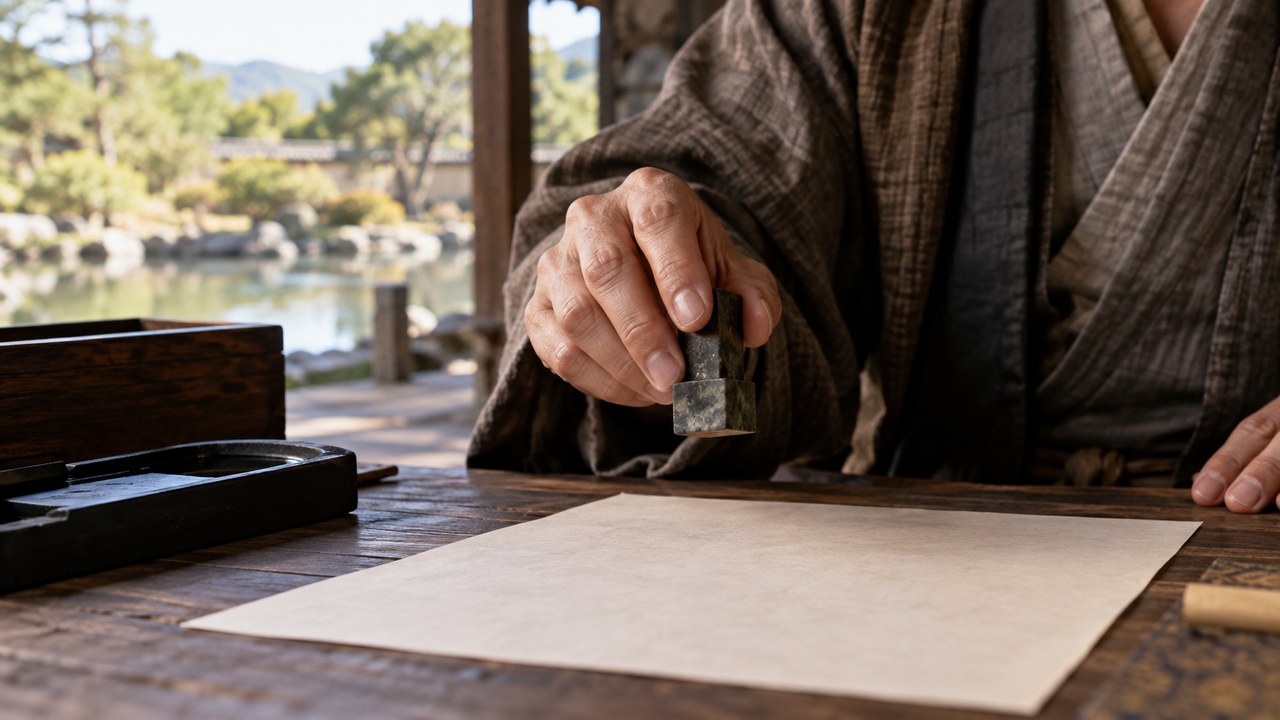
Some of Josui's letters bear a seal in Roman letters in place of the usual handwritten cipher. The seal reads IOSUI SIMEON, combining his Buddhist name, Josui, with his baptismal name, Simeon. It appears on the correspondence preserved by the Matsumoto family and is one of the most striking physical traces of his later years.
Kanbei is said to have been baptized in 1583 under the influence of the Christian lord Takayama Ukon. Common name, formal name, Buddhist name and baptismal name all belonged to one man, and the seal shows how some of them could be used together. The 2014 exhibition also included a letter with a Roman-letter seal dated the nineteenth day of the first month of 1604, two months before he died.
A single seal cannot tell us the full depth of his faith. What it does show is that he used a stamp joining a Buddhist name and a Christian name on papers that dealt with everyday business. That concrete detail is a better guide to his later identity than any broad claim about what he privately believed.
Chapter 8
News from Kyoto to fellow poets
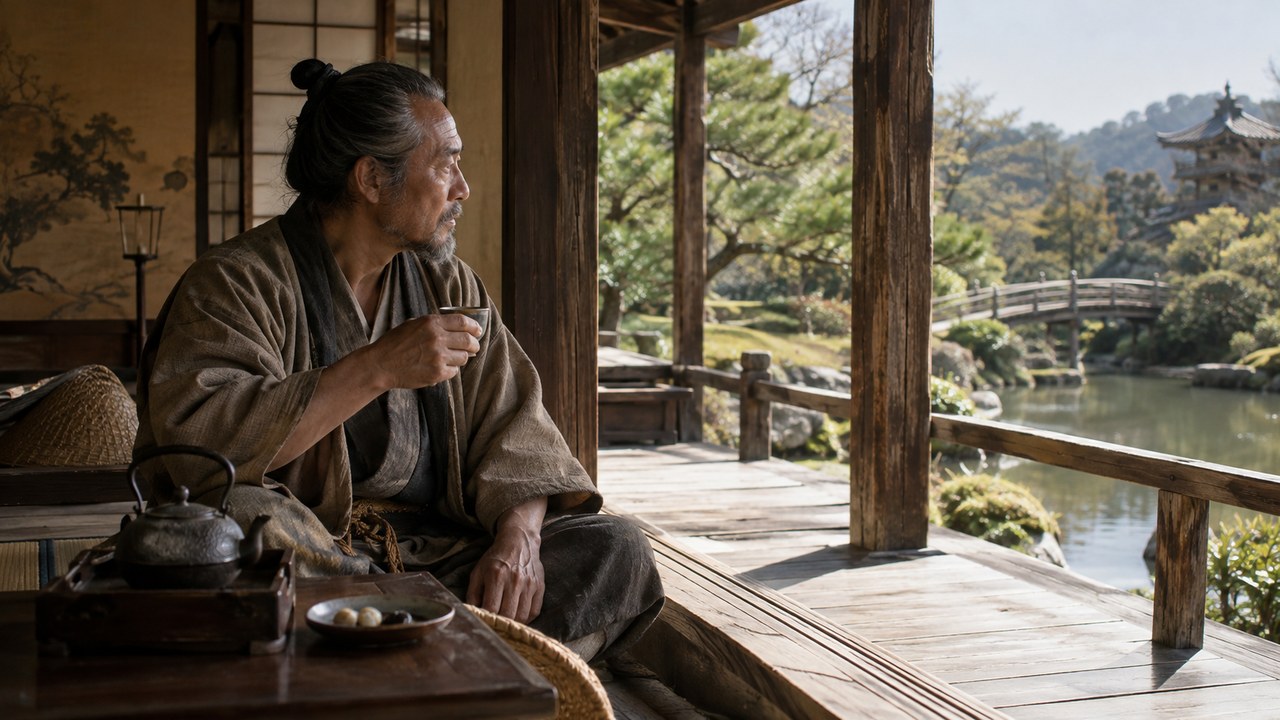
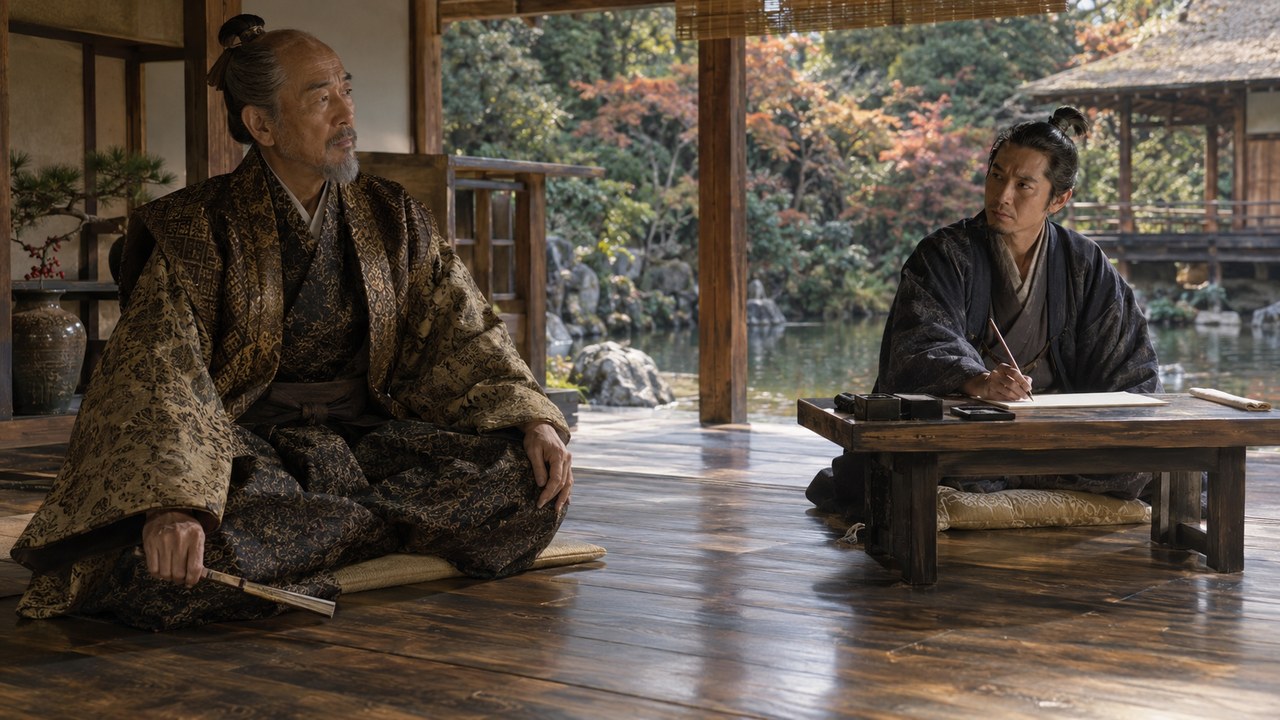
On the twenty-eighth day of the seventh month of 1603, Josui wrote from Kyoto to two trusted correspondents in his home province. He reported that the renga master Satomura Shōshitsu had died four days earlier, on the twenty-fourth. Josui had studied linked verse with Shōshitsu and other members of the Satomura school.
He copied out Shōshitsu's farewell poem and asked that it also be shown to fellow enthusiasts at Dazaifu Tenmangū. The poem belonged to Shōshitsu, not to Josui, so the sender of the letter and the author of the verse must be kept apart. The letter's value lies in showing how news and poetry traveled through a network of friends.
News gathered in Kyoto passed to the home province and then on to the poets of Dazaifu. The same hand that directed war vessels also carried literary messages between the capital and Chikuzen. Depending on the recipient and the subject, a sheet of paper could connect Josui to very different circles of people.
Chapter 9
A student of verse
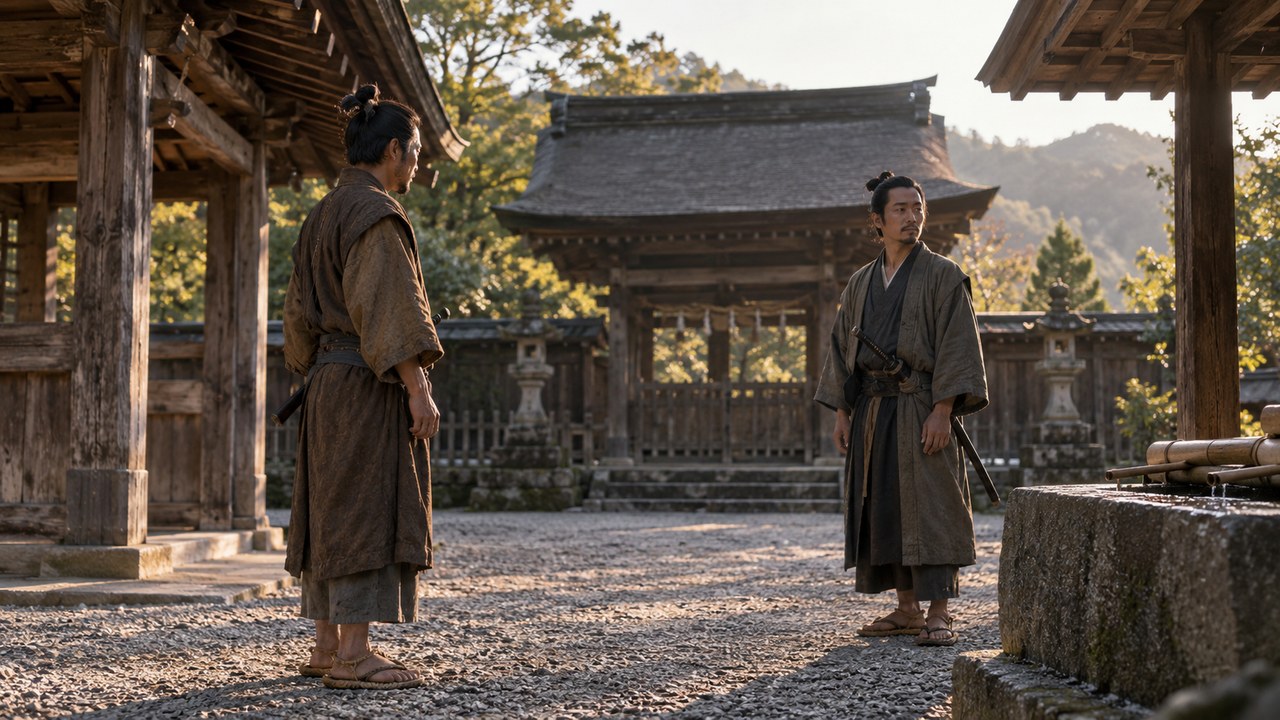
Josui's gravestone inscription records that in his late teens he eagerly pursued the study of waka poetry until a Buddhist monk persuaded him to give it up. He is also said to have received a commentary on the Shin Kokinshū from Hosokawa Yūsai. His interest in literature, in other words, did not appear suddenly in old age.
His activity becomes clearly visible from 1598, when he was fifty-three. He took part in linked-verse gatherings, mainly in Kyoto, and associated with the renga master Satomura Jōha and the court noble Konoe Nobutada. When the Kuroda became lords of Chikuzen, Nobutada wrote to congratulate Josui on governing a land connected with the deity of linked verse.
The museum also presents a letter in Josui's own hand asking Satomura Shōtaku to correct his verse. A solo hundred-verse sequence by Josui carries corrections by Shōshitsu, who praised his use of classical allusion. Compiling a work, sending it to a teacher and accepting revision were all part of his practice, and the surviving papers record that process as well as its results.
Chapter 10
The poets of Dazaifu
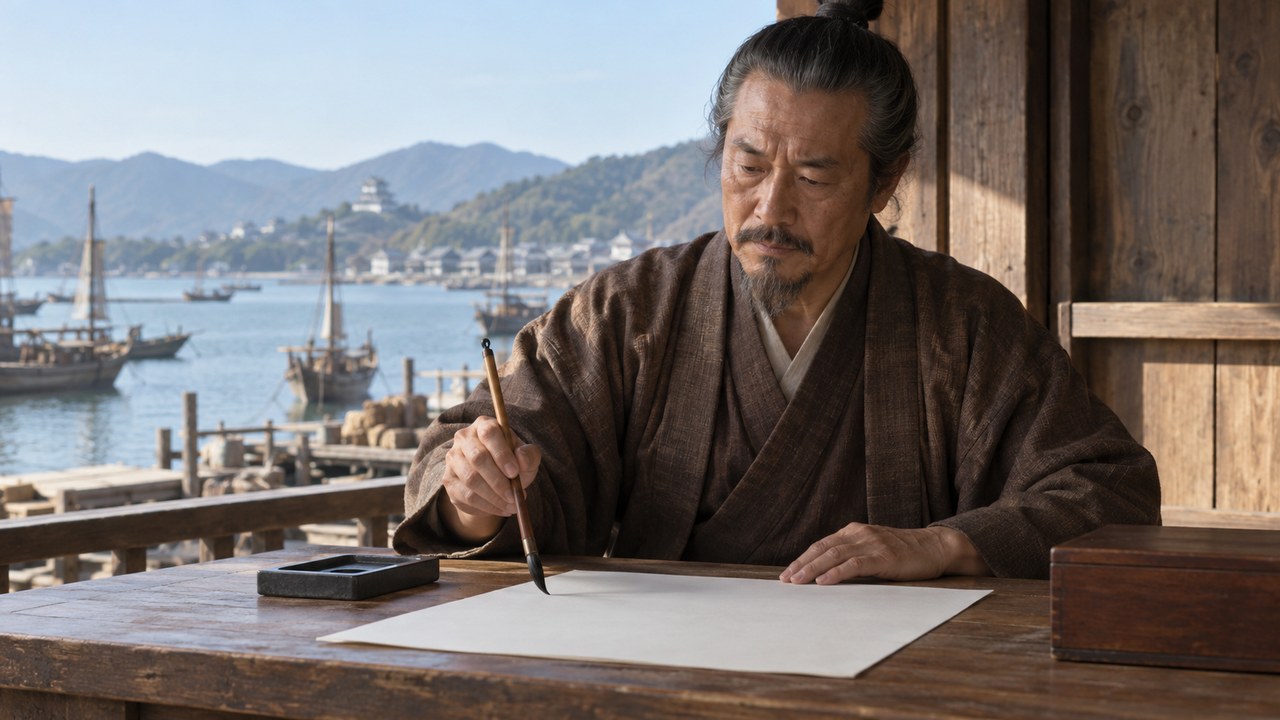
After moving to Fukuoka, Josui worked to support the linked-verse tradition at Dazaifu Tenmangū. He revived the shrine's house of renga, installed a professional renga poet as its master and frequently held gatherings with shrine priests and his own retainers. Poetry was never a purely private pastime for him. It depended on the people who came together to compose.
A dream-inspired renga sequence dated the sixteenth day of the first month of 1602 is thought to contain the earliest known use of the place name Fukuoka in its opening verse. The museum finds in the sequence the technique of honkadori, which borrows words and ideas from older poetry, and notes a parallel in a travel account by Hosokawa Yūsai.
Teachers who corrected his work, companions who gathered to compose and friends who received his news all stand behind the simple statement that he enjoyed poetry. In a different way from his orders about ships, this too was work carried out with and for other people, and it occupied an important place in his last years.
Chapter 11
Death at Fushimi
According to a Fukuoka Prefecture public-relations magazine, Josui fell ill and went to Kyoto to recuperate. He died at the Kuroda residence in Fushimi on the twentieth day of the third month of 1604, at the age of fifty-nine by Japanese count. The date corresponds roughly to April 19 in the modern calendar, about eight months after his letter about Shōshitsu's death.
The 2014 exhibition presented his farewell poem, which says that he leaves no words behind, and read in it the satisfaction of a life fully lived. The prefectural magazine adds that he died holding a rosary and asked that his body be taken to Fukuoka and mourned at a church. These later accounts give his death a distinctly Christian setting.
Nagamasa is reported to have honored that request with a Christian funeral and to have held a Buddhist service afterward. Josui's grave stands in the Kuroda family cemetery beside Sōfukuji, the family temple in Fukuoka. Its stone carries an inscription composed by the diplomat monk Keitetsu Genso and dates from the time the monument was first erected.
Chapter 12
A later life seen through its recipients
After his death the Kuroda family and its retainers commissioned many portraits of Josui. The familiar image of the old man in retirement is therefore itself a later creation. The same caution applies to his famous helmet: the sandalwood-lacquered helmet of the Momoyama period and the red-lacquered copy made for his great-grandson Mitsuyuki are different objects.
Nagamasa once warned his son Tadayuki that Josui's strengths would be hard to imitate and that the boy must not copy his grandfather's faults. Respect for a father and concern for a son sit side by side in that letter. Even within the family, the memory of Josui was never a single uncomplicated story of brilliance.
Orders for war vessels, land and duties, news for fellow poets and requests for correction all had someone at the other end who received them and responded. Beyond the fame of the strategist lies a man who, in his last years, kept working, kept learning and kept people connected through the letters he sent.
How to read this work
History, interpretation, and reconstruction
Following the recipients of his letters shows that Kanbei continued to work, learn and sustain relationships long after he handed over the family headship.
This work is grounded in published sources and historical research. Interior thoughts, dialogue, and some visual details are cinematic reconstructions. Where historians disagree, the article presents the point as debated rather than settled fact.
Timeline
The story in time
-
Kanbei is born at Himeji in Harima Province, according to reference works.
Sources: s09 -
He is baptized under the influence of Takayama Ukon and takes the name Simeon.
Sources: s09 -
At forty-four he passes the headship to Nagamasa, yet continues to serve in campaigns.
Sources: s04 -
He shaves his head and takes the name Josui, according to Fukuoka City Museum.
Sources: s04 -
Renga materials allow his literary activity to be followed in detail.
Sources: s04 -
Josui sends Katsushige instructions on the operation of war vessels.
Sources: s02 -
Date of the dream-inspired renga sequence associated with Josui.
Sources: s07 -
The renga master Satomura Shōshitsu dies.
Sources: s01 -
Josui writes from Kyoto with news of Shōshitsu’s death and his farewell poem.
Sources: s01 -
Date of a letter bearing Josui’s Roman-letter seal.
Sources: s07 -
Fukuoka Castle is completed.
Sources: s17
People & terms
A guide for new readers
Key figures
- Kuroda Kanbei (Yoshitaka; Josui)
- After transferring headship of the family in 1589, he continued military and household work alongside literary activities.
- Kuroda Nagamasa
- Succeeded his father as family head and later became lord of Chikuzen and the first lord of the Fukuoka domain.
- Matsumoto Katsushige
- An officer responsible for the family’s ships, addressed in documents concerning military vessels and landholding responsibilities.
- Satomura Shōshitsu
- A renga master who corrected Josui’s linked verse. News of his death and a copy of his farewell verse were sent to people back home.
- Satomura Shōtaku
- A renga practitioner whom Josui asked to review and correct his work.
Glossary
- Kanbei, Yoshitaka and Josui 官兵衛・孝高・如水
- Names associated with the same person in different contexts: a familiar name, personal name and later name used after tonsure. Their use is placed within the relevant stage of his life.
- Family headship 家督
- The position transferred from Kanbei to Nagamasa in 1589. Transfer of headship is distinguished from the father ceasing every military and household responsibility.
- Chikuzen 筑前
- The province associated with Nagamasa’s later lordship and the setting of the Matsumoto assignments discussed here; it is not used as a label for all Kyushu.
- Kyushu 九州
- The regional setting where Josui fought during the Sekigahara conflict, distinct from Nagamasa’s activity with Ieyasu.
- Funategashira 船手頭
- The officer responsible for the family’s ships, the role held by Matsumoto Katsushige. It is not translated into a modern naval rank.
- Chigyō 知行
- A retainer’s assigned holding or land revenues, described here with an assessment of 400 koku. It is kept separate from land entrusted for administration.
- Koku 石
- The unit used for the assessments in the museum’s explanation of the land assignments. The figures describe distinct categories, not one combined personal reward or a modern cash salary.
- Land entrusted for administration 代官預かり
- The separate responsibility described as more than 207 koku in Katsushige’s assignment. This is not simply added to his 400-koku holding.
- Renga 連歌
- Poetry formed through linked verses. The article includes gatherings and a sequence put together by one person, so the term does not imply that every work had the same authorship.
- Dokugin 独吟
- A linked-verse sequence composed by one person. The work discussed here also preserves another person’s corrections.
- Honkadori 本歌取り
- A literary technique that draws on wording, ideas or structures from earlier poetry. The museum identifies such allusions without making the older material Josui’s original invention.
- Dazaifu Tenmangū 太宰府天満宮
- The shrine setting connected with the literary companions and gatherings discussed in the museum’s explanations. Generated scenes do not authenticate the actual buildings.
- IOSUI and SIMEON ローマ字印
- The Roman-letter forms identifying Josui and his baptismal name Simeon on the seal described by the museum. Their meanings are not reversed.
- Contemporary Japanese calendar 当時の暦
- The calendar used for the historical month-and-day dates. They are not silently converted into Gregorian dates with the same numerals.
Sources & method
How this article was built
This English edition follows the revised Japanese article scene by scene and keeps its seventeen sources, their order and its sixteen timeline entries. It draws on eight Fukuoka City Museum pages, reference entries on Kotobank, Fukuoka Prefecture, the Fukuoka Prefecture Tourism Association, Nippon Tabi Magazine and Sumitomo Mitsui Trust Realty.
Museum explanations, reference works and the interpretation offered here are kept separate. Where sources differ, as they do on the date of his tonsure, the difference is stated. The original manuscripts were not independently deciphered. Images are AI-generated reconstructions, not authentic portraits or site photographs.
Sources
References and further reading
- Kanbei’s Letters: From Kyoto to People Back Home 官兵衛の手紙・京都から国元へ Title translated editorially for reader convenience. Fukuoka City Museum 福岡市博物館 Used for the letter of 1603, its recipients, the death of Shōshitsu and the request to share his poem at Dazaifu. Accessed 2026-11-18
- Kanbei’s Letters: The Ship Officer and the Roman-Letter Seal 官兵衛の手紙・船手頭とローマ字印 Title translated editorially for reader convenience. Fukuoka City Museum 福岡市博物館 Used for the Matsumoto papers, the nineteen letters from each writer, ship orders, land assignments and the Roman-letter seal. Accessed 2026-11-18
- Kanbei’s Letters: List of Exhibited Documents 官兵衛の手紙・出品一覧 Title translated editorially for reader convenience. Fukuoka City Museum 福岡市博物館 Used for the land-grant date and for letters whose years are estimated. Accessed 2026-11-18
- Kuroda Josui’s Literary Activities: Headship and Literary Evidence 黒田如水の文芸・家督と文芸の史料 Title translated editorially for reader convenience. Fukuoka City Museum 福岡市博物館 Used for the succession, tonsure, literary activity from 1598, the gravestone account and the letter from Konoe Nobutada. Accessed 2026-11-18
- Kuroda Josui’s Literary Activities: Corrections and Dazaifu 黒田如水の文芸・添削と太宰府 Title translated editorially for reader convenience. Fukuoka City Museum 福岡市博物館 Used for requests for correction, Shōshitsu’s comments, the Dazaifu gatherings and the dream-inspired sequence. Accessed 2026-11-18
- Depictions of Kuroda Josui and Nagamasa 描かれた如水・長政 Title translated editorially for reader convenience. Fukuoka City Museum 福岡市博物館 Used for the move to Nakatsu, the roles of father and son in 1600 and posthumous portraits. Accessed 2026-11-18
- The 2014 Strategist Kanbei Special Exhibition: Overview 2014特別展・軍師官兵衛展示概要 Title translated editorially for reader convenience. Fukuoka City Museum 福岡市博物館 Used for the 1578 oath, the tonsure tradition, the 1602 sequence, the 1604 seal letter, the helmets and the farewell poem. Accessed 2026-11-18
- Kuroda Nagamasa: Retrospective Assessments of Father and Son 没後400年黒田長政・父への評価 Title translated editorially for reader convenience. Fukuoka City Museum 福岡市博物館 Used for the grant of 1587, Nagamasa at Sekigahara, his testament and his letter to Tadayuki. Accessed 2026-11-18
- Kuroda Yoshitaka 黒田孝高 Title translated editorially for reader convenience. Kotobank コトバンク Used for dates of birth and death, baptism, the campaign in Kyushu and a differing date for his tonsure. Accessed 2026-11-18
- Kuroda Nagamasa 黒田長政 Title translated editorially for reader convenience. Kotobank コトバンク Used for the Chikuzen assessment, the castle at Fukusaki and the origin of the name Fukuoka. Accessed 2026-11-18
- Places Connected with Kuroda Kanbei in Fukuoka Prefecture 黒田官兵衛ゆかりの地、福岡県 Title translated editorially for reader convenience. Fukuoka Prefecture Tourism Association 福岡県観光連盟(クロスロードふくおか) Used for the Dazaifu retreat, his residence at the castle and his death at Fushimi. Accessed 2026-11-18
- Kuroda Kanbei Sites: Dazaifu and Fukuoka 黒田官兵衛ゆかりの地(太宰府・福岡) Title translated editorially for reader convenience. Fukuoka Prefecture Tourism Association 福岡県観光連盟(クロスロードふくおか) Used for Josui’s Well and his residences in his last years. Accessed 2026-11-18
- The Unknown 270 Years of Fukuoka Domain: Kuroda Kanbei and His Descendants 知られざる福岡藩270年 最終回 黒田官兵衛と、その子孫たち(グラフふくおか2014年春号) Title translated editorially for reader convenience. Fukuoka Prefecture 福岡県 Used for his illness, the modern date of his death, the rosary and the funeral. Accessed 2026-11-18
- Kuroda Family Cemetery of the Fukuoka Domain Lords 福岡藩主黒田家墓所 Title translated editorially for reader convenience. Fukuoka Prefecture Tourism Association 福岡県観光連盟(クロスロードふくおか) Used for the cemetery beside Sōfukuji and the inscription by Keitetsu Genso. Accessed 2026-11-18
- Dazaifu Tenmangū 太宰府天満宮 Title translated editorially for reader convenience. Nippon Tabi Magazine ニッポン旅マガジン Used for his temporary residence at the shrine and Josui’s Well. Accessed 2026-11-18
- Sōfukuji and the Kuroda Family Cemetery 崇福寺・福岡藩主黒田家墓所 Title translated editorially for reader convenience. Nippon Tabi Magazine ニッポン旅マガジン Used for the family temple and the cemetery. Accessed 2026-11-18
- The Early History of Fukuoka and Hakata 福岡・博多の前史(このまちアーカイブス) Title translated editorially for reader convenience. Sumitomo Mitsui Trust Realty 三井住友トラスト不動産 Used for the start and completion of Fukuoka Castle and the renaming of Fukusaki. Accessed 2026-11-18
Continue reading
More stories from Shigeki
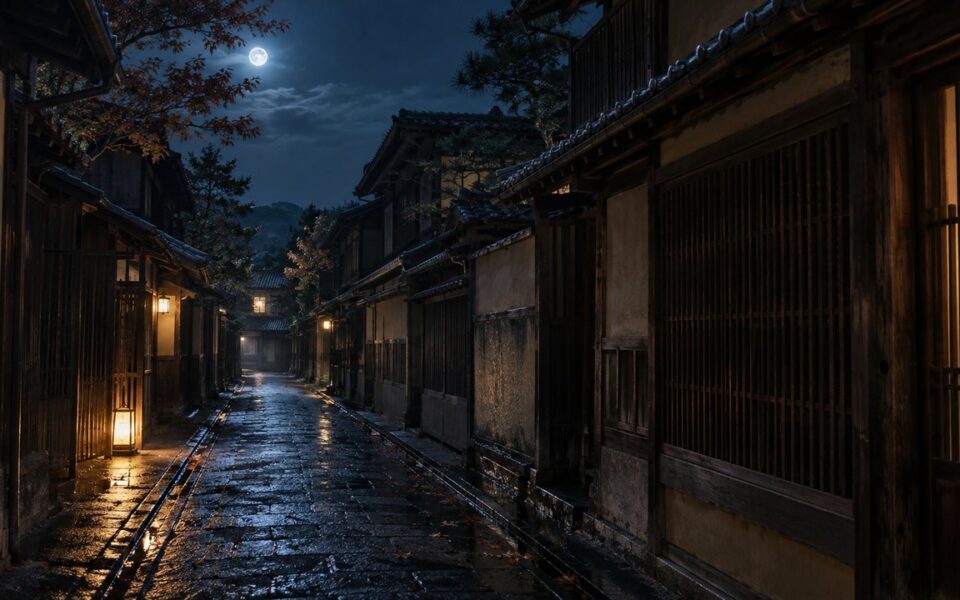
Shigeki English
The Ōmiya Incident: The Night Ryōma and Nakaoka Were Attacked, Read Through the Surviving Records
The Teradaya, the return of power, the move to the Ōmiya, the night of the attack, three deaths, the funeral at Ryōzen, the Mimawarigumi testimony and theories of a hidden hand, with what can be confirmed kept apart from competing accounts.
- When The attack on the 15th day of the 11th month of Keiō 3 (10 December 1867), with its background from 1865 and later testimony, the 1927 marker and the 1962 statues
- Where The Ōmiya, a soy-sauce merchant’s shop on Kawaramachi in Kyoto.
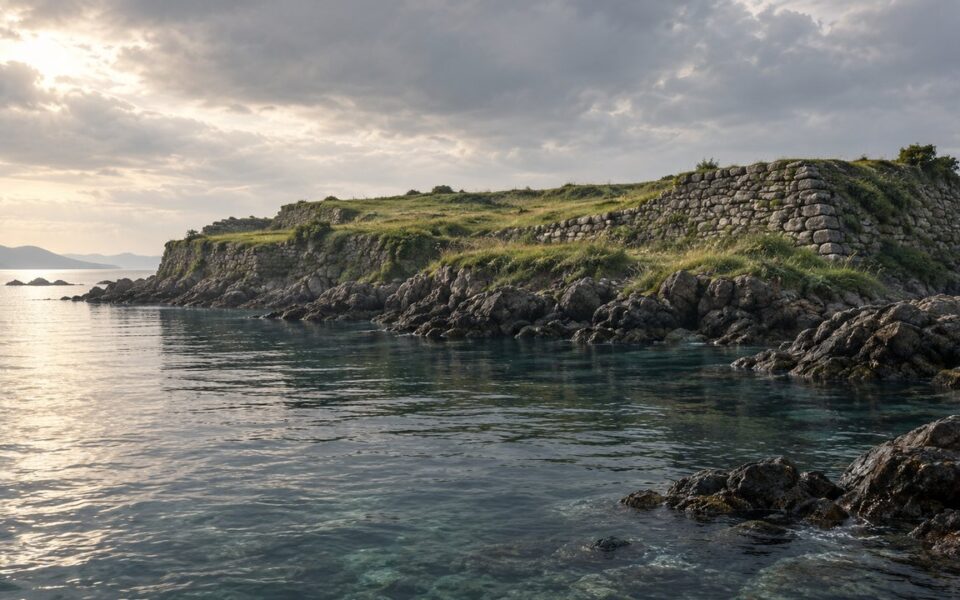
Shigeki English
Amakusa Shiro at Hara Castle: A Young Symbol in the Surviving Evidence
An Arima castle, Matsukura taxes, risings in Shimabara and Amakusa, Itakura’s death, Nobutsuna’s siege and the fall of the castle: the history of the people who gathered under a boy’s name, told within the limits of the sources.
- When Kan’ei 14–15 (1637–1638), with the castle’s construction (1599–1604) and modern excavation and World Heritage inscription (2018) as background
- Where Shimabara and Amakusa in southwestern Japan, culminating in the siege of Hara Castle