
SHIGEKI ENGLISH STORYEN
Japanese history in English
Hasedo: Why Fighting Continued after Sekigahara
Separate the siege, the arrival of news, and withdrawal under pursuit.
In 1600, fighting around Hasedo near Yamagata continued beyond the distant decision at Sekigahara. Follow the stronghold, Date assistance, delayed information and retreat, while distinguishing later painted screens, the transmission of letters and postwar territorial changes.
At a glance
Before you enter the story
- When
- 1600; month and day references use the calendar of the time
- Where
- Hasedo and Yamagata in Dewa, connected with Aizu and distant Sekigahara
- Key figures
- Mogami Yoshiaki, Uesugi Kagekatsu, Naoe Kanetsugu, Shimura Izunokami, Date Masamune
- What was at stake
- How did a distant political defeat change a siege that had not yet ended locally?
Why this story matters
The larger history behind the turning point
A map of a national conflict can make events seem simultaneous and fully known to everyone involved. Actual decisions depended on reports reaching people who still faced the conditions of their own front. Information travelled through time as well as across territory.
Withdrawal was not necessarily the moment danger ended. Reversing the direction of an operation could bring pursuit and further fighting. Separating victory, information and a safe return restores the stages hidden inside the simple statement that a war was already decided.
Historical context
What an international reader needs to know
Distinguish the lord, the commander and the strongholds
Uesugi Kagekatsu was the lord based in Aizu. Naoe Kanetsugu was his senior retainer and the commander associated with the advance toward Hasedo. They were different people, and Kagekatsu did not personally fight in the main battle at Sekigahara.
Mogami Yoshiaki’s Yamagata Castle and the nearby stronghold of Hasedo were also different places. Hasedo formed a defensive position on the approach to Yamagata. Their relationship helps explain the local stakes without reducing the campaign to one undifferentiated castle siege.
A screen, a catalogue and a letter offer different evidence
The museum explains a pair of painted screens as showing different phases of the fighting on different dates. A later representation can preserve an account of a battle without functioning as a continuous eyewitness film or a precise plan of the original deployments.
An exhibition catalogue identifies objects, dates and the distinction between originals and copies. It does not provide the full text of every listed letter. The reliability of a particular transmitted letter must be assessed individually; doubt about one item does not invalidate all copies or all correspondence.
Watch the film
See the story in motion
The film currently uses Japanese audio. This English article provides the context and source trail; it does not imply that an English subtitle track is available.
Scene 01
A distant decision did not immediately end the siege
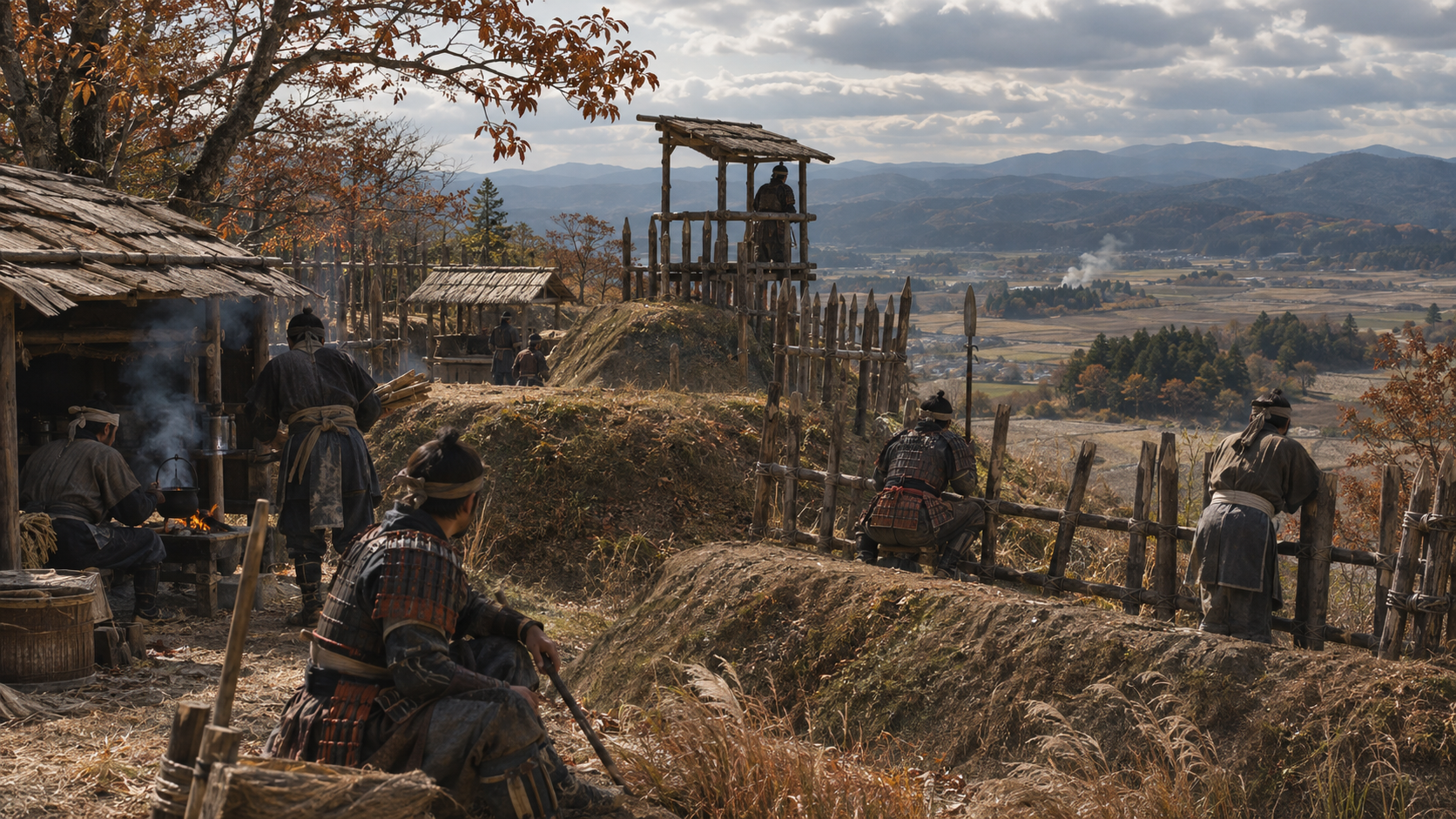
Even after the outcome at Sekigahara, fighting continued in the northeast around Hasedo, in present Yamagata. Kanetsugu attacked for the Uesugi side, while the defenders belonged to the Mogami. The immediate local operation had its own conditions.
The position of the castle and the time required for information to arrive are central to the explanation. Participants did not share the later reader’s view of a national result already placed on a completed historical map.
The account therefore follows how defence near Yamagata intersected with distant political change. Hasedo was not merely an incidental footnote to a better-known battlefield. Its sequence needs to be considered before the later overall outcome is used to explain it.
Scene 02
View the conflict from Aizu as well as Mino
In 1600 Kagekatsu was based in Aizu. The Uesugi Museum places his refusal of the demand to go to Kyoto within the conflict that prompted Ieyasu’s expedition. Kagekatsu affected the northern situation without attending the main Sekigahara battle.
Yoshiaki aligned with the eastern side, while Kagekatsu belonged to the western grouping. The central conflict overlapped with relationships among neighbouring northern powers. National alignments mattered through their local expression.
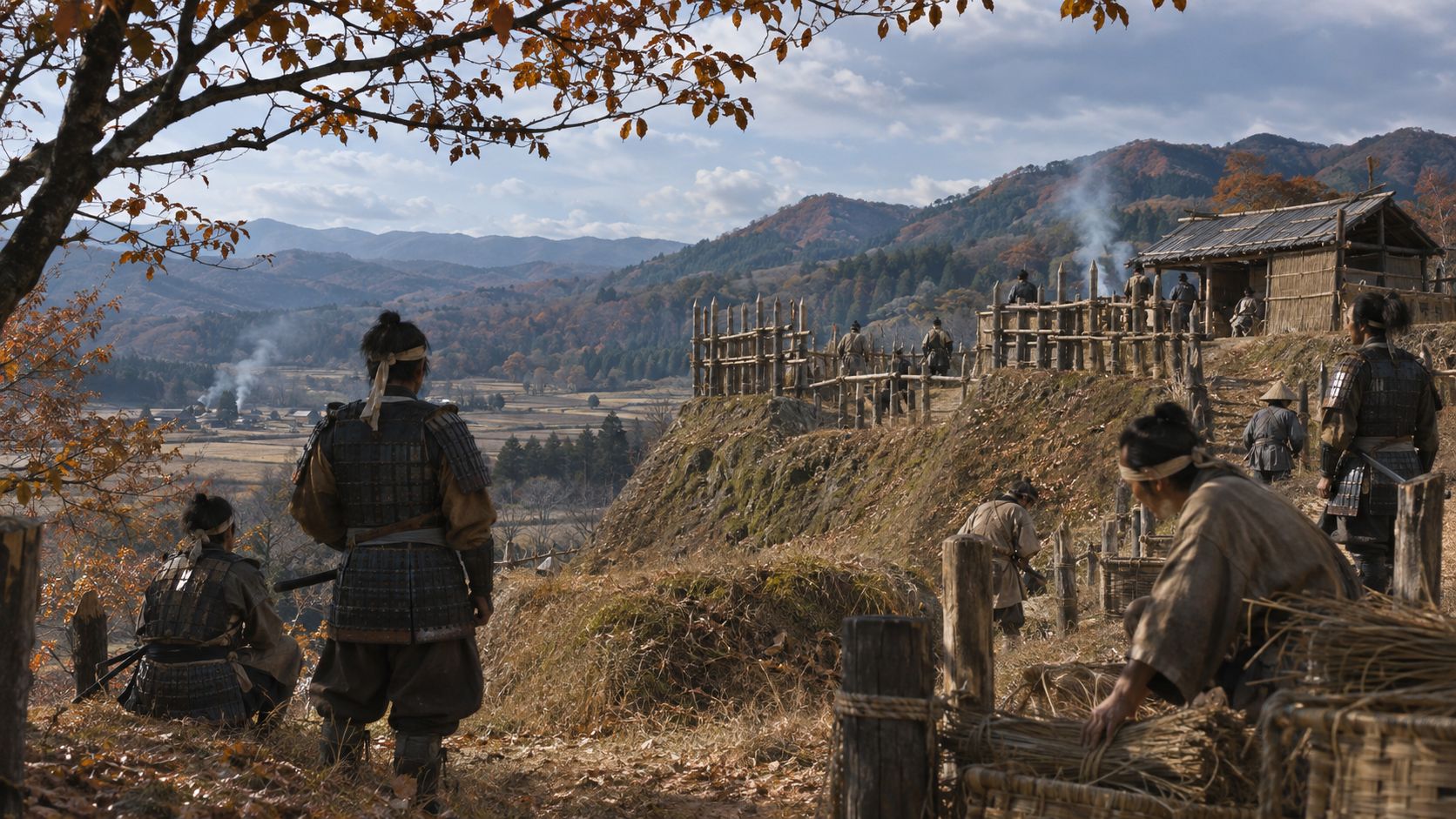
The lord’s position and the commander’s action should remain separate. Kanetsugu led the advance associated with Hasedo; that does not place Kagekatsu beside him in every scene. Generated anonymous figures authenticate neither man’s appearance or exact presence at a depicted spot.
Scene 03
Hasedo stood on the approach to Yamagata
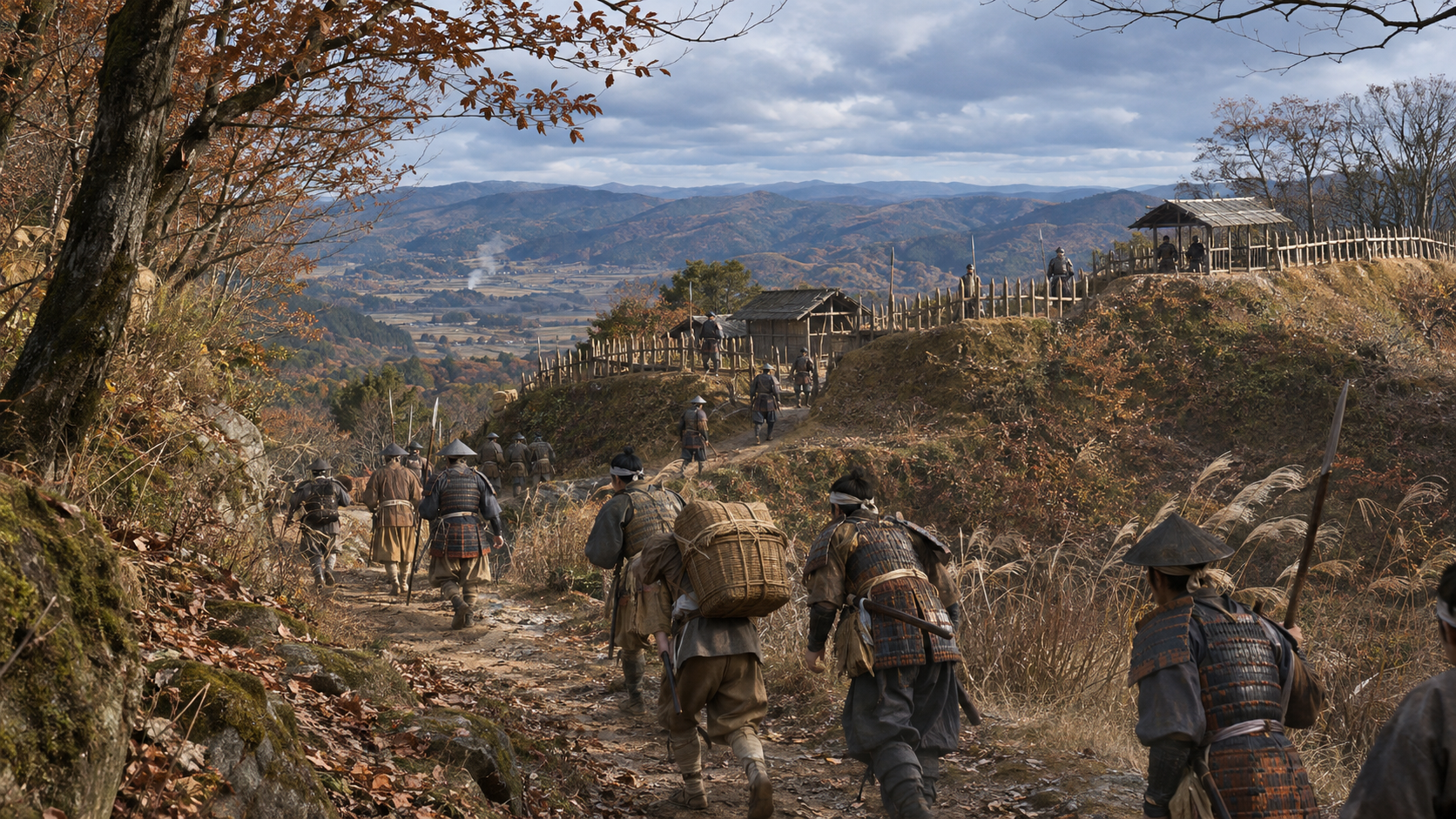
Yamagata City describes Uesugi attacks from more than one direction, including the Yonezawa and Shonai sides. Mogami defence extended beyond the immediate surroundings of one stronghold. The wider front helps explain the pressure on local positions.
The tourism association places Hasedo’s encirclement after the fall of Hataya. In the advance from the south toward Yamagata, Hasedo became a final defensive line. It was not simply another name for Yamagata Castle.
A sequence of captured places cannot by itself establish the fate of every remaining position. Distinguishing what had fallen from what continued to resist gives the map its meaning, rather than allowing a line of advance to imply an automatic final conquest.
Scene 04
Terrain mattered without deciding every action
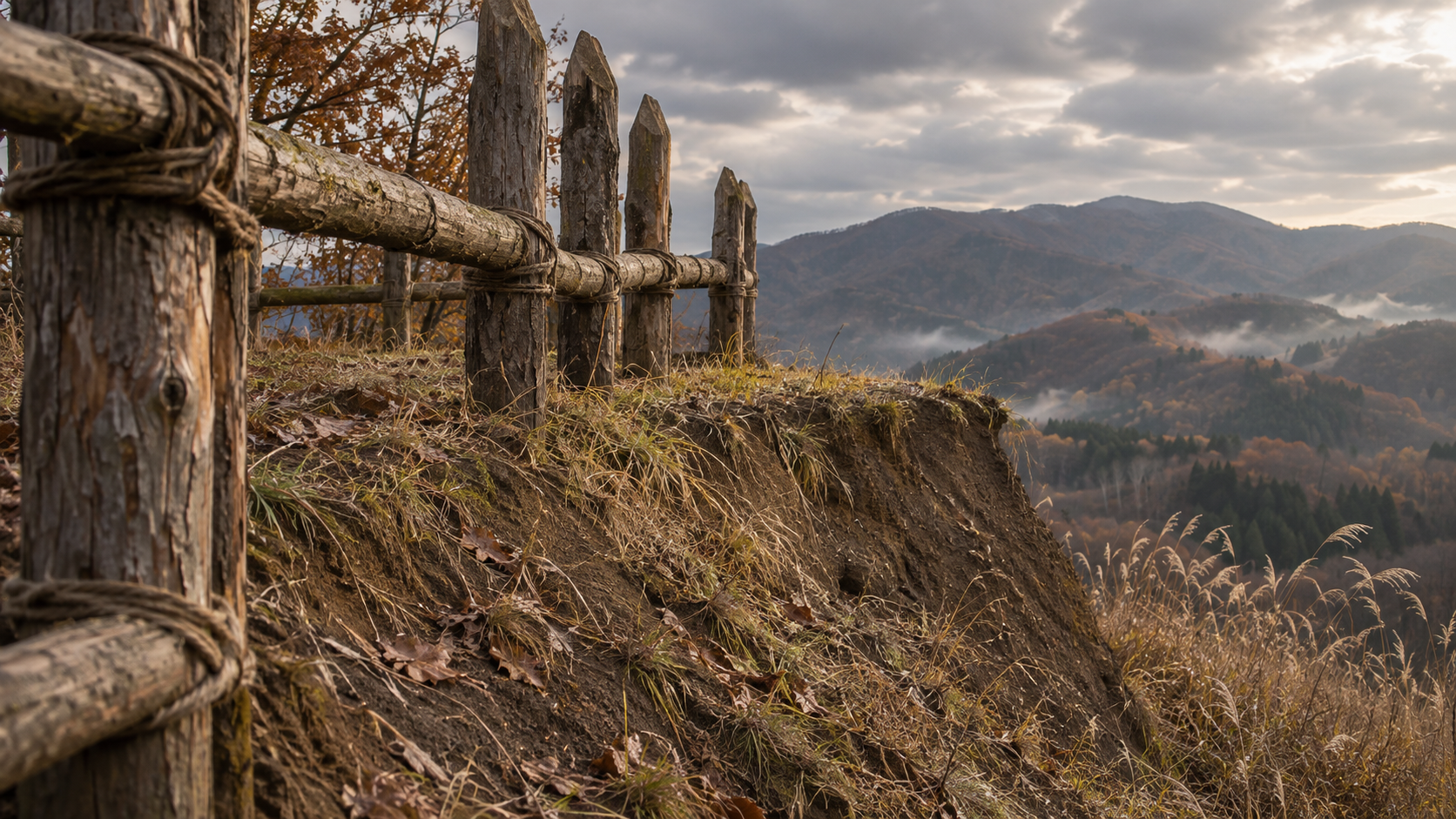
Hasedo used a hill rising independently from the plain. The present site retains earthworks and level enclosures. City explanations identify Shimura Izunokami as a central defender and describe resistance to the Uesugi attack.
Holding higher ground did not guarantee victory in every possible encounter. It did, however, place those ascending a slope and those defending above it in different physical conditions. This is a general observation about terrain, not a reconstructed deployment order.
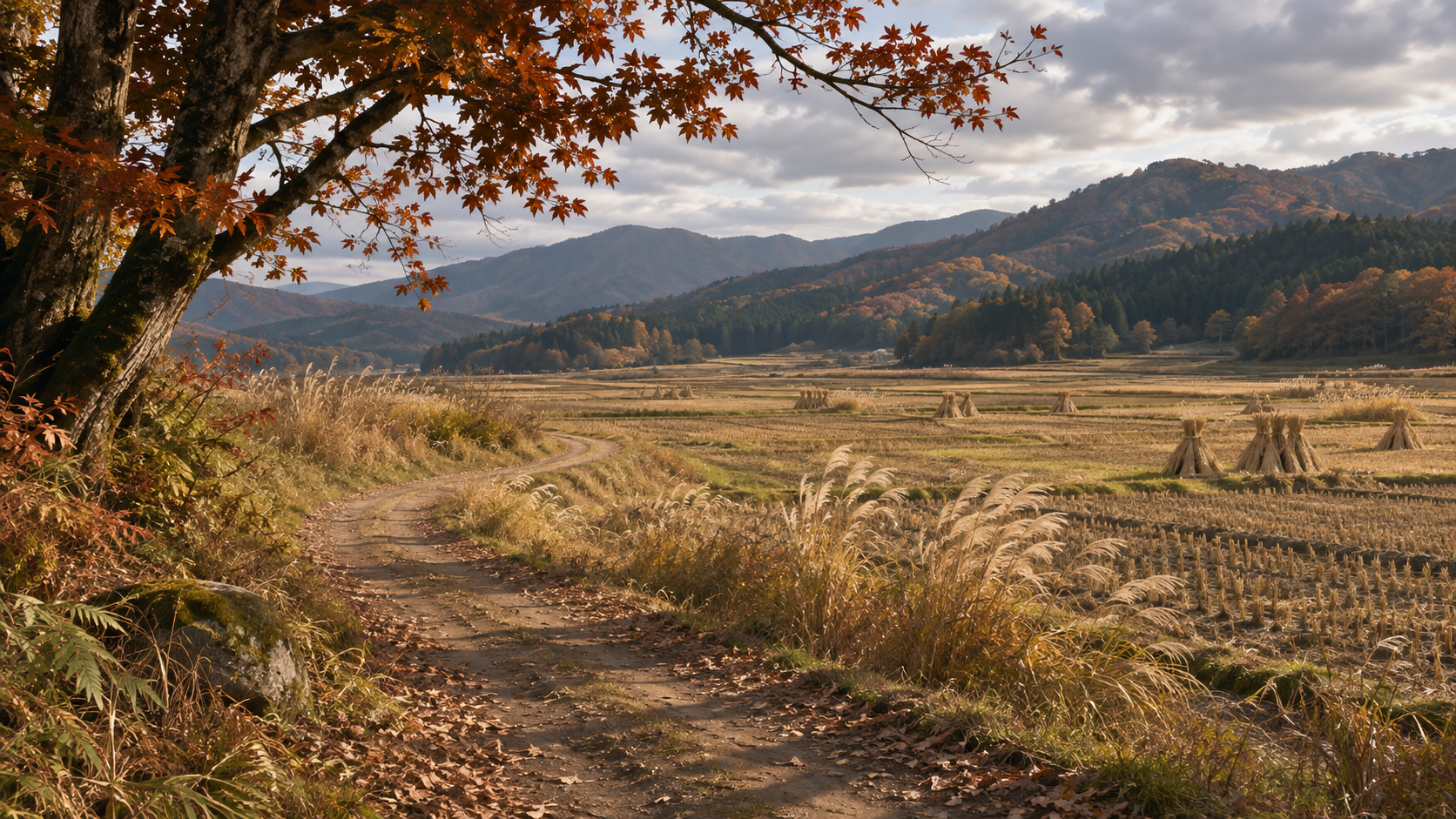
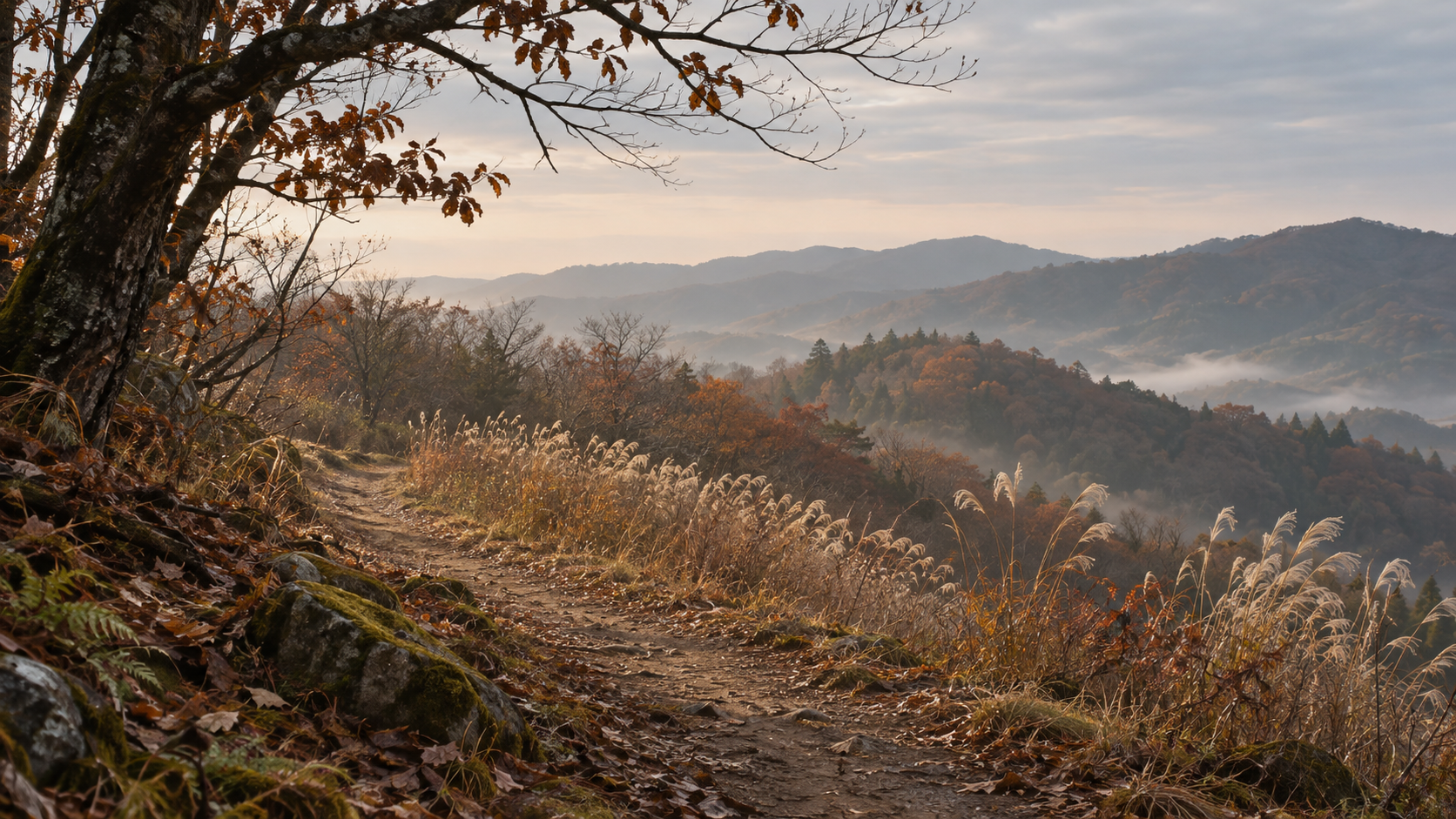
Surviving ground cannot recover every soldier’s position or gesture. The site supports discussion of the setting and the fact that resistance continued, while the conceptual illustration remains distinct from a measured restoration of the castle during the campaign.
Scene 05
Date assistance added another relationship
Date forces also provided assistance. Masamune was Yoshiaki’s nephew through Yoshihime, Yoshiaki’s sister. Family connection did not mean that the two men had always held the same political view or avoided conflict.
The city’s biographical account presents both earlier opposition and Date assistance in the Dewa fighting. The Uesugi Museum’s exhibition catalogue also lists Masamune letters associated with the Hasedo campaign.
Those catalogue entries identify a body of communication worth examining. They do not establish that this article has independently read every command in the original letters. Kinship, military cooperation and the content of particular correspondence remain different levels of evidence.

Scene 06
The event date and the news date were different
The museum explains the screen’s right-hand portion as the fighting of the ninth month, fifteenth day: the same date as the main Sekigahara battle. A shared date does not mean the two battlefields knew each other’s results while fighting.
Yamagata’s tourism association gives the ninth month, twenty-ninth day for the arrival of news of western defeat. This article attributes that specific reception date to the association, rather than claiming independent confirmation from an unread original letter.
These dates use the calendar of the period. They should not be silently turned into the identically numbered days of modern September. The distinction between an event and learning about it is essential even where precise reception details remain dependent on an institutional explanation.
Scene 07
News changed the conditions of the operation
The eastern side won at Sekigahara. Yamagata City explains Kanetsugu’s withdrawal in relation to learning of the western defeat. Hasedo’s defenders still held their position when the wider political setting changed.
Continuing the siege and bringing the army back were different decisions. A distant outcome could alter the assumptions under which a local campaign was being conducted, even without physically removing either army from the northern battlefield.
This interpretation does not require invented speech revealing Kanetsugu’s thoughts. The supported sequence is continued resistance at Hasedo and Uesugi withdrawal following the defeat report. The dangers faced during that withdrawal remained another stage of the campaign.
Scene 08
Retreat and pursuit continued the fighting
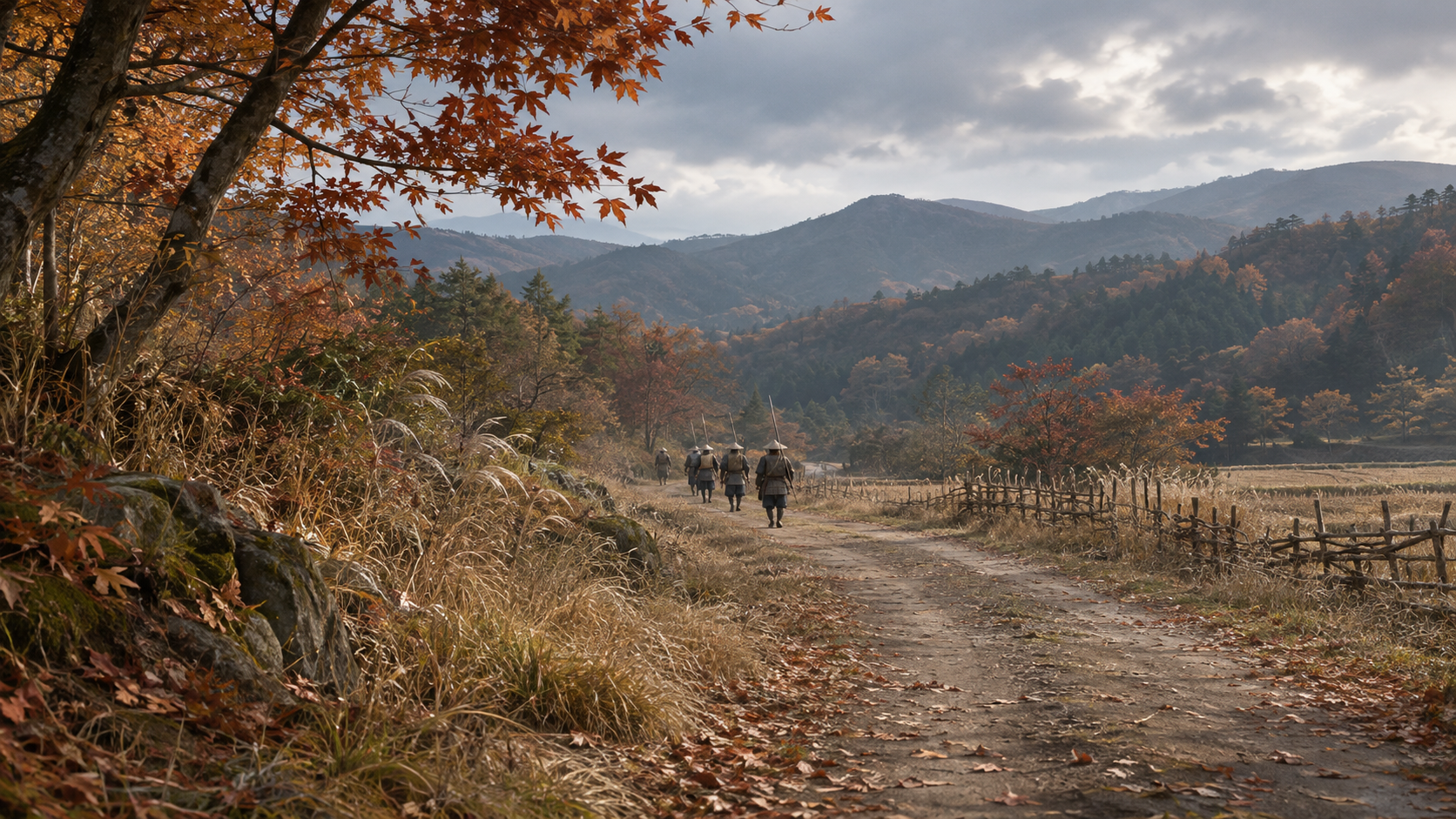
Withdrawal did not mean that everyone immediately ceased fighting. The museum describes the screen’s left-hand portion as Uesugi retreat and Mogami pursuit around the tenth month, first day. The direction of the operation had changed.
The institution also explains representations of Yoshiaki with an iron command baton and Kanetsugu protected by firearms troops. These are descriptions of what the painting shows, not proof of the exact instant or location of every depicted action.
The larger structure remains significant: siege gave way to retreat and pursuit. Receiving news of defeat was different from completing a safe return. A later image can communicate that change while remaining a constructed representation rather than continuous documentation of movement.
Scene 09
The screen combines different phases
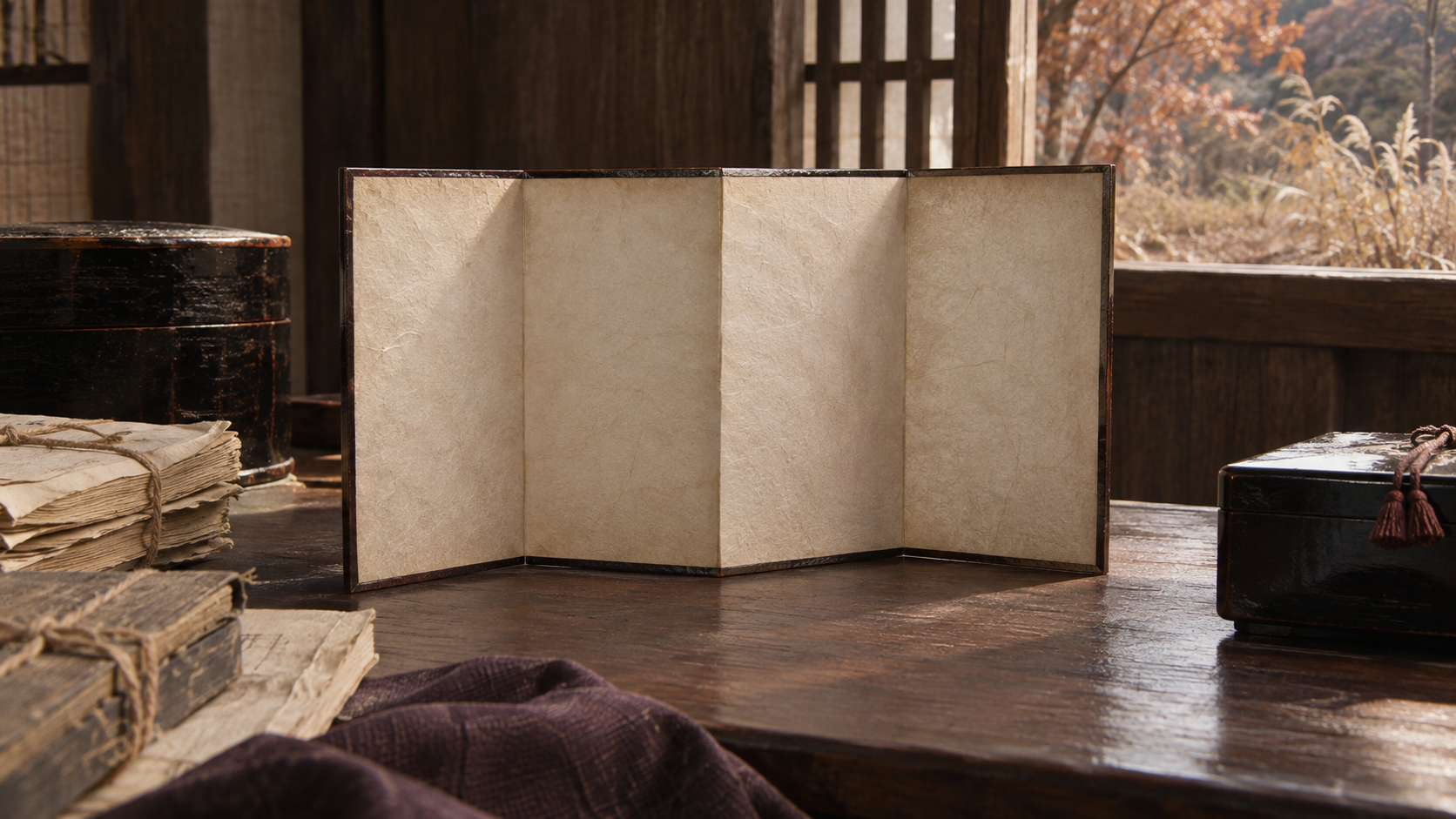
The two parts do not simply spread a single day across a wider image. According to the museum’s explanation, one presents the siege and the other later retreat and pursuit. Date and scene must therefore be read together.
Written names within the painting also help identify whom the image foregrounds. The museum notes reconsideration of the traditional attribution of authorship, reminding readers that even familiar interpretive statements can be revised.
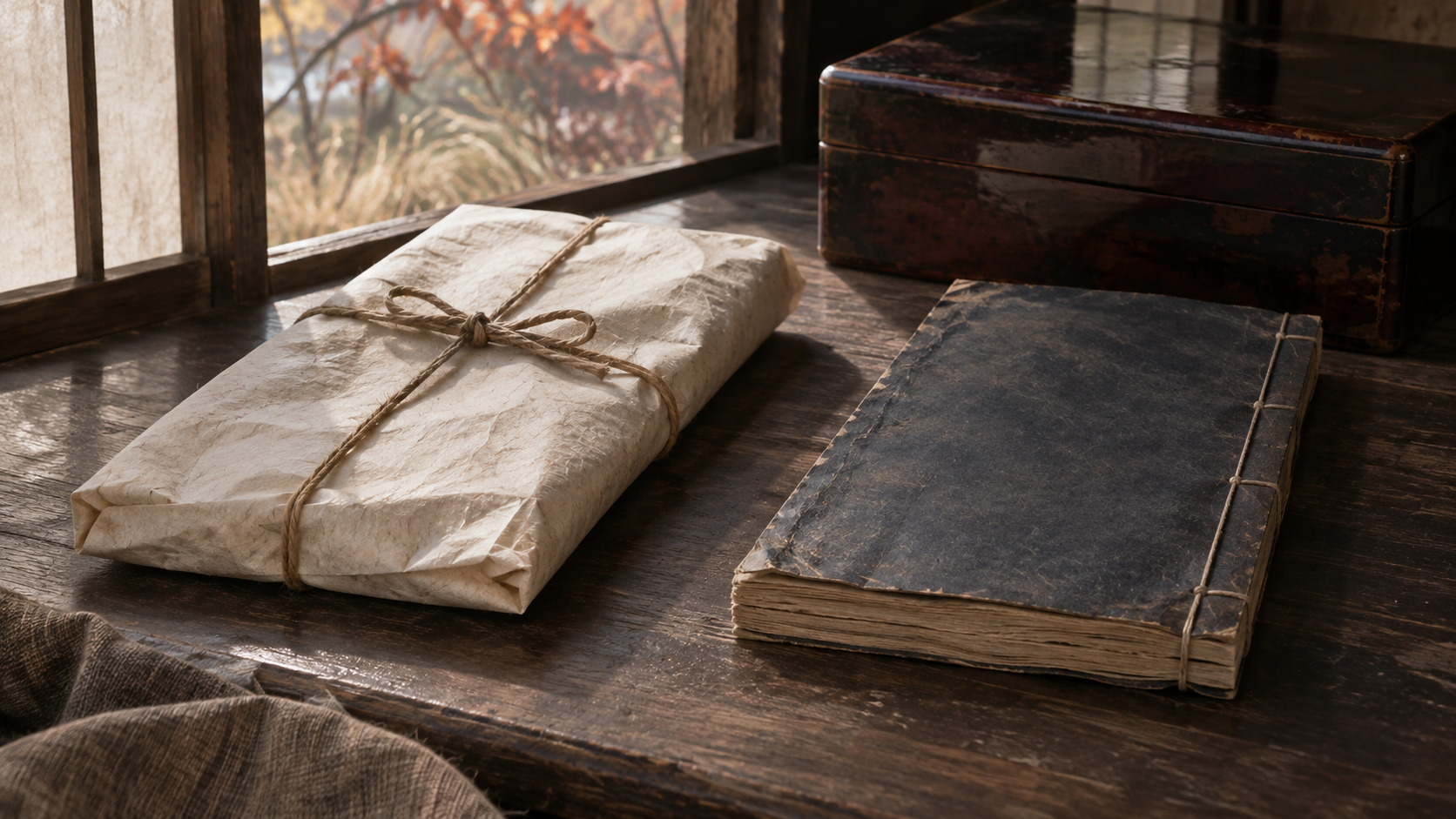
The work offers evidence of how the campaign was represented as well as a resource for studying the fighting. The generated blank screen illustrates the category of object only. It contains no borrowed image and does not reproduce the historical work’s composition.
Scene 10
Why question one transmitted letter?
A letter said to have been sent from Yoshiaki to Kanetsugu on the eighth month, eighteenth day raises a particular evidential problem. Katagiri Shigeo’s museum-published essay questions its reliability through its transmission and relationship with other records.
The discussion concerns text preserved in later compilations, the unclear location of an original and the lack of expected connections with contemporary correspondence. The essay’s judgement is attributed to its author rather than presented as universal scholarly agreement.
Doubt about this letter does not prove that every copy is worthless. Each item has its own transmission. An account that derives Yoshiaki’s fear or strategy from the disputed text would need to confront those specific problems before treating its language as direct personal evidence.
Scene 11
Postwar Yamagata and Yonezawa were another stage
The defenders held Hasedo, and Uesugi forces withdrew. Subsequent territorial change nevertheless involved more than a personal contest between two commanders. The city explains Yoshiaki’s postwar holding as 570,000 koku, while Kagekatsu moved from Aizu to Yonezawa.
Siege, national politics and the later settlement were connected but distinct. A supplemental city diagram showing Yonezawa’s postwar scale should not be used as a map of the territorial situation at the campaign’s beginning.
Withdrawal did not end the Uesugi house’s history. Nor was the entire Mogami settlement determined by one moment of pursuit. The changes in towns and lordships extended beyond the battlefield day and belong to a longer regional history.
Scene 12
Separate decision, information and departure
Why did Hasedo continue after the result at Sekigahara? The national outcome did not reach every place simultaneously, and the local siege was still being fought. After the report prompted retreat, pursuit created further danger.
The time of decision, the time of learning and the time of leaving are therefore three different stages. Hasedo was not simply a passive place waiting for distant news. Its defence and withdrawal formed a sequence of local actions.
Reading terrain, dated scenes in a later screen and differently transmitted correspondence together makes that sequence visible without merging their evidential roles. The history of Sekigahara extends beyond one day at one battlefield, and beyond the moment its final result became known.
How to read this work
History, interpretation, and reconstruction
The decision of a battle, receipt of its news and departure from a battlefield occur at different times; Hasedo becomes clearer when those stages and local decisions remain distinct.
This work is grounded in published sources and historical research. Interior thoughts, dialogue, and some visual details are cinematic reconstructions. Where historians disagree, the article presents the point as debated rather than settled fact.
Timeline
The story in time
-
The main Sekigahara battle; the museum assigns the screen’s siege scene to the same date.
Sources: s02 -
The tourism association gives this as the reception date for news of western defeat; not independently established here from original correspondence.
Sources: s07 -
The museum explains the other screen scene as Uesugi retreat and Mogami pursuit.
Sources: s02
People & terms
A guide for new readers
Glossary
- Hasedo 長谷堂
- The hill stronghold on the approach to Yamagata, distinct from Yamagata Castle.
- Dewa campaign 出羽合戦
- The regional fighting through which broader alignments were expressed in the northeast.
- Castle enclosure 曲輪
- A defined level space within a defensive complex, still relevant to reading the surviving terrain.
- Retreat and pursuit 撤退と追撃
- Different movements after a change of operational direction, potentially involving continued fighting.
- Folding screen 屏風
- The painted object whose separate scenes are interpreted by the museum as different phases and dates.
- Transmitted copy 写し
- A later copy whose value depends on the particular document’s transmission, rather than being automatically valid or worthless.
Sources & method
How this article was built
The account separates fighting, reception of information, retreat and the postwar settlement. Dates retain the calendar of the time, and the tourism association’s precise reception date remains attributed. Later overall knowledge is not assigned to participants before they could have received it.
Museum descriptions support a reading of the screen as different phases. The exhibition catalogue identifies objects but is not their full text. Katagiri’s essay questions one transmitted letter; it is not evidence that all copies are forged or that every researcher agrees. Several references share institutions and are not eight independent eyewitness accounts.
The site, painting, catalogue, correspondence and later territorial diagram retain different status. The generated scenes include unmarked paper and a blank screen rather than reproductions. Exact deployments, troop totals, private speeches and psychological motives are not invented.
Sources
References and further reading
- Hasedo Castle site: a municipal historical introduction 市長のやまがた自慢 長谷堂城跡 Title translated editorially for reader convenience. Yamagata City 山形市 The republished 2016 explanation supports terrain and the defence–withdrawal sequence, without invented troop totals, casualties or private motives. Accessed 2026-11-06
- The Hasedo battle screens 長谷堂合戦図屏風 Title translated editorially for reader convenience. Mogami Yoshiaki Historical Museum / Yamagata cultural foundation 最上義光歴史館/山形市文化振興事業団 The museum’s interpretation of separate siege and retreat scenes, and its caution about authorship. No reproduction of the original painting is used. Accessed 2026-11-06
- A letter attributed to Yoshiaki before Hasedo 長谷堂合戦前夜の義光書状をめぐって Title translated editorially for reader convenience. Katagiri Shigeo / Mogami Yoshiaki Historical Museum 最上義光歴史館/片桐繁雄 The essay’s objections to one letter are attributed to its author, not extended to all scholarship or all correspondence. Accessed 2026-11-06
- Uesugi Kagekatsu and Sekigahara: first-period exhibition catalogue 特別展 上杉景勝と関ヶ原合戦 前期展示目録 Title translated editorially for reader convenience. Yonezawa City Uesugi Museum 米沢市上杉博物館 Catalogue entries and types of object, not an independent reading or quotation of every original letter. Accessed 2026-11-06
- Uesugi Kagekatsu and Sekigahara: exhibition introduction 没後四〇〇年記念特別展 上杉景勝と関ヶ原合戦 Title translated editorially for reader convenience. Yonezawa City Uesugi Museum 米沢市上杉博物館 The 2023 exhibition’s scope distinguishes Kagekatsu’s Aizu position, absence from the main battle and later move to Yonezawa. Accessed 2026-11-06
- Yamagata Castle and its successive lords 山形城と歴代の城主 Title translated editorially for reader convenience. Yamagata City 山形市 Relevant biographies, family relations and postwar territory. Kinship does not imply permanent political agreement; current urban views are not projected onto 1600. Accessed 2026-11-06
- The Dewa fighting at Hasedo 城下町山形観光見聞録 第一章 出羽の激戦 長谷堂合戦 Title translated editorially for reader convenience. Yamagata City Tourism Association 山形市観光協会 Regional chronology checked against city and museum explanations. The specific reception date retains attribution; disputed numbers, speech and dramatic weather are omitted. Accessed 2026-11-06
- Explore the Hasedo Castle site 長谷堂城跡を探検してみよう Title translated editorially for reader convenience. Yamagata City 山形市 Supplemental three-page site explanation. Its postwar territorial diagram is not used as the situation at the beginning of the campaign; no photographs or diagrams are reproduced. Accessed 2026-11-06
Continue reading
More stories from Shigeki
Shigeki English
The Second Choshu Expedition: Four Fronts and a Negotiated Withdrawal
Read weapons together with terrain, training, command and support.
- When 1866, distinct from the first expedition in 1864; the process of ending extended into January 1867
- Where Oshima, the Aki border, Iwami and the Kanmon Strait facing Kokura
Shigeki English
Fukushima Masanori: Castle Repairs, Rules and the Loss of Hiroshima
Follow the stages between flood damage, construction and punishment.
- When 1615–1619, with documents of 1616 and 1635 and later preservation history
- Where Hiroshima Castle and Takaino in Shinano