
SHIGEKI ENGLISH STORYEN
Japanese history in English
Dojima Rice Market: Receipts, Accounts and the Movement of Prices
Trading without moving a bale did not make every transaction the same kind of trade.
Trace Osaka’s Dojima market through domain warehouses, rice receipts, shomai spot trading, choaimai account trading, settlement of price differences, brokers and information networks. Keep the move around 1697, official recognition in 1730, later Edo practices and modern institutional changes in their separate periods.
At a glance
Before you enter the story
- When
- Seventeenth-century Osaka; relocation around 1697; recognition in 1730; later Edo networks; institutional changes from 1869 to 1939
- Where
- Dojima and the Nakanoshima warehouse district in Osaka, linked to rice-producing regions and distant customers
- Key figures
- Rice brokers, Domain warehouse officials, Distant customers, Tokugawa Yoshimune, Economic historian Takatsuki Yasuo
- What was at stake
- What changed hands when rice was traded without physically transferring its bales at every sale?
Why this story matters
The larger history behind the turning point
A market can circulate claims and prices without ceasing to depend on physical goods. Dojima’s accounts rested on rice grown in fields, transported by boat and handled through warehouses. Separating those operations helps explain the connections between production, finance and information.
The distinction between shomai and choaimai also prevents a misleading shortcut: the use of paper alone does not identify a transaction as a futures trade. What is transferred, how a price is referenced and how the transaction ends are more informative questions.
Historical context
What an international reader needs to know
Domains needed rice and spendable funds
Domains collected much of their revenue in rice, while many expenses required funds that could be spent in urban markets. Osaka’s waterways and warehouse compounds connected regional produce with the process of selling it. A domain warehouse was therefore also a commercial base, rather than simply a building where food waited.
A rice receipt represented a promise of exchange for rice. The exchange’s historical account describes a unit corresponding to ten koku, a volume measure used for rice. No conversion into modern currency or uniform present-day purchasing power is attempted here. The receipt’s function matters more than a dramatic contemporary price equivalent.
A long history does not describe one unchanging market
The market’s relocation, the government’s recognition of transactions and later changes in brokerage were different developments. Accounts of late-Edo customers and communications cannot be projected unchanged onto the moment of official recognition in 1730.
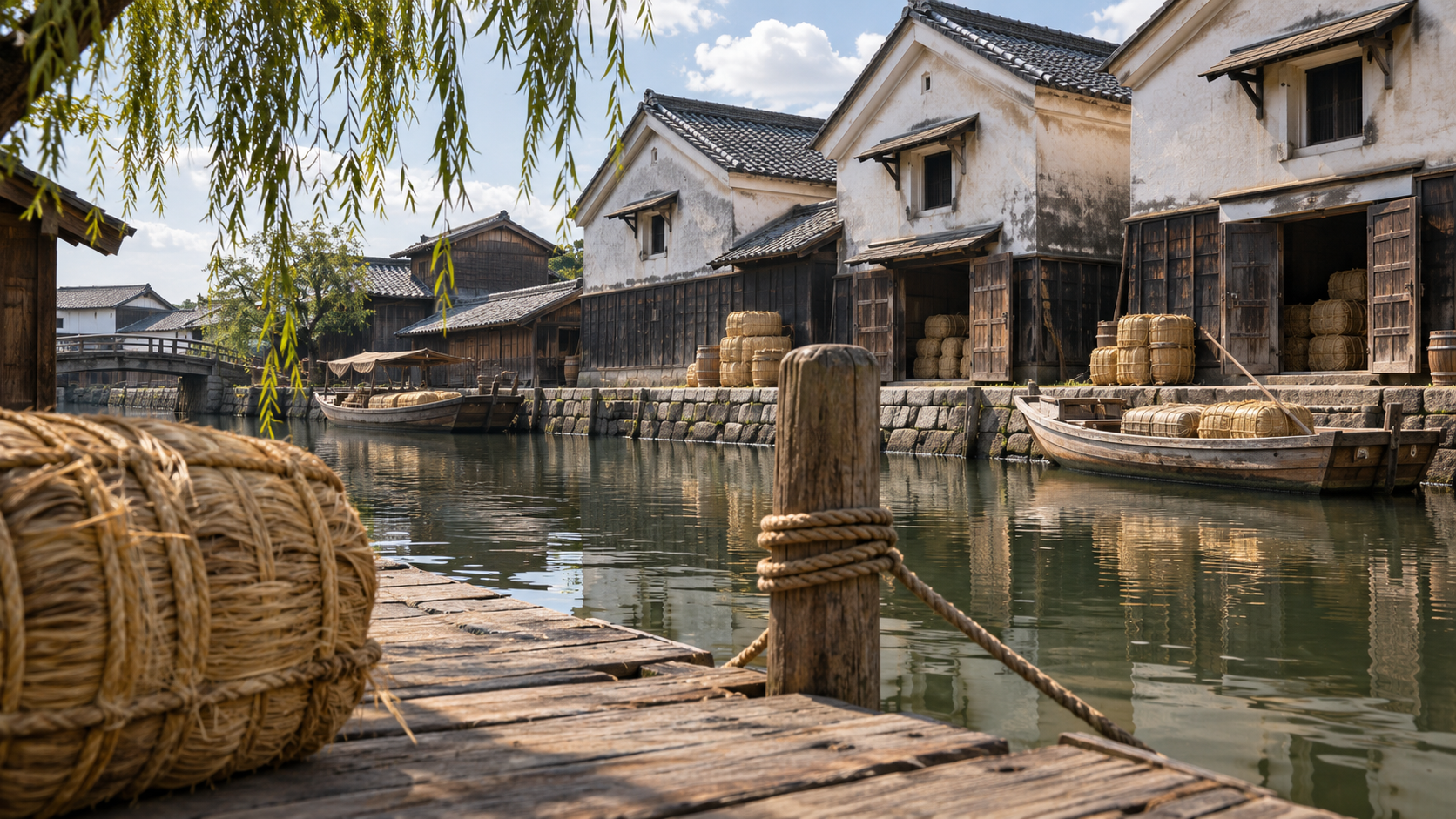
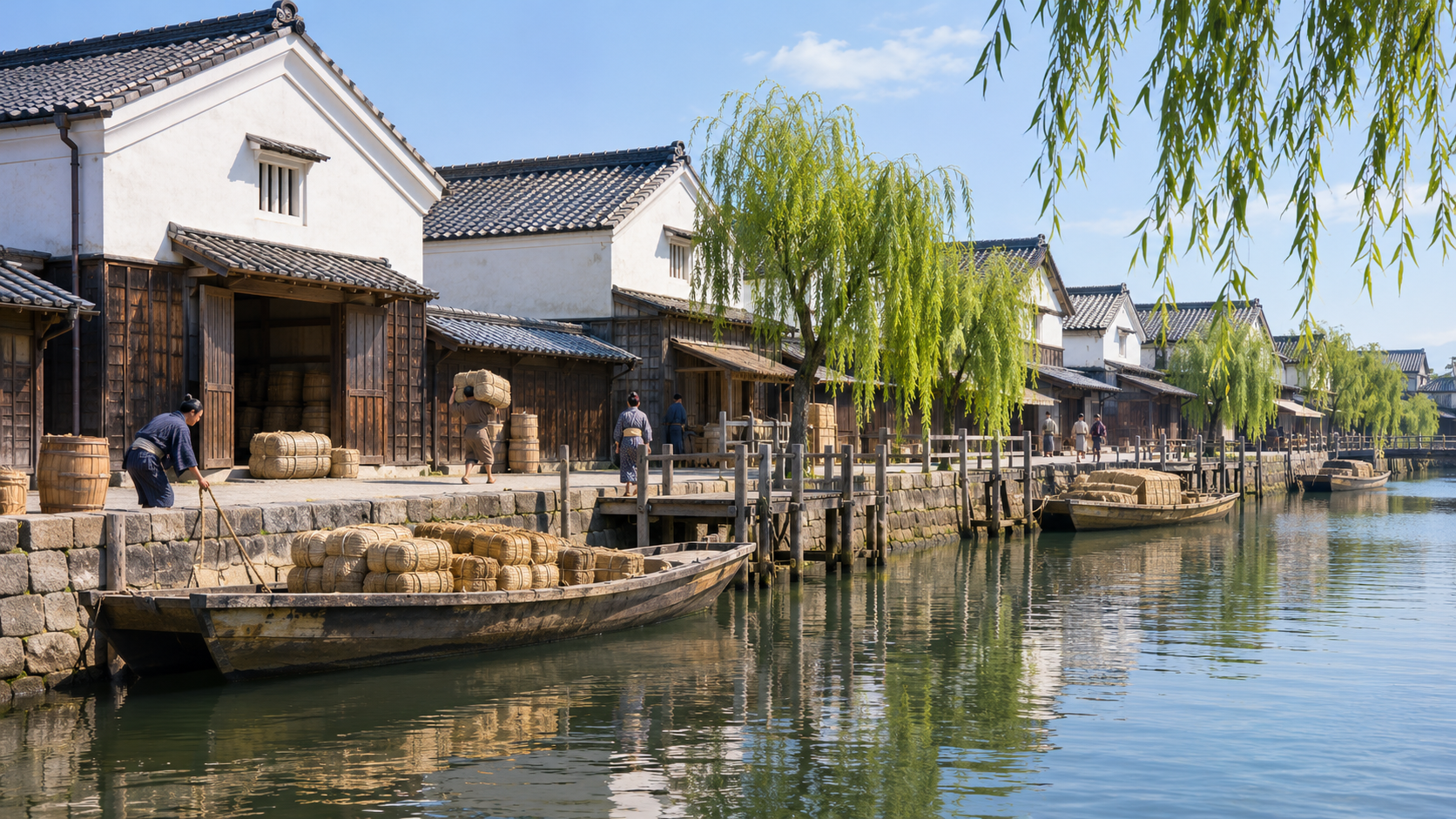
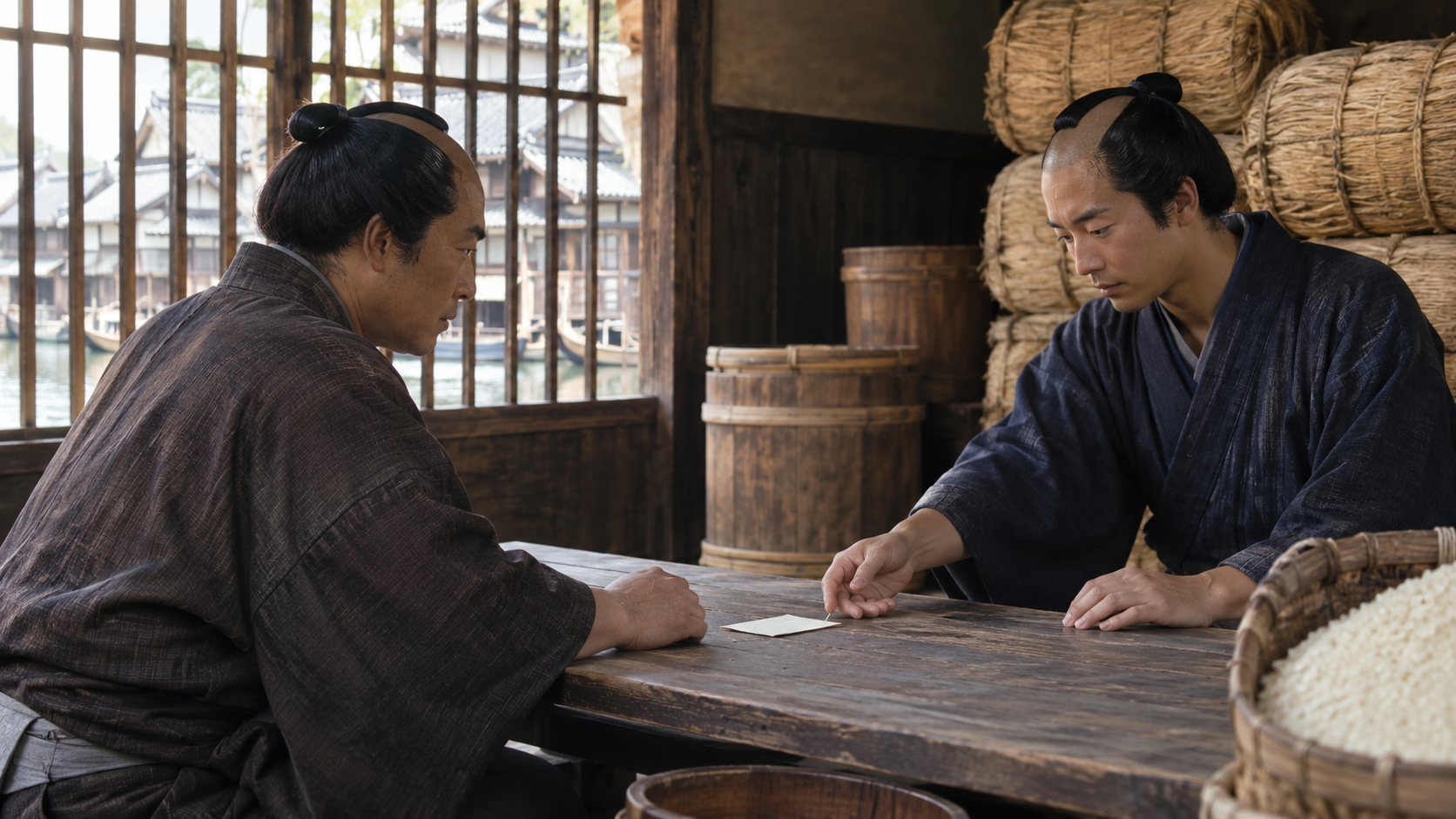
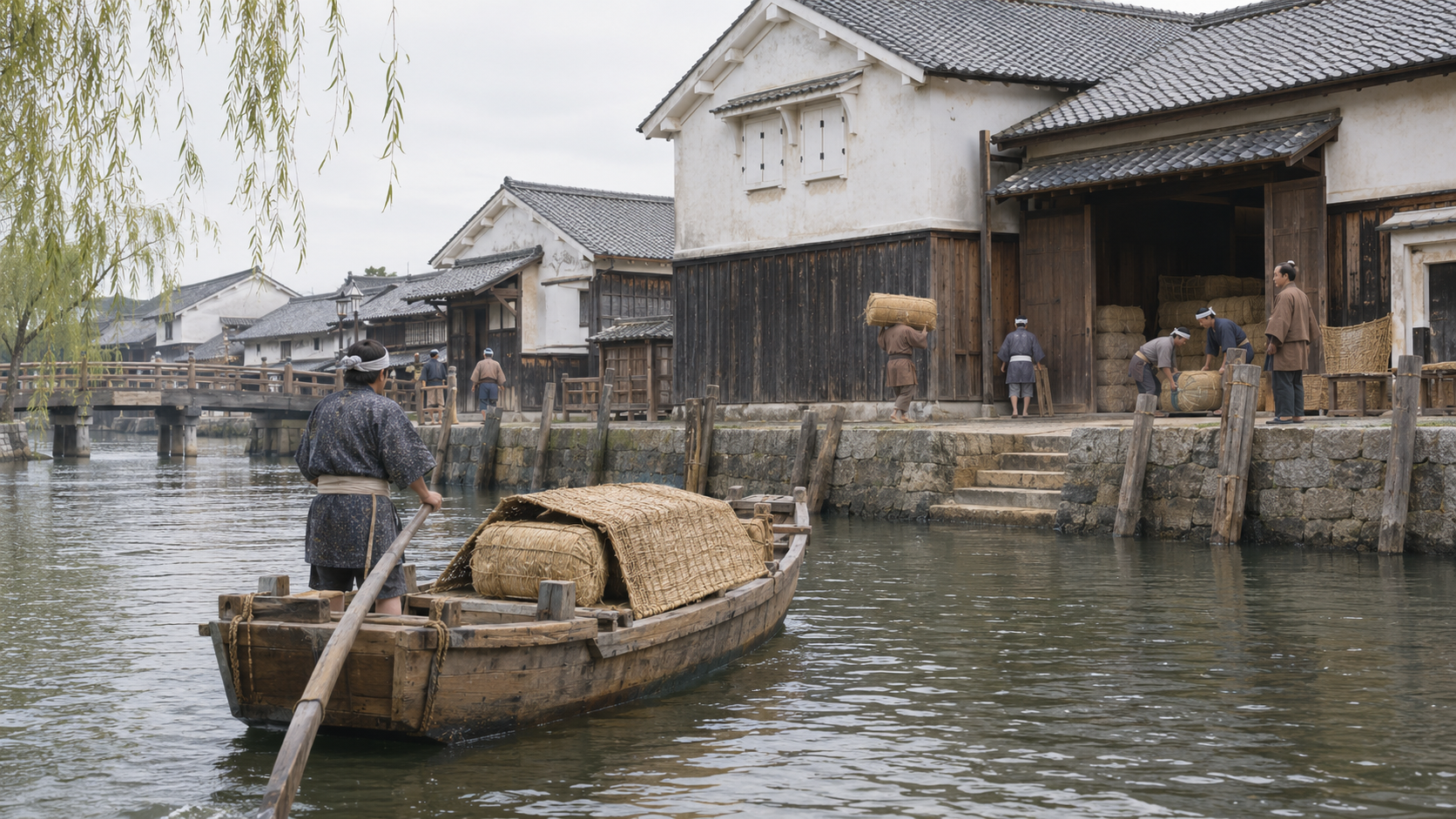
The illustrations are anonymous generated waterfront, warehouse, writing and rice-handling scenes. They do not reproduce an original receipt, ledger, trading manual, identified broker or exact Dojima street plan. Later pictures of market buildings also require their own dates rather than being treated as a complete view of 1730.
Watch the film
See the story in motion
The film currently uses Japanese audio. This English article provides the context and source trail; it does not imply that an English subtitle track is available.
Scene 01
Trading without passing every bale
In Edo-period Osaka, a sale at the rice market did not always involve moving and handing over the physical bales. Promises of exchange and entries in accounts could circulate instead.
Two mechanisms must be distinguished. Shomai involved trading rice receipts, while choaimai involved account transactions referenced to a representative rice brand. Describing both simply as paper trading hides that difference.
The useful questions are what was sold, what changed hands and how the obligations were settled. Starting with those questions connects the waterfront’s rice to the receipt and then to the account book.
Scene 02
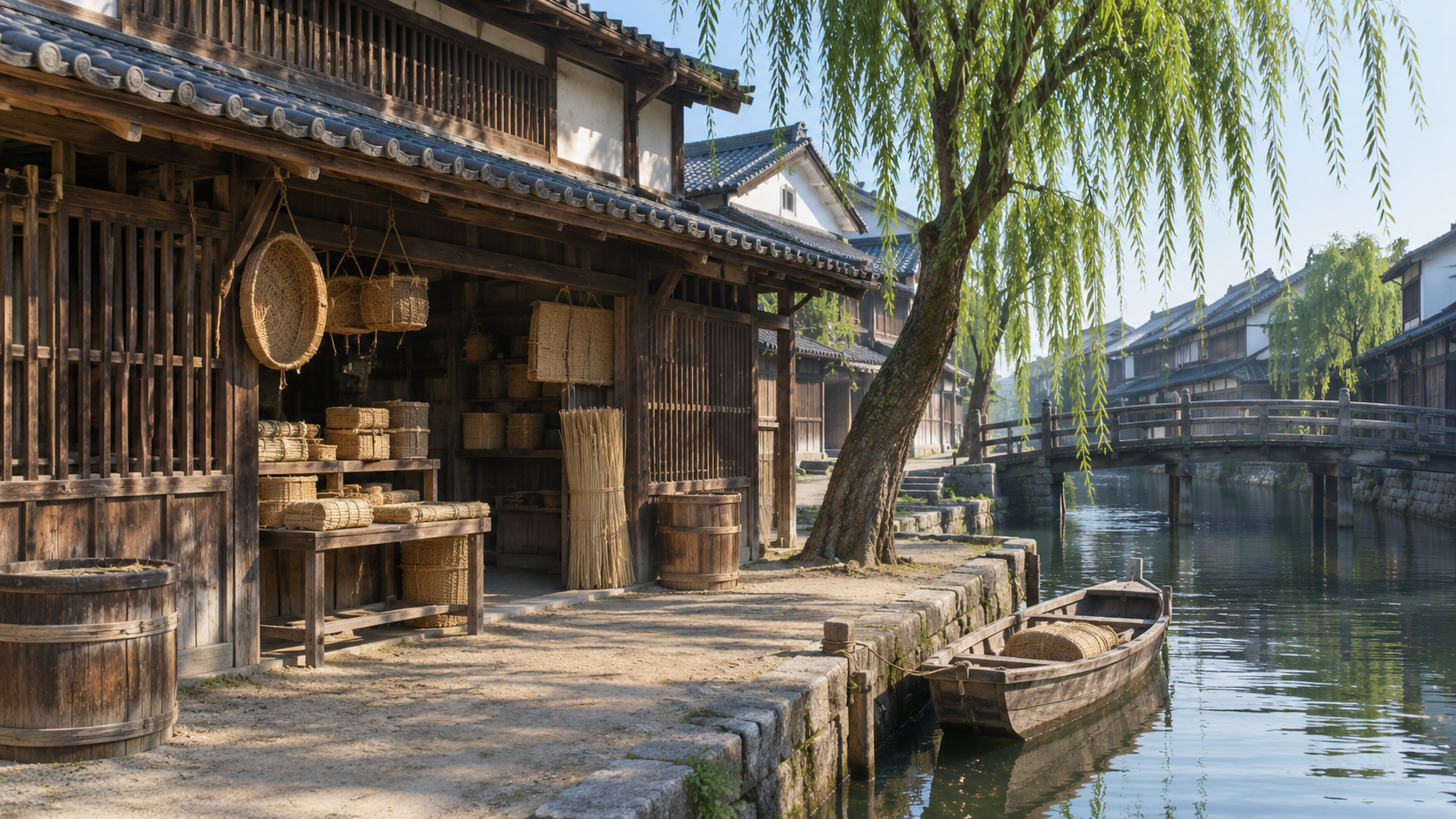
Water routes lead to warehouse compounds
Rice reached Osaka through coastal routes and inland waterways, including the Yodo River system. Domains’ tax rice was brought to major urban markets and stored in compounds around Nakanoshima.
These compounds connected storage with the domain’s need to sell rice and obtain funds. Transport and warehousing formed the material foundation of transactions that might later appear only as writing on paper.
The market did not begin in a world detached from agriculture. Even when the next trade moved no rice, the promises being exchanged concerned produce with a history of cultivation, carriage and storage.
Scene 03
Turning collected rice into funds
Possessing collected rice was different from possessing funds available for payments. The sale process helped domains meet expenses and purchase what they required.
Rice in the compounds was sold by bidding to brokers, with successful buyers receiving rice receipts. Japan Exchange Group describes the receipt as a security promising exchange for rice, rather than a delivery note confirming a completed shipment.
A transferable piece of paper thus stood between the seller and the rice that could be received. A claim could change hands without a fresh rearrangement of bales every time the receipt was resold.
Scene 04
A receipt and the rice currently in store are not identical
Rice receipts did not always correspond to rice immediately visible in the warehouse. The institutional explanation includes rice that had not yet arrived and rice from future harvests.
The issuer and the promise of exchange therefore mattered. The paper was not simply a miniature bale representing goods always waiting at the same location.
This complication does not erase the difference between holding a rice receipt and participating in choaimai. A promise can circulate on paper while belonging to a mechanism different from the account trading examined below.
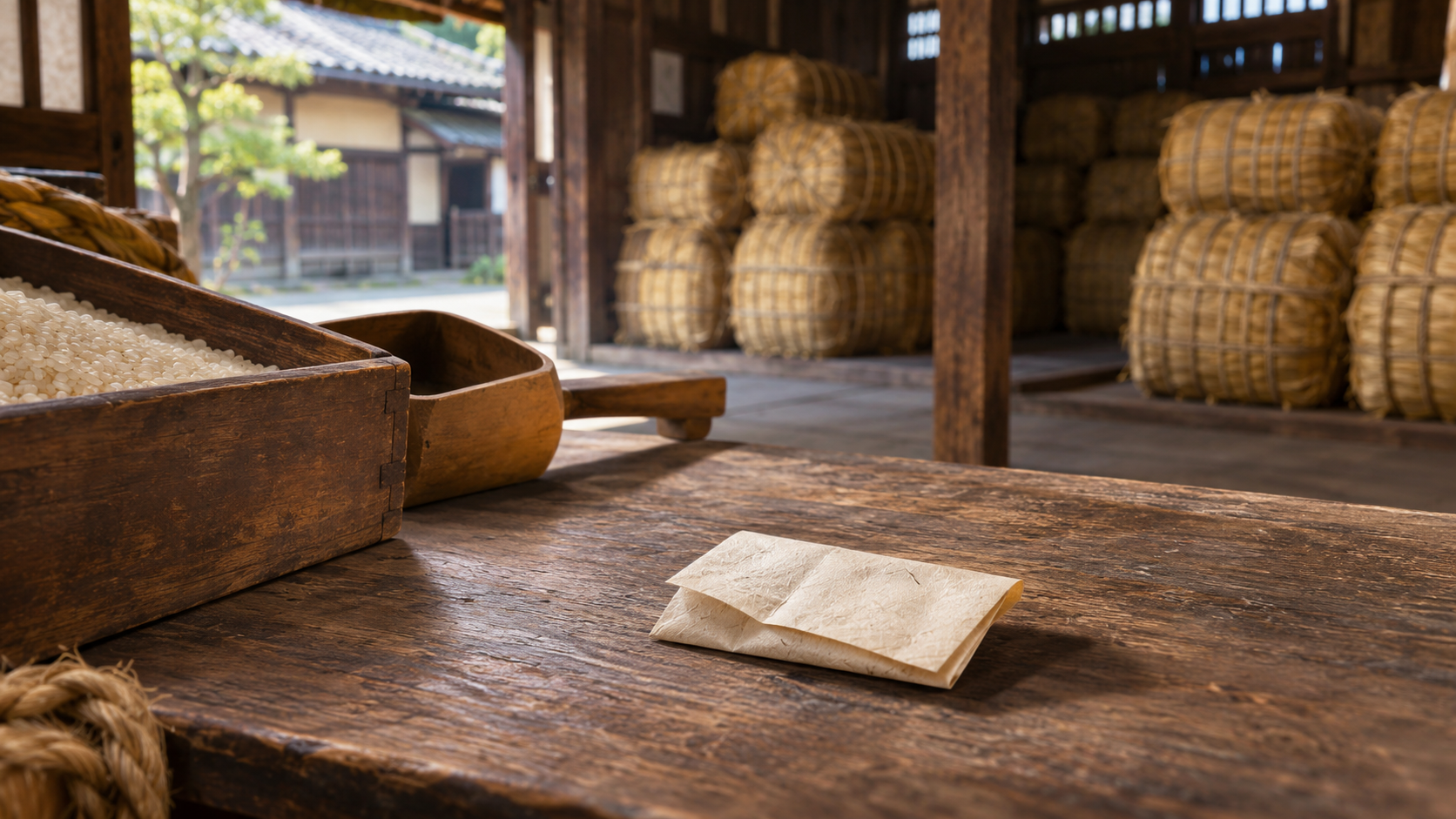
Scene 05
Shomai transfers the rice receipt
In shomai, the seller delivered a rice receipt and the buyer paid for it. The immediate object passing between them was the receipt carrying the promise of exchange for rice.
That helps explain why the transaction is described as spot trading even when no large bale was passed across the market at that moment. Trading a receipt and collecting rice at the warehouse were distinguishable stages.
The holder of the receipt changed. This transfer of a rice-related claim provides a practical contrast with choaimai, where a particular receipt was not necessarily acquired at the close of the trade.
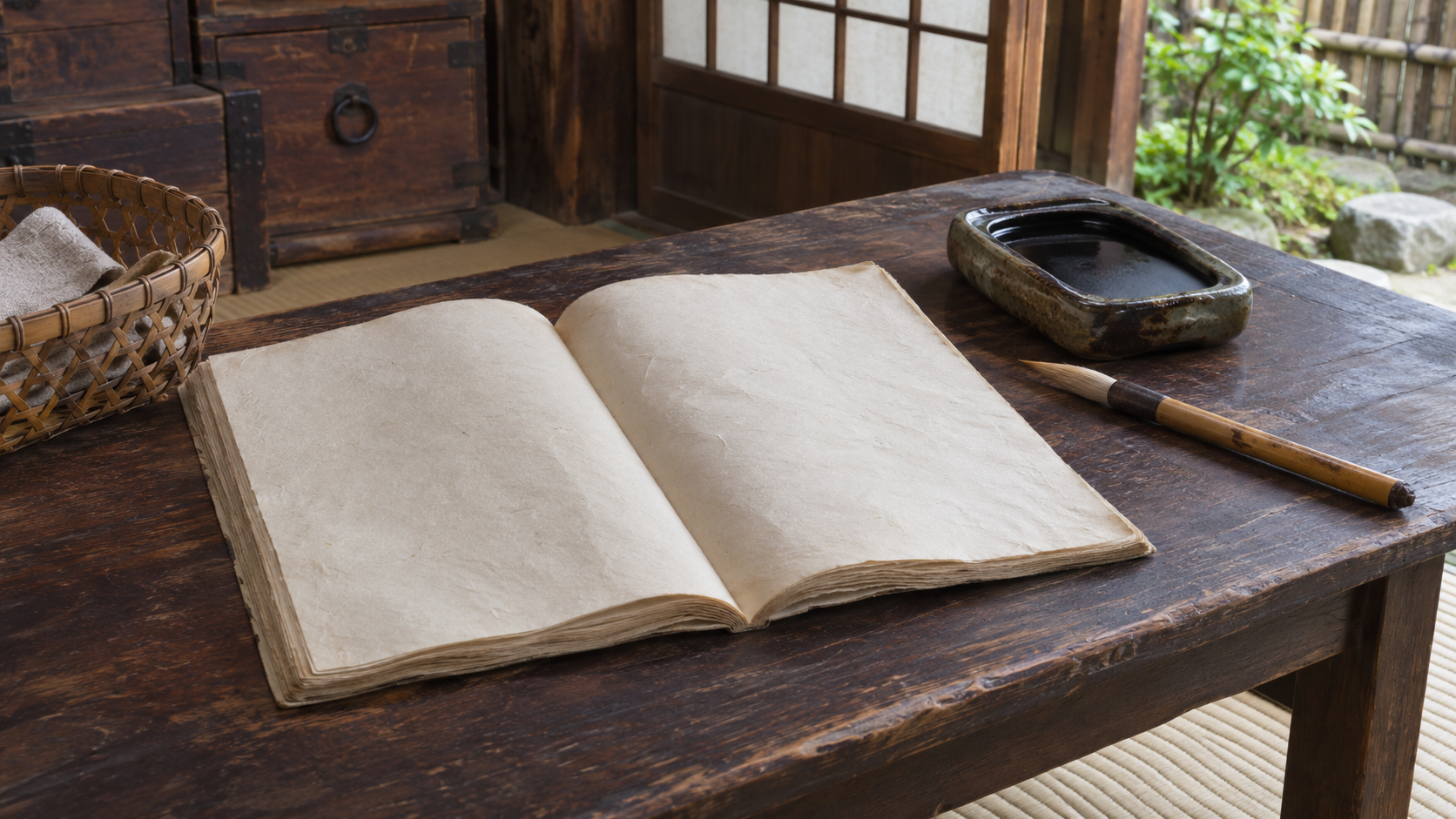
Scene 06
Choaimai uses a representative price reference
Choaimai did not consist of passing individual rice receipts back and forth in the same way. Transactions were made in accounts using a representative trading brand as their reference.
Economic historian Takatsuki Yasuo describes a division of the year into three trading periods, with representative brands selected for each. The reference rice and the eventual settlement were different aspects of the mechanism.
Choosing a rice brand as the price basis did not mean that every participant necessarily finished by receiving that brand’s rice receipt. A drawing of bales alone would fail to explain this distinction.
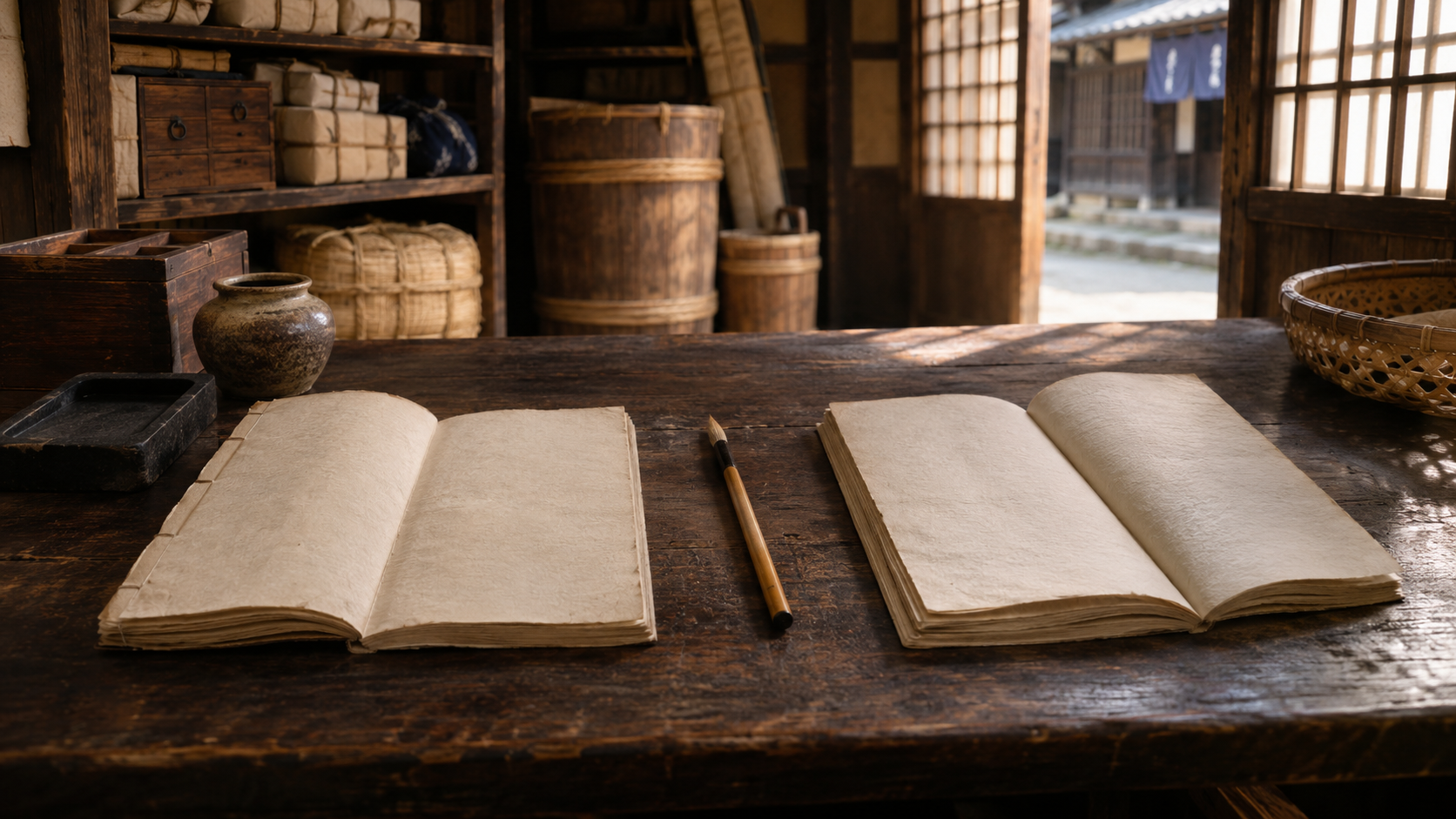
Scene 07
The transaction can end with a price difference
Settlement of differences is another key to choaimai. A difference between sale and purchase prices could be settled in money through the accounting of opposing transactions, rather than by transferring an entire quantity of rice.
Price movement could create a receiving side and a paying side. Paper and accounting did not make the mechanism a guarantee that every participant would gain.
Shomai’s exchange of a receipt for payment and choaimai’s settlement of price differences coexisted. Their different functions help explain why Dojima was more than a place where physical rice accumulated.
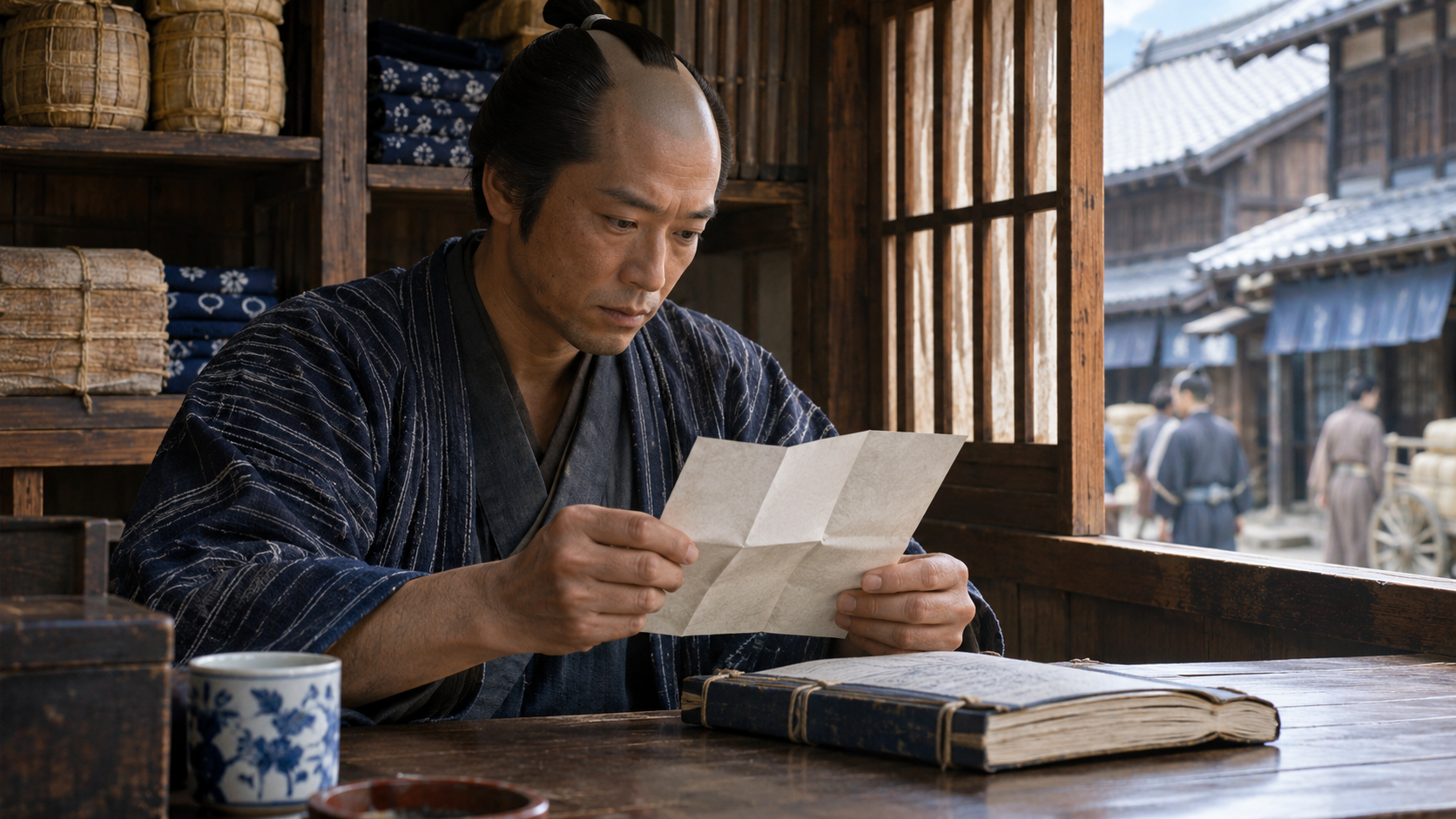
Scene 08
Brokers and customers beyond the trading place
In his explanation of late-Edo Dojima, Takatsuki describes brokers handling customers’ orders and receiving commissions. Participation in choaimai extended beyond the people physically present at the market.
Counting only the brokers visible near the trading place would therefore miss customers whose decisions came from elsewhere. Local transactions could be connected with judgments made at a distance.
The period qualification is essential. An account of late-Edo brokerage does not establish that the same scale of participation and communication network already existed at the market’s recognition in 1730.
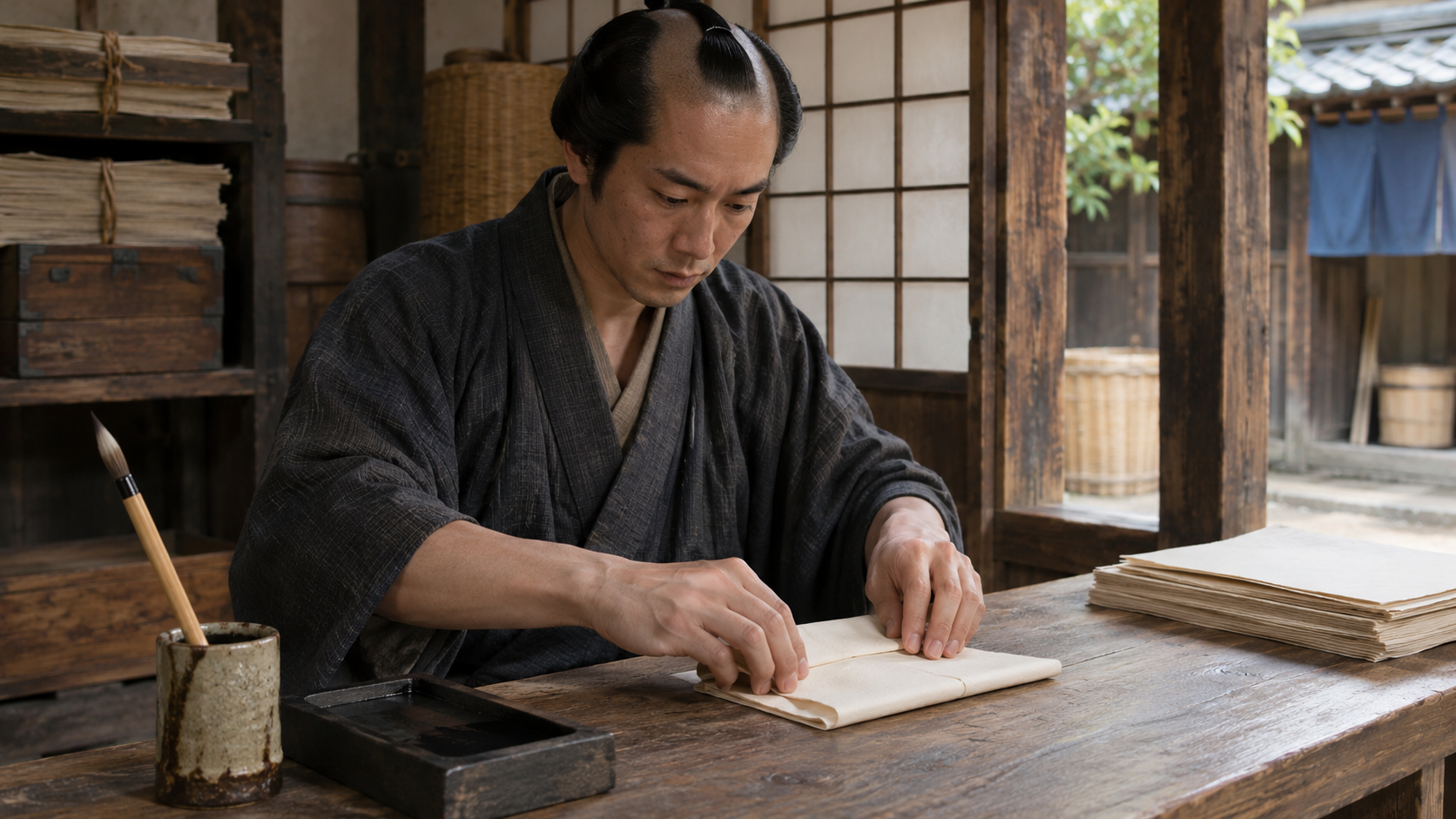
Scene 09
Prices travel by a different route from rice
Customers outside Osaka needed information about Dojima’s prices. People called joya gathered market information, made it into letters and sold it; the letters could also contain reports on harvest conditions.
Rice-market couriers specialized in carrying such reports. The organization of departures and their relationship to trading occasions mattered alongside the speed of an individual runner. Flag signalling also conveyed prices.
The account keeps these forms of communication distinct and does not transfer later measured speeds unchanged into earlier periods. Rice-laden boats and information-bearing paper followed different routes while connecting the same commercial world.
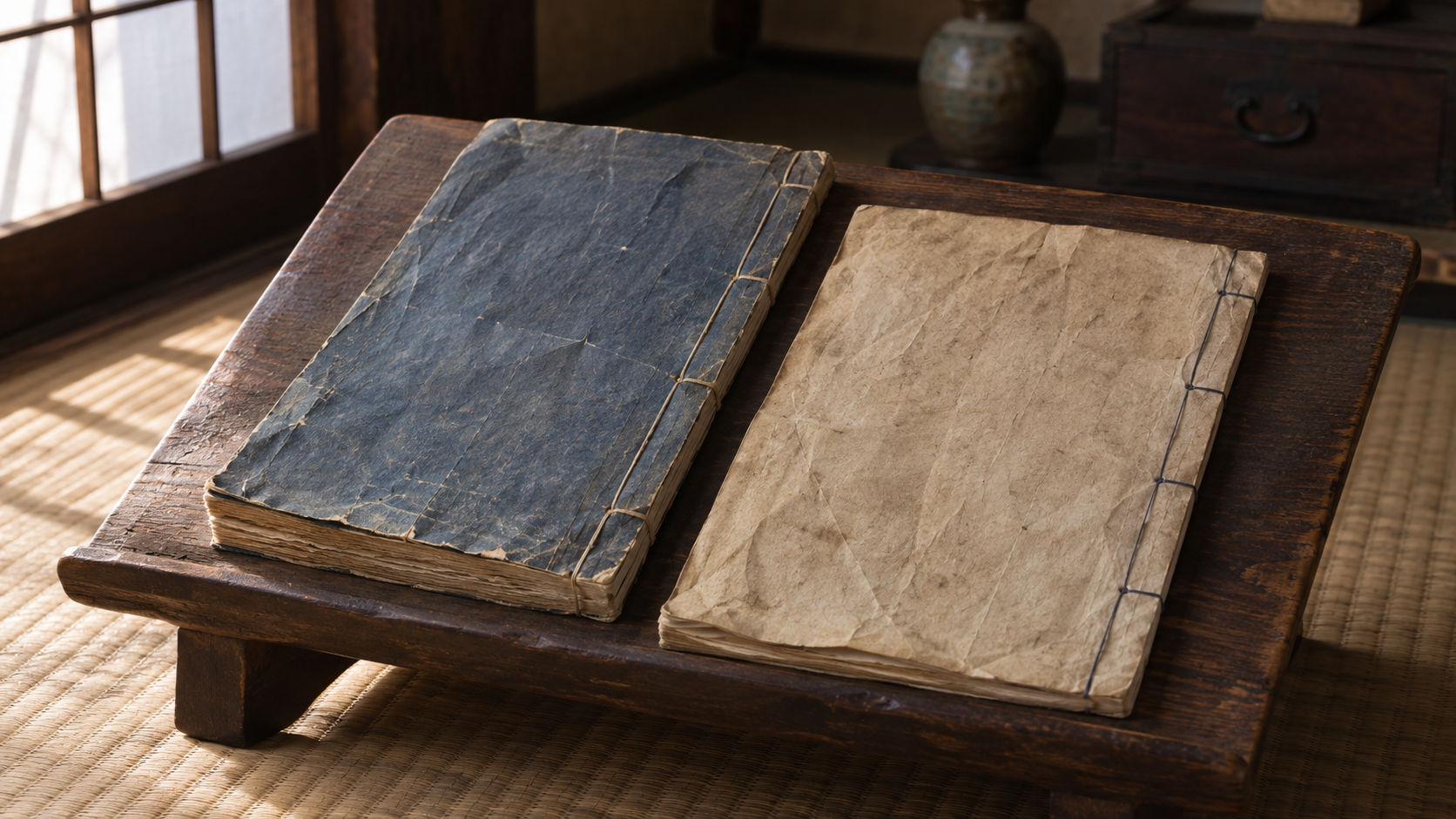
Scene 10
Trading manuals reveal historical ways of thinking
Takatsuki’s study compares trading manuals from around the middle eighteenth century. It describes a view in which forces beyond human control affected harvests, while people’s expectations and market sentiment could also influence shorter movements.
This is the researcher’s analysis of historical market thinking, not a modern forecasting formula attributed to Edo traders. The manuals also concerned terminology, practical conduct and knowledge of trading.
Government recognition alone did not mechanically operate a market. Practices, interpretation and attempts to understand prices also belonged to the work performed by its participants.
Scene 11
Relocation, recognition and later institutional change
The rice market associated with Yodoya’s premises is described as moving to Dojima around 1697. In 1730, under Yoshimune, the government officially recognized shomai and choaimai. Recognition was not the first moment anybody sold rice.
The National Diet Library follows later changes: prohibition in 1869, revival as a rice exchange in 1871 and abolition under the rice-distribution control system in 1939.
The present monument and library materials help orient the history without making every later building an image of the market in 1730. Institutions, trading arrangements and the surrounding city changed over time.
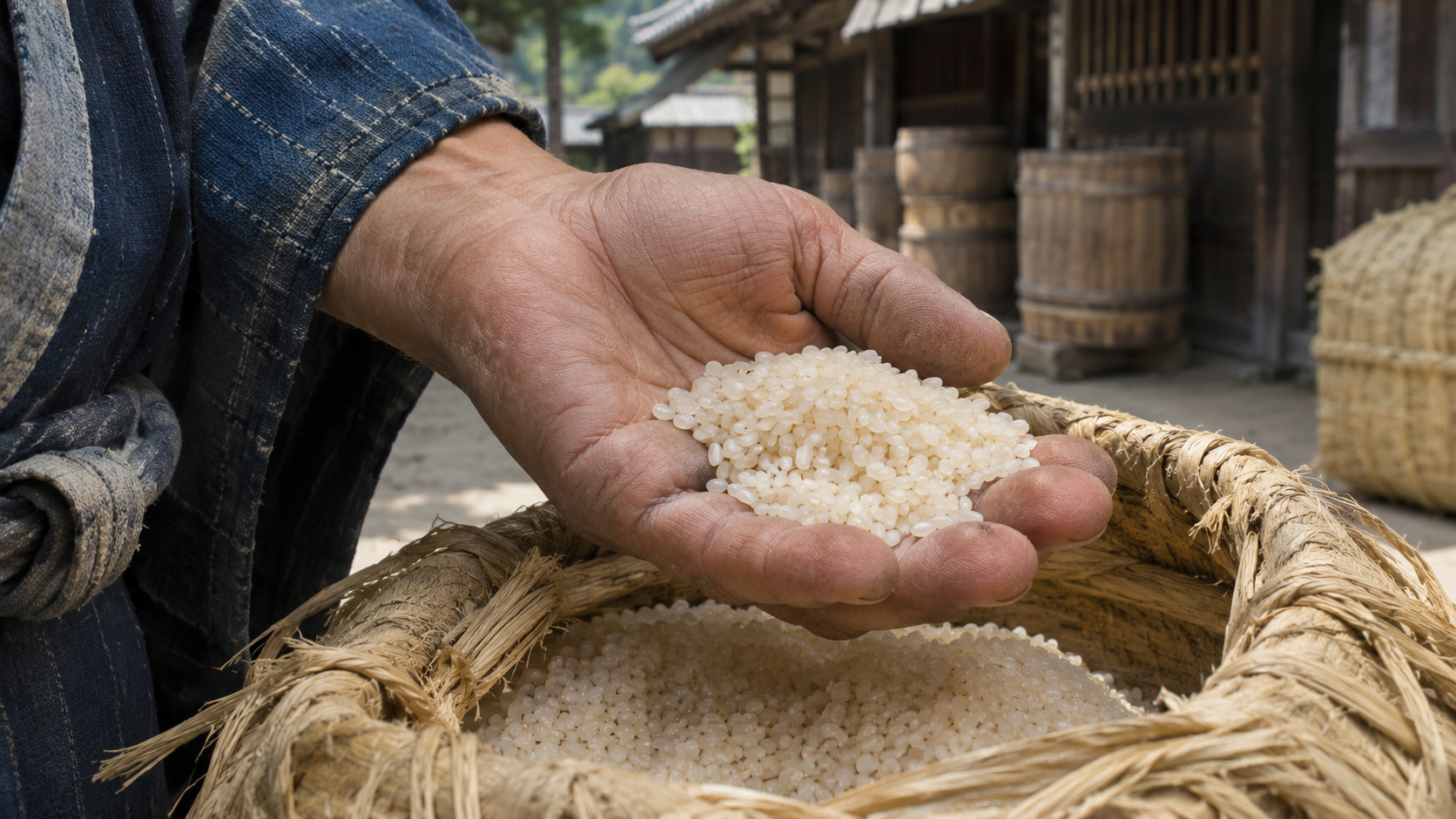
Scene 12
Rice, promises and information belong together
Several things moved through Dojima: rice entering compounds, receipts promising exchange, sale and purchase entries in accounts, and prices communicated to distant towns. Each had a different role.
Shomai transferred receipts. Choaimai referenced a representative brand and could end in settlement of differences. Keeping that contrast in view makes the opening image of trading without moving bales more precise.
Dojima is known as an early organized futures market, but its foundations still included fields, boats, warehouses and people making promises. Abstract-looking transactions remained connected with those material activities.
How to read this work
History, interpretation, and reconstruction
Distinguishing transfer of a rice receipt from settlement against a representative rice price reveals how physical rice, promises and information worked together at Dojima.
This work is grounded in published sources and historical research. Interior thoughts, dialogue, and some visual details are cinematic reconstructions. Where historians disagree, the article presents the point as debated rather than settled fact.
Timeline
The story in time
-
The institutional account places the beginnings of rice trading around Yodoya’s premises in this period.
Sources: jpx -
Distant orders, brokerage, market letters and courier networks are described in the researcher’s account.
Sources: tak2022 -
The Meiji government prohibits trading at Dojima.
Sources: ndl -
A rice exchange is revived.
Sources: ndl -
The exchange is abolished under the rice-distribution control system.
Sources: ndl
People & terms
A guide for new readers
Glossary
- Kome kitte 米切手
- A rice receipt promising exchange for rice; receipts could circulate and could include rice not yet delivered or harvested.
- Shomai 正米
- Trading in rice receipts, described as spot trading even when bales were not physically transferred at every sale.
- Choaimai 帳合米
- Account trading referenced to representative rice brands, distinguished from acquiring an individual rice receipt.
- Sakin kessai 差金決済
- Settlement of a price difference, rather than mandatory delivery of the full quantity of rice.
- Kurayashiki 蔵屋敷
- A domain warehouse compound that connected storage, selling rice and obtaining funds for expenditure.
- Joya 状屋
- People who gathered and sold market information in letters, connecting trading with information from other places.
Sources & method
How this article was built
The account combines institutional history with the stated sections of Takatsuki’s research and explanation. It distinguishes historical practice from modern terminology and avoids describing all paper trading as one mechanism. It supplies neither a present-day currency conversion nor an assertion that participation ensured profit.
Dates attach to particular changes: the market’s move, official recognition, late-Edo customer networks and modern reorganization. Generated waterfronts and writing props illustrate concepts, with no claim to reproduce authentic receipts, ledgers, manuals or a specific trade. No music, institutional image or source-book page is incorporated into the article.
Sources
References and further reading
- Dojima Rice Market 堂島米市場 Title translated editorially for reader convenience. Japan Exchange Group 日本取引所グループ Institutional history distinguishing receipts, spot and account trading, recognition in 1730 and later chronology. Pictures are not reproduced. Accessed 2026-11-06
- Markets in Osaka 大阪の市場 錦絵と写真でめぐる日本の名所 Title translated editorially for reader convenience. National Diet Library 国立国会図書館 Exhibition text concerning waterways, warehouses and institutional changes. Modern views and later illustrations are not transferred unchanged to 1730. Accessed 2026-11-06
- Commodity Futures Trading: Historical Background 商品先物取引 商品先物取引の歴史 Title translated editorially for reader convenience. Ministry of Agriculture, Forestry and Fisheries 農林水産省 Only the historical section is used for rice receipts and account trading; modern regulatory arrangements are not projected backward. Accessed 2026-11-06
- Trading Manuals in Early Modern Japan: The Osaka Rice Market 高槻泰郎 近世日本の相場指南書 大坂米市場を素材にして Title translated editorially for reader convenience. Takatsuki Yasuo / Kobe University 高槻泰郎/神戸大学 The cited introductory and relevant printed pages concern trading periods, reference brands, differences and historical market thinking. No claim to have read every original trading manual. Accessed 2026-11-06
- Learning from the Edo Period: Dojima Market Information 高槻泰郎 江戸時代に学ぶ 堂島米市場の情報 Title translated editorially for reader convenience. Central Council for Financial Services Information / Takatsuki Yasuo 金融広報中央委員会/高槻泰郎 Researcher’s explanation of late-Edo brokerage, customers, market letters and couriers. Later evidence about signalling speed is not treated as a measurement for 1730. Accessed 2026-11-06
- The Roots of Japanese Securities Markets in the Edo Period, Part Two 日本の証券市場のルーツは江戸時代にあり 後編 Title translated editorially for reader convenience. Tokyo Stock Exchange, Money-bu 東京証券取引所 東証マネ部 An institutional public explanation of receipts, reference brands and difference settlement, distinguished from a primary contract or guaranteed investment outcome. Accessed 2026-11-06
- Dojima Rice Market, Osaka e-Collection 堂島米市場 おおさかeコレクション Title translated editorially for reader convenience. Osaka Prefectural Library 大阪府立図書館 Collection description and catalogue context for the market’s location and history. The collection image is not reproduced. Accessed 2026-11-06
- Dojima Rice Market Monument 堂島米市場跡碑 Title translated editorially for reader convenience. Osaka City 大阪市 Municipal account of relocation, official recognition and the two mechanisms. A later marker is distinguished from an original market facility. Accessed 2026-11-06
Continue reading
More stories from Shigeki
Shigeki English
The Second Choshu Expedition: Four Fronts and a Negotiated Withdrawal
Read weapons together with terrain, training, command and support.
- When 1866, distinct from the first expedition in 1864; the process of ending extended into January 1867
- Where Oshima, the Aki border, Iwami and the Kanmon Strait facing Kokura
Shigeki English
Hasedo: Why Fighting Continued after Sekigahara
Separate the siege, the arrival of news, and withdrawal under pursuit.
- When 1600; month and day references use the calendar of the time
- Where Hasedo and Yamagata in Dewa, connected with Aizu and distant Sekigahara