
SHIGEKI ENGLISH STORYEN
Japanese history in English
The Haitorei of 1876: Society After the Sword Was Unfastened
Permission to stop wearing a sword, a later prohibition, and changes in work, income and social roles.
Trace the change from permission to stop wearing swords in 1871 to the general prohibition of 1876. Read the exceptions and seizure provision separately, then follow distinct reforms, swordsmanship performances and the continuing history of swordmaking.
At a glance
Before you enter the story
- When
- 1871–1876, with later swordmaking history extending to 1906
- Where
- Meiji Japan, with specific examples from Kumamoto and Tokyo
- Key figures
- Former warrior families and people affected by reform, Sakakibara Kenkichi, Gassan Sadakazu, Miyamoto Kanenori
- What was at stake
- What changed when removing a sword moved from a permitted choice to a general requirement, and how did different people continue their lives and skills?
Why this story matters
The larger history behind the turning point
A familiar name can conceal the exact action a measure regulates. Wearing a sword, possessing one at home and having a sword seized for a violation are different matters. Reading the prohibition with its exceptions and enforcement provision gives a clearer understanding of what the short proclamation actually established.
The surrounding years also changed administration, military service and stipends through separate reforms. Their effects overlapped in people’s lives, yet they did not occur through one command on one day. Distinguishing them makes room for varied responses, changing livelihoods and the continued use of inherited skills.
Historical context
What an international reader needs to know
Wearing, ownership and conditions
Taito means wearing a sword on the person. The measure commonly called Haitorei, issued on 28 March 1876, concerns that action. Its exceptions involve specified ceremonial or uniformed circumstances, while its final provision addresses taking swords from violators. None of those elements should be omitted when describing it.
The distinction between an action and an object matters throughout this article. A general prohibition on wearing a sword does not establish simultaneous collection from every home. Equally, the seizure provision means it was not simply a request without an enforcement consequence. The article explains the historical text, without turning it into a claim about present-day weapons rules.
Separate reforms and historical dates
The reforms discussed here address different subjects: domains and prefectural administration, conscription, wearing swords, and the replacement of stipend payments by bonds. They are placed alongside one another as changes affecting society rather than treated as interchangeable names for a single measure.
For events in 1871, the article uses the year without silently converting an old-calendar month and day into a Gregorian date. The 1876 proclamation and August stipend measure have their own dates. Shizoku identifies the former warrior-status group discussed in the sources; it does not imply that every member chose the same response or shared the same feelings.
Watch the film
See the story in motion
The film currently uses Japanese audio. This English article provides the context and source trail; it does not imply that an English subtitle track is available.
Scene 01
One gesture, two different meanings
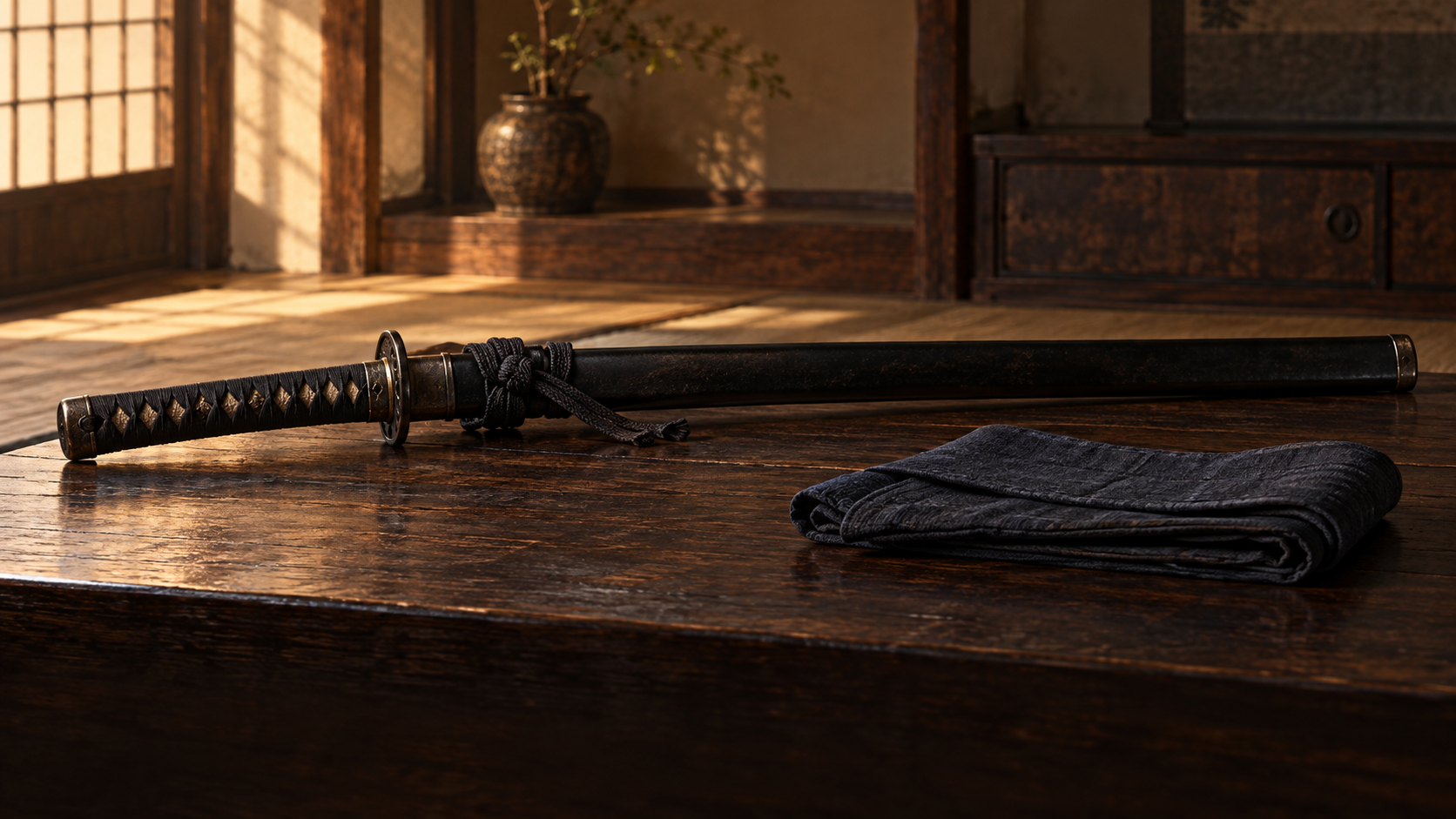
Unfastening a sword could mean different things five years apart. In 1871, a person could stop wearing it. In 1876, wearing it was generally prohibited. The physical movement could look similar while the rule surrounding it changed from permission to restriction.
The measure commonly called Haitorei was issued on 28 March 1876. Its name can suggest that warriors’ swords disappeared overnight, but that picture leaves several questions unanswered: what was prohibited, what exceptions remained, and what other changes affected people’s work and lives?
Following one sword through these years opens a longer history of visible status and social rules. The person removing it did not become nobody on that date. What changed was the institutional relationship between the person, the object and the circumstances in which it could be worn.

Scene 02
Read the action in the proclamation
The archival item is titled in Japanese as a prohibition on wearing swords. Taito concerns bearing a sword on the person. Beginning with that action gives the measure a more precise outline than its familiar short name alone.
The proclamation prohibits the practice except in stated circumstances involving grand ceremonial dress and military personnel, police officials and others in prescribed uniforms. Keeping a sword at home and going out with it at the waist consequently raise different questions. The specified clothing and status conditions are part of the text.
Replacing those conditions with a statement that nobody could ever wear a sword would omit part of the measure. Attention to the regulated verb, together with the exceptions, makes the historical rule easier to follow without expanding it into a prohibition the article has not established.
Scene 03
The provision for taking a violator’s sword
It would also be mistaken to describe the measure as unrelated to taking swords away. Its final proviso states that a violator’s sword would be taken. The consequence for breaching the prohibition was therefore included in the wording.
Leaving that out would make the measure sound like a request without compulsory force. Yet taking a sword from a person who violated the rule is different from collecting every sword from every household. The target and condition are not the same.
This account keeps three elements together: the prohibition on wearing swords, the exceptions tied to dress or uniform, and seizure for violation. Their combination avoids two unsupported extremes, either total confiscation from everyone or a claim that no sword could be taken under the measure.
Scene 04
Five years earlier, removal was permitted
In 1871, the measure commonly known for permitting changes of hairstyle and removal of swords had recognized a choice. The National Archives explanation describes permission for shizoku to go without wearing a sword, rather than a general prohibition on continuing to wear one.
Permission to stop and a requirement to stop are different stages. Recognizing a choice also did not guarantee that habits or concern about others’ perceptions disappeared on the same day. The institutional change and each person’s decision need to remain separate questions.
The article does not assign one shared emotional response to all former warrior families. Placing 1871 alongside 1876 instead reveals a change in the rule itself: from leaving removal open as an option to establishing a general restriction with stated exceptions.
Scene 05
The domains and the structure behind appearance
These five years cannot be explained through clothing alone. In 1871, the domains were abolished and prefectural administration reorganized. Domain governors were dismissed, and administration passed to officials appointed by the government.
The political organization behind the visible figure wearing a sword was being reshaped. That context matters, but abolishing domains and restricting the wearing of swords were not the same proclamation. Saying that every sword became prohibited as soon as the domains disappeared would skip several years and combine distinct measures.
The timeline therefore keeps the administrative reform of 1871 apart from the sword-wearing proclamation of 1876. Considering the two together, while retaining their dates and subjects, shows how reform continued after the initial political changes associated with the Restoration.
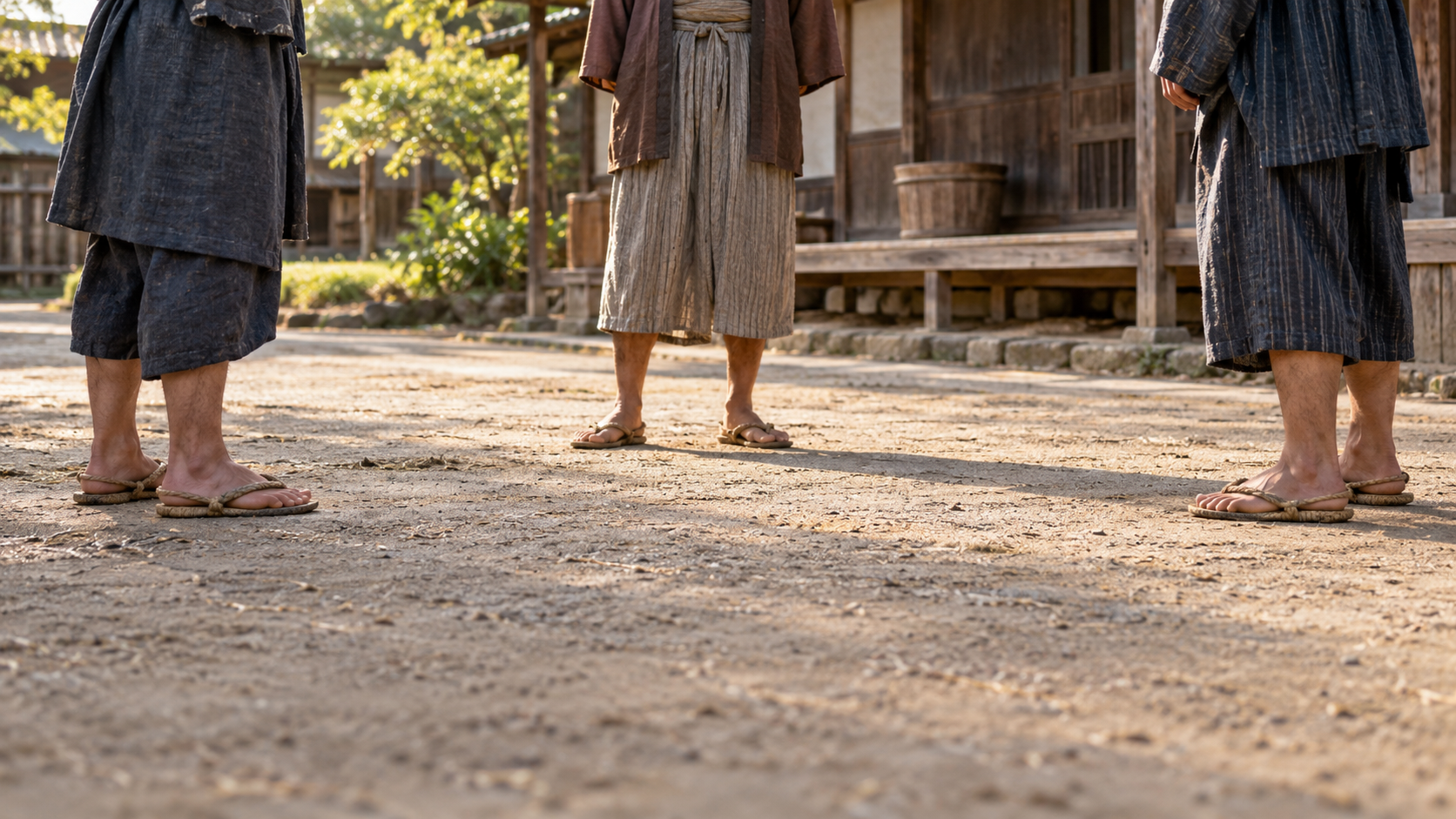
Scene 06
Changing the organization of military service
The conscription measure followed in 1873. The National Archives explains a system in which men aged twenty underwent examination and those who qualified were selected by lot for standing-army service. Various exemptions accompanied the principle of general military obligation.
It is therefore inaccurate to imagine every man, without exception, immediately entering the army. The system reorganized who performed military service and how that obligation operated, including conditions that need to remain part of its description.
Seen in this setting, the changing appearance of a sword-wearer concerns more than one old weapon being replaced by another. It also raises questions about service and organization. Conscription and Haitorei remain separate measures, but reading them alongside each other reveals changing roles around the sword.
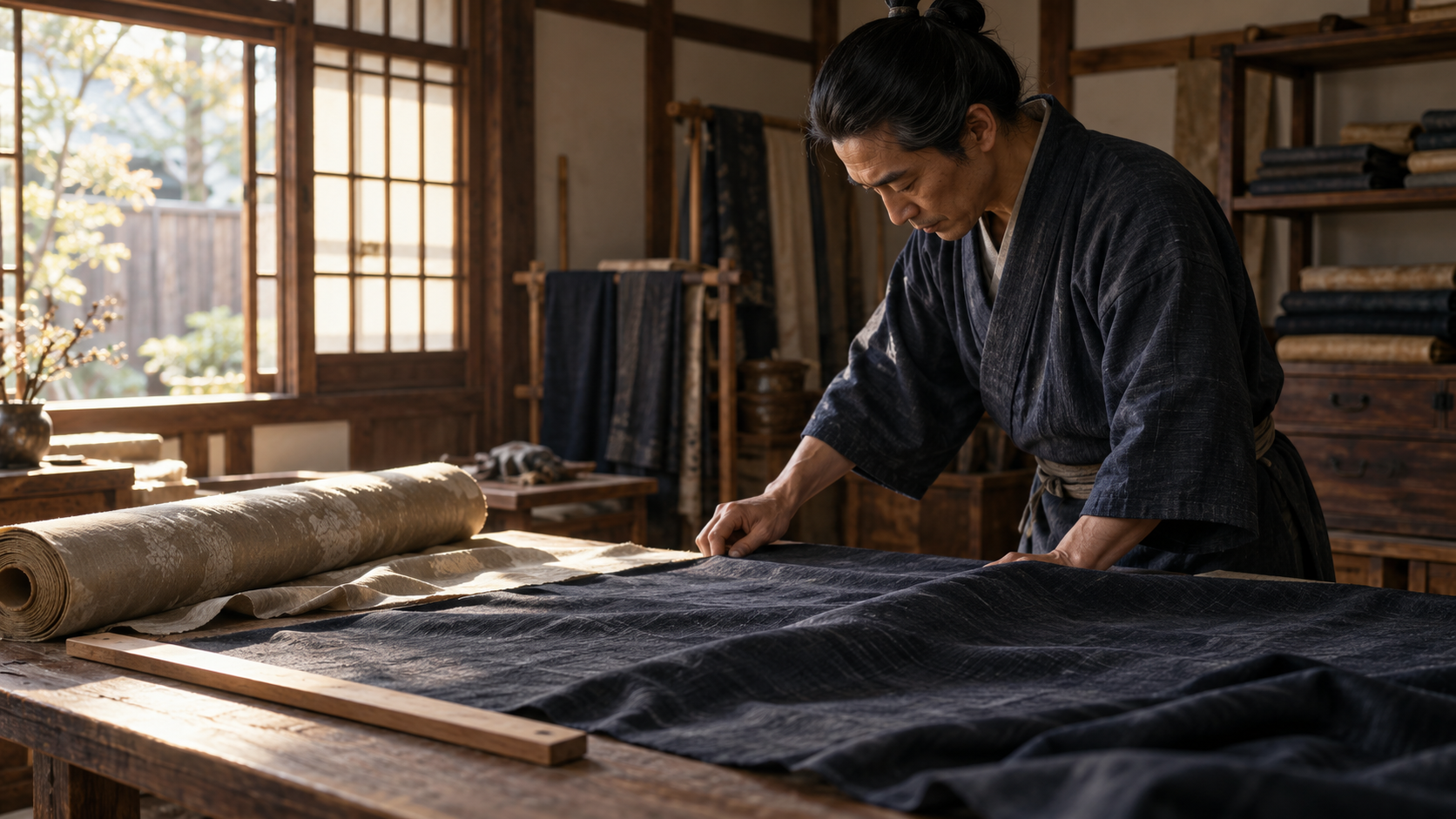
Scene 07
Ceremonial dress and prescribed uniforms
Returning to the 1876 text, the exceptions concern grand ceremonial dress and prescribed uniforms worn by military personnel, police officials and others specified. They cannot be expanded into unrestricted permission for every military person at any time.
The clothing conditions matter alongside the person’s position. Calling an outfit ceremonial is not enough to establish that it meets a particular exception. The rule connects sword-wearing with defined forms of dress rather than supplying a blanket privilege detached from circumstances.
A figure seen wearing a sword in a town would therefore not, by appearance alone, prove either compliance or violation. Status, occasion and clothing conditions are needed. The distinctions are more informative than a picture of a society in which nobody wore swords any longer.
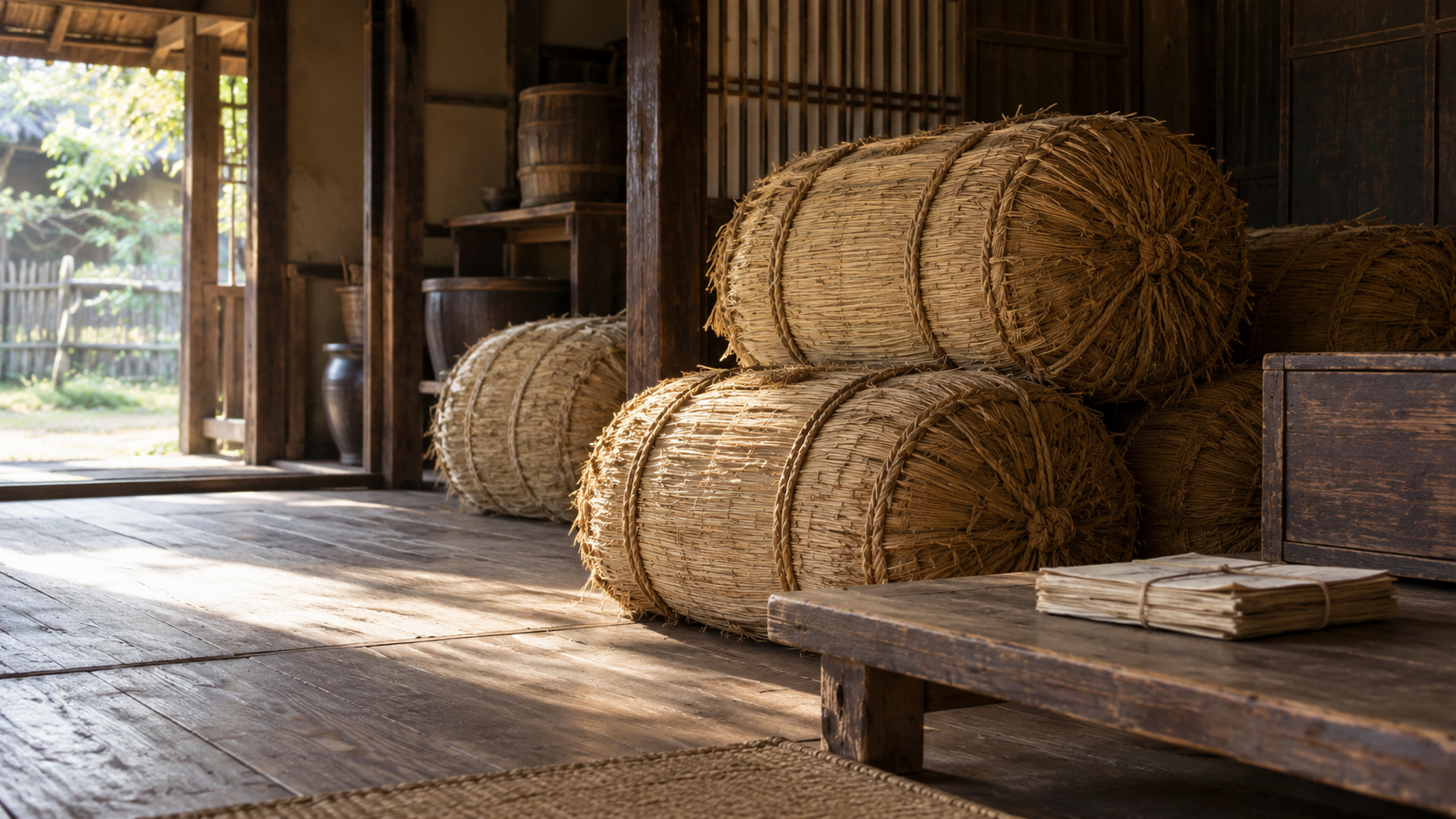
Scene 08
A sword at the waist and a livelihood
Another reform occurred in August 1876: the stipend commutation. The arrangement ended payments of hereditary and merit stipends in return for issuing government bond certificates. A continuing payment was replaced through a different financial form.
Haitorei was issued in March, while the stipend measure followed in August. Treating them as one order on one day would blur what each changed. One concerned the wearing of swords; the other concerned the mechanism by which stipends were provided.
Their effects could overlap in people’s lives without becoming identical. Imagining sorrow at removing a sword alone would miss changes in material support, while an account of income alone would not explain visible appearance or pride. The article keeps these questions together without inventing a uniform financial or emotional outcome.
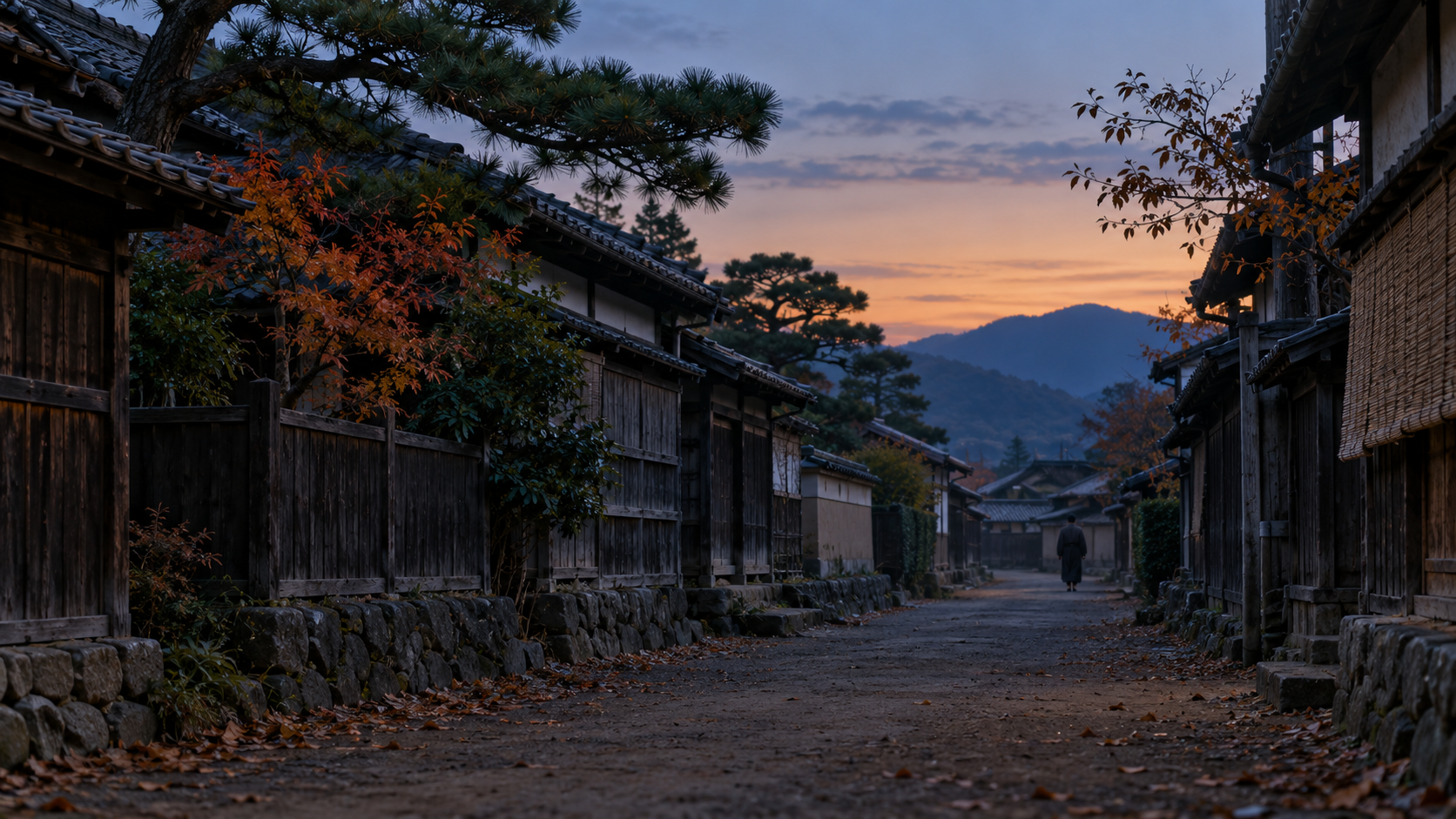
Scene 09
Do not reduce resistance to one cause
Resistance to the government occurred amid these reforms. In October 1876, the Shinpuren uprising took place in Kumamoto. The city research centre’s explanation describes a faction of shizoku dissatisfied with modernization policies and opposed to measures including Haitorei.
That account cannot be expanded into a claim that everyone who lost the option of wearing a sword rose in rebellion. The ideas and actions of one group were not the responses of all former warrior families living elsewhere. Nor does chronological sequence prove that one reform caused every subsequent conflict.
Rules about swords, arrangements supporting livelihoods and views of politics and society need separate consideration. Haitorei was an important part of this setting, but does not provide a single explanation for every expression of opposition during the period.
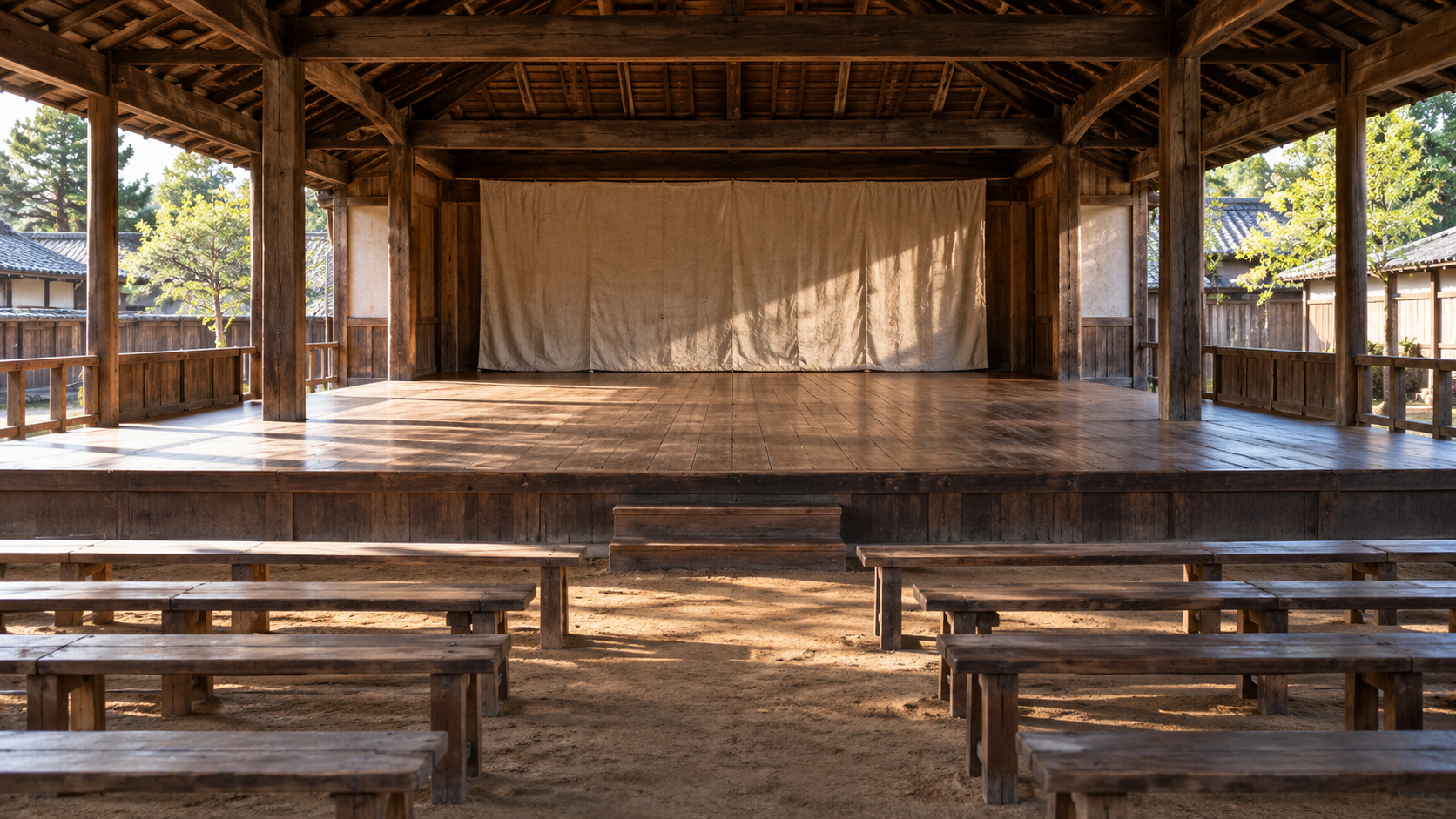
Scene 10
Finding another way to perform a skill
Changes surrounding swords also affected activities outside battle and government. The Tokyo Metropolitan Archives introduces the performances of swordsman Sakakibara Kenkichi and his adaptation after Haitorei. The example concerns a particular practitioner rather than every school of swordsmanship.
The object described is a wooden sword equipped with a hook for hanging from the belt. According to the archival explanation, Sakakibara continued his performances using it in place of a sword. The conceptual image does not supply a precise measured form or an authenticated performance sequence.
This case distinguishes restrictions on wearing swords from the disappearance of all opportunities to practise or demonstrate swordsmanship. It provides a specific example of adapting a skill to changing conditions, without claiming that all practitioners followed the same path.
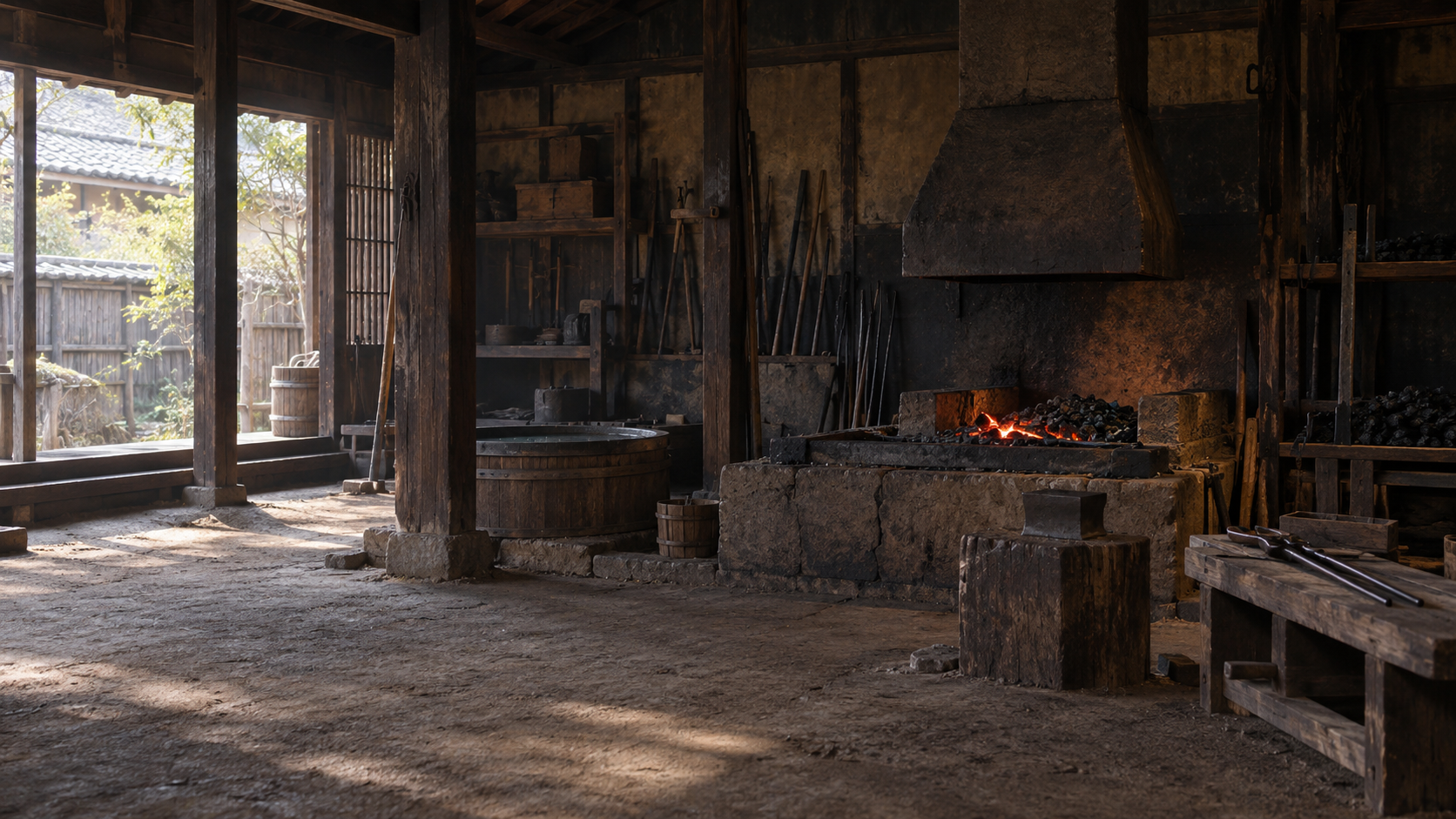
Scene 11
Swordmaking and the continuation of technique
The change also affected those who made swords. The Sword Museum’s account describes swordsmiths losing work following Haitorei and discusses later protection of their techniques. A major alteration in employment was part of the history of the craft.
In 1906, Gassan Sadakazu and Miyamoto Kanenori were appointed Imperial Court Artists. The later date matters: it belongs to a continuing history beyond the single day of the 1876 proclamation, rather than an immediate solution appearing at the same moment.
Not every craftsperson’s life can be told as identical, and a severe change in work is different from the complete extinction of technique. The perspective shifts from a sword worn in daily life toward swords inherited as technical accomplishments and works. Objects and their makers continued to have a history after the visible social practice changed.
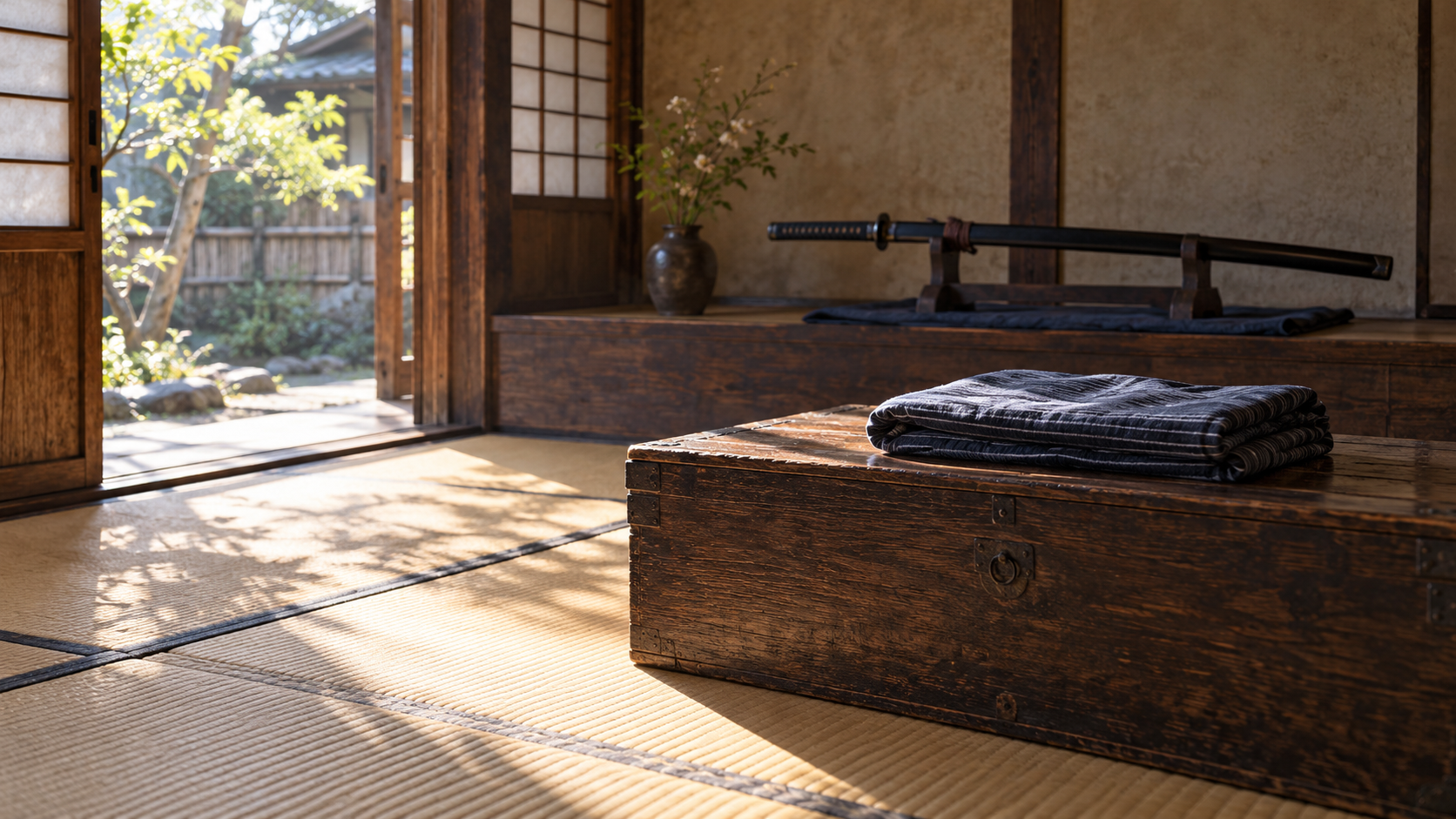
Scene 12
What was being unfastened?
The opening distinction returns: a person could remove a sword, and later generally could not wear one. The gesture might look the same, but society assigned it a different place through changing rules. That difference is the starting point for understanding the measure.
The proclamation includes prohibition, exceptions and taking a violator’s sword. Separate reforms around it changed administration, military roles and stipends. An image in which swords and warriors vanish together overnight cannot adequately convey these overlapping processes.
How people changed their appearance, continued work and livelihoods, and passed skills onward opens a longer history beyond the short text. The date of 28 March 1876 remains significant, while the five preceding years and later developments reveal continued social reorganization after the Restoration.
How to read this work
History, interpretation, and reconstruction
The 1876 prohibition on wearing swords belonged to a longer reorganization of social roles, with exceptions and consequences that cannot be reduced to the disappearance of every sword or former warrior overnight.
This work is grounded in published sources and historical research. Interior thoughts, dialogue, and some visual details are cinematic reconstructions. Where historians disagree, the article presents the point as debated rather than settled fact.
Timeline
The story in time
-
The measure commonly called sanpatsu datto rei recognizes the freedom to stop wearing a sword.
Sources: s03 -
Domains are abolished and prefectural administration reorganized, a reform separate from Haitorei.
Sources: s04 -
Conscription is established with examination, selection by lot and exemptions.
Sources: s05 -
Stipend commutation provides government bond certificates in place of payments.
Sources: s06 -
The Shinpuren uprising occurs in Kumamoto; it is not treated as the uniform response of all shizoku.
Sources: s07 -
Gassan Sadakazu and Miyamoto Kanenori are appointed Imperial Court Artists.
Sources: s09
People & terms
A guide for new readers
Glossary
- Haitorei 廃刀令
- The common name for the 1876 proclamation regulating the wearing of swords, including exceptions and seizure for violation.
- Taito 帯刀
- Wearing a sword on the person, distinguished in the article from keeping one at home.
- Sanpatsu datto rei 散髪脱刀令
- The common name for the 1871 measure permitting hairstyle changes and going without a sword.
- Shizoku 士族
- The former warrior-status group discussed here; membership does not establish one universal response to reform.
- Haihan chiken 廃藩置県
- The 1871 abolition of domains and reorganization of prefectural administration.
- Chitsuroku shobun 秩禄処分
- The 1876 stipend commutation discussed through the replacement of payments with bond certificates.
- Hooked wooden sword 倭杖
- The wooden sword with a belt hook described in the archival example of Sakakibara’s performances.
- Imperial Court Artist 帝室技芸員
- The appointment received by the two swordsmiths in 1906, as described in the Sword Museum’s history.
Sources & method
How this article was built
Every Japanese scene, timeline entry and source identifier is retained. Source titles are editorial translations. The 1876 proclamation is distinguished from its later file material and from the bibliographic function of the law index; the English edition does not claim a new independent decipherment of the original.
Permission in 1871 and general prohibition in 1876 remain separate. Exceptions and the seizure provision are both retained. Administrative reform, conscription and stipend commutation keep their own dates, mechanisms and limits rather than becoming one composite order.
Specific examples of rebellion, performance and swordmaking are not generalized into the experience of everyone in a social group. Conceptual images do not establish dress conditions or historical document wording. No invented quotation, private motive or universal emotional response is added.
Sources
References and further reading
- The sword-wearing prohibition is issued 国立公文書館「廃刀令が発せられる」 Title translated editorially for reader convenience. National Archives of Japan 国立公文書館 Used for the 28 March 1876 date, the regulated action and the ceremonial or uniform exceptions. Accessed 2026-10-29
- Index of Japanese Laws and Regulations: law ID 00012764 国立国会図書館 日本法令索引・法令ID00012764 Title translated editorially for reader convenience. National Diet Library 国立国会図書館 Identifies the title and bibliography of Grand Council proclamation No. 38. The prohibition and enforcement are read with the archival document, not inferred from the index alone. Accessed 2026-10-29
- Prohibiting the wearing of swords: archival document 国立公文書館「帯刀ヲ禁ス」原史料 Title translated editorially for reader convenience. National Archives of Japan 国立公文書館 Source for the proclamation’s prohibition, exceptions and taking swords from violators. The proclamation is distinguished from subsequent petitions and discussion in the file. Accessed 2026-10-29
- That day’s public document: National Archives News No. 13 国立公文書館ニュース13「あの日の公文書」 Title translated editorially for reader convenience. National Archives of Japan 国立公文書館 Used for the freedom recognized in 1871. An old-calendar month and day are not presented as the same Gregorian date. Accessed 2026-10-29
- The abolition of domains is carried out 国立公文書館「廃藩置県が断行される」 Title translated editorially for reader convenience. National Archives of Japan 国立公文書館 Used for the 1871 administrative reform and government-appointed officials, distinct from the 1876 sword measure. Accessed 2026-10-29
- Conscription is established 国立公文書館「徴兵令が発せられる」 Title translated editorially for reader convenience. National Archives of Japan 国立公文書館 Used for the 1873 system, age-twenty examination, selection and exemptions. It does not imply immediate service for every man without exception. Accessed 2026-10-29
- Stipend commutation is implemented 国立公文書館「秩禄処分が行われる」 Title translated editorially for reader convenience. National Archives of Japan 国立公文書館 Used for 5 August 1876 and the bond arrangement replacing stipends. Individual poverty, sales or outcomes are not generalized. Accessed 2026-10-29
- The Shinpuren uprising and damage to the garrison 熊本市・熊本城調査研究センター「神風連の変と鎮台の被災」 Title translated editorially for reader convenience. Kumamoto City / Kumamoto Castle Research Centre 熊本市・熊本城調査研究センター Used for the October 1876 event and opposition to modernization policies including Haitorei. No single-cause or all-shizoku explanation is adopted. Accessed 2026-10-29
- Parks are a wonderland, Part 3 東京都公文書館「公園はワンダーランド その三」 Title translated editorially for reader convenience. Tokyo Metropolitan Archives 東京都公文書館 Used for Sakakibara Kenkichi and the hooked wooden-sword performance example. No precise tool diagram or routine is invented. Accessed 2026-10-29
- History of the Japanese sword 日本美術刀剣保存協会・刀剣博物館「歴史」 Title translated editorially for reader convenience. Society for Preservation of Japanese Art Swords / Sword Museum 日本美術刀剣保存協会・刀剣博物館 Used for effects on swordsmiths, the 1906 appointments and continuing technique. The account does not add unsupported smith totals or export figures. Accessed 2026-10-29
Continue reading
More stories from Shigeki
Shigeki English
Kobayakawa Hideaki after Sekigahara: Work beyond Okayama’s Keep
The outer moat offers a way into a short period of castle government.
- When Hideaki’s Okayama rule, 1600–1602; earlier construction in 1597 and later changes considered separately
- Where Okayama Castle, its outer enclosures and former western moat; Bizen and Mimasaka
Shigeki English
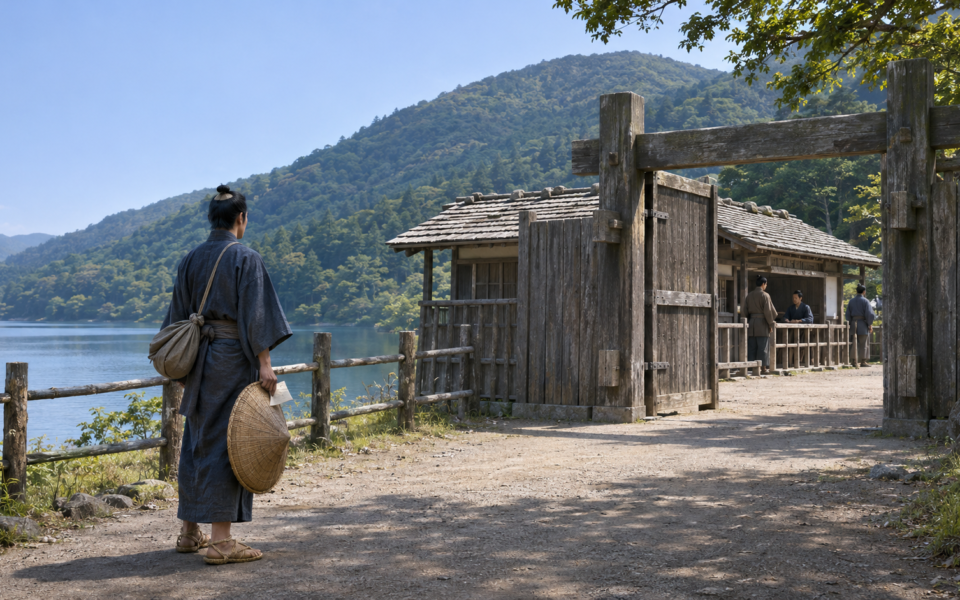
Passing Hakone Checkpoint: Identity, Direction and Travel Documents
A pass mattered, but the inspection depended on more than possessing paper.
- When Edo-period Hakone; establishment at the present location around 1619, regulations of 1711 and later reconstruction
- Where The Tokaido road between Lake Ashi and the surrounding mountains at Hakone