
SHIGEKI ENGLISH STORYEN
Japanese history in English
Did Chosokabe Motochika Unify Shikoku? Castles, Letters and the Limits of Expansion
From Oko Castle and victories in Awa to competing lords in Iyo and the turning point of 1585.
Follow Chosokabe Motochika’s expansion from Tosa through castles, institutional document explanations and local histories. Broad influence, the allegiance of individual lords and uniform control of all four provinces are kept distinct.
At a glance
Before you enter the story
- When
- The 1570s to 1591, with 1585 as a major political turning point
- Where
- Tosa, Awa, Sanuki and Iyo, the four historical provinces of Shikoku
- Key figures
- Chosokabe Motochika, Ichijo Kanesada, Mori Terumoto, Toyotomi Hideyoshi
- What was at stake
- What did expansion mean in places where local cooperation, resistance and outside assistance continued?
Why this story matters
The larger history behind the turning point
A map coloured as one territory can make political power seem more consistent than the evidence allows. Defeating an opponent, gaining a lord’s cooperation and maintaining control throughout a province describe different relationships. Reading them separately gives the scale of Motochika’s expansion a more precise meaning.
The distinction also changes how success is assessed. Retreat and negotiation belong to the history alongside victories, while political changes within Tosa continued after submission to Hideyoshi. A single verdict of successful or failed unification can obscure both the extent of expansion and its limits.
Historical context
What an international reader needs to know
Four provinces and many local relationships
Tosa, Awa, Sanuki and Iyo are the historical provincial names used in this account of Shikoku. They orient the reader across the island, but naming a province does not identify the allegiance of every castle or lord within it. Local relationships need to be considered alongside the larger geographical labels.
Official summaries themselves use qualifications such as control of most of the island or near unification. The Kochi Prefectural Museum of History introduces recent research as indicating that Motochika did not secure the whole island. The article preserves those limits rather than replacing them with a map of complete control.
Dates and the evidence of places
Municipal and museum summaries give 1574 and 1575 for the consolidation of Tosa. This account retains that difference and describes a process during the 1570s. The year estimated for one Motochika letter also remains a range, approximately 1581–84, rather than being converted into a precise date.
Castle remains, excavated objects and explanations of documents provide different kinds of evidence. This article follows institutional descriptions; it does not claim direct inspection of the exhibitions, original papers or manuscripts. Generated images are conceptual scenes, not facsimiles of letters, portraits or measured reconstructions of castles.
Watch the film
See the story in motion
The film currently uses Japanese audio. This English article provides the context and source trail; it does not imply that an English subtitle track is available.
Scene 01
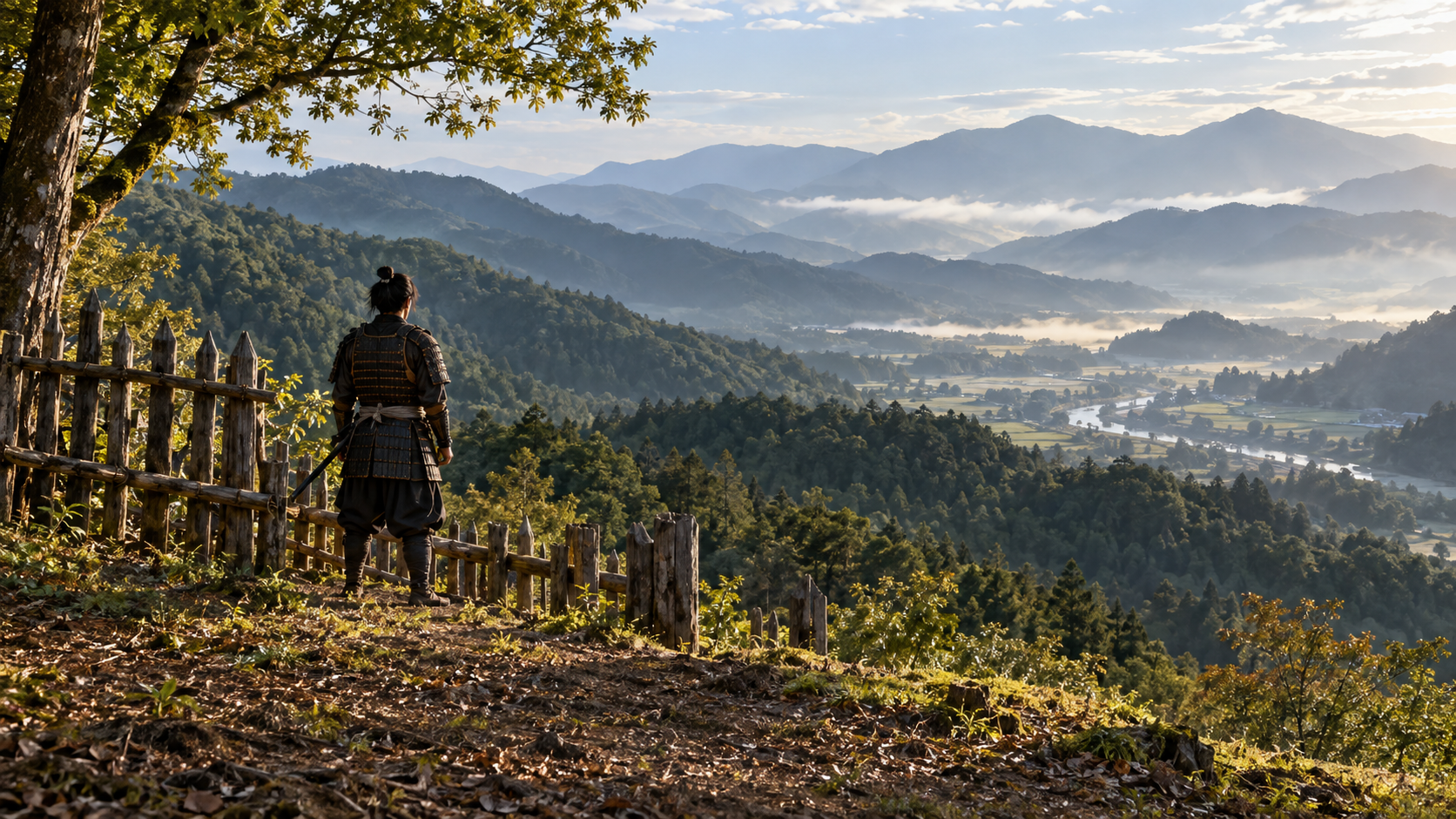
Beyond a one-colour map
Chosokabe Motochika is often introduced as the warrior who unified Shikoku. That description can suggest a map with four provinces neatly filled in as a single territory. The apparent simplicity of the picture raises a question about the relationships it conceals.
Public institutional explanations retain qualifications. Some describe control of most of the island or near unification. The prefectural history museum introduces recent research as suggesting that Motochika did not secure the whole island. Those descriptions do not erase his power, but they change how its reach is understood.
The question is therefore how far he expanded and what that expansion achieved. Tosa provided the starting point, victories changed Awa, conflict continued in Iyo, and Hideyoshi’s invasion reshaped the political setting. These events need to be connected without assuming a completed final stage between them.
Castles and explanations of letters offer ways to follow both reach and limits. Together they suggest a history with reversals, alliances and uneven authority, rather than a straight line in which each victory completes control of another province.
Scene 02
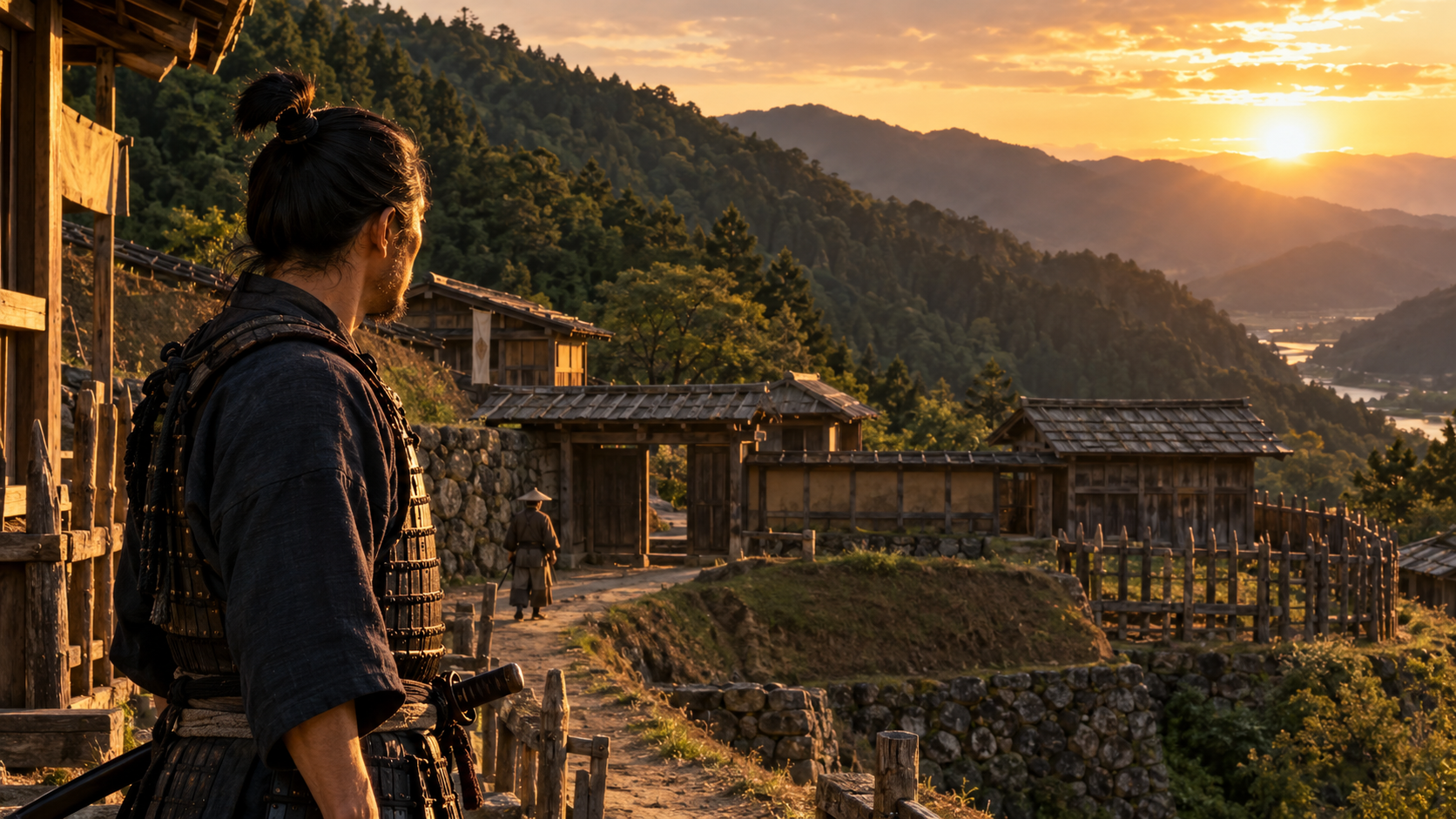
The starting point at Oko
Motochika’s base was Oko Castle, a mountain castle in present-day Nankoku, Kochi Prefecture. Imagining the white tower of today’s Kochi Castle would introduce a different place and historical setting. The distinction matters before the expansion beyond Tosa can be followed.
At Oko, investigations have identified levelled areas on the hill, earthworks, ditches, stonework and foundation stones. These are specific traces through which the site can be studied. They do not require the appearance of a later castle to make the earlier stronghold comprehensible.
Several major powers operated in Tosa; the Chosokabe did not begin their expansion with the entire island already under their control. Motochika first established his position within a province containing other influential families and interests.
The surviving earth and stone locate that starting point. They connect the later extent of Chosokabe power with a particular base, while leaving room for questions about the buildings and activities that no longer survive intact.
Scene 03
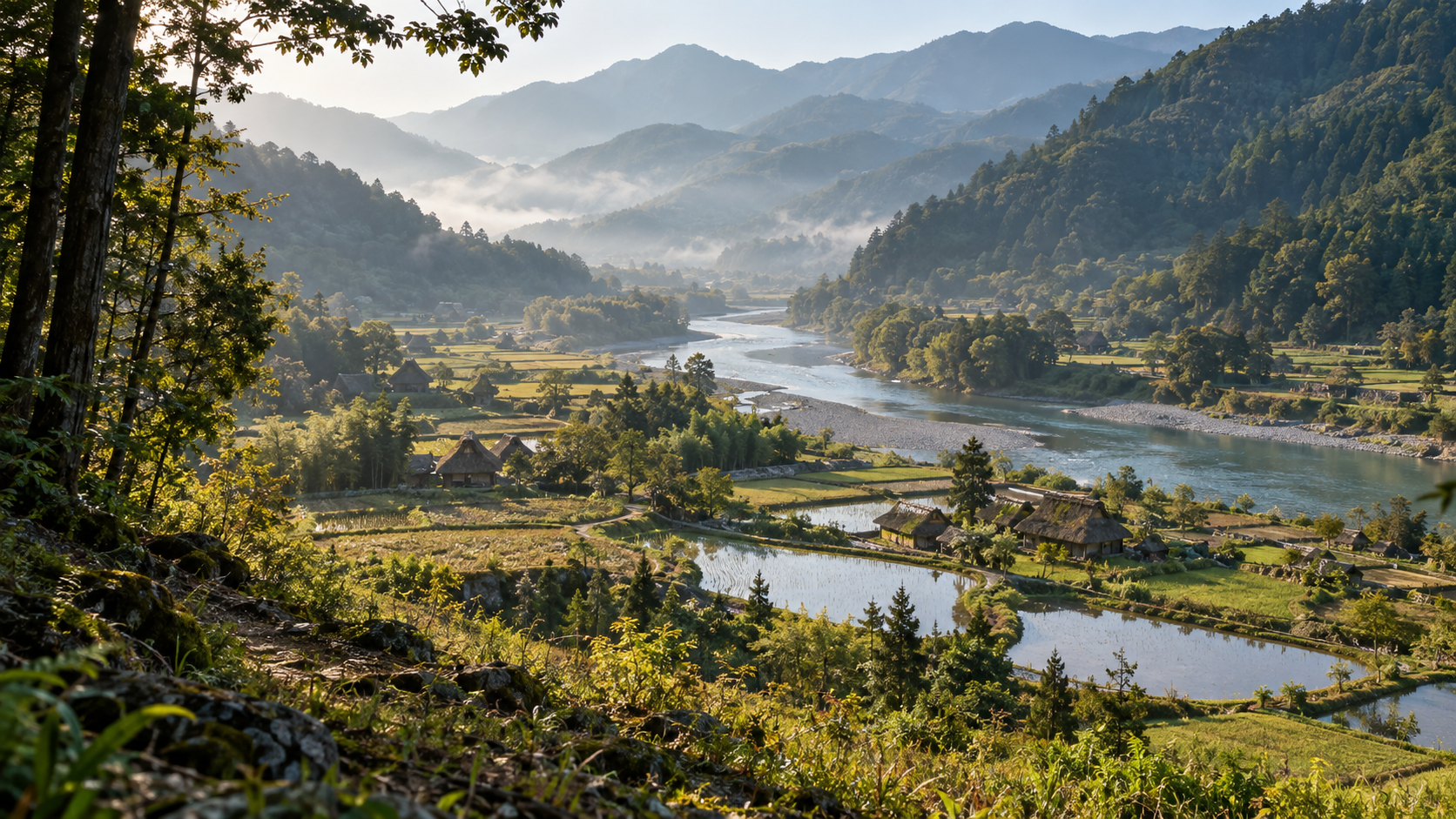
Consolidating Tosa
Accounts of Tosa’s unification differ in their dating: one municipal outline gives 1574, while another institutional explanation gives 1575. Here the consolidation is treated as a process in the 1570s, preserving the difference instead of silently selecting a single year.
The museum explains that Ichijo Kanesada was defeated by Motochika at the Battle of Watarigawa in 1575. That defeat did not mean that every relationship associated with the Ichijo disappeared at once. A battle and the later connections of a defeated lord are separate matters.
Documents introduced by the museum indicate that support for Kanesada continued on the Iyo side after he left Tosa. Victory, departure and the survival of personal or political ties consequently had different chronologies.
Following those connections prevents a victory date from closing the history of a region prematurely. It also provides a starting point for understanding expansion into Shikoku’s other provinces, where existing relationships continued to affect what a new power could accomplish.
Scene 04
A dated tile and a changing castle
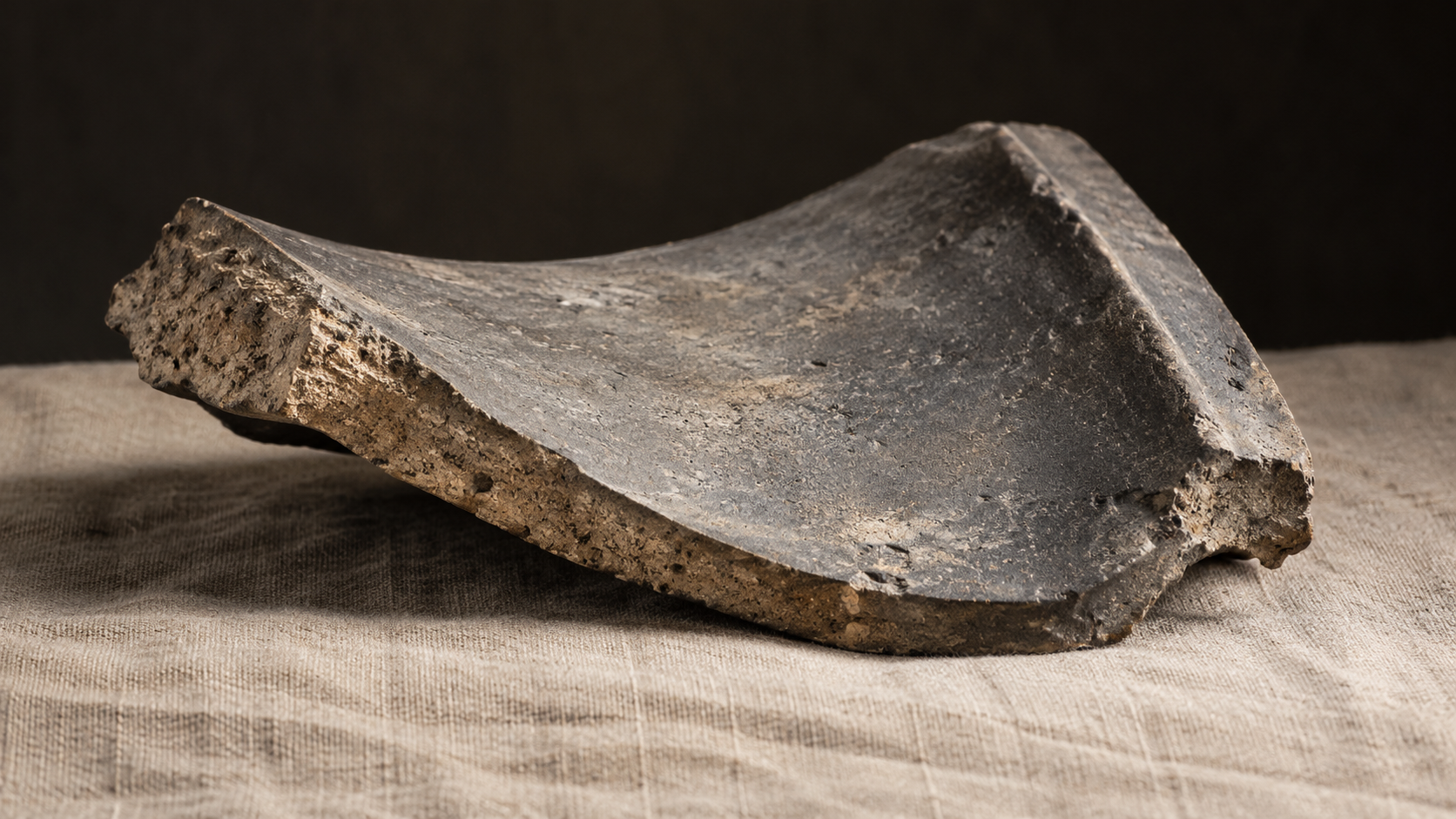
A roof tile bearing the Tensho 3 date, corresponding to 1575, was excavated at Oko Castle. The museum interprets it as evidence suggesting major renovation in that year. The dated object supports an inference about change; it does not reveal every detail of construction.
The suggested renovation coincides with the period in which Motochika strengthened his position in Tosa. Excavation has also revealed stone-paved remains, traces of buildings using foundation stones and imported ceramics. These objects broaden the questions that can be asked about the base.
A castle was more than a collection of defensive walls used during fighting. Buildings and objects can also point toward everyday activity and connections beyond the site. They allow political expansion to be considered alongside the material setting in which a ruling family operated.
One tile, however, cannot establish Motochika’s exact instructions or the complete appearance of a building. The article distinguishes the excavated find from an interpretation of the castle and from the conceptual image used to illustrate the subject.
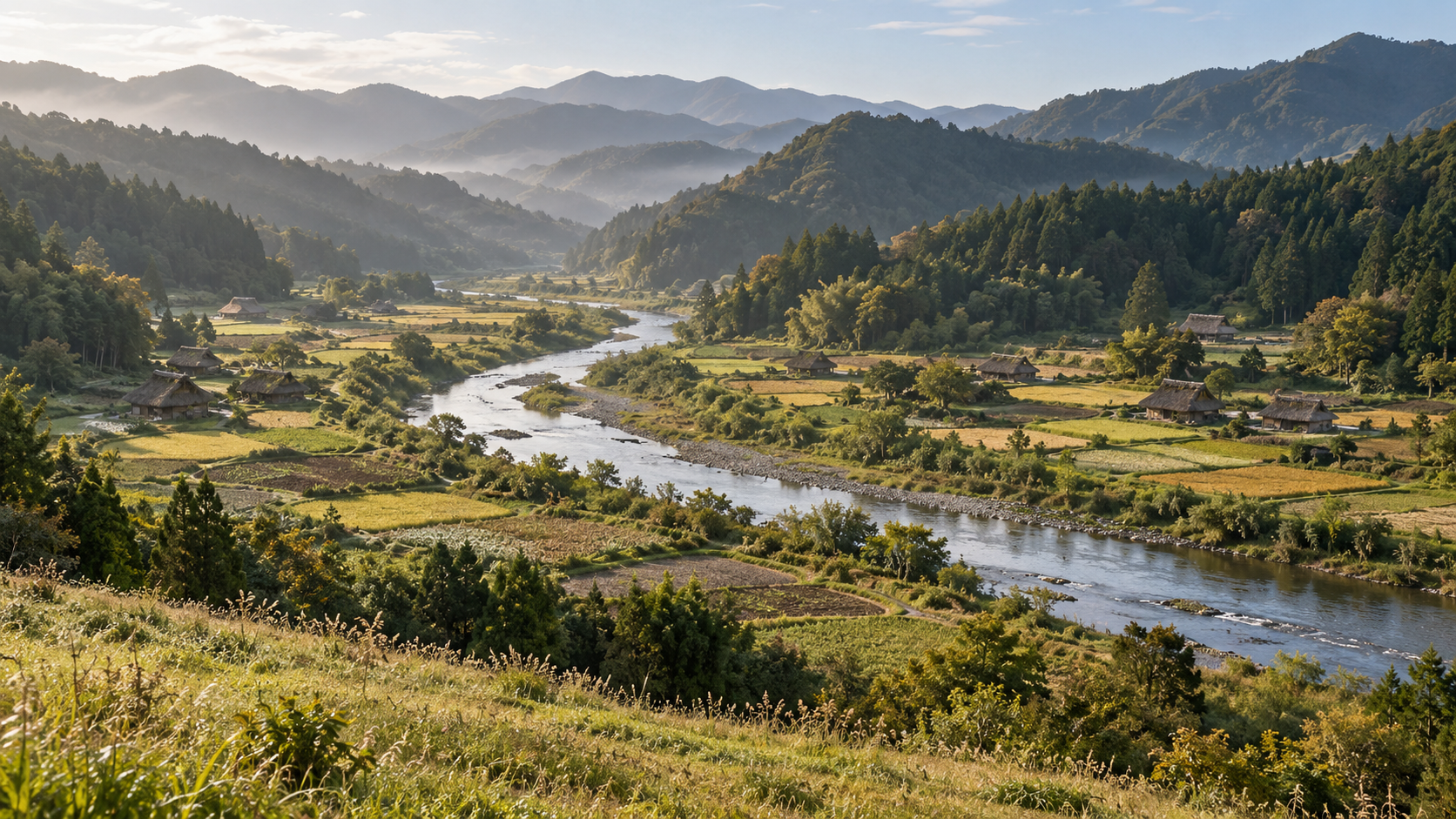
Scene 05
Expansion into Awa
From Tosa, Motochika extended his influence toward Awa, Sanuki and Iyo. Institutional exhibition explanations describe expansion through diplomacy as well as force. The means of extending influence should therefore not be reduced to a sequence of battles alone.
In Awa, the Miyoshi had risen to a position of substantial power from their earlier relationship with the Hosokawa. Tokushima Prefecture’s historical explanation records the Miyoshi’s defeat by Motochika in 1582. His influence had reached a major established power outside Tosa.
Defeating that opponent and securing every castle or lord with equal authority are nevertheless different claims. A regional victory can alter relationships without establishing identical conditions throughout the surrounding province.
Asking who was defeated and where the balance changed makes expansion more concrete. It preserves the significance of the victory while avoiding an unsupported conclusion about every other location included within the name Awa.
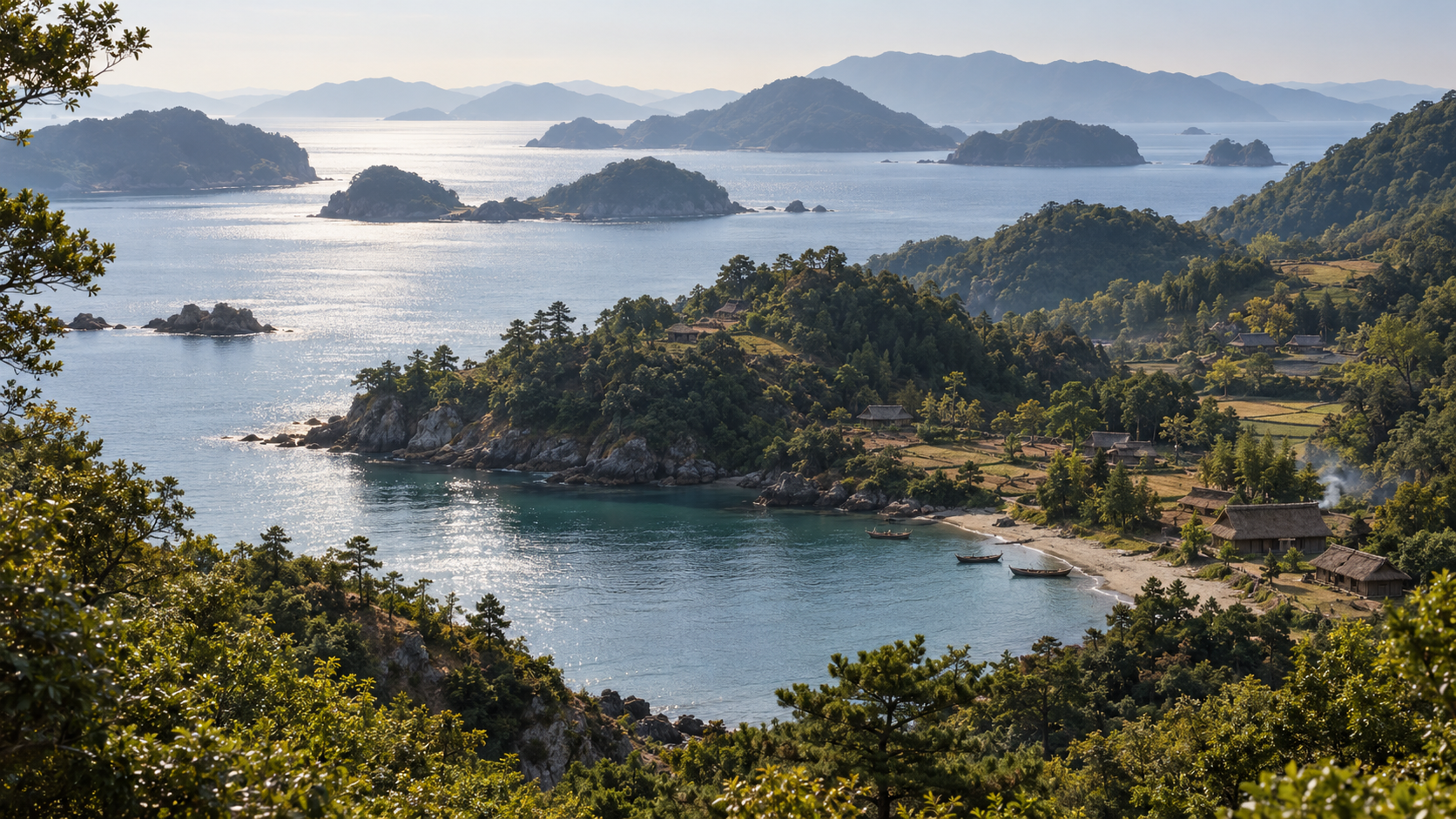
Scene 06
Provincial names and individual lords
The names Tosa, Awa, Sanuki and Iyo can make the story look like the successive movement of four large blocks. Sources introduced for Iyo instead reveal local consultation and assistance from outside. The province contained relationships that cannot be read from its outline alone.
Matsuyama’s chronology records that Ono Naoyuki in Iyo aligned with the Chosokabe side in 1580. The connection with a local power formed part of Motochika’s advance. It is evidence about that relationship, rather than proof that the entire province submitted.
A single lord’s cooperation could matter without resolving every other allegiance. Keeping the scale of the claim close to the evidence helps distinguish a foothold, an alliance and control extending over a much wider area.
The same caution applies when discussing expansion into Sanuki. Provincial names identify destinations, but they do not supply the details of authority within them. Before colouring a map uniformly, the reader needs to ask who was connected with whom in particular places.
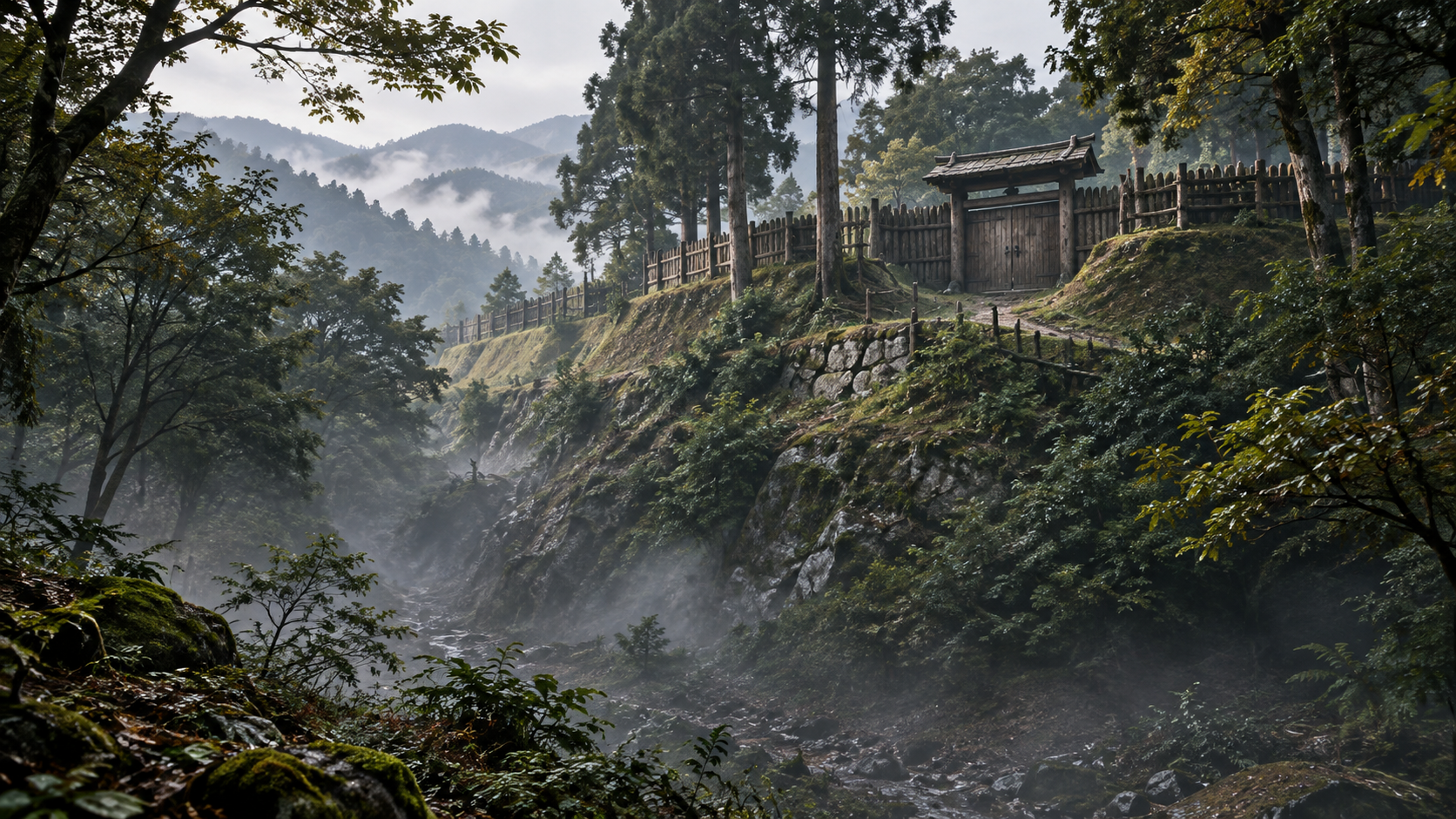
Scene 07
A letter concerning retreat
Sieges involving Motochika did not always proceed according to plan. The museum introduces a letter attributed to him and tentatively dated to around 1581–84. The range is retained because the explanation does not establish one exact year.
According to that explanation, the letter accepts retreat during an attack on an Iyo castle as unavoidable after arrangements differed from what had been expected. It also requests consultation with nearby lords to advance a plan. These are paraphrases of the institutional explanation, not invented quotations.
Retreat, consultation and renewed planning reveal movements that a list of victories can miss. They show authority being exercised through adjustment and relationships as well as successful attacks. They do not supply a transcript of a conversation at the scene.
The letter therefore complicates a simple progress narrative without establishing a complete alternative campaign route. Its uncertain date and the limits of the museum’s explanation remain visible, while the conceptual image is kept separate from the original written evidence.
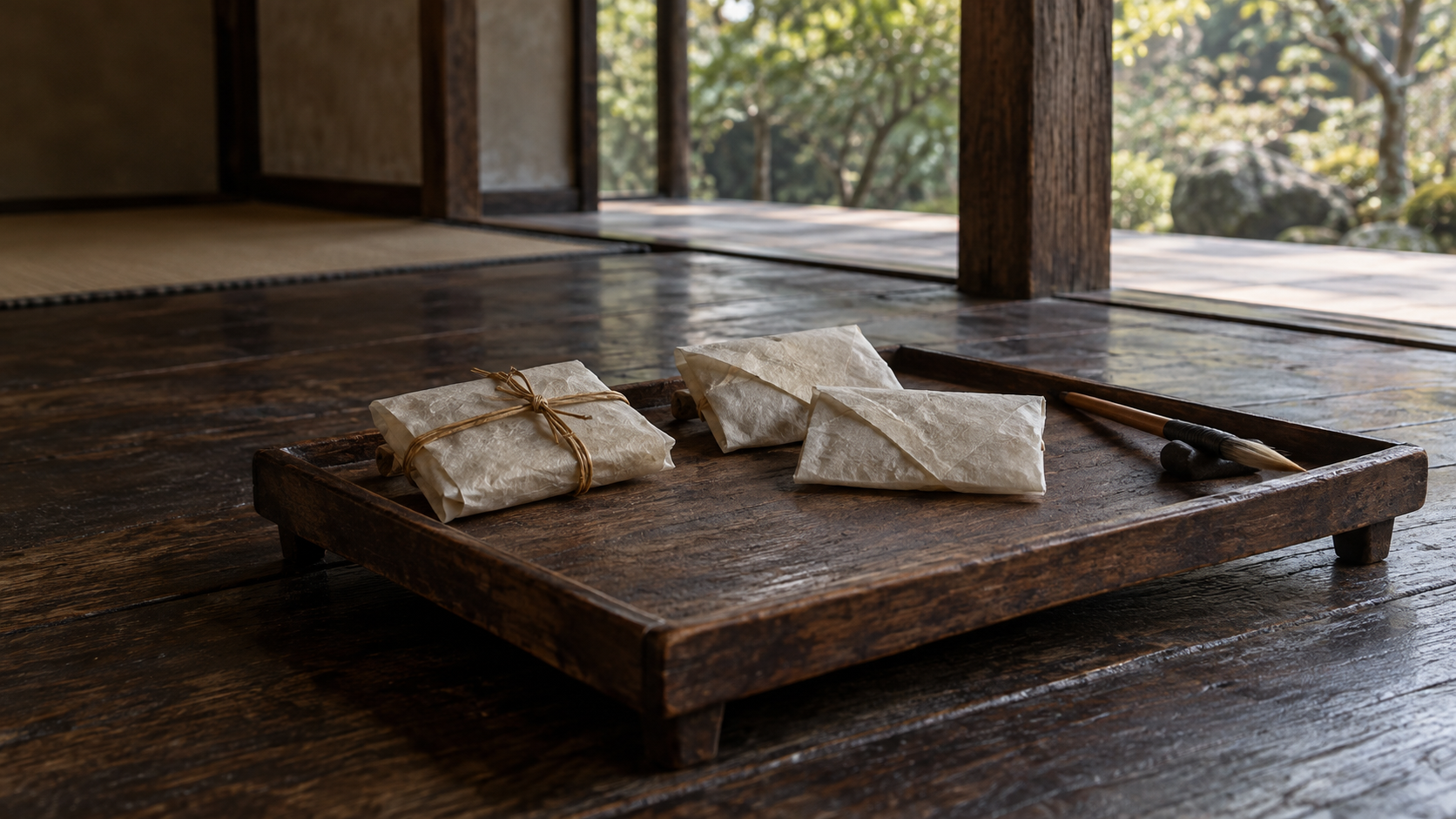
Scene 08
Competing powers in Iyo
The Chosokabe were not the only active power in Iyo. A 1584 letter from Mori Terumoto, introduced by the museum, concerns assistance to the Kono. Their connection overlapped with the Chosokabe advance in the region.
The relationship points to resistance and support networks that continued while Motochika’s influence expanded. A large reach and the survival of competing powers can both form part of the same account. Neither needs to be removed to make the other intelligible.
Matsuyama’s chronology then records Kobayakawa Takakage crossing into Iyo on Hideyoshi’s side in 1585, followed by Kono Michinao’s resistance and submission. The chronology does not support a prior picture in which every Iyo power had already been fully absorbed under Motochika.
The conclusion remains bounded by these institutional accounts. They demonstrate why uniform control should not be assumed; the article does not add unverified army numbers, detailed routes or exact converted calendar dates to reconstruct a campaign beyond the sources.
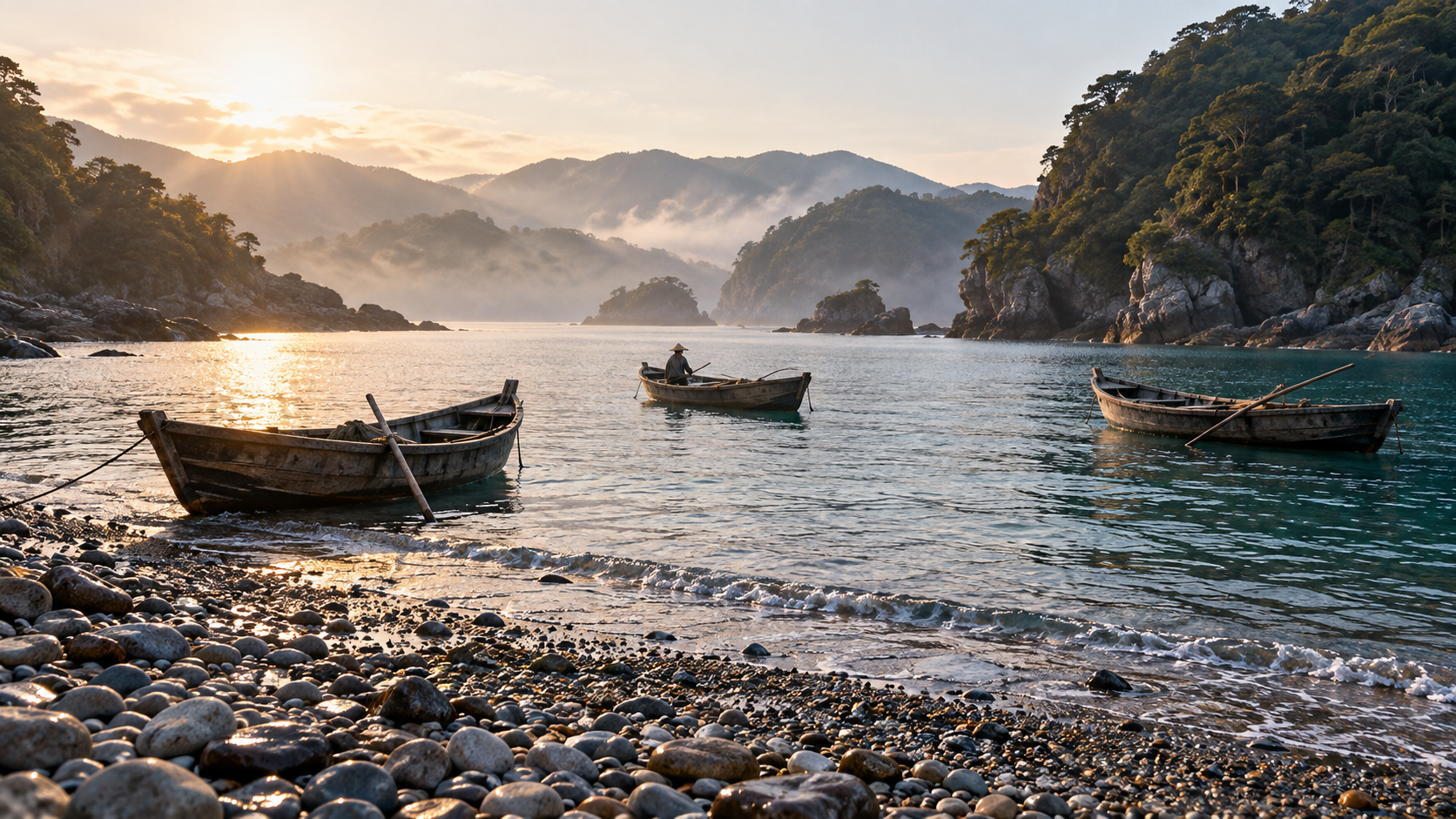
Scene 09
The turning point of 1585
Hideyoshi’s invasion of Shikoku in 1585 substantially changed Motochika’s position. Kochi Prefecture explains that he submitted and retained Tosa. The influence he had extended beyond his original base was greatly restricted by the invasion.
Awa also entered a new political arrangement as territory was assigned to Hideyoshi’s retainer. The changes belonged to a broader redistribution of power, rather than only to the outcome of a contest between individual castles.
Defeat by a force coming from outside the island does not make the preceding expansion meaningless. Equally, the defeat cannot be used to insert an assumed moment of complete island-wide unification immediately before it. Both conclusions would go beyond the evidence presented.
The year marks the incorporation of a power based in Tosa into a larger political order. That change provides a clear turning point while leaving the extent and character of the earlier expansion open to more precise examination.
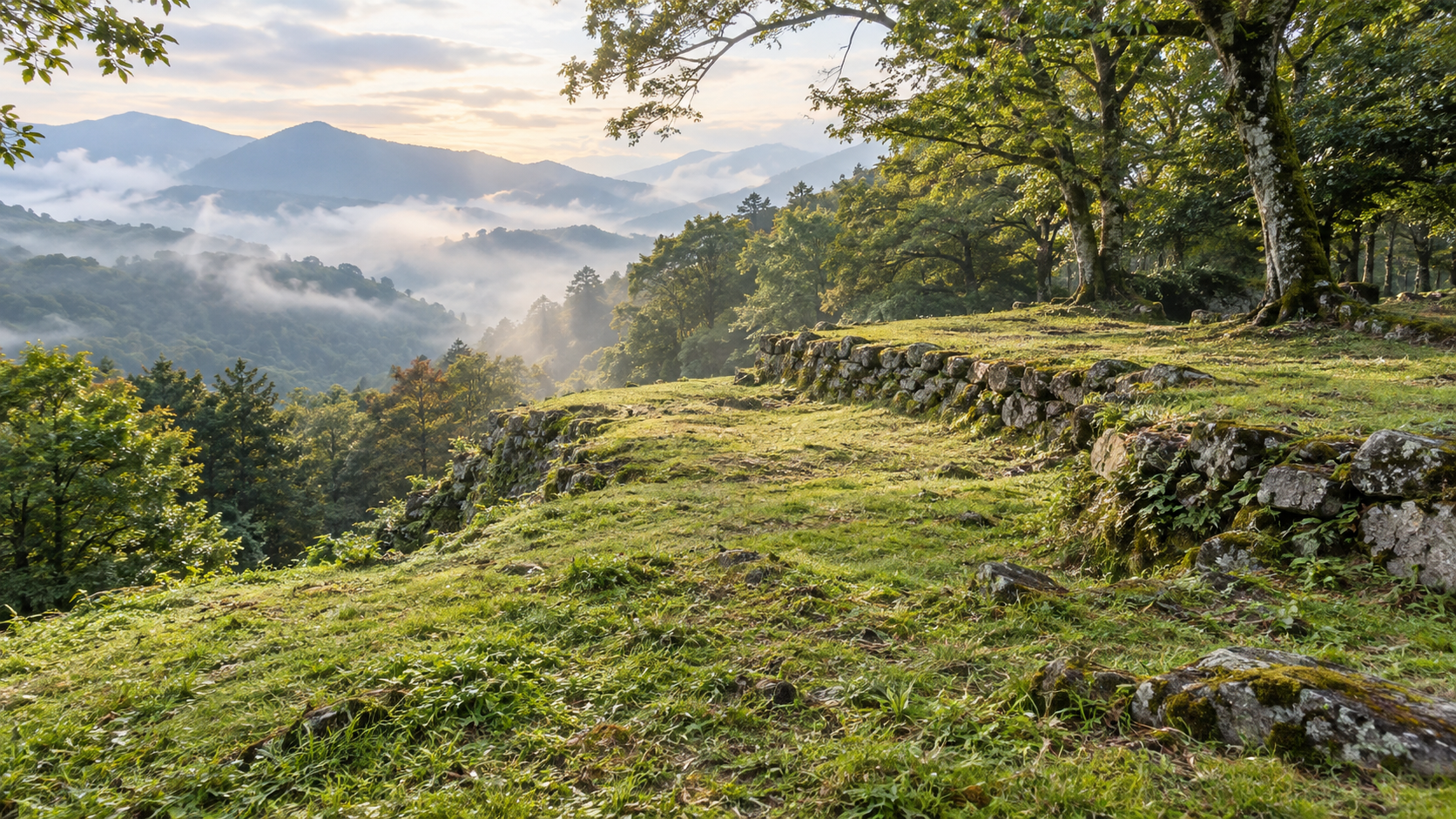
Scene 10
Castles as points of investigation
Castle sites offer ways to investigate movements that cannot be followed through documents alone. The museum introduces research comparing defensive arrangements at different castles in considering the advance of Chosokabe forces. Material traces can thus contribute to questions about political expansion.
The method involves studying places and comparing them with events described in documents. A connection proposed between sites remains an interpretation supported to a particular extent, rather than a complete view of everything that occurred between them.
Drawing a line from one castle to another does not establish the exact route an army walked. This account does not convert the spatial pattern into a verified itinerary. Gaps in the evidence remain gaps even when the locations can be placed on a modern map.
Oko itself includes features presented or restored on the basis of excavation. Distinguishing surviving remains, later changes and research-based interpretation makes the site a place for asking historical questions, rather than a display of a final answer about unification.
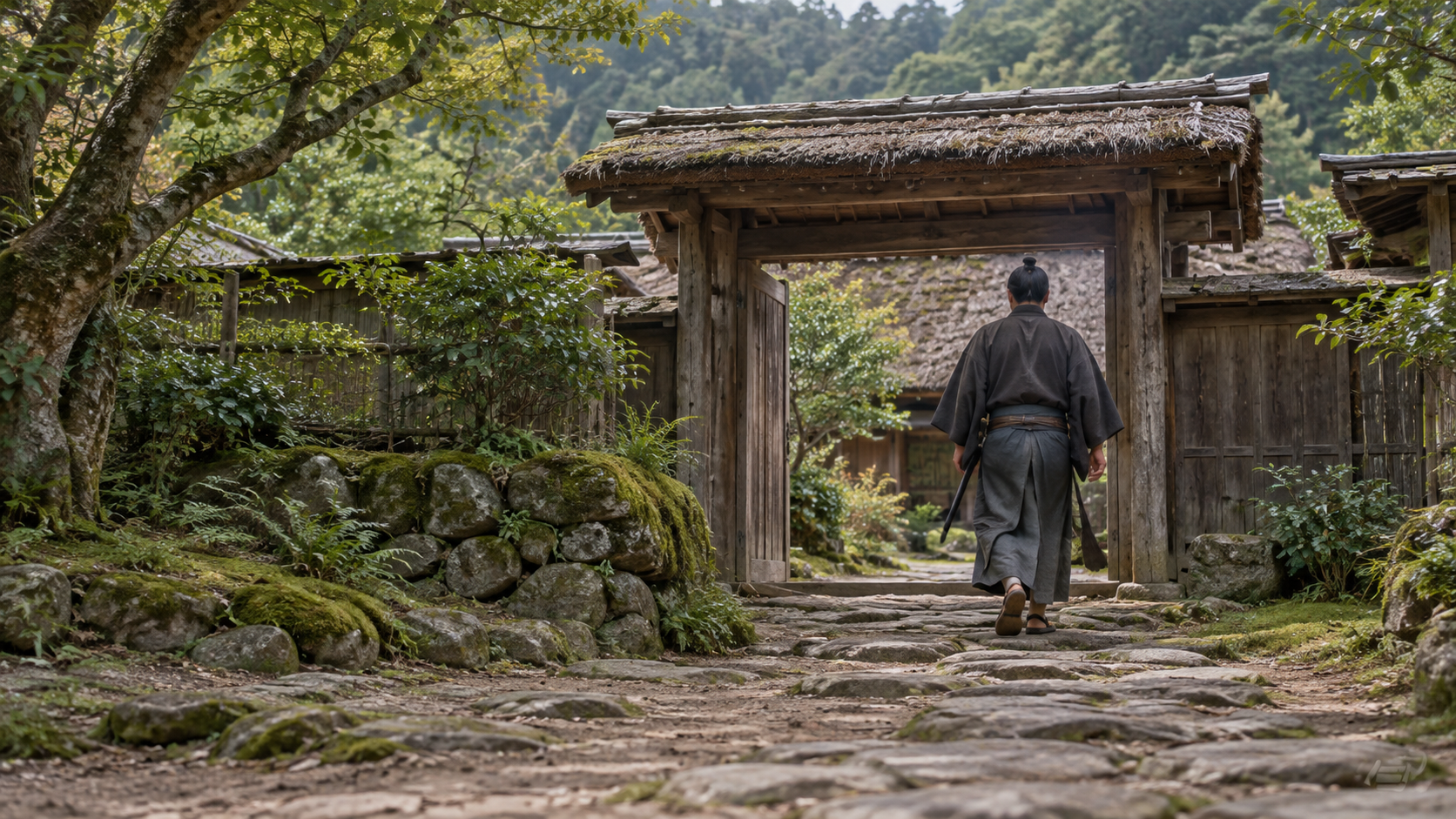
Scene 11
Tosa’s history continues
Motochika’s submission did not end his history or Tosa’s. Kochi Prefecture’s guide to historical sites records the transfer of his base from Oko to Otakasa in 1588, and then to Urado in 1591. The changing location of authority continued after the major expansion.
The end of the period of broad influence across Shikoku therefore did not freeze the political geography inside Tosa. Residences and administrative bases continued to change, with consequences that a simple story ending in 1585 would miss.
After a castle ceased to be used, its surviving terrain and objects could convey the past in a different way through later investigation. Oko’s role as archaeological evidence belongs to that later history as well as to the period of its occupation.
Judging Motochika only by successful or failed unification leaves these continuing changes outside the frame. Following the movement of his base connects the period of fighting with what followed, while avoiding invented motives for the transfers.
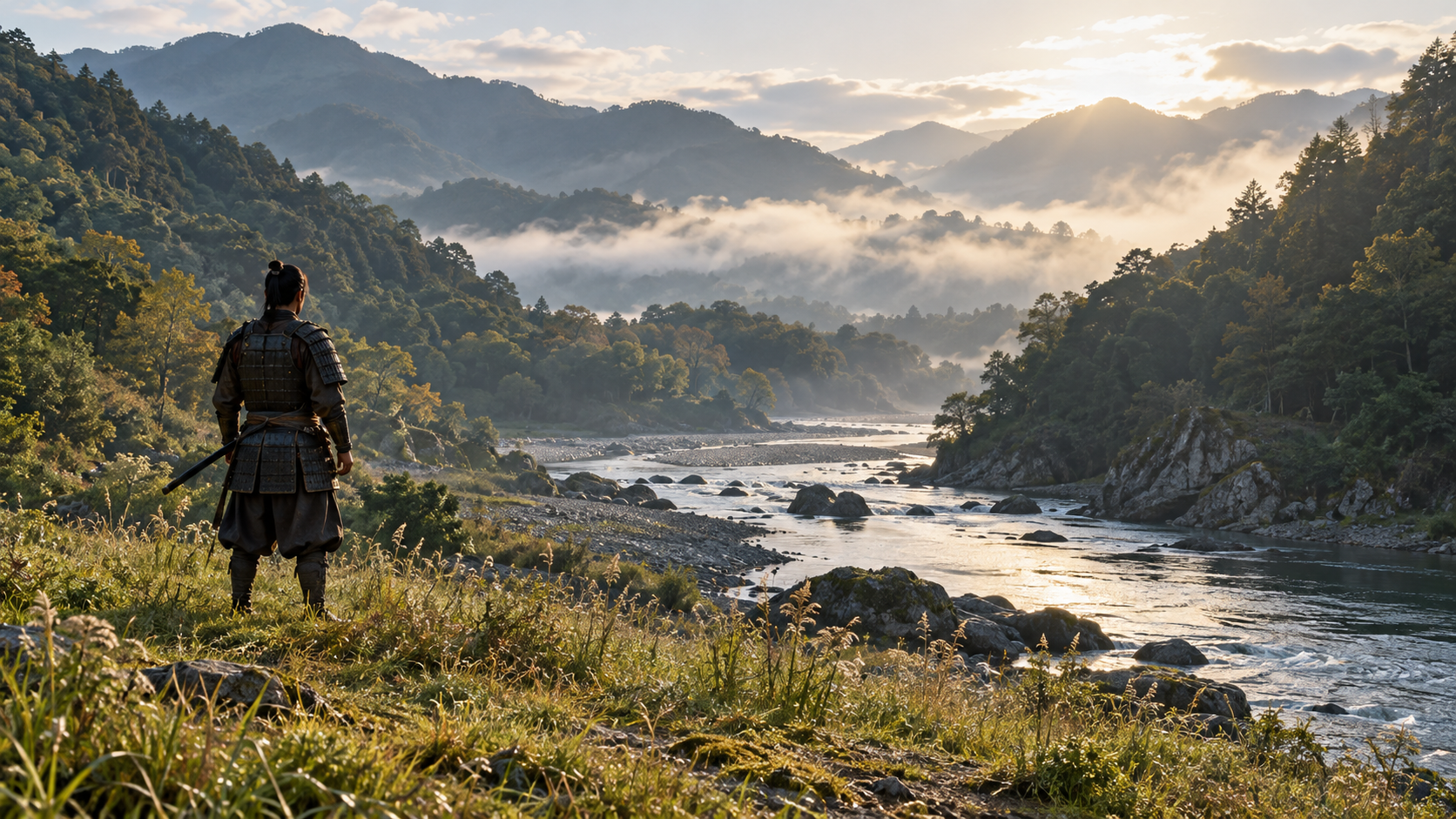
Scene 12
Seeing reach and limits together
Motochika extended power from Tosa across a wide part of Shikoku. The expression unification has conveyed the scale of that achievement. Its usefulness, however, depends on what a reader understands it to mean about control in particular places.
Relations with local lords, surviving opponents in Iyo and sieges that did not proceed as intended reveal differences in authority. Broad influence cannot automatically be translated into equal control of the entire island. Recognizing that distinction makes expansion more specific.
Victories and retreats, cooperation and resistance, the Tosa base and politics beyond Shikoku all belong in the account. Keeping them together preserves the significance of Motochika’s power without smoothing away the relationships that constrained it.
The question of unification consequently leads back to evidence. Castles and explanations of letters continue to refine how the expansion can be understood. They support a history attentive to both achievement and limits, rather than a map whose single colour supplies the conclusion in advance.
How to read this work
History, interpretation, and reconstruction
Motochika’s extensive influence across Shikoku must be distinguished from uniform control of the whole island.
This work is grounded in published sources and historical research. Interior thoughts, dialogue, and some visual details are cinematic reconstructions. Where historians disagree, the article presents the point as debated rather than settled fact.
Timeline
The story in time
-
A chronology records Ono Naoyuki in Iyo aligning with the Chosokabe side.
Sources: s06 -
Tentative dating of a Motochika letter concerning retreat and consultation with nearby lords.
Sources: s10 -
The Miyoshi in Awa are defeated by Motochika.
Sources: s11 -
A Mori Terumoto letter concerns assistance to the Kono.
Sources: s10 -
The base moves from Oko to Otakasa and then to Urado.
Sources: s08
People & terms
A guide for new readers
Glossary
- Shikoku 四国
- The island discussed through its four historical provinces: Tosa, Awa, Sanuki and Iyo.
- Oko Castle 岡豊城
- The Chosokabe mountain-castle base in present-day Nankoku, distinct from today’s Kochi Castle.
- Watarigawa 渡川
- The battle identified in the museum explanation with Kanesada’s defeat in 1575.
- Tensho 3 天正三年
- The era-year date corresponding to 1575, found on a tile from Oko.
- Local lord 領主
- A regional power whose individual relationships cannot be inferred solely from a province’s name.
- Otakasa 大高坂
- The base to which the prefectural guide dates Motochika’s move in 1588.
- Urado 浦戸
- The subsequent base, dated to 1591 in the same guide.
Sources & method
How this article was built
The English edition retains all twelve Japanese scenes, eight timeline entries and ten source identifiers. Titles are editorial translations. Prefectural departments share their parent publisher identity; the account does not treat every office as an independent historical authority.
The 1574/1575 dating difference and the tentative 1581–84 letter date remain explicit. Institutional descriptions of documents and research are distinguished from direct reading of manuscripts or original papers. An unavailable page and an unused source from earlier research are not introduced as new evidence.
Local cooperation, regional victory and uniform control are separate claims throughout. Conceptual images do not establish routes, historical buildings or original document wording, and the article invents no dialogue, troop figures or individual motives.
Sources
References and further reading
- Chosokabe Motochika, Sengoku Tosa and its seven major powers 長宗我部元親と土佐の戦国時代・土佐の七雄 Title translated editorially for reader convenience. Kochi Prefecture 高知県東京事務所 Used for the regional powers, qualified near unification and retention of Tosa after submission. Later military-tale anecdotes are not adopted. Accessed 2026-10-25
- Exhibition: Chosokabe Motochika’s castle building 企画展 長宗我部元親の城づくり-四国制覇に向けて- Title translated editorially for reader convenience. Kochi Prefecture and associated exhibition organizers 高知県・高知県立歴史民俗資料館等主催の文化祭公式案内 The official event guide supports the 1575 dating and expansion through diplomacy and force. The exhibition and catalogue were not directly inspected. Accessed 2026-10-25
- History of Nankoku 南国市の歴史 Title translated editorially for reader convenience. Nankoku City 南国市生涯学習課 Used for Oko and the 1574 dating of Tosa’s pacification. The difference from museum dating is retained. Accessed 2026-10-25
- From Muromachi to Azuchi-Momoyama 室町時代から安土・桃山時代 Title translated editorially for reader convenience. Matsuyama City 松山市文化財課 Used for Ono’s alignment in 1580 and the 1585 events involving Kobayakawa and Kono. Missing dates are not supplied. Accessed 2026-10-25
- Historical figure: Chosokabe Motochika 偉人・長宗我部元親 Title translated editorially for reader convenience. Kochi Prefecture 高知県 The outline describes most of Shikoku and retention of Tosa; its summary is not expanded into uniform control. Accessed 2026-10-25
- Chosokabe Motochika: historical sites 長宗我部元親と土佐の戦国時代・史跡案内 Title translated editorially for reader convenience. Kochi Prefecture 高知県東京事務所 Used for the moves to Otakasa in 1588 and Urado in 1591. Present statues or sites are not treated as period portraits or views. Accessed 2026-10-25
- Chosokabe Motochika’s castle building: toward supremacy in Shikoku 長宗我部元親の城づくり —四国制覇に向けて— Title translated editorially for reader convenience. Kochi Prefectural Museum of History 高知県立歴史民俗資料館 The institutional introduction describes recent research and limits on control. Original papers and the exhibition were not directly inspected. Accessed 2026-10-25
- Medieval southwestern Shikoku and court nobility: exhibited documents 西南四国の中世社会と公家・展示資料紹介 Title translated editorially for reader convenience. Kochi Prefectural Museum of History 高知県立歴史民俗資料館 Used for explanations of Ichijo, Motochika and Mori documents. The tentative 1581–84 range is preserved; no original-document transcription is claimed. Accessed 2026-10-25
- History: medieval and early modern periods 歴史・中世/近世 Title translated editorially for reader convenience. Tokushima Prefecture 徳島県 Used for the Miyoshi defeat in 1582 and changes in Awa in 1585, without adding army numbers or detailed routes. Accessed 2026-10-25
- Oko Castle national historic site 国史跡・岡豊城跡 Title translated editorially for reader convenience. Kochi Prefectural Museum of History 高知県立歴史民俗資料館 Used for remains, excavated objects, the dated tile and inferred renovation, continued use until around 1588 and modern presentation. No object photograph is reproduced. Accessed 2026-10-25
Continue reading
More stories from Shigeki
Shigeki English
Kobayakawa Hideaki after Sekigahara: Work beyond Okayama’s Keep
The outer moat offers a way into a short period of castle government.
- When Hideaki’s Okayama rule, 1600–1602; earlier construction in 1597 and later changes considered separately
- Where Okayama Castle, its outer enclosures and former western moat; Bizen and Mimasaka
Shigeki English
Passing Hakone Checkpoint: Identity, Direction and Travel Documents
A pass mattered, but the inspection depended on more than possessing paper.
- When Edo-period Hakone; establishment at the present location around 1619, regulations of 1711 and later reconstruction
- Where The Tokaido road between Lake Ashi and the surrounding mountains at Hakone