
SHIGEKI ENGLISH STORYEN
Japanese history in English
Ikedaya: A Night in Kyoto, Recorded in Rewards and Rumor
The meeting, news reaching the town and the following month’s conflict: looking beyond one inn.
The Shinsengumi attacked a meeting at Ikedaya in 1864. Earlier political change, an arrest, diary reports, reward documents and later commemoration place the night within Kyoto while separating a reported plan from a later actual fire.
At a glance
Before you enter the story
- When
- The historical eighth month of 1863, the sixth and seventh months of 1864, and the Ikedaya monument erected in 1927. No exact Gregorian conversion is asserted.
- Where
- Kyoto, including the Sanjō–Shijō area, the inn’s surroundings, court-related political space and later memorial locations.
- Key figures
- Kondō Isami, Matsudaira Katamori, Furutaka Shuntarō, Yoshida Toshimaro
- What was at stake
- Security and political influence, lives lost and arrests, official recognition, circulating information and damage to the city.
Why this story matters
The larger history behind the turning point
A familiar night can reach us through evidence created for different purposes. Reward papers, incoming diary reports and later memorials widen the account beyond swordsmanship without making a reported plan, a verified action and a remembered scene equivalent.
Historical context
What an international reader needs to know
Court politics and the city’s security arrangements
Kyoto’s court was a focus of political influence as well as a physical place. The 1863 upheaval changed Chōshū’s position there, while Aizu and Satsuma acted together. In this setting the Shinsengumi operated under Katamori’s Kyoto protector office. Translating that relationship simply as a modern police organization would hide its connection with the contemporary political conflict.
Merchants, inns, residences and routes of movement also supported relationships among people. The Furutaka arrest and subsequent search are introduced through those connections. The article follows the institutional explanations without creating a complete interrogation transcript or asserting that every person associated with the same political language belonged to one plan.
Different sources and two different months
The Wakasugi diary contains information reaching a recorder; a reward statement has a different function; a later monument marks commemoration. Each can illuminate the affair without being a complete combat report. A figure naming reward recipients cannot automatically answer how many people entered the building, just as a diary’s proximity in time does not make every reported event directly witnessed.
The historical sixth-month raid and the seventh-month fighting and fire are kept separate. Institutional explanations introduce an earlier arson plan, but the later actual fire is not proof of the plan’s full extent. Historical month numbers are retained rather than silently labeled as modern June and July. This keeps the sequence clear without claiming a new exact calendar conversion.
Watch the film
See the story in motion
The film currently uses Japanese audio. This English article provides the context and source trail; it does not imply that an English subtitle track is available.
Chapter 01
Kyoto beyond the inn’s doorway
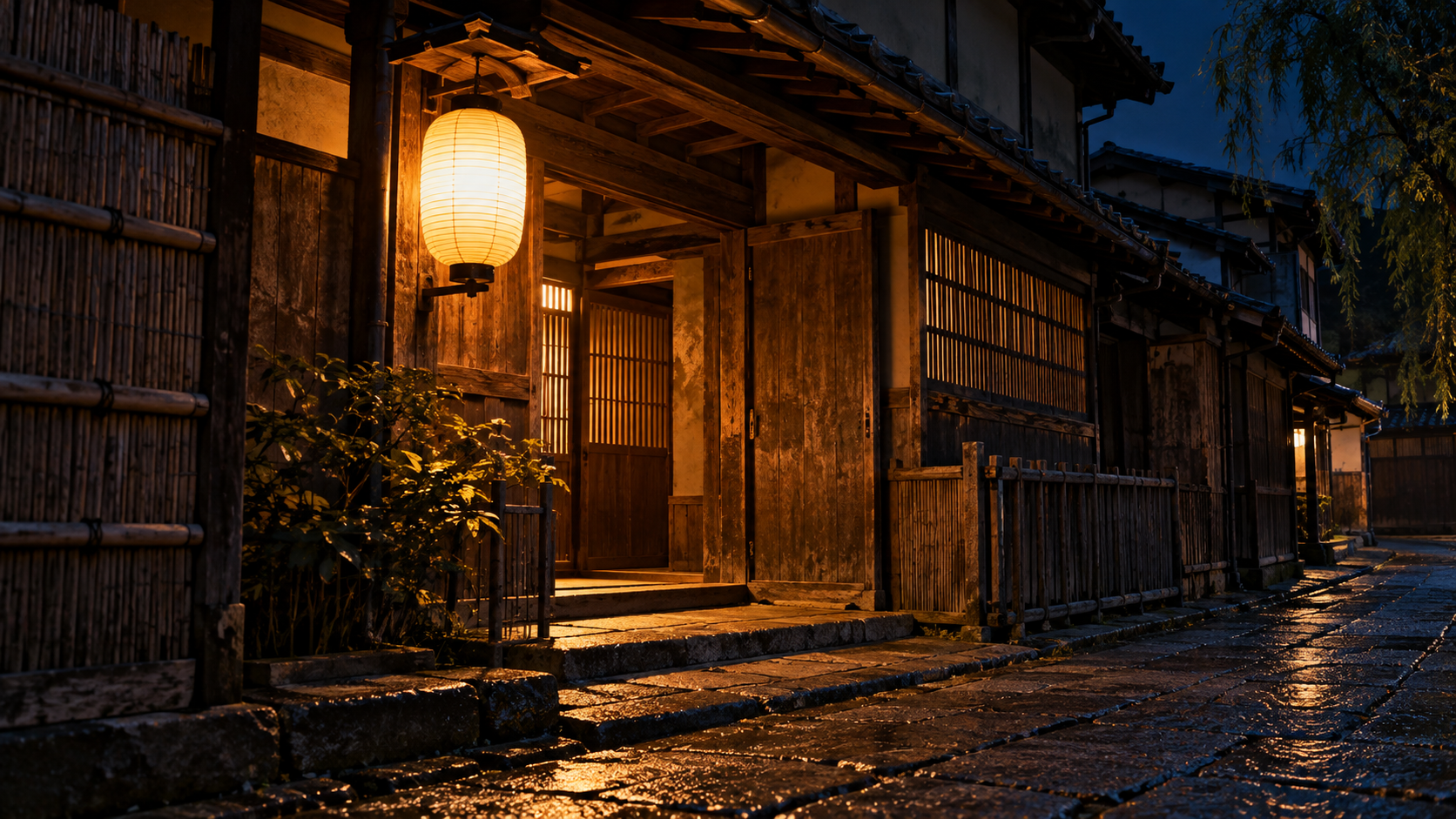
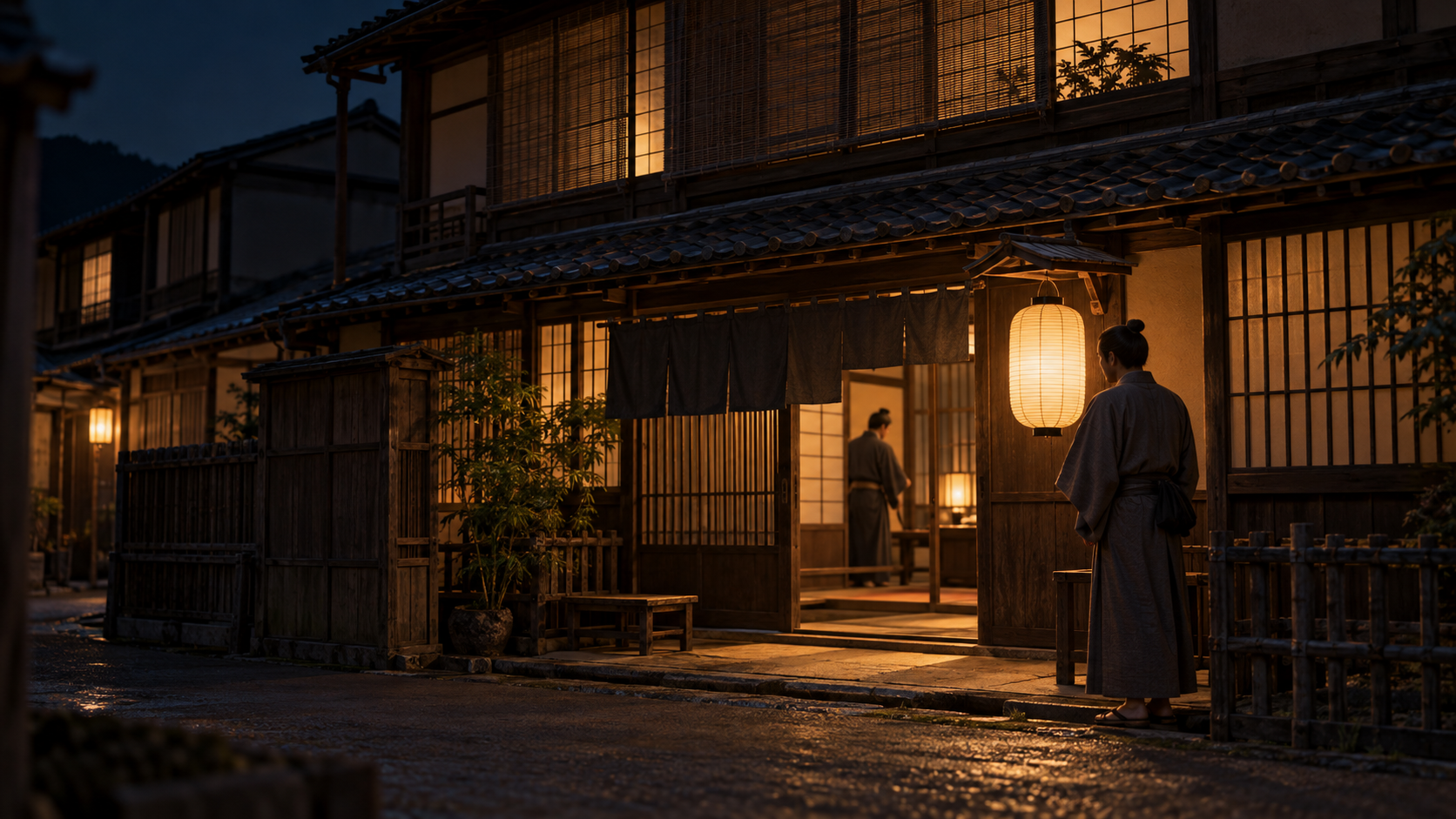
A lantern illuminates the entrance of an inn. The fighting beyond such a doorway would become a night closely associated with the Shinsengumi in later retellings. Yet swordsmanship is not the only route into the Ikedaya affair. Documents and the information circulating through the city lead outward from the familiar scene.
On the fifth day of the sixth month in 1864, the first year of Genji, the Shinsengumi attacked people assembled at Ikedaya who supported revering the emperor and expelling foreigners. The fighting caused deaths and injuries, and people were arrested. The dates here retain the calendar then used.
Outside the inn were other positions within Kyoto: Chōshū supporters displaced from the center of court politics, Aizu authorities responsible for security, and townspeople receiving news. The same night reached those people in different forms. The event’s significance cannot be contained entirely within an imagined room.
Records concerning rewards and a diary containing rumor offer different paths through the aftermath. Reading them together, while keeping their character distinct, places the affair within the wider city. The article supplies neither an exact reconstruction of the inn nor invented conversations to connect these different perspectives.
Chapter 02
The political change of the previous year
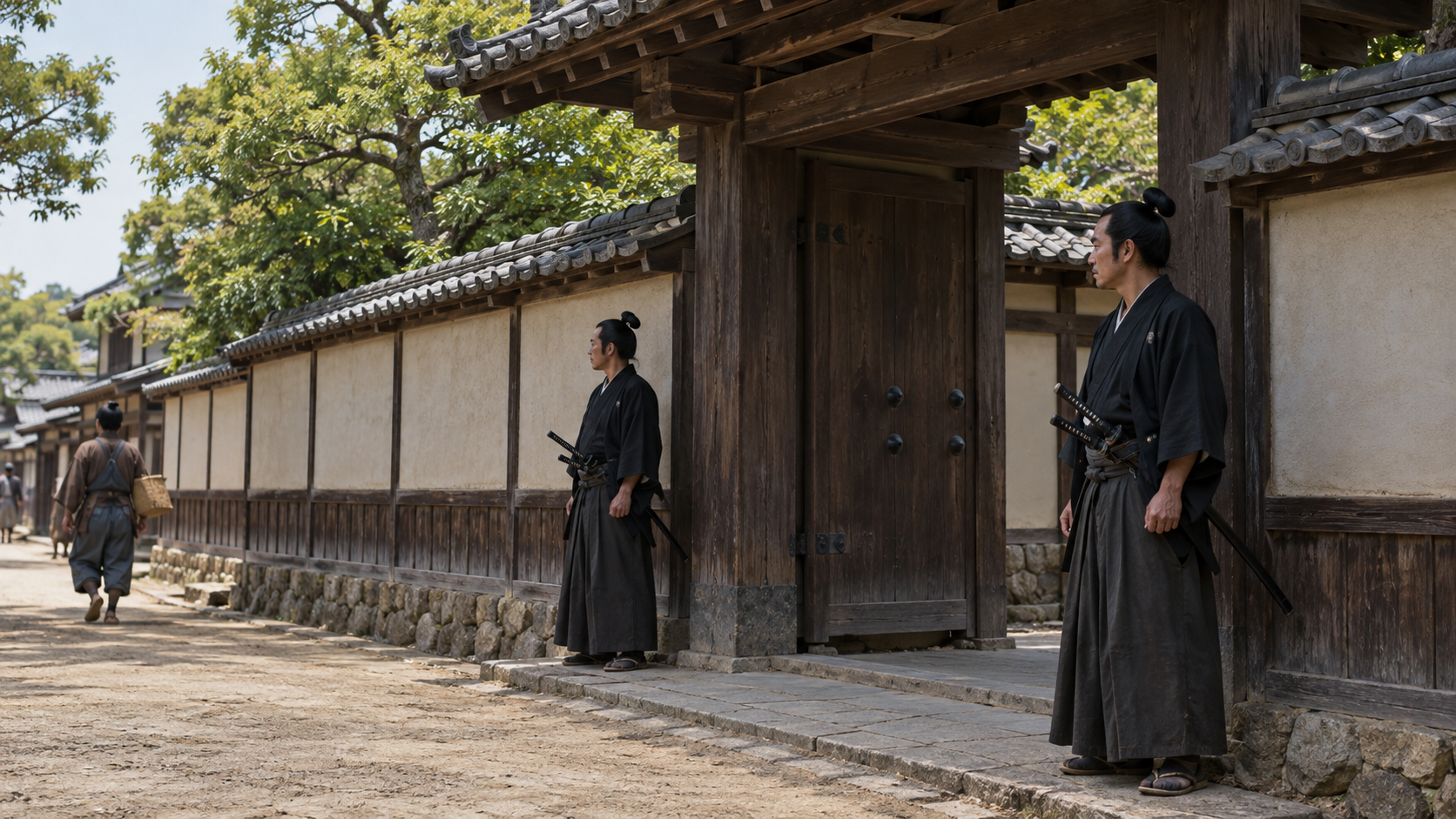
On the eighteenth day of the eighth month in 1863, a political upheaval took place in Kyoto. Aizu and Satsuma acted together, and Chōshū lost its earlier position at the center of politics around the court. This was the year before the Ikedaya affair.
The National Archives of Japan connects the Chōshū withdrawal from Kyoto after that upheaval with the subsequent Ikedaya affair and the Kinmon conflict. Before the famous night was a period in which positions within the capital had changed. That sequence gives the raid a political setting.
Those advocating reverence for the emperor and the expulsion of foreigners should not be treated as one completely uniform organization. Some left Kyoto, while connections and activity continued through others. A common political language does not establish that every person shared a single plan or acted through one structure.
Efforts to recover Chōshū’s lost position were viewed with suspicion by those responsible for order. Who could approach the court, and who could act within Kyoto? Such questions formed part of the conflict behind the affair, rather than appearing only after the inn had been attacked.
Chapter 03
An organization under the Kyoto protector
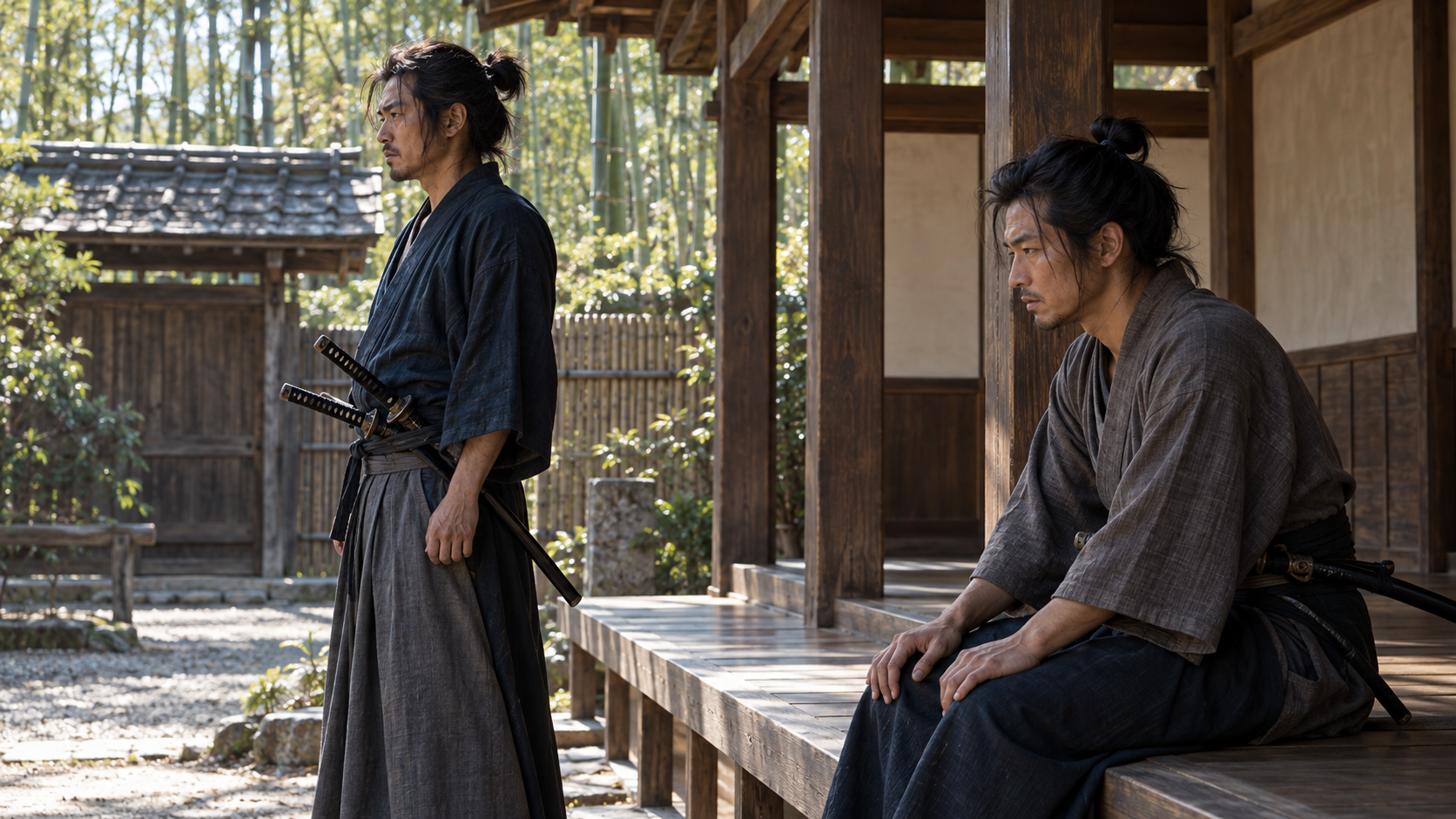
The formation of the Shinsengumi also leads back to Kyoto in the previous year. The National Archives explains its emergence from members of the Rōshigumi sent to Kyoto who remained there, including Kondō Isami and Serizawa Kamo. The account concerns an organization as well as later-famous individuals.
The group operated under Matsudaira Katamori, lord of Aizu and Kyoto military protector, and was mobilized during the eighth-month upheaval. Its members were situated within arrangements concerned with the capital’s security and politics. Their actions cannot be explained by skill with swords alone.
Whom should the authorities watch, and whom should they restrain? Such judgments were connected with the struggle over influence in Kyoto. The article does not invent a specific order for every action, but preserves the institutional relationship supplied by the archival explanation.
At Ikedaya, too, the names of Kondō and others belong alongside the group’s position under the protector. That relationship matters when following how the action was evaluated afterward. The later records of rewards extend the inquiry from what happened at an inn to the work of official recognition.
Chapter 04
Merchants, lodging and political connections
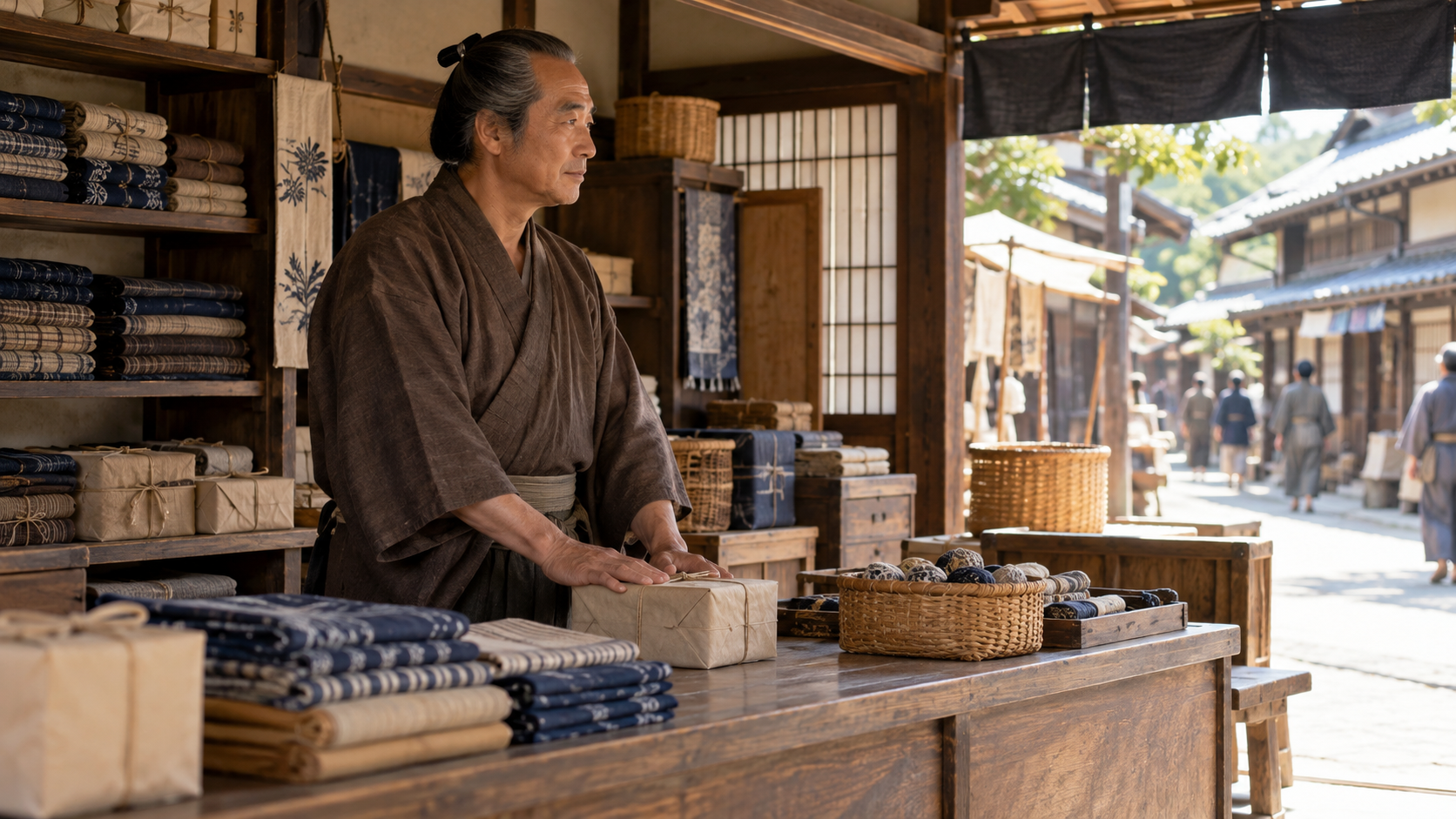
Furutaka Shuntarō appears in the sequence leading to the search at Ikedaya. Kyoto City’s tourism explanation introduces him as a merchant who supported the activists. Commercial activity and political connections overlapped within the urban setting described by the guide.
That explanation moves from his arrest by the Shinsengumi to the Ikedaya affair. Connections between people conducting business and those engaged in politics had become a subject of investigation. The guide’s narrative is retained without converting it into a newly verified transcript of interrogation.
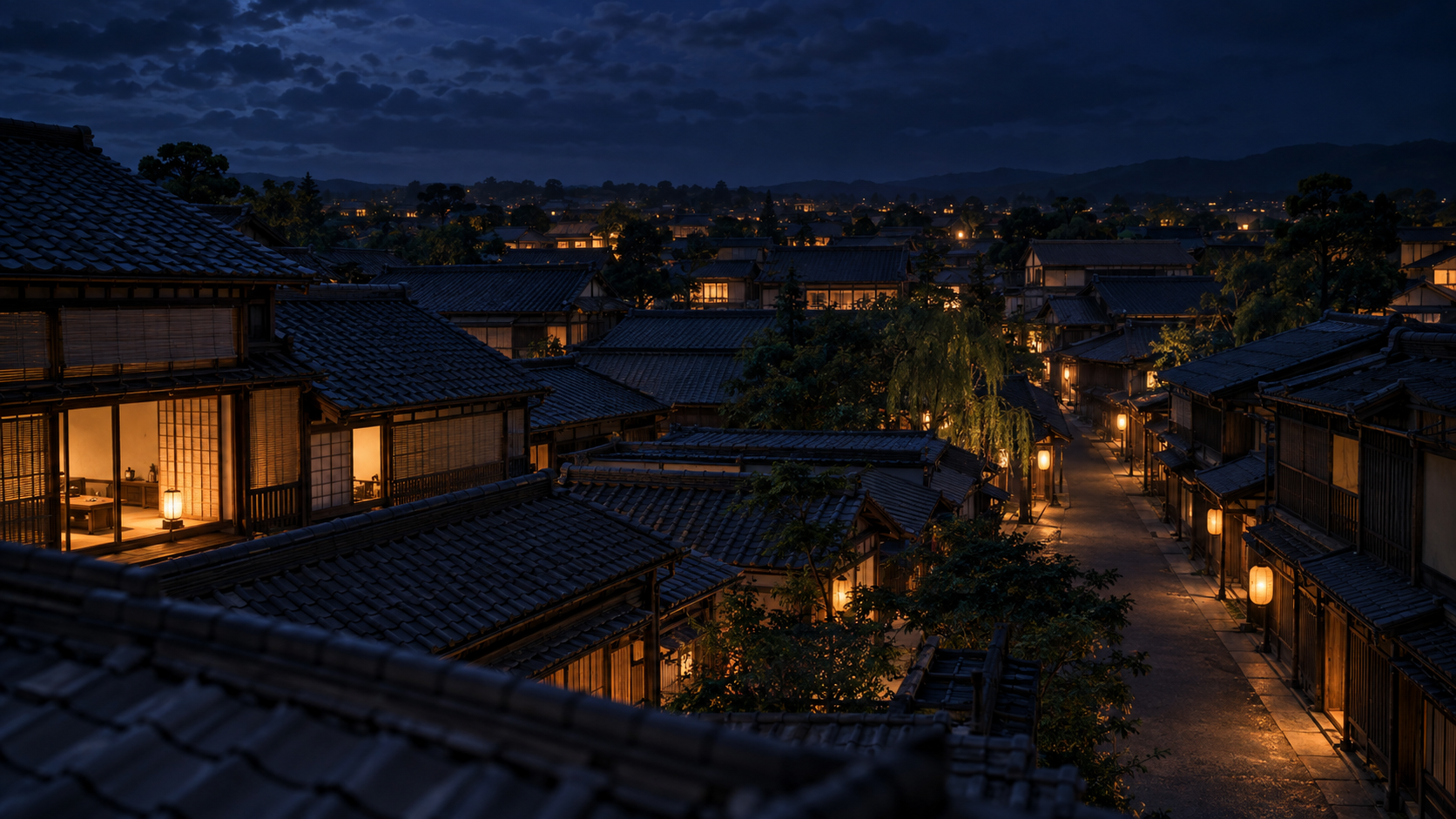
The districts around Sanjō, Shijō, Kawaramachi and Kiyamachi contained inns and merchant houses as well as domain residences. Places supporting movement and temporary stays could also serve political communication. The city’s geography therefore matters beyond the single building in which the fighting occurred.
The institutional explanations adopted here do not allow a complete reconstruction of Furutaka’s statements or the actual conversations during questioning. The article follows the connection between arrest and search while leaving unverified details open. No torture scene or invented exchange is added to make the sequence more dramatic.
Chapter 05
The meeting attacked on the fifth day
On the fifth day of the sixth month, activists were holding a meeting at Ikedaya near Sanjō and Kiyamachi. The Shinsengumi attacked the gathering, and fighting took place inside. That is the supported outline approached through the adopted institutional explanations, rather than a newly reconstructed sequence of individual sword fights.
Kyoto City’s monument and tourism pages contain figures for people attending or being arrested. Numbers whose scope has not been shown to match cannot simply be placed beside one another as competing counts of the same group. Their categories matter as much as their size.
People at the meeting, people who entered the building and people arrested in connection with the affair raise separate questions. A contrast between a small band and a large gathering does not by itself determine every aspect of the fighting. The article gives no definitive indoor headcount from those unmatched figures.
The core remains an attack on a political meeting in which lives were lost and arrests were made. Its gravity does not depend on inventing staircase positions or adding particular blows. An image of an inn offers a setting for the narrative without authenticating the building or the people shown.
Chapter 06
Information reaching the town
One source approaches that night through information reaching people in Kyoto: the Wakasugi family diary introduced by Kyoto Prefecture. The Wakasugi served in household administration for the court-aristocratic Tsuchimikado family. The diary is not an all-seeing account from inside the inn.
The prefecture’s supplied reading and explanation include news of a major disturbance and security activity by Aizu and the Mibu rōnin. They also preserve reports of arrests and injuries and rumor concerning violent conduct by rōnin. These are read as information appearing in the record, with that status retained.
The diary offers a route into how a town learned of a large event through incoming reports. It does not follow that the writer directly witnessed each action mentioned. Nor does repeating a reported statement independently verify an interrogation or establish the complete course of combat.
Even writing close in time to an event can contain both observation and things heard from others. Distinguishing official evaluation from circulating rumor changes how each source is used. Together, the records reveal more than one response to the night without being merged into a single uniform narrative.
Chapter 07
How to read the account of an arson plan
The Ikedaya affair is sometimes explained as preventing arson in Kyoto and the assassination of important figures. The National Archives exhibition describes a plan to use the confusion of a fire to regain control around the court, and states that the Shinsengumi learned of it beforehand.
Kyoto City’s explanation of the Ikedaya monument also introduces an assassination plan. What is established for this article is that these institutions present such explanations. Their attribution is kept visible rather than replaced by a claim that this article has independently proved the full design.
The adopted evidence does not include a new independent reading of an original Furutaka deposition or the complete text of Kondō’s own incident report. It therefore does not establish every part of the plan, the certainty of its execution or agreement by every person at the meeting.
A source explaining a plan and the extent to which that plan has been independently demonstrated are different questions. Keeping them distinct allows us to consider how the Shinsengumi’s action has been described. It also prevents a later actual fire from silently becoming evidence that every earlier reported intention was certain.
Chapter 08
The night becomes a record of rewards
After the affair, the Shinsengumi’s action was treated as service deserving recognition on the shogunate’s side. The National Archives introduces a statement concerning reward money for Kondō and others, as well as a letter of thanks from Katamori to the shogunate’s senior councillors.
Action at the scene thus continued into a documentary process. Rewards were recorded and the work was evaluated within the relationship between the Kyoto protector and the shogunate. These surviving materials give a route into official appraisal beyond a later reputation for bravery.
The thirty people appearing in the title of a reward-related document cannot automatically be made the number who entered the inn. A statement identifying recipients and a source reconstructing combat deployment serve different purposes. The article preserves that difference instead of borrowing the number for a dramatic comparison.
The circulation of the Shinsengumi’s name involved both martial reputation and a mechanism for recognizing service. Following the reward documents places the inn’s night within that political work. It does not require treating official praise as the only perspective held by everyone affected in Kyoto.
Chapter 09
Memory on the side that lost people
A night recorded as a service deserving reward was also an event in which the attacked side lost people. Kyoto City’s historical-site explanation identifies the Chōshū warrior Yoshida Toshimaro as having died in the Ikedaya affair. That loss forms another part of the account.
Kusaka Genzui, also associated with Chōshū, died in the later Kinmon conflict. Both names can appear in an explanation of the same historical site without their deaths becoming events of the same night. The article does not assign Yoshida an unverified final route or place within the building.
The dead of the Ikedaya affair are described as having been buried at San’en-ji, with graves or markers later moved in connection with the temple’s relocation. The event and subsequent commemoration have different histories. A present-day marker should not be treated as an unchanged view of the site in 1864.
The monument identifying the Ikedaya site was erected in 1927. What is now visible as commemoration is therefore later than the event itself. Asking what subsequent people sought to preserve also belongs to the history of a place, alongside the different experiences of the raid.
Chapter 10
The confrontation in the following month
The month after Ikedaya, the Kinmon conflict took place in Kyoto, also known as the Hamaguri Gate conflict. Chōshū troops advanced toward the city and were defeated after clashes around the imperial palace with Aizu, Satsuma and other forces. This was a later military event, not the same inn raid.
Since the previous year’s upheaval, Chōshū supporters had sought to recover a lost political position. The blow at Ikedaya belongs within those continuing tensions. Its place in the sequence matters without turning it into the only political circumstance from which the later action arose.
A flow from the affair to military movement and fighting is not equivalent to proof that one night alone determined the deployment. Earlier political conflict and approaches toward the court also belong in the explanation. The article adds no private decision scene to reduce those relationships to one motive.
Looking outward from the inn changes the scale of the account. The event does not end simply as a contest among swordsmen. The struggle over a position in the capital continued into a larger armed confrontation, affecting people and places beyond those present at Ikedaya.
Chapter 11
A reported plan and an actual city fire
During the Kinmon conflict, Kyoto suffered a major fire, remembered as the Dondon-yake. The municipal urban-history explanation connects the fighting with the burning of the town. This later damage belongs within the widening history of political and military conflict in the city.
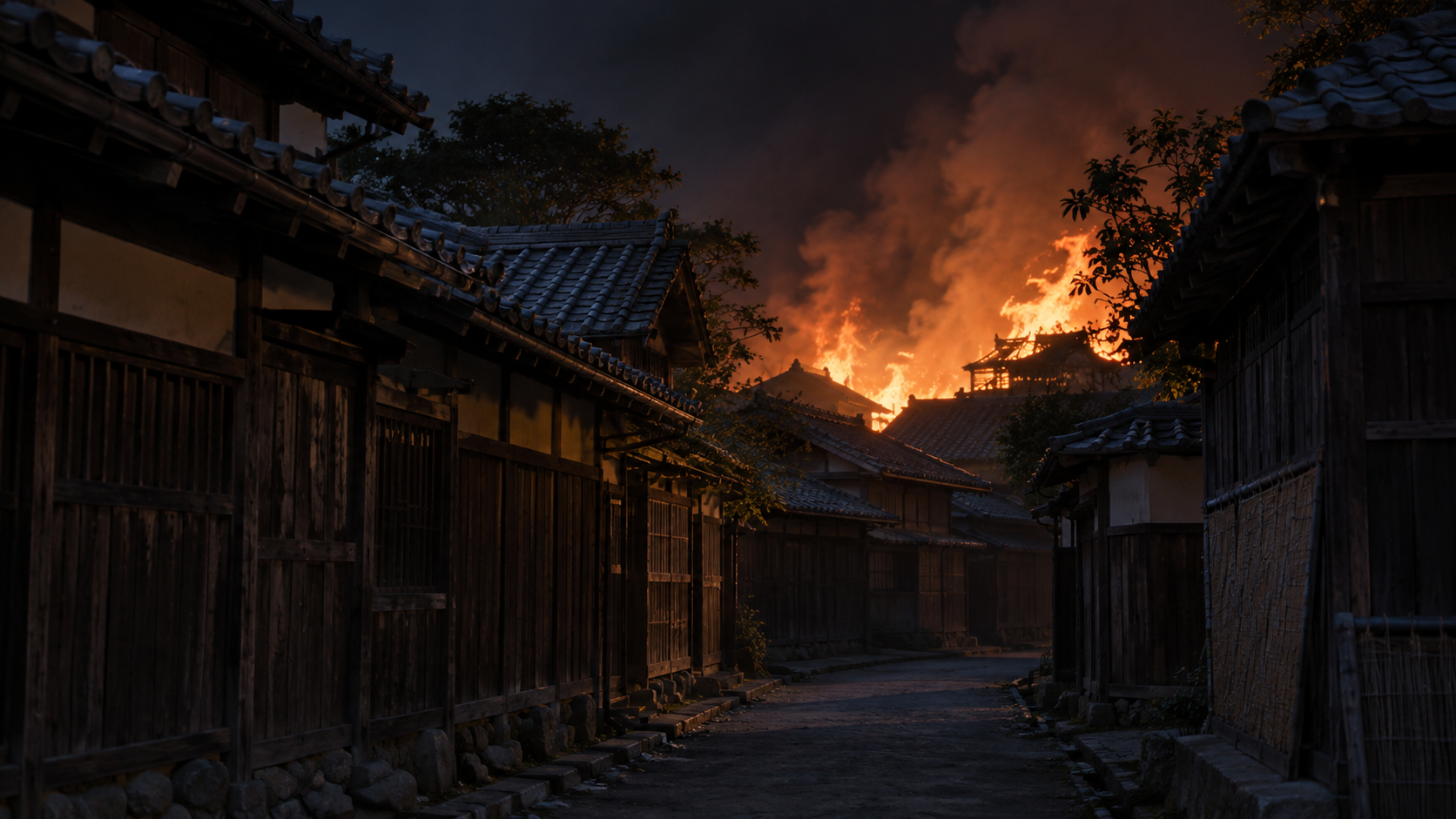
The arson plan introduced in explanations of Ikedaya and the fire accompanying the next month’s fighting are separate matters. The later occurrence of a real fire does not prove the full extent of the earlier reported plan. Nor is the illustrative fire image placed on the night of the sixth-month raid.
For townspeople, the effects of conflict involved homes, trade and religious places as well as the outcome of struggles for influence. The consequences extended to people who did not take part in the fighting. The article does not supply a damage total from the internally inconsistent municipal summary.
Around the names of Shinsengumi members and political activists was a city in which people lived and worked. The damage to that city belongs at the end of the route leading outward from the inn’s doorway. It adds another scale of experience without making all those experiences identical.
Chapter 12
Reading different records together
The same night left reward-related documents, rumor recorded in a diary and a later history of mourning. None of these should be made to describe the entire battle by itself. Their differences allow official evaluation, incoming news and commemoration to remain parts of the inquiry.
An explanation presenting an arson plan and a question about how much can be proved independently are distinct. So are the people named for rewards and the number inside a building. Separating similar-looking descriptions makes the event more concrete by keeping each claim attached to the evidence that supports it.
The gaps need not be filled with dramatic speeches. The adopted sources still allow the night to be placed within Kyoto’s political conflict and the tensions continuing into the following month. An incomplete reconstruction of every room and action does not prevent an account of those relationships.
Beyond Ikedaya’s doorway were more than Shinsengumi members and activists. Those responsible for security, those attacked and townspeople receiving news encountered the affair in different ways. Reading their traces together opens the night toward the wider history of late-shogunate Kyoto.
How to read this work
History, interpretation, and reconstruction
The raid becomes a wider history of Kyoto when security, politics, rewards, rumor and mourning are read together, with the limits of each source preserved.
This work is grounded in published sources and historical research. Interior thoughts, dialogue, and some visual details are cinematic reconstructions. Where historians disagree, the article presents the point as debated rather than settled fact.
Timeline
The story in time
People & terms
A guide for new readers
Key figures
- Kondō Isami
- Commander of the Shinsengumi, which operated under Katamori; his name appears in materials concerning the affair and its rewards.
- Matsudaira Katamori
- Lord of Aizu and holder of the Kyoto military-protector office, under whom the Shinsengumi operated.
- Furutaka Shuntarō
- Merchant introduced by Kyoto City as supporting the pro-imperial, anti-foreign activists; his arrest appears in the account leading to the searches.
- Yoshida Toshimaro
- Chōshū warrior who died in the Ikedaya affair, distinct from Kusaka Genzui, who died in the later Kinmon conflict.
Glossary
- Shinsengumi 新選組
- The group operating under Katamori in Kyoto, approached here through security, politics and later official recognition as well as combat.
- Kyoto military protector — Kyoto shugoshoku 京都守護職
- The office held by Katamori; it locates the group within the capital’s security arrangements rather than a modern police force.
- Rōshigumi 浪士組
- The group sent to Kyoto from which those remaining there formed the Shinsengumi in the archival explanation.
- Sonnō jōi 尊王攘夷
- Reverence for the emperor and expulsion of foreigners; a political language that does not establish one uniform organization or identical plans among all adherents.
- Chōshū 長州
- The domain and associated supporters displaced from court-political influence in 1863, involved in the context of the later conflict.
- Aizu 会津
- Katamori’s domain, connected with the security side of the Kyoto account.
- Reward-related statement 褒賞に関する書上
- A document concerning recognition or payment, whose named recipients are not automatically a combat deployment or building-entry count.
- Senior councillors — rōjū 老中
- The shogunate’s senior councillors addressed in Katamori’s letter of thanks introduced by the Archives.
- Rumor 風聞
- Information received or circulating, distinguished from direct observation and independent verification.
- Kinmon conflict 禁門の変
- The armed confrontation in the following historical month, also known as the Hamaguri Gate conflict.
- Dondon-yake どんどん焼け
- The great city fire associated with the later Kinmon fighting; not the realization of a fully proved sixth-month plan.
- San’en-ji 三縁寺
- The temple named in the burial account; later relocation and commemoration are distinguished from the event. Romanization is editorial.
- Historical sixth month 旧暦六月
- The month in the calendar then used, not silently converted to modern June.
- Commemoration 慰霊・顕彰
- Later acts of mourning and marking a place, which have dates and circumstances distinct from the fighting.
Sources & method
How this article was built
The fixed Japanese manuscript supplies twelve chapters, four people, five timeline entries and eight adopted source IDs. Their order and source assignments are preserved. Additional context explains the same evidence without inventing dialogue, interior routes, private intentions or a definitive headcount.
All eight adopted institutional explanations are used within the recorded reading scope. Provider-supplied partial readings of documents and the diary are distinguished from a new independent decipherment of whole originals. Furutaka’s full original deposition and Kondō’s complete report are not claimed as independently examined.
The arson-plan account remains attributed to its providers. It is not expanded into proof of every detail or every attendee’s agreement. The later Kinmon fire is a separate event, and the inconsistent date and damage aggregate in the municipal page are not used.
National Archives pages count once, Kyoto Prefecture once, and Kyoto City pages and its tourism department once. The eight references therefore represent three actual publisher organizations. No extra publisher is created by treating a municipal department or individual monument page as a separate body.
All illustrations are imaginative generated scenes. No institutional photographs, original handwriting, maps or document images are copied. Buildings, anonymous figures and the city fire are not exact reconstructions; the fire illustration concerns the subsequent conflict, and later memorial sites are not treated as unchanged scenes from 1864.
Sources
References and further reading
- Late-Shogunate Upheaval 42: A Record of Chōshū-Affiliated Activists and Assumed Names 激動幕末42 元治甲子長州附属諸国脱走変名大略 Title translated editorially for reader convenience. National Archives of Japan 国立公文書館 Exhibition explanation of the previous year’s upheaval, the meeting attacked on the fifth day, the blow to activists and the later Kinmon conflict. The arson-plan account is attributed to the provider, not independently proved here from a full original. Accessed 2026-10-20
- Late-Shogunate Upheaval 43: Statement Concerning Thirty Men Including Kondō Isami, and Related Papers 激動幕末43 新選組隊長近藤勇以下三十名御手当之儀書上ほか Title translated editorially for reader convenience. National Archives of Japan 国立公文書館 Introduces the Rōshigumi origins, the relationship with Katamori, reward-related documents and a letter of thanks. The number in a document title is not reused as an indoor entry count. Accessed 2026-10-20
- The Wakasugi Family Diary — Collection Exhibition 若杉家日記 総合資料館収蔵品展 Title translated editorially for reader convenience. Kyoto Prefecture 京都府 The relevant provider-supplied reading and summary concern security, rumor, arrests and injuries. They are not treated as the writer’s direct observation of every event or an independently verified deposition. Accessed 2026-10-20
- Urban History 25: The Hamaguri Gate Conflict and Dondon-yake 都市史25 蛤御門の変とどんどん焼け Title translated editorially for reader convenience. Kyoto City 京都市 Municipal explanation of the 1863 upheaval, Ikedaya and the later seventh-month conflict and fire. The inconsistent date in its damage subsection and its aggregate damage count are not adopted. Accessed 2026-10-20
- Ikedaya Affair Site Monument — NA033 いしぶみNA033 池田屋騒動址 Title translated editorially for reader convenience. Kyoto City 京都市 Site explanation of the attacked meeting and the monument of 1927. Unmatched attendance and arrest figures are not reconciled into a definitive headcount; the assassination-plan description remains attributed to the provider. Accessed 2026-10-20
- Walking Kyoto with Sakamoto Ryōma: The Sanjō–Shijō Area 坂本龍馬と歩く京のまち 三条~四条界わい Title translated editorially for reader convenience. Kyoto City 京都市産業観光局 Tourism explanation used for Furutaka’s arrest, urban connections and locations. Its acknowledgment of differing accounts is retained; detailed torture scenes, numbers and a sole-cause explanation are not adopted. Accessed 2026-10-20
- Former Lodgings of Kusaka Genzui, Yoshida Toshimaro and Others 久坂玄瑞・吉田稔麿等寓居跡 Title translated editorially for reader convenience. Kyoto City 京都市 Historical-site explanation distinguishing Yoshida’s death at Ikedaya from Kusaka’s death during the Kinmon conflict. No precise reconstruction of Yoshida’s final movements is asserted. Accessed 2026-10-20
- Former Burial Site of Those Who Died in the Ikedaya Affair — HI147 いしぶみHI147 池田屋事変殉難志士墓所跡 Title translated editorially for reader convenience. Kyoto City 京都市 Introduces burial at San’en-ji and later movement associated with relocation. Present-day markers are not offered as unchanged views of the 1864 event. Accessed 2026-10-20
Continue reading
More stories from Shigeki
Shigeki English
Sakai’s Merchant City: Trade, Self-Government and Survival
A port, a merchant council and town communities—from changing authority to rebuilding after fire.
- When From the later fifteenth century through the Sengoku period, the fire of 1615 and early Edo-period reconstruction.
- Where Sakai, in present-day Osaka Prefecture, where maritime routes met roads on land.
Shigeki English
The Aburanokōji Incident: After Leaving the Shinsengumi
A separation in spring, a new base in summer, and two successive attacks.
- When Kyoto in Keiō 3 (1867). The incident’s historical date corresponds to December 13, 1867.
- Where Kyoto: the guards’ successive bases, the Aburanokōji attack site and the later place of remembrance.