
SHIGEKI ENGLISH STORYEN
Japanese history in English
Chōsokabe Motochika: Land and Rule after the Battles
From surrender and succession to castle moves, land surveys and records used by a later ruling house.
After surrendering to Hideyoshi in 1585, Motochika retained Tosa. Castle moves, surveys with Morichika, rules and the later use of land registers reveal a history of government continuing beyond the campaigns.
At a glance
Before you enter the story
- When
- 1539–1601, with later transmission and Genroku-era copying of the registers; the Hetsugigawa year remains Tenshō 14.
- Where
- Tosa and Shikoku; the narrative also follows the campaign to Bungo in Kyushu and Motochika’s death at Fushimi.
- Key figures
- Chōsokabe Motochika, Chōsokabe Kunichika, Chōsokabe Nobuchika, Chōsokabe Morichika, Toyotomi Hideyoshi, Yamauchi Kazutoyo
- What was at stake
- The territory a house held, the succession between generations, and the records needed to continue governing land.
Why this story matters
The larger history behind the turning point
A reduction in territory does not end every other historical process. Motochika’s post-surrender administration and the registers’ use under a succeeding house let us read change at several scales: campaigns, provincial rule and the longer life of recorded information.
Historical context
What an international reader needs to know
A province and an island are different scales
Tosa was a historical province within Shikoku. The sources move between the house’s initial place among Tosa’s regional powers, its control of the province and its wider reach across much of the island. Keeping these scales distinct helps overseas readers understand why retaining “one province” represented a contraction without implying that local government had disappeared.
The municipal and prefectural accounts provide the geographical sequence used here. Their language of unification is read cautiously: a broad statement of territorial reach is not treated as proof that all places were administered in the same way. Present-day Kochi institutions explain this history, but their modern names are not the names of sixteenth-century governing bodies.
A surviving register collection has its own history
A land-survey register is evidence connected with the examination and recording of land. The collective title attached to the Chōsokabe materials does not mean that every surviving volume has the same date, author or physical history. The Board of Education specifically includes related administrative records, early Yamauchi materials and later copies in its explanation of the collection.
Its continued use under a new ruling house is central to this article. Copying to address insect damage in the Genroku era belongs to that continuing history. A document can preserve useful information while its physical form changes through copying. Recognizing that distinction prevents the 368-volume total from becoming an unsupported claim about Motochika’s autograph originals.
Watch the film
See the story in motion
The film currently uses Japanese audio. This English article provides the context and source trail; it does not imply that an English subtitle track is available.
Chapter 01
The years after surrender
In 1585, Chōsokabe Motochika was defeated by Toyotomi Hideyoshi’s forces after extending his influence across much of Shikoku. He was allowed to retain Tosa, a single province. A history measured only by the size of territories might make this the point where his achievement simply receded from view.
Yet government in Tosa continued. Motochika moved his seat, land was surveyed, and rules were put in place. His story cannot be finished at the moment of greatest expansion, or at the moment of surrender. The years that followed belong to the history of his rule as much as the campaigns that preceded them.
How was the remaining province governed, and what passed to the next generation? These questions direct attention from victories to the work that followed them. Alongside castle sites, registers recording land become important evidence. They offer a different way of approaching a lord whose reputation is closely tied to military expansion.
The path traced here moves from regional conflict to rule over Tosa, then to records used after the Chōsokabe ceased to govern it. Connecting these different spans of time changes what counts as a historical outcome. A territorial defeat and the end of a document’s usefulness need not occur together.
Chapter 02
One power among several in Tosa
Motochika was born in 1539 at Okō in Tosa, the eldest son of Kunichika. The family into which he was born did not already control all of Shikoku. Starting with the later extent of his power would conceal the much smaller political position from which the family’s expansion began.
Tosa contained several competing powers, including the Motoyama, Aki and Tsuno. Kochi Prefecture’s explanation places the Chōsokabe among the seven leading houses conventionally called the seven powers of Tosa. It describes them as relatively weak within that grouping. The designation does not make those houses equal in resources or authority.
The Ichijō are treated separately in the prefectural account, as a house of court-aristocratic origin holding a distinctive position. Tosa should therefore not be pictured as a uniform territorial block already waiting under a single authority. Relationships among different regional powers were part of the setting Motochika inherited.
For a house based at Okō, struggles with neighboring powers concerned nearby lands before they became part of a wider island story. Returning to this smaller starting point helps us read succession as an inherited political task. It avoids projecting Motochika’s later reach backward onto the conditions of his birth.
Chapter 03
From a first campaign to control of Tosa
In 1560, when Kunichika fought the Motoyama at Nagahama, Motochika took part in his first battle. His father died that same year, and Motochika succeeded him. Entering combat and assuming responsibility for the house were thus events of the same year, rather than widely separated stages of a simple rise.
Further years of conflict lay between that succession and the unification of Tosa. Kochi City’s account describes the removal of the Motoyama from Asakura Castle and the subsequent submission of the Aki and Tsuno. These were encounters involving different opponents and places, not parts of a single decisive action.
The city’s explanation places Motochika’s defeat of the Ichijō at the Shimanto River in 1575. Fifteen years separated his first battle from that point. The short expression “unification of Tosa” compresses a sequence of conflicts into a result; it should not remove the time required to reach it.
Reading those stages in order gives a clearer sense of how Motochika’s position changed after he inherited the house. It does not require imagined speeches, a childhood prophecy or a single battle that explains everything. The institutional accounts provide a chronology of actions; the relationship among those actions is the subject of interpretation here.
Chapter 04
How far did power extend?
After bringing Tosa under his authority, Motochika extended his power across Shikoku. Kochi City describes his reach in 1585 as covering most of the island. A house that began as one regional power had come to operate across a much broader area, beyond its original provincial base.
Institutional guides also use expressions equivalent to the unification, or near-unification, of Shikoku. This article retains the more cautious description “much of Shikoku.” That wording does not assume that every part of the island was subject to the same completed, equally effective form of Chōsokabe government.
Extending influence and maintaining relationships across the areas it reached were connected tasks, but they were not identical. A record of victory cannot by itself describe all the arrangements through which distant local powers remained connected. The size of an area on a modern map does not settle that question.
Looking beyond territorial extent leads to a different kind of evidence: the written relationships among lords. One point of entry is an oath document issued by Motochika and introduced today by the prefectural historical museum. It brings a document, rather than a battlefield alone, into the account of political expansion.
Chapter 05
A promise recorded on paper
The Chōsokabe exhibition at the Kochi Prefectural Museum of History introduces an oath document issued by Motochika to Hiwasa Hizen-no-kami. The existence of this document offers evidence for thinking about connections among warriors in a form different from a campaign. The museum’s explanation is the basis used here.
The museum describes such oath documents in relation to a pledge to keep a promise and divine or Buddhist punishment for breaking it. Putting a commitment into writing was one means of supporting a relationship. This general explanation helps readers understand the kind of object being introduced in the exhibition.
It does not supply a complete reconstruction of the particular negotiations or the detailed terms of this promise. This article has not independently deciphered the original document. It therefore adds neither a newly translated clause nor dialogue attributed to Motochika, and does not turn an illustrative scene into a witnessed meeting.
The document’s existence still matters. It invites us to consider relationships among lords through written commitments as well as military action. That is an interpretive direction supported by the museum’s introduction, not a claim that the document alone explains every connection through which Chōsokabe influence spread across the island.
Chapter 06
Keeping Tosa under a changed authority
The fighting against Hideyoshi’s army in 1585 sharply limited Motochika’s expansion. He surrendered and retained Tosa. The change involved more than the extent of his lands: his political position as a territorial lord also changed. The province remained his to govern within a different relationship of authority.
Surrender did not immediately end his government of Tosa. Instead, he continued to hold the province while becoming subject to Hideyoshi’s commands. These two facts belong together. Retaining a territorial base did not mean continuing to exercise the same freedom to pursue expansion that had characterized his earlier campaigns.
Kochi City’s biographical account also introduces his later participation in the Odawara campaign and the Bunroku and Keichō invasions of Korea. Such service outside Tosa forms part of the post-surrender sequence. The article does not treat those obligations as interchangeable with the work of administering his remaining province.
Government within Tosa was connected to a wider political order under Hideyoshi. To read these years, we need to keep local administration and externally demanded action in the same frame. Neither an account confined to Tosa nor a map showing only a reduction in territory captures the whole sequence presented by these sources.
Chapter 07
Nobuchika’s death at Hetsugigawa
In Tenshō 14, Motochika went to Kyushu with his eldest son Nobuchika, under Hideyoshi’s orders, to aid the Ōtomo in Bungo. His position had shifted from pursuing expansion in Shikoku to taking part in a campaign under Hideyoshi. The names of these places mark a change in the setting of his military activity.
At Hetsugigawa, they were defeated by the Shimazu forces, and Nobuchika was killed. Motochika survived and returned to Tosa. The loss of an heir concerns the future of the ruling house in a different way from a contraction in territory. Nobuchika must also be distinguished from Morichika, the later successor.
The battle’s year is given here as Tenshō 14, retaining the historical era designation. The boundaries of a year in the calendar then used do not automatically match those of the modern Gregorian calendar. No exact modern date, or unverified conversion of the battle’s day, is supplied in this article.
Succession and the work of government continued after Nobuchika’s death. It would go beyond the evidence to explain every later choice through grief or to compose words expressing Motochika’s private feelings. The next stage is approached through actions that can be checked in the adopted institutional accounts, rather than through an invented inner life.
Chapter 08
From Okō to Ōtakasaka and Urado
Motochika’s seat moved from Okō to Ōtakasaka and then to Urado. Kochi Prefecture’s historical-site guide dates the first move to 1588 and the second to 1591. Keeping the sequence and the two dates distinct helps readers follow changes within Tosa after the surrender of 1585.
Leaving an inherited base and establishing a different seat were part of the work of ruling the province that remained. A castle was not only a point in a military itinerary. Its place in this account also concerns the location from which the business of territorial government continued to be conducted.
The fact of a move should be kept separate from a complete explanation of its cause. In particular, this article does not reduce the move to Urado to the convenience of its port. That would turn one possible line of discussion into a sole established motive, which the adopted account does not warrant.
Nor can today’s Kochi Castle or nearby facilities simply be placed in Motochika’s lifetime. A location, a sequence of seats and buildings erected later are different things. Separating them allows the historical movement of his base to remain legible without making modern structures into eyewitness evidence for the sixteenth century.
Chapter 09
The sustained work of surveying land
After the campaigns, the examination of land in Tosa continued. The Kochi Castle Museum of History explains that Motochika and Morichika carried out land surveys across Tosa’s seven districts over twelve years beginning in 1587. This introduces a span of administrative work, rather than another single military turning point.
The records known as the Chōsokabe land-survey registers preserve evidence connected with this work. Identifying land and putting information about it into records formed part of territorial government. The registers open a route into that activity without requiring us to invent the contents of an individual survey entry.
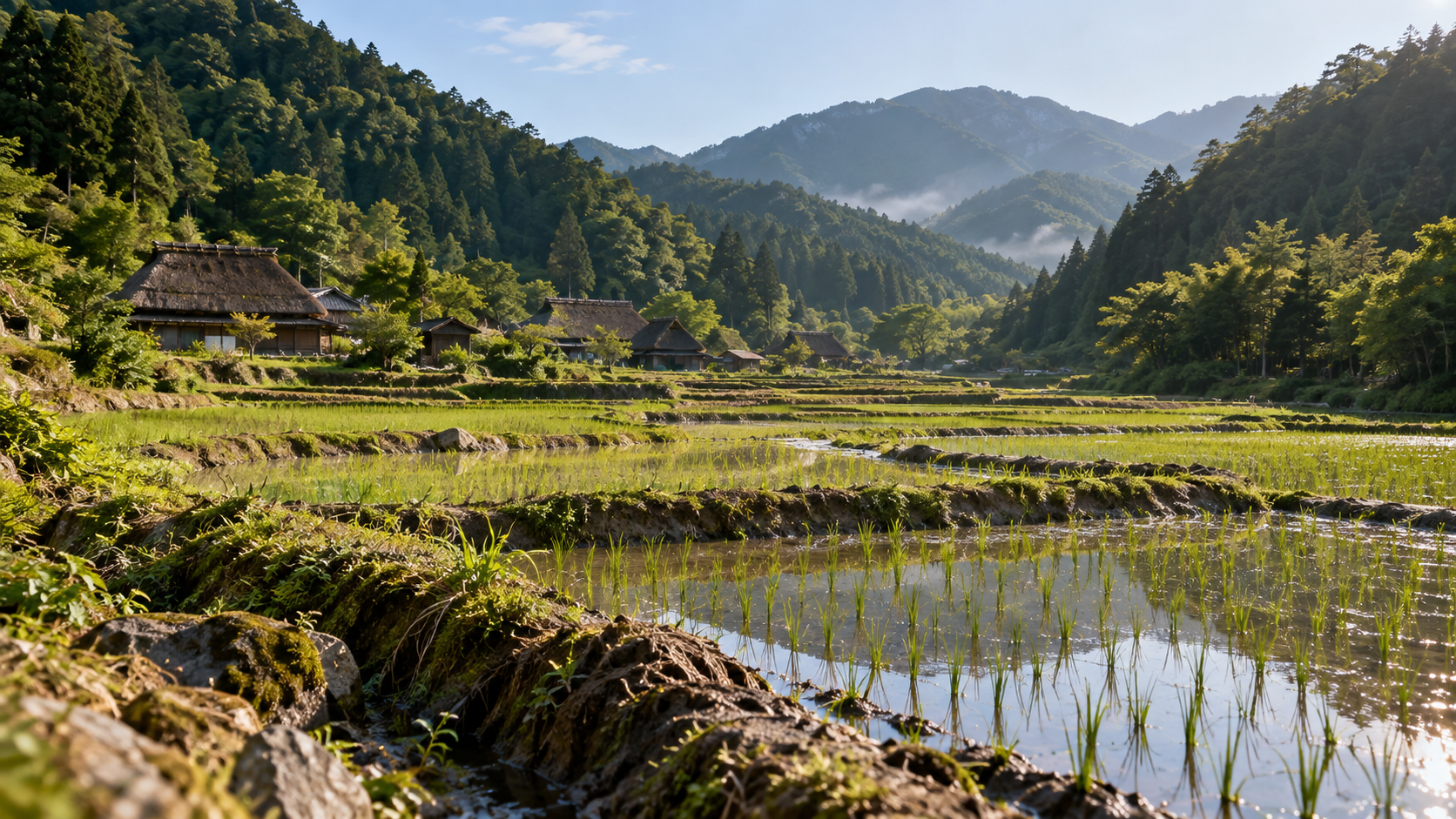
Seen from this angle, fields and villages are places to be examined and recorded, as well as landscapes through which armies might travel. Governing a territory required knowledge of places and work with records. The image accompanying this chapter illustrates that change of viewpoint; it does not document a specific survey method.
The surveys make it possible to ask what continued after Motochika’s power contracted to one province. Those years cannot simply be treated as an empty interval after defeat. Their administrative record gives the post-campaign period a history of its own, connected to the land rather than measured only by new conquests.
Chapter 10
A collection of 368 volumes, with a layered history
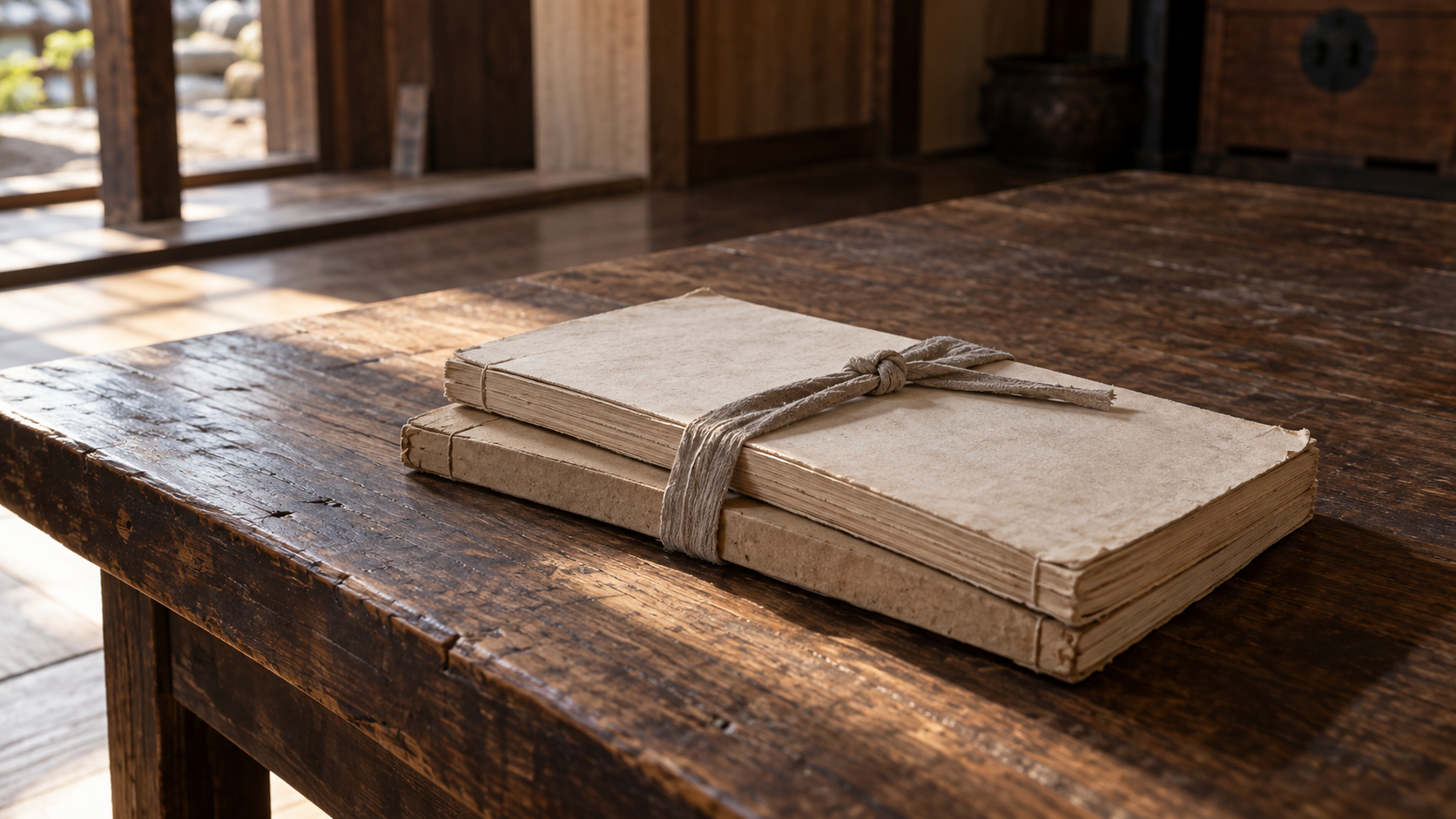
The surviving materials known collectively as the Chōsokabe land-survey registers comprise 368 volumes. The total conveys the scale of the collection. It should not be turned into a claim that every volume was written at the same time, or that all are original manuscripts in Motochika’s own hand.
The Kochi Prefectural Board of Education explains that the collective designation includes related administrative registers and records from the early Yamauchi period, as well as materials copied in later times. Different moments in the history of government and preservation are therefore present within the group now described under one name.
The providing institutions differ in aspects of classification and in their explanations of the component totals. This article does not resolve those descriptions into a newly asserted breakdown. It keeps the overall collection distinct from its formation and transmission, rather than treating a single figure as a complete account of documentary provenance.
The board also explains that the registers continued to have force under Yamauchi rule, and that new copies were made in the Genroku era to address insect damage. Their survival was connected with continued use and renewal. A later copy can belong to that history without being mistaken for an original sixteenth-century manuscript.
Chapter 11
Rules alongside the records of land
Land surveys were not the only element of Motochika’s territorial administration introduced in the institutional explanations. Kochi City also mentions the establishment of the Hundred Articles, a body of rules. In this article, that reference remains part of the account of governing Tosa after the period of wider expansion.
The complete original text of those rules has not been independently interpreted here. No particular article is therefore quoted, reconstructed or rewritten as something Motochika personally said. An institution’s identification of a body of rules supports its inclusion in the narrative, but does not replace the separate work of examining its clauses.
Moving the seat of government, surveying land and establishing rules can be read alongside one another. Together, they show activities concerned with maintaining rule over the remaining province. This is the article’s interpretive connection among documented actions; it is not a claim that the sources provide a single comprehensive administrative plan.
A history of a warrior lord based only on battles won and territory gained makes the later work seem smaller than it was. Keeping everyday government within the frame gives the years after 1585 their proper place in the narrative. It does not require declaring every measure successful or inventing its effects on individual households.
Chapter 12
Records outlasting a ruling house
Motochika died at Fushimi in 1599. The man who sided with the Western Army at Sekigahara in 1600 was his successor Morichika. These events belong to different lives and years. Combining them would incorrectly give Motochika an action that took place after his death and obscure the succession between them.
The Chōsokabe subsequently lost their lands in Tosa, and the Yamauchi took over. A letter by Yamauchi Kazutoyo dated 1600, introduced by the Kochi Castle Museum of History, must be distinguished from his entry into Tosa in 1601. The document’s date and the later movement are separate points in the sequence.
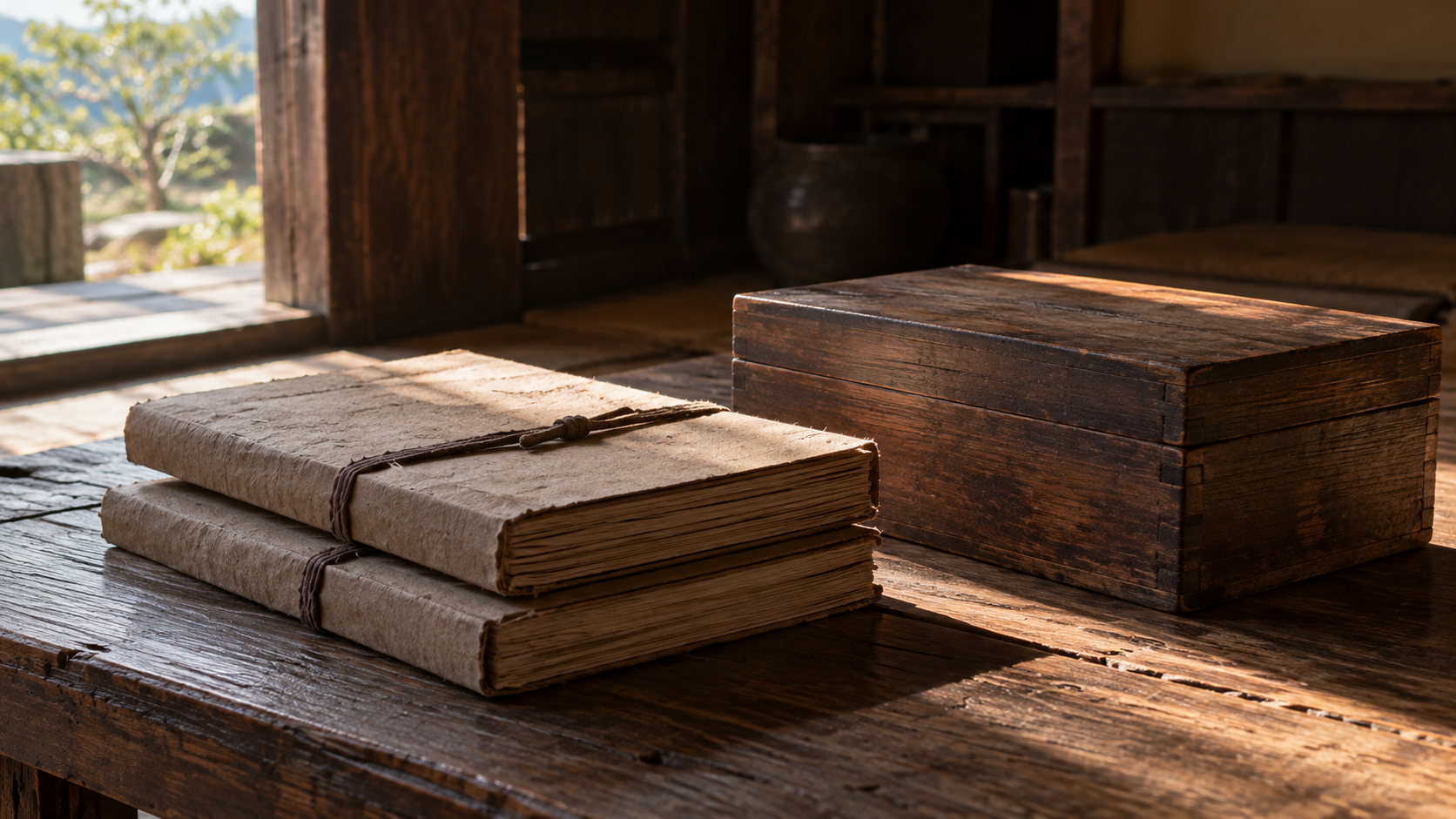
Even after the ruling house changed, the records used to understand land continued to be employed. The end of Chōsokabe territorial government was therefore not the end of the registers’ usefulness. That difference gives the history of the records a longer span than an account ending with the family’s political loss.
Motochika’s reach across Shikoku contracted, and the house’s rule over Tosa eventually ended. Yet the records connected with surveying its land had a subsequent history. Looking at that work alongside the battles allows us to see something else left by his period: information that later rulers continued to use, preserve and copy.
How to read this work
History, interpretation, and reconstruction
Reading castle moves, land surveys, rules and the registers’ later transmission together gives the years after surrender a place alongside Motochika’s military expansion.
This work is grounded in published sources and historical research. Interior thoughts, dialogue, and some visual details are cinematic reconstructions. Where historians disagree, the article presents the point as debated rather than settled fact.
Timeline
The story in time
People & terms
A guide for new readers
Key figures
- Chōsokabe Motochika
- Born in 1539; extended his power from Tosa across much of Shikoku, retained Tosa after surrendering in 1585, and died in 1599.
- Chōsokabe Kunichika
- Motochika’s father, who died in 1560.
- Chōsokabe Nobuchika
- Motochika’s eldest son, killed at Hetsugigawa in Tenshō 14, using the historical calendar.
- Chōsokabe Morichika
- Motochika’s successor, involved in the land surveys; sided with the Western Army at Sekigahara in 1600.
- Toyotomi Hideyoshi
- The ruler to whom Motochika surrendered in 1585.
- Yamauchi Kazutoyo
- Entered Tosa in 1601 after the Chōsokabe lost their territory.
Glossary
- Tosa 土佐
- The historical province at the center of this account; distinguish it from the present-day administrative name Kochi Prefecture.
- Shikoku 四国
- The island across much of which Motochika extended his influence; the article does not assume equally complete control of every area.
- Daimyō 大名
- A territorial lord; the article follows Motochika’s changing position before and after surrender to Hideyoshi.
- Okō 岡豊
- The Chōsokabe base associated with Motochika’s birth and the starting point of the later sequence of seats.
- Ōtakasaka 大高坂
- The seat to which Motochika moved in 1588, before relocating to Urado.
- Urado 浦戸
- Motochika’s seat from 1591 in the prefectural site chronology; a port-based explanation is not asserted as its sole cause.
- Land survey — kenchi 検地
- The examination and recording of land, here associated with the surveys conducted by Motochika and Morichika.
- Land-survey registers — chikenchō 地検帳
- The records known collectively under the Chōsokabe name; the surviving collection has a layered history of compilation and copying.
- Oath document — kishōmon 起請文
- A written pledge associated with sanctions by divine and Buddhist powers; the museum introduces a surviving example without this article independently interpreting its clauses.
- Hundred Articles 百箇条
- The body of rules mentioned in the municipal account; no individual provision is newly translated or quoted here.
- Tenshō 14 天正十四年
- A historical era-year designation retained for the Hetsugigawa battle; no exact Gregorian conversion is supplied.
- Genroku era 元禄期
- The later period in which the Board of Education describes replacement copies made to address damage to the registers.
- Succession 家の継承
- The transfer of leadership within the house; Nobuchika, the eldest son killed in battle, and Morichika, the later successor, are distinct people.
Sources & method
How this article was built
This English article follows the fixed Japanese manuscript, preserving its twelve chapters, people, eleven timeline entries, eight source IDs and source assignments. Additional context explains the same adopted evidence; no new dialogue, motives or numerical claims are invented.
The eight adopted institutional explanations are used as modern descriptions of history and collections. The original oath, the complete Hundred Articles, individual land-register entries and the 1600 letter have not been independently deciphered or translated here.
The two municipal and prefectural governments and the separately identified operating foundations are normalized as four publisher organizations. Multiple municipal pages count once, as do the prefecture and its Board of Education. Separate museum page titles alone are not evidence of separate publishers.
The historical calendar is retained for Tenshō 14. Nobuchika’s death, Morichika’s succession and 1600 alignment, Motochika’s 1599 death, Kazutoyo’s 1600 letter and his 1601 entry into Tosa remain distinct. Differences in the detailed classification of register volumes are not silently reconciled.
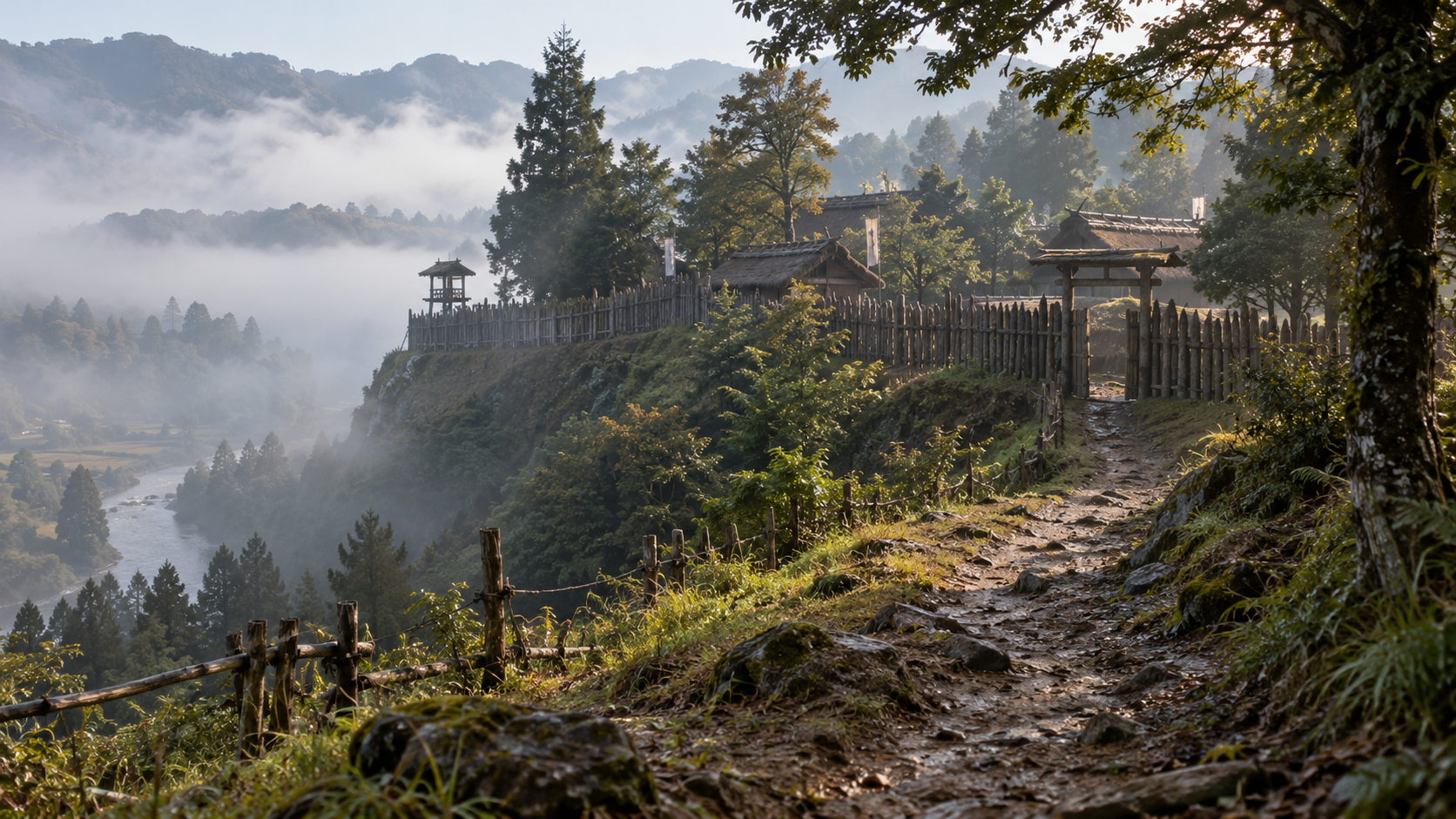
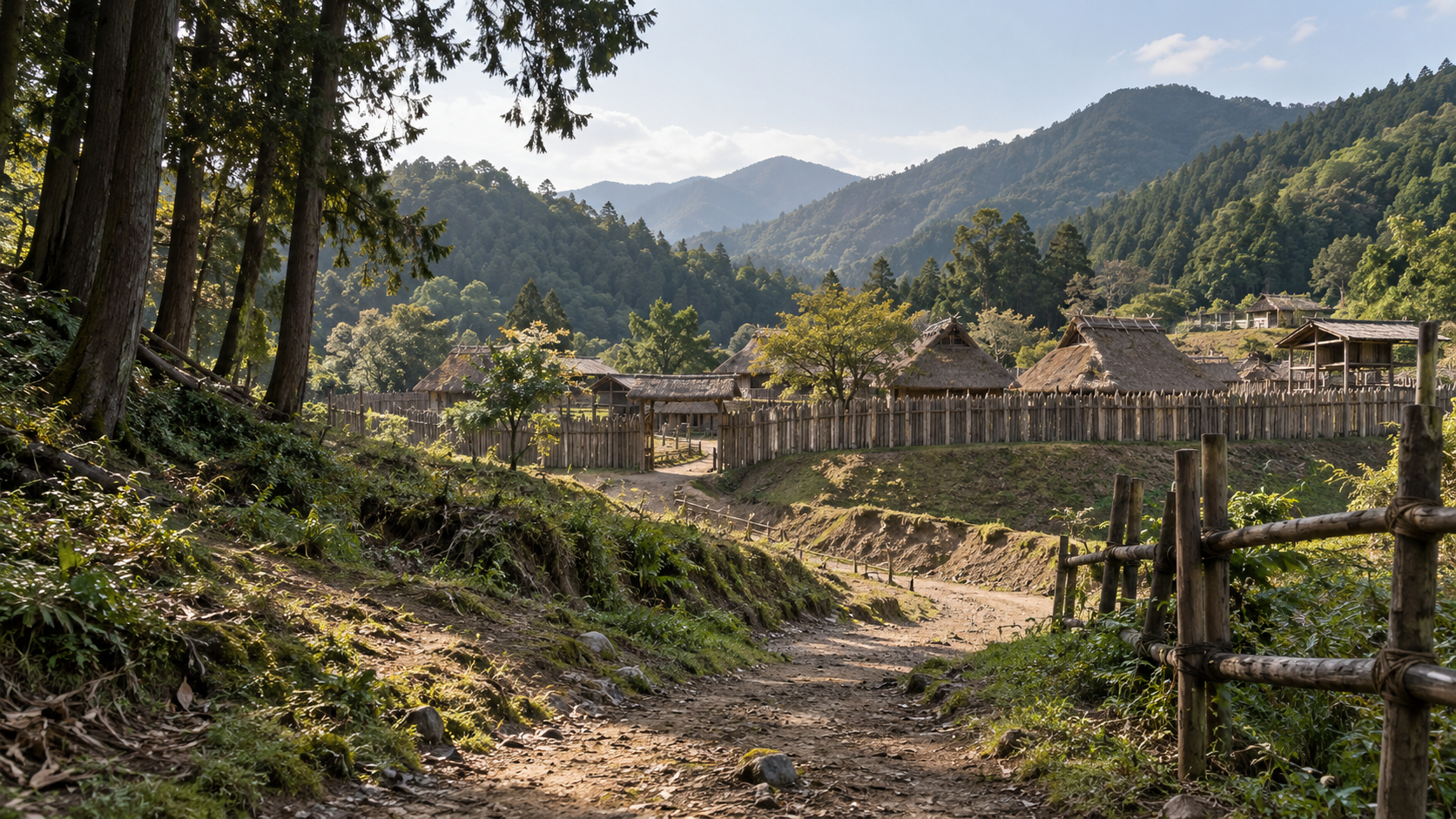
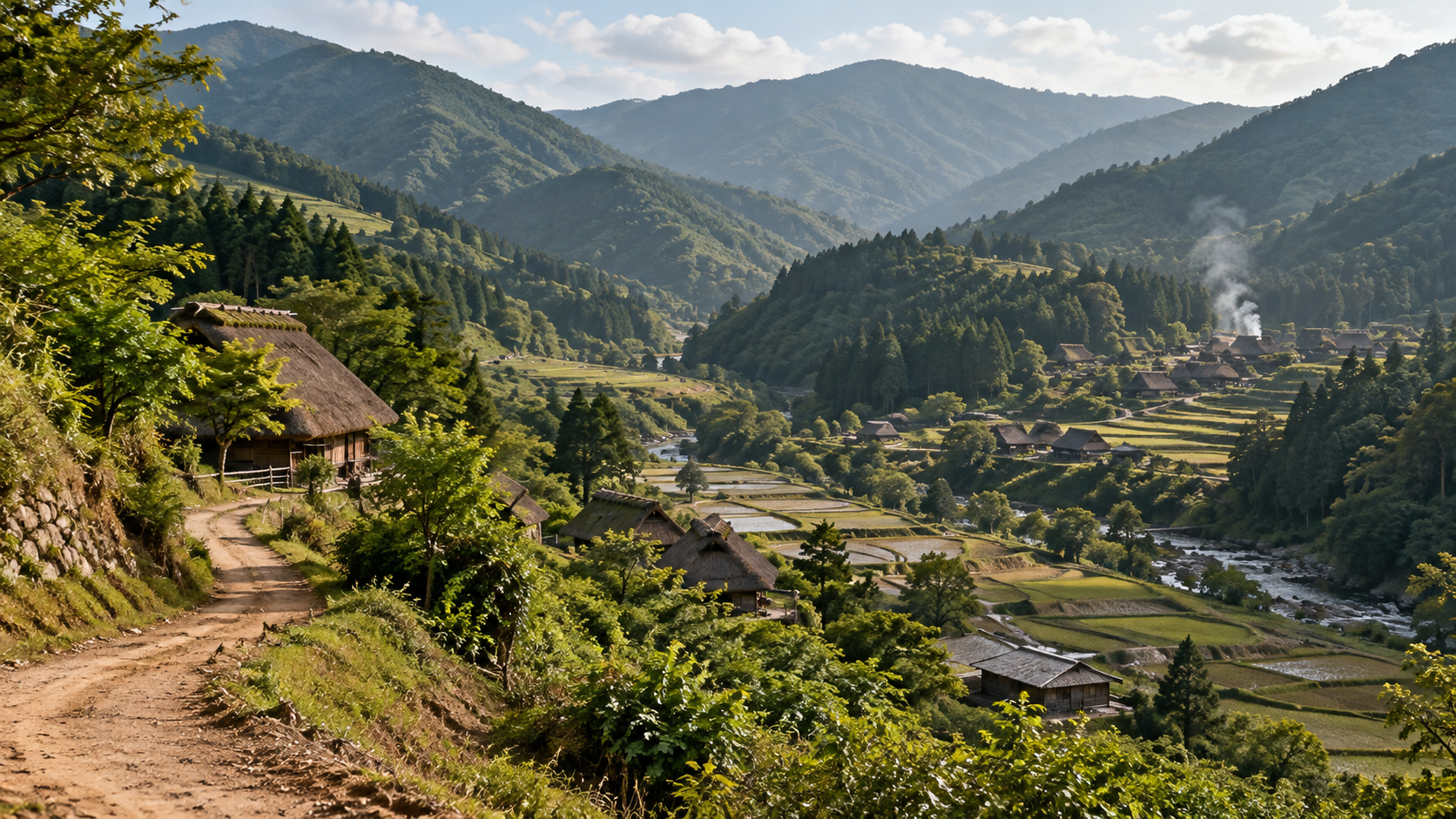
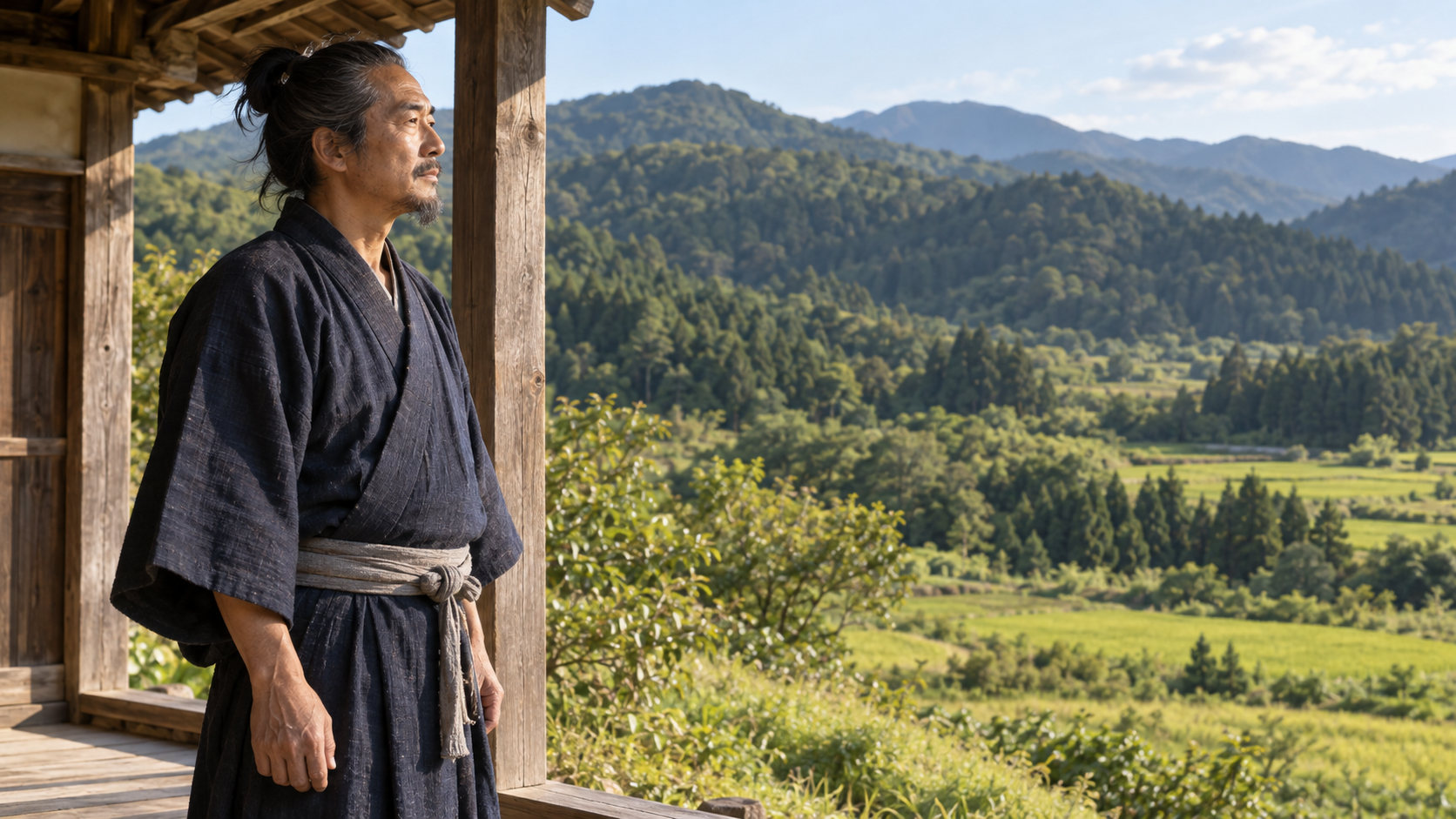
All accompanying images are imaginative generated illustrations. They reproduce no institutional photographs or manuscript facsimiles and authenticate no portraits, castle plans, survey techniques, topography or historical scenes.
Sources
References and further reading
- Chōsokabe Motochika 高知市・長宗我部元親 Title translated editorially for reader convenience. Kochi City 高知市 Municipal biographical explanation used for the chronology, expansion across much of Shikoku, surrender, subsequent service, surveys, rules and death. Anecdotes and private feelings are not adopted. Accessed 2026-10-19
- The Chōsokabe Exhibition Room 高知県立歴史民俗資料館・長宗我部展示室 Title translated editorially for reader convenience. Kochi Cultural Foundation 高知県立歴史民俗資料館 The Kochi Prefectural Museum of History’s exhibition explanation introduces Motochika’s oath document to Hiwasa Hizen-no-kami and the general nature of oath documents. It is not an independent reading of the original pledge. Accessed 2026-10-19
- Chōsokabe Motochika and the Seven Powers of Tosa 高知県・長宗我部元親と土佐七雄 Title translated editorially for reader convenience. Kochi Prefecture 高知県 Explains the regional powers, the distinctive Ichijō position, Chōsokabe expansion and the loss of territory under Morichika. Later narratives are not treated as contemporary testimony. Accessed 2026-10-19
- The Grave of Chōsokabe Motochika 高知市文化財情報・長宗我部元親墓 Title translated editorially for reader convenience. Kochi City 高知市 Cultural-property explanation supporting the biographical sequence, Nobuchika’s death, castle moves and administrative work. Its photographs are not reproduced. Accessed 2026-10-19
- Principal Collections 高知県立高知城歴史博物館・主な収蔵品 Title translated editorially for reader convenience. Tosa Yamauchi Memorial Foundation 高知県立高知城歴史博物館 The Kochi Castle Museum of History introduces the 368-volume register collection, surveys beginning in 1587, Kazutoyo’s 1600 letter and his entry into Tosa in 1601. Original documents are not independently transcribed. Accessed 2026-10-19
- The Chōsokabe Land-Survey Registers 高知県教育委員会・長曾我部地検帳 Title translated editorially for reader convenience. Kochi Prefecture 高知県教育委員会文化財課 The Board of Education explains the collective name, related and later registers, continued use under the Yamauchi and Genroku-era copying. The collection is not described as wholly autograph or simultaneous. Accessed 2026-10-19
- The Chōsokabe Land-Survey Registers 高知市文化財情報・長宗我部地検帳 Title translated editorially for reader convenience. Kochi City 高知市 Municipal cultural-property account of the 1587–1598 surveys by Motochika and Morichika and the records’ transmission. Differences in detailed classification are preserved. Accessed 2026-10-19
- Historical Sites of Motochika and Sengoku Tosa 高知県・長宗我部元親と土佐の戦国時代 史跡案内 Title translated editorially for reader convenience. Kochi Prefecture 高知県 Site guide supporting the Okō–Ōtakasaka–Urado sequence and moves of 1588 and 1591. Modern structures and a sole unverified motive for relocation are not projected backward. Accessed 2026-10-19
Continue reading
More stories from Shigeki
Shigeki English
Sakai’s Merchant City: Trade, Self-Government and Survival
A port, a merchant council and town communities—from changing authority to rebuilding after fire.
- When From the later fifteenth century through the Sengoku period, the fire of 1615 and early Edo-period reconstruction.
- Where Sakai, in present-day Osaka Prefecture, where maritime routes met roads on land.
Shigeki English
The Aburanokōji Incident: After Leaving the Shinsengumi
A separation in spring, a new base in summer, and two successive attacks.
- When Kyoto in Keiō 3 (1867). The incident’s historical date corresponds to December 13, 1867.
- Where Kyoto: the guards’ successive bases, the Aburanokōji attack site and the later place of remembrance.