
SHIGEKI ENGLISH STORYEN
Japanese history in English
Yamamoto Kansuke: A Messenger in the Letters, a Strategist in the Stories
Two letters to northern Shinano, a family archive and the later accounts that preserved Kansuke's reputation.
A letter from Takeda Harunobu preserves Yamamoto Kansuke's name as a messenger. Following the letters, the Ichikawa family documents, a copied manuscript and a later inscription reveals both evidence of his existence and the history of his celebrated strategist's image.
At a glance
Before you enter the story
- When
- Letters provisionally dated to 1557; later books, manuscripts, monuments and document preservation through 2010.
- Where
- Northern Shinano and Kawanakajima, in present Nagano Prefecture; Yamanashi; Aizu and Yonezawa; Kushiro in Hokkaido.
- Key figures
- Yamamoto Kansuke, Takeda Harunobu (Shingen), Ichikawa Fujiwaka
- What was at stake
- What the surviving correspondence establishes about Kansuke, and how a celebrated military reputation was passed down.
Why this story matters
The larger history behind the turning point
A famous military figure can become more understandable through a particular letter and the people who preserved it. Keeping correspondence, later narratives and commemoration distinct also helps readers appreciate the history of a tradition without treating every repeated story as independent confirmation.
Historical context
What an international reader needs to know
Names, places and a messenger's work
The events in the letters belong to Japan's age of regional warfare, when relationships between warrior families required continuing communication. The Ichikawa held a position in northern Shinano near Echigo and served the Takeda. A promise to send a messenger belongs to this network of contact.
Takeda Harunobu is the leader later known as Takeda Shingen. Nagao Kagetora is the figure later known as Uesugi Kenshin. These pairs of names identify the same respective people at different stages; they do not add extra participants to the exchange. Kawanakajima is the setting of the series of battles discussed in the museum accounts.
Historical dates and different kinds of writing
The letters are provisionally dated to Koji 3, corresponding to the year 1557. Their sixth-month day dates retain the historical calendar and have not been converted to Gregorian dates. The first month of the 1843 manuscript follows the same rule.
Correspondence, a military treatise, a war narrative and a later inscription answer different questions. A letter can place a named person in a specific exchange. A copied narrative can reveal what later readers transmitted. A monument or sculpture can show how an account entered commemoration. Connections between these sources need to be examined rather than assumed.
Watch the film
See the story in motion
The film currently uses Japanese audio. This English article provides the context and source trail; it does not imply that an English subtitle track is available.
Chapter 01
Kansuke in a letter
Yamamoto Kansuke is often imagined as the brilliant strategist beside Takeda Shingen, planning his lord's battles. A different point of entry survives on paper: the name of a messenger in a letter. Beginning with that name brings us closer to a particular exchange, before we turn to the larger story of the celebrated military adviser.
Yamanashi Prefecture's cultural-property guide introduces a letter from Takeda Harunobu in the Ichikawa family documents as evidence supporting Kansuke's existence. Harunobu was the head of the Takeda family, later known as Shingen. The Nagano Prefectural Museum of History also describes the Kansuke named in a document as a messenger dispatched during the battles of Kawanakajima.
A surviving name is a valuable clue. It makes it possible to ask whose communications this person helped to carry. The clue has a scope of its own: it does not establish every detail of the life, appearance or battle plans attributed to Kansuke in later accounts. Those claims need to be approached through the sources that actually contain them.
Following the messenger in the letters and the warrior in later stories also brings other people into view. Someone entrusted a message to him; a family received it; descendants preserved the paper. The history of Kansuke's name includes their work, as well as the military reputation that eventually became familiar.
Chapter 02
The family at the receiving end
The Ichikawa were a warrior family based in northern Shinano, an inland region in what is now Nagano Prefecture. According to the Nagano Prefectural Museum of History, they belonged to the Takeda side during the age of warfare, even though their territory lay close to Echigo. Their history places the letters within relationships among regional powers.
Messages sent by the Takeda were part of maintaining those relationships. An ally at a distance needed to receive information about the situation, and the sender needed to keep contact with that ally. Warfare depended on these continuing exchanges as well as on the movement of troops. A messenger's name can help reveal that less visible activity.
Reading only for the famous name can make the recipient disappear. Ichikawa Fujiwaka, the person addressed in both letters discussed here, matters to their meaning. Asking who was meant to receive the paper keeps the connection between the Takeda leadership and a family in northern Shinano in view.
The messenger's name reached the present through a history on the receiving side. The Ichikawa documents provide clues about a well-known warrior, while also preserving a record of the family's dealings with larger powers. Their survival allows us to follow a relationship, rather than assemble a biography from a name alone.
Chapter 03
The fifteenth day: a messenger promised
One letter from Takeda Harunobu to Ichikawa Fujiwaka bears the date of the fifteenth day of the sixth month. The original is held by the Nagano Prefectural Museum of History. Its explanation assigns the letter provisionally to Koji 3, or 1557. The qualification matters: the year is a scholarly dating, and the month and day belong to the calendar then in use.
The museum describes the letter as reporting the Takeda situation in response to the movements of Nagao Kagetora, later known as Uesugi Kenshin, and seeking the Ichikawa family's continued loyalty. It was an exchange with an ally away from the sender. Information about the situation and the maintenance of that relationship belonged together.
At the end came notice that a messenger would be sent soon. A person's visit was to follow the written communication. This promise provides a glimpse of the work of direct contact beyond the surviving sheet, without preserving everything the messenger would say or do.
The letter on its own does not describe the whole assignment. Before searching for the messenger's identity, it helps to establish the exchange in which the promised dispatch appeared. A second letter adds a name to that setting and gives the museum another basis for understanding the connection.
Chapter 04
Eight days later, a name
Yamanashi Prefectural Museum holds another letter addressed to the same Ichikawa Fujiwaka, dated the twenty-third day of the sixth month. That is eight days after the date on the first letter. Neither date should be rendered simply as a modern June date: both use the historical calendar.
The Nagano Prefectural Museum of History compares the letters' contents, paper, ink traces and kao, the stylized signature used on documents. It judges them to be part of a sequence from the same period. From the later letter, the museum explains, the messenger is thought to have been Yamamoto Kansuke.
The promise to send someone and the subsequent letter containing a name can therefore be read together. The comparison places Kansuke within a flow of communication. It gives the name a setting and a purpose, while keeping the conclusion attached to the institution's examination of the documents.
The written forms of Kansuke's name differ between the letter and the familiar later spelling. That difference alone does not settle whether two names refer to the same person or to different people. Here we follow the museum's comparison, without supplying an exact journey, invented conversation, formal rank or complete career for the messenger.
Chapter 05
A family moves, and papers survive
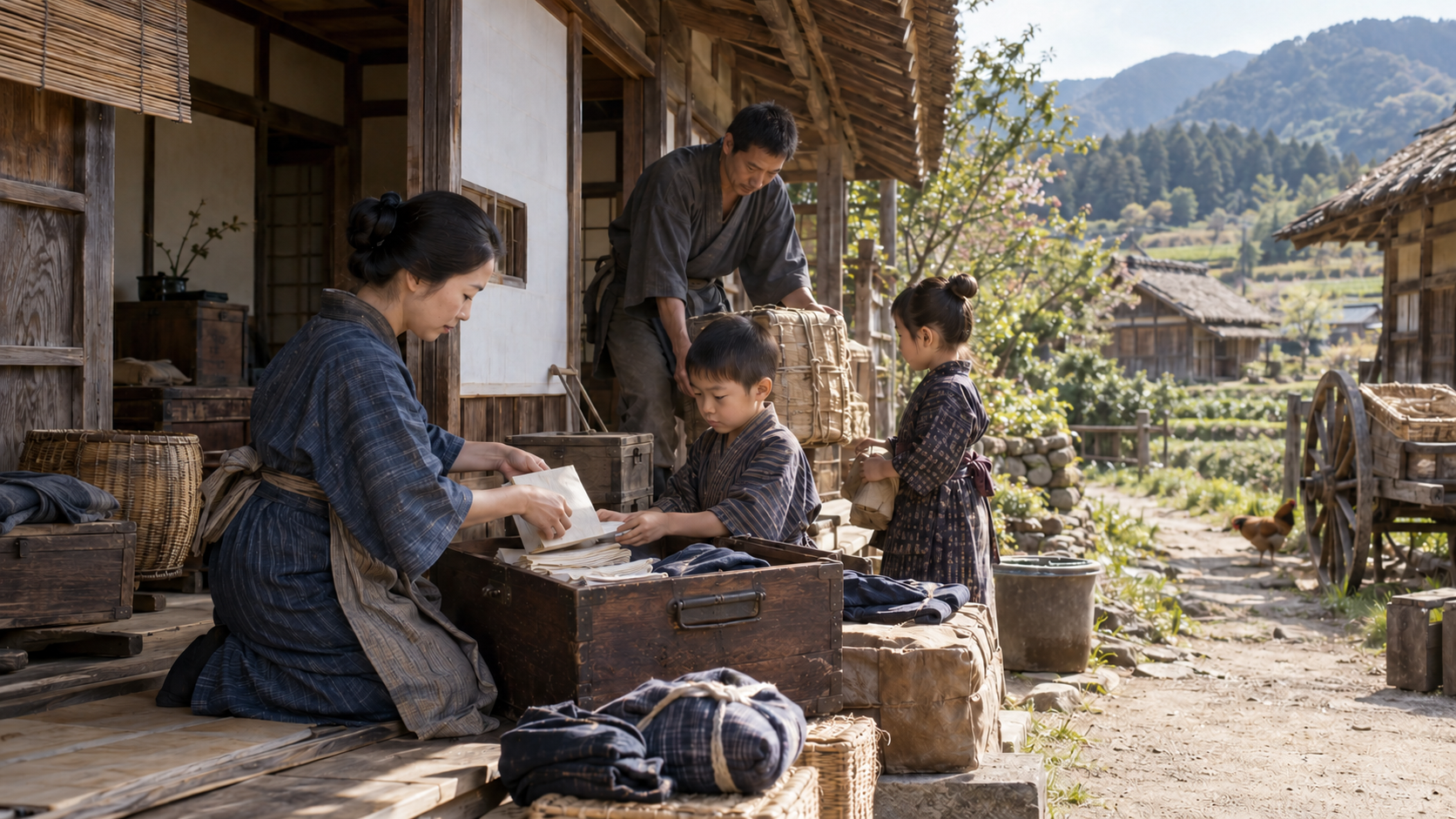
After the fall of the Takeda, the Ichikawa served the Uesugi. As the Uesugi moved, the family went to Aizu and then to Yonezawa. They reached the Meiji Restoration as retainers of the Yonezawa domain. In 1890, the family migrated to Hokkaido, the northern island of Japan.
The distance between the letters' original setting and their later place of discovery reflects a family history that continued through changes of allegiance and location. Northern Shinano, Aizu, Yonezawa and Hokkaido belong to different stages of that history. The papers' survival makes those movements relevant to understanding how evidence reached researchers.
The museum's account does not allow us to reconstruct who carried every sheet, which box held it or which road was taken. The family's movements nevertheless connect two places that might otherwise seem unrelated: an exchange with northern Shinano and documents later found in Hokkaido. The connection rests on provenance, the history of the documents' ownership and preservation.
These papers were not a memoir written by Kansuke. They survived among documents associated with the family receiving the messages, and later became clues for research. A historical person may become visible through the records of people who dealt with him, as well as through anything he left himself.
Chapter 06
The discovery in Kushiro
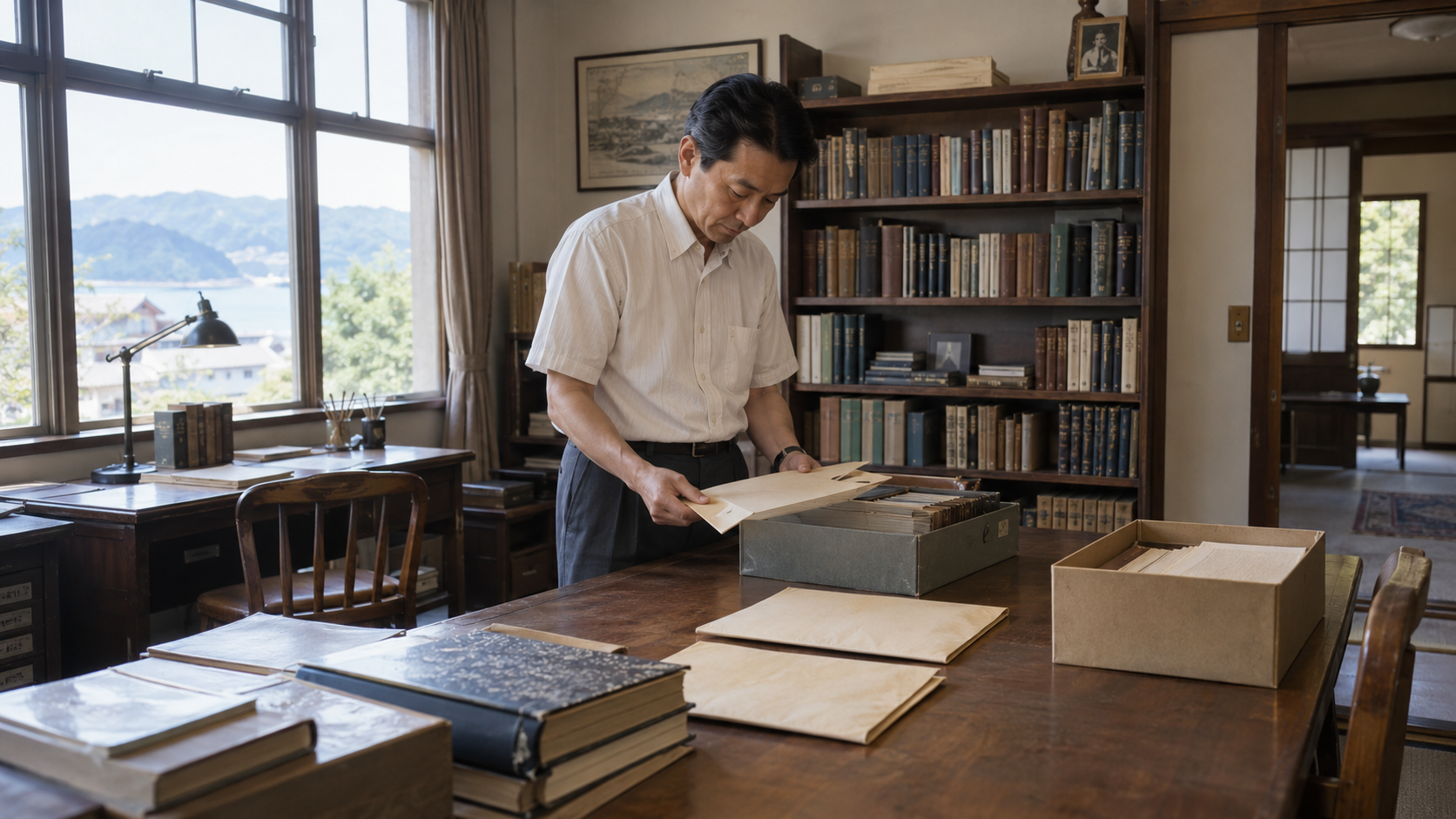
In 1969, new documents were discovered in the home of Ichikawa descendants in Kushiro, Hokkaido. The Nagano Prefectural Museum of History identifies these with the Ichikawa family documents now held by Yamanashi Prefectural Museum. They include evidence associated with the question of Kansuke's existence.
Another group known as the Ichikawa documents is held by the Honma Museum of Art in Sakata, Yamagata Prefecture. Both collections are connected with the Ichikawa family, but their present holdings are distinct. Similar collection names should not lead us to combine their contents, locations or histories into a single undifferentiated archive.
Yamanashi Prefecture's cultural-property guide identifies ninety-one items in its Ichikawa family collection. That group was designated a prefectural tangible cultural property in 2010. The number and designation refer to the Yamanashi collection; they should not be transferred to the separate group at the Honma Museum.
Reading the named sheet therefore involves checking the collection to which it belongs and where it is held. The question of Kansuke's existence is supported by the work of discovering, preserving and organizing documents. The evidence did not reach the present independently of those efforts.
Chapter 07
The warrior encountered in a book
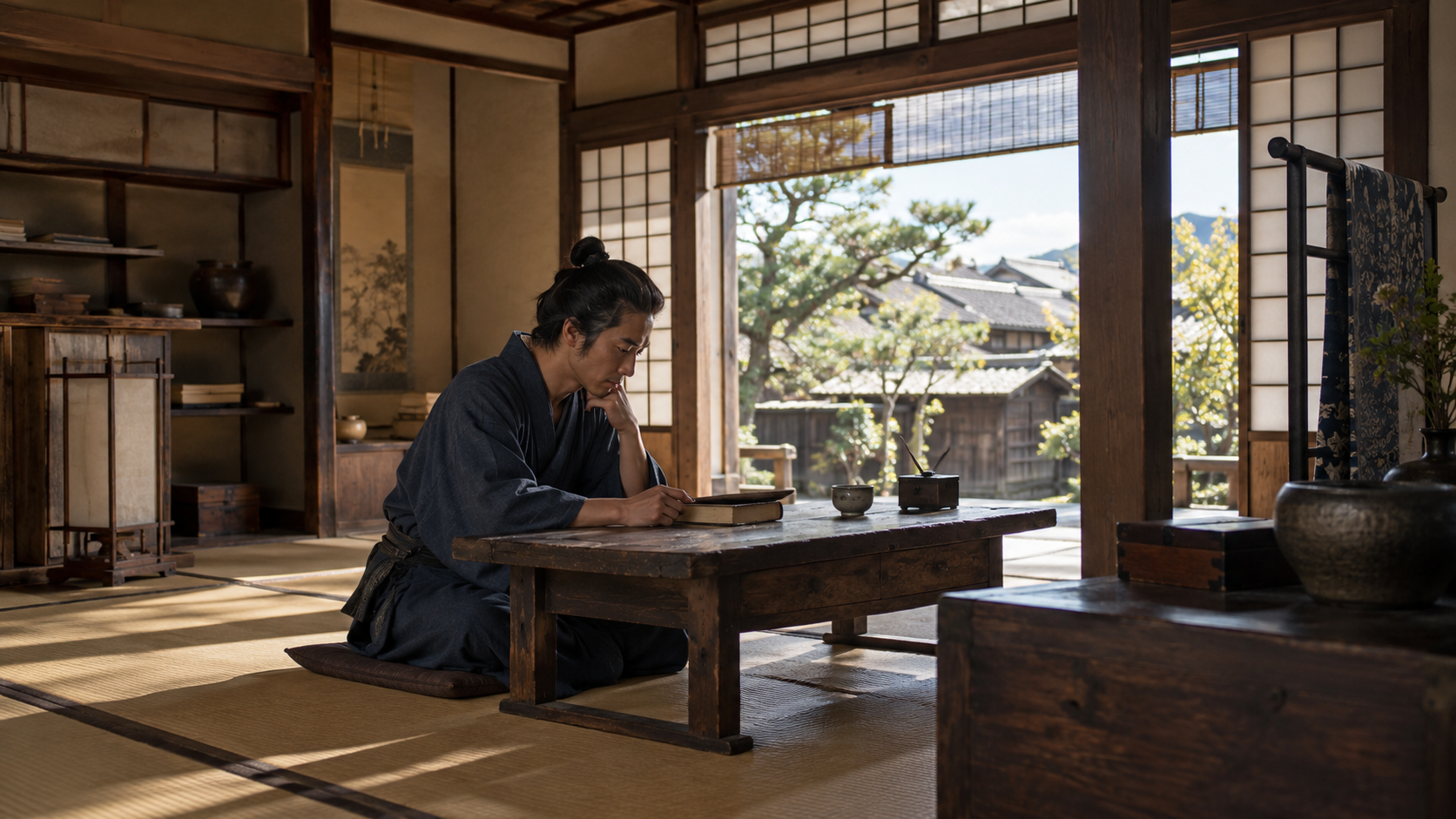
Turning from the letters to books introduces another Kansuke. Koyogunkan is known as a military treatise associated with the Takeda side. The Nagano City Museum's explanation describes its portrayal of Kansuke as an ashigaru taisho, a commander of foot soldiers. That literary portrayal must be read in its own setting.
The CODH database provides a bibliographical record from the National Institute of Japanese Literature for an edition of Koyogunkan published in Meireki 2, or 1656. An edition's publication date helps identify the book being consulted. It anchors the surviving object within the history of the text's circulation.
That bibliographical date is not automatically the date when all the contents were first composed. Publication information for one edition cannot, by itself, establish the entire process of writing and transmitting a work. The distinction matters when moving from a surviving seventeenth-century edition to claims about a sixteenth-century person.
The letters preserve a name within a particular exchange. The book preserves a portrayal of a warrior. Keeping the type of information and the time of its transmission visible allows us to consider how later readers encountered Kansuke, alongside the narrower evidence provided by contemporary correspondence.
Chapter 08
The person copying a story in 1843
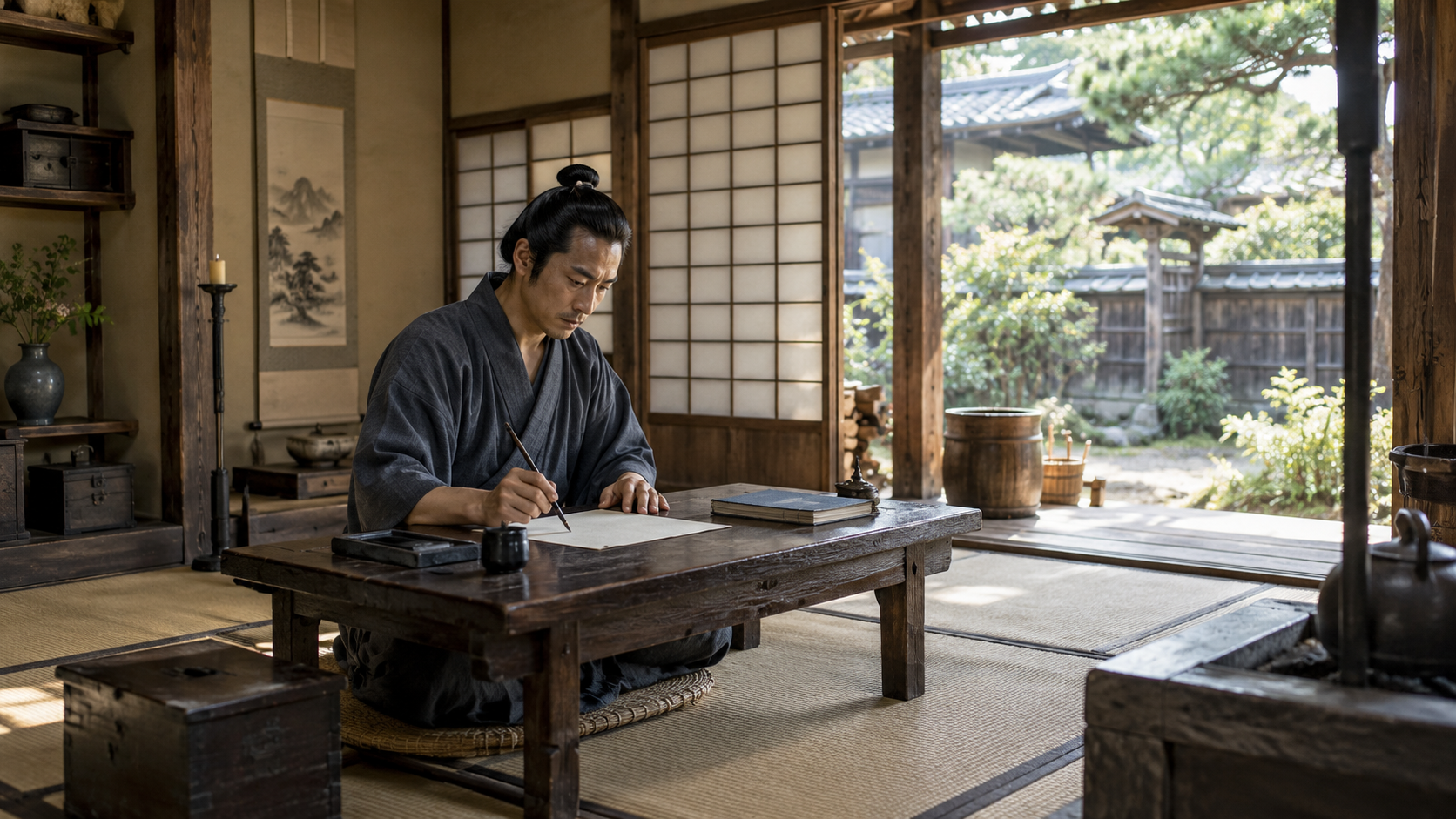
Nagano City Museum introduces a manuscript containing legends about Kansuke, titled in Japanese as a copied Yamamoto account. According to the museum's article, an ancestor of its owner copied it from an original in the first month of Tempo 14, or 1843. The month follows the historical calendar; it is not an unqualified modern January date.
Family origins, travels for training and entry into Takeda service formed part of the life story being copied. A person in the late Edo period preserved these accounts with a brush. The warrior of an earlier age had entered the reading and writing of a later household, and the manuscript is evidence of that encounter.
The museum article also discusses differing statements about Kansuke's year of birth. This account does not select one as established fact. Descriptions of appearance in later traditions likewise cannot produce an authenticated portrait simply because their wording is detailed. Detail in a narrative and verification of a person's appearance are separate questions.
The manuscript's richness helps us study the image of Kansuke that was being transmitted. Asking when and by whom it was copied brings the later writer into view. Asking how much it establishes about the sixteenth-century person keeps the limits of its evidence visible. Both questions give the paper a place in this history.
Chapter 09
When a book and a stone tell the same story
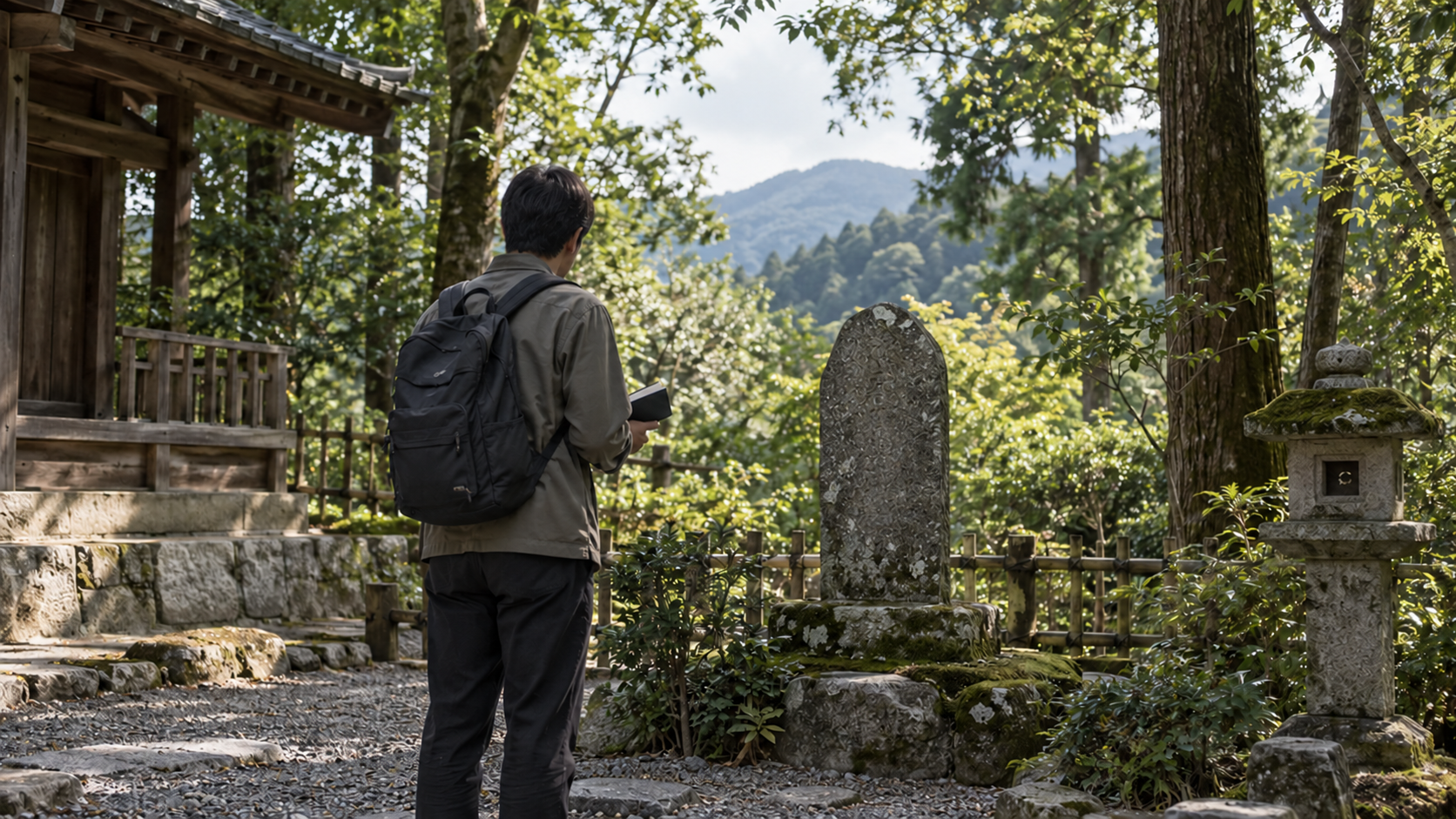
A story appearing in two places may seem to have twice the support. Nagano City Museum points out, however, that an inscription made in 1739 around Kansuke's grave overlaps with the account in Koyogunkan. The relationship between the texts is part of what the evidence needs to explain.
The museum considers it likely that the person composing the inscription consulted Koyogunkan. If one account draws on the other, the two cannot be counted as separate eyewitness records of a sixteenth-century event. Their agreement may reflect a route of transmission rather than independent confirmation.
That route still has historical value. A portrayal encountered in a book appears to have been carried into an inscription and into the commemoration of Kansuke. The overlap helps show how a story was received and preserved. It can support a question about remembrance even where it does not independently verify the original event.
What a source can tell us depends in part on the question we bring to it. We may be checking an event, or tracing the people who passed down an account of it. Paying attention to the connection between the book and the inscription allows the tradition to be read carefully, with its particular evidentiary value intact.
Chapter 10
Which battle does the third mean?
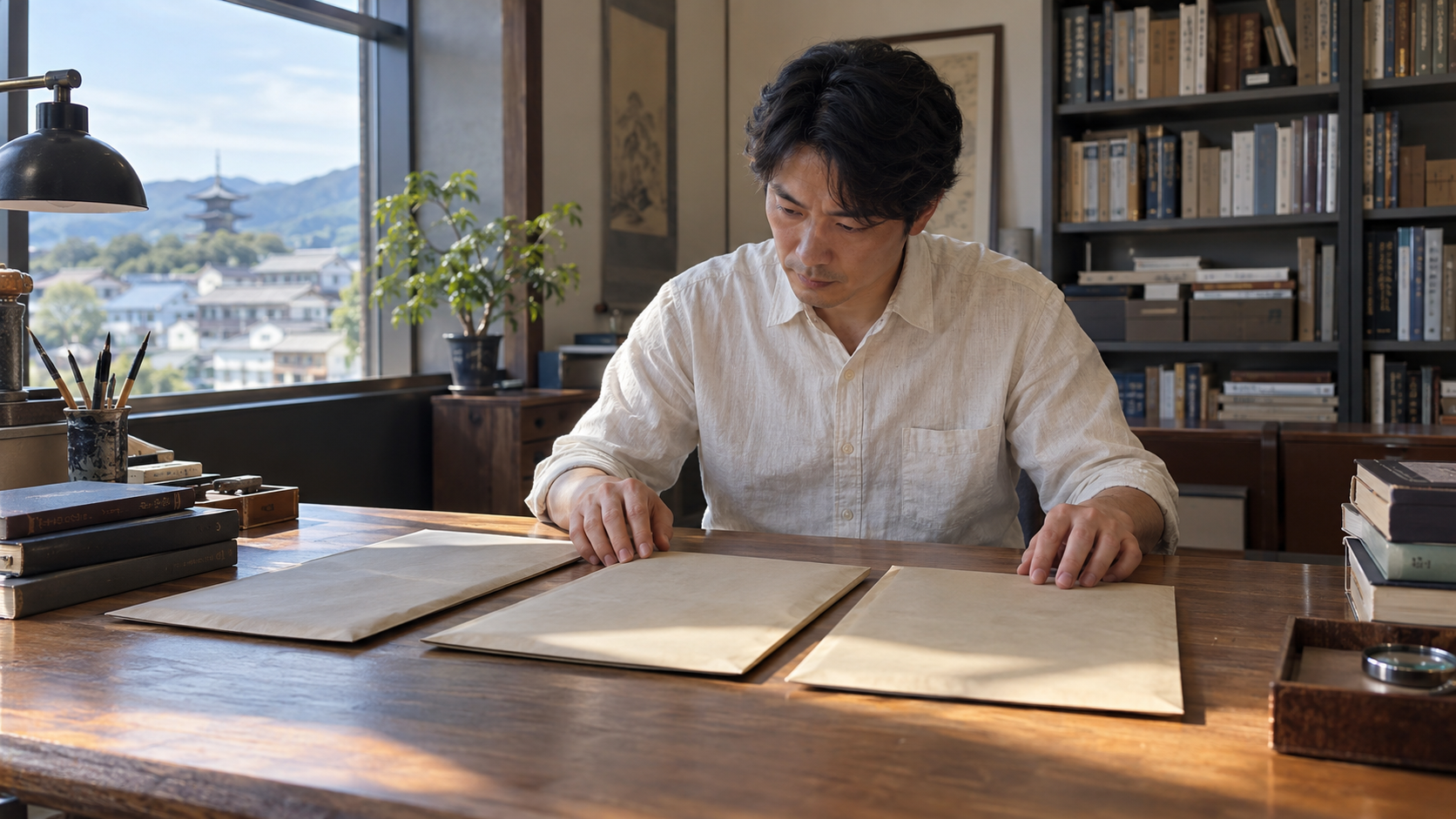
Even the numbering of the battles of Kawanakajima varies between accounts. Nagano City Museum explains that the third battle in Kawanakajima Gokado Kassenki, a war narrative associated with the Uesugi side, corresponds to the battle conventionally called the fourth. The shared place name does not make the numbering uniform.
Putting every reference to a third battle together would therefore combine different events. The messenger letter provisionally dated to 1557 is associated with the conventionally numbered third battle. It cannot simply be joined to a narrative using a different sequence without first checking what that narrative means by its number.
According to the museum introduction, the Uesugi-side narrative mentions Kansuke's death in battle but offers no detailed account of him. This article follows the scope of that introduction. It does not claim to have examined all the original volumes or use the brief reference to supply a fuller story of his final actions.
Before arranging sources into a modern list of battles, we need to establish the event each text identifies. Preserving a small difference in numbering helps keep the messenger's activity and a later account of his death in their respective settings. The number is part of the source's meaning.
Chapter 11
Remembering Kansuke at the battlefield
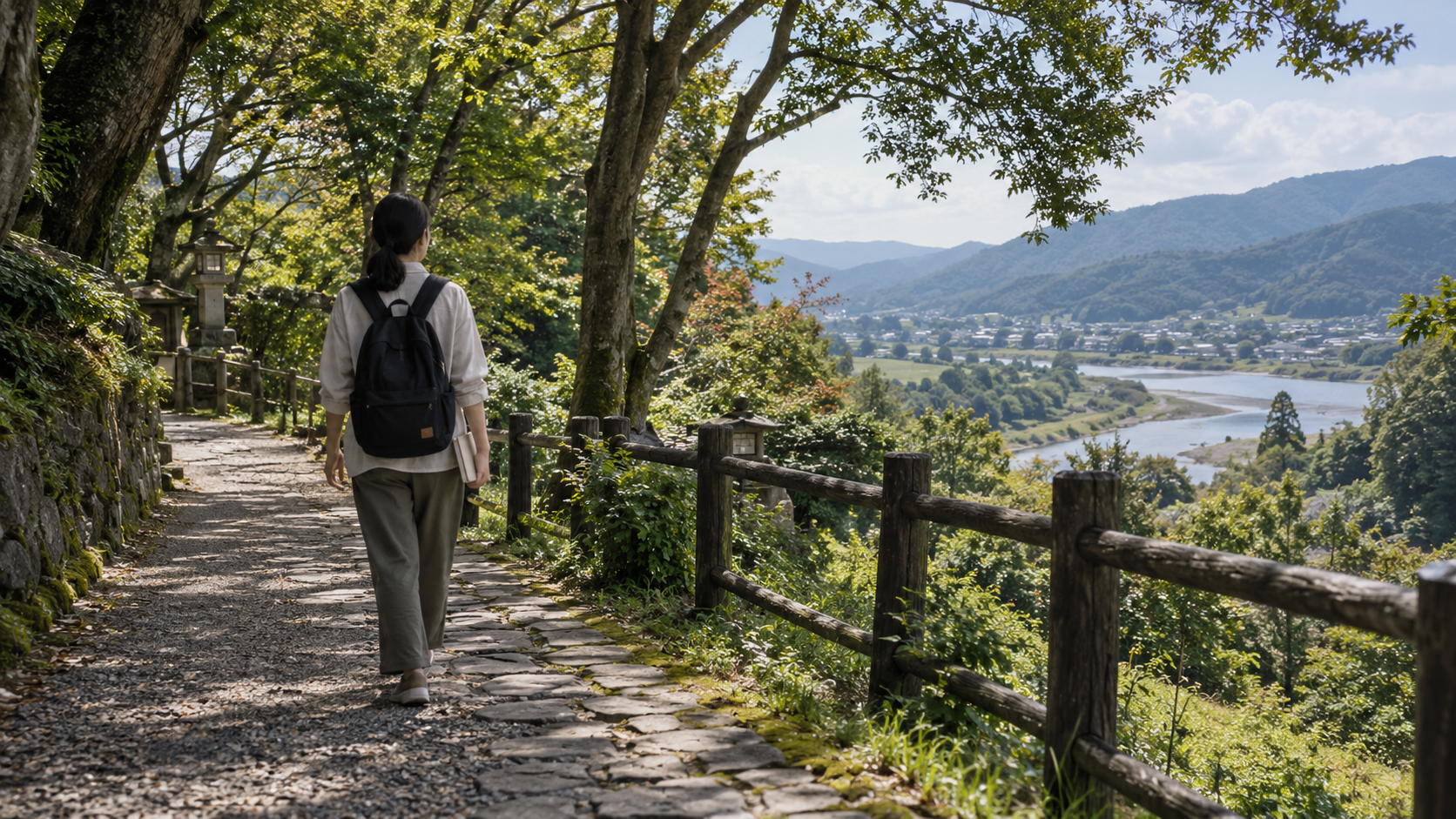
The present Kawanakajima Battlefield Historic Site Park includes a sculpture depicting a duel between Shingen and Kenshin. Nagano City Museum's guide introduces it as an expression of a scene described in Koyogunkan. The book's account has thus entered the landscape through a later work of commemoration.
The guide also introduces the old building of a Hachiman shrine. Its origin is traditionally connected with Kansuke's inviting the deity when Kaizu Castle was constructed. The traditional attribution is part of the information: readers need to receive that qualification along with the association between the shrine and his name.
A visit can establish that a sculpture or shrine building is present today. Their existence does not, by itself, verify every sixteenth-century scene associated with them. The present place and the accounts of its origins need to be approached in sequence, with attention to the guide's wording and the sources it invokes.
A battlefield site can introduce the course of fighting and the longer history of remembering it. A passage in a book becomes a sculpture; a person's name becomes connected with a shrine's origins. Those later associations also shape what visitors encounter, and they belong to the history surrounding Kansuke.
Chapter 12
Begin again with the messenger
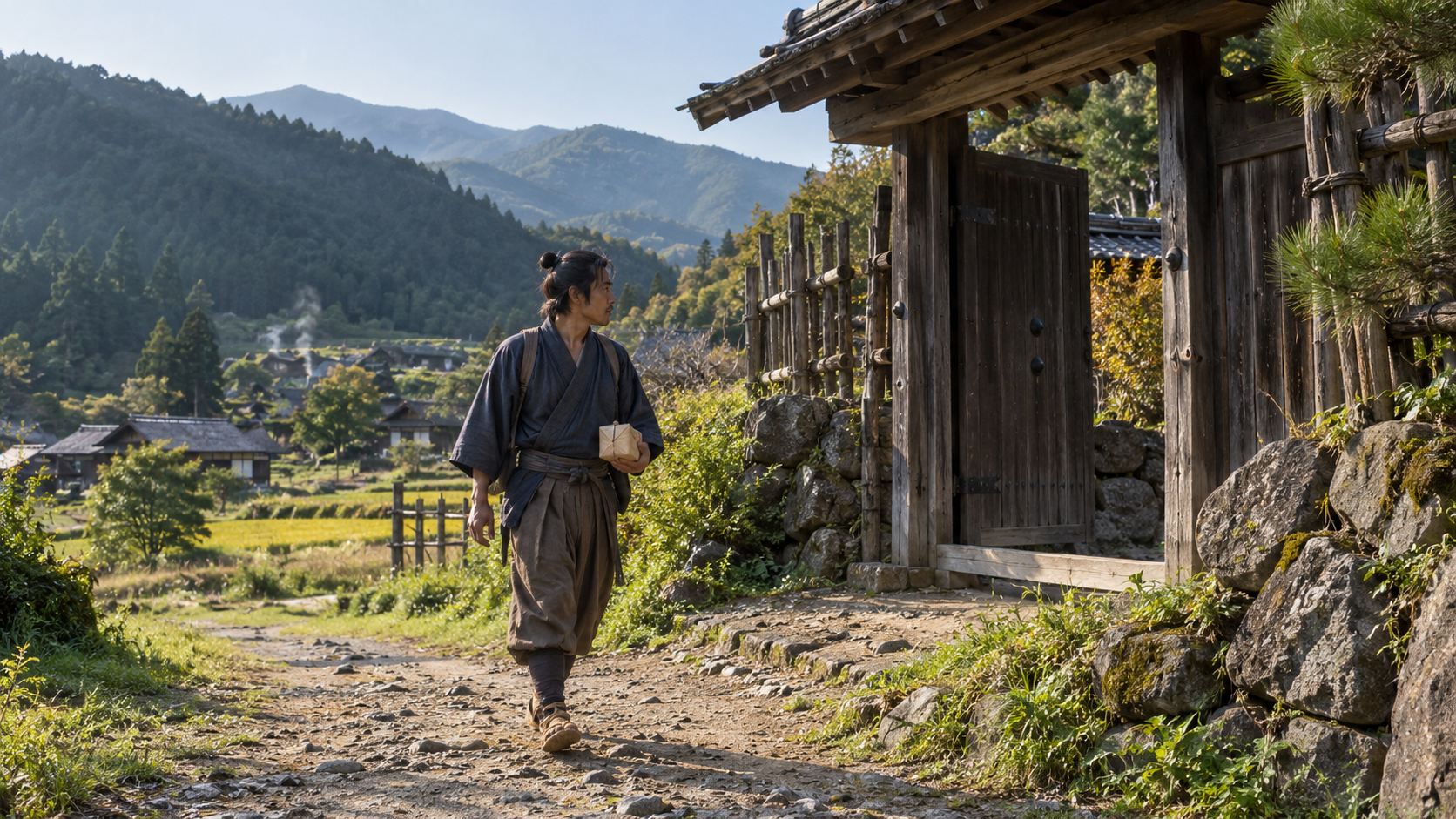
The name Yamamoto Kansuke in a surviving letter remains an important entrance to the subject. It identifies a messenger within communications between the Takeda side and the Ichikawa. The recipient family and the subsequent preservation of its documents help explain why that name can still be read.
Military writing, a copied manuscript, an inscription and a historic site each preserve portrayals received in different periods. Placing them beside the letters calls for attention to what each can establish. They do not all supply the same kind of evidence, even when they are concerned with the same person.
A complete biography is beyond the surviving clues discussed here, but several kinds of work become visible. A letter promises a messenger; a later letter names him; a family preserves papers; someone copies a book. The history surrounding Kansuke extends to these activities and to the people through whom his name and reputation survived.
Beginning again with the messenger lets us follow both the correspondence and the growth of the celebrated strategist's story. Reading within the scope of the letters, then tracing the later reception of Kansuke, brings the historical figure and the people who preserved his name into the same account, with their evidence kept distinct.
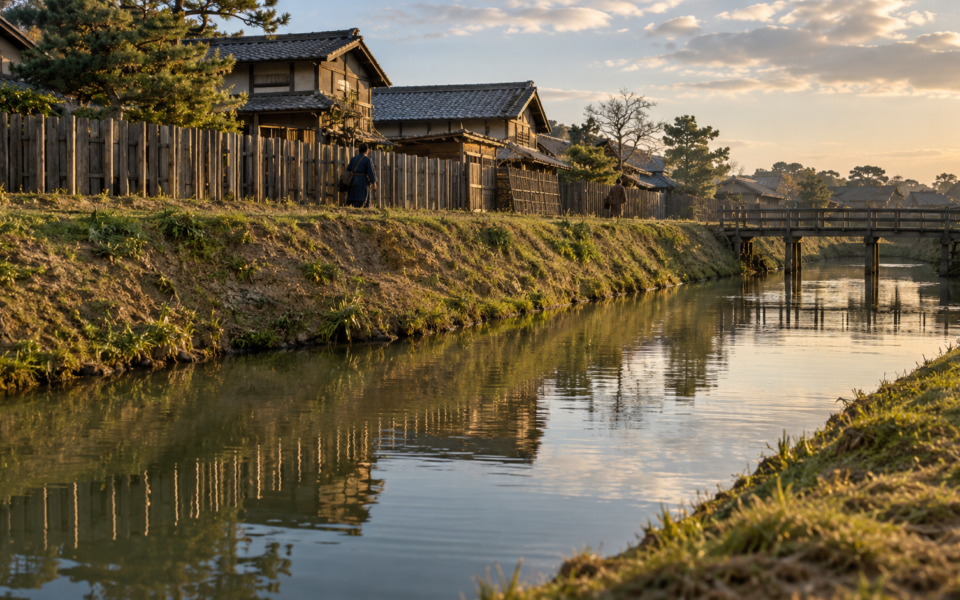
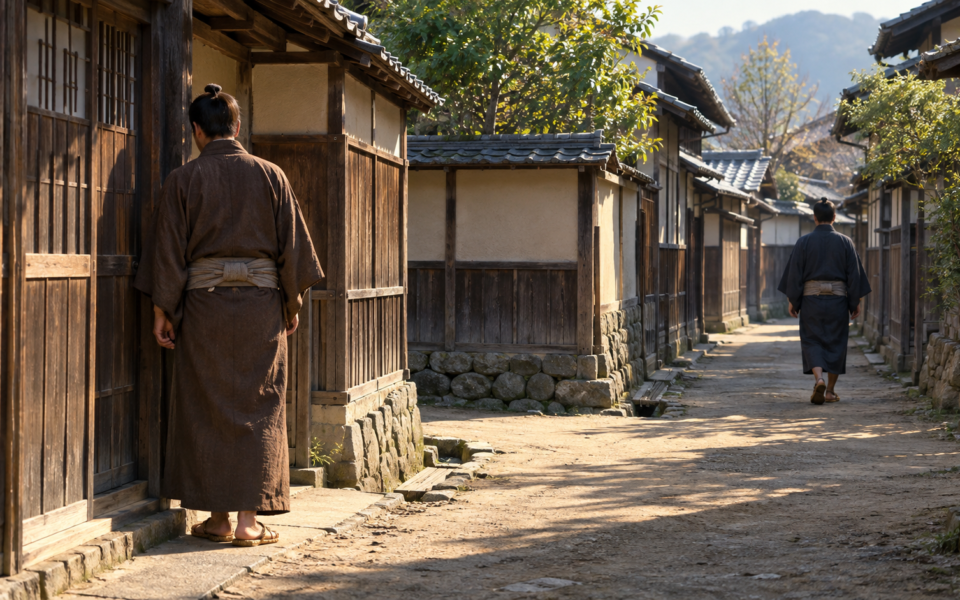
Editorial note: the letters' year, 1557, is provisional. Their dates are the fifteenth and twenty-third days of the sixth month in the historical calendar. This account uses institutional explanations, a bibliographical record and the relevant museum newsletter articles; it does not claim a new complete transcription of the original letters or war narratives. Interpretations of actions and remembrance are editorial. The AI-generated illustrations are not authenticated portraits, photographs of original documents, exact images of a particular house, monument or battlefield, or evidence of the messenger's route.
How to read this work
History, interpretation, and reconstruction
Read the messenger in the letters, later portrayals of the strategist and the people who preserved and copied the accounts with attention to their different kinds of evidence.
This work is grounded in published sources and historical research. Interior thoughts, dialogue, and some visual details are cinematic reconstructions. Where historians disagree, the article presents the point as debated rather than settled fact.
Timeline
The story in time
-
Harunobu reports the situation to Ichikawa Fujiwaka and announces that a messenger will be sent soon.
Sources: s05 -
A Koyogunkan edition published in Meireki 2 is listed in the NIJL bibliographical record. This does not date the first composition of all its contents.
Sources: s06 -
An inscription transmits a later portrayal of Kansuke; the museum considers it likely to have drawn on Koyogunkan.
Sources: s04 -
A manuscript of the Yamamoto account is copied, preserving legends about Kansuke.
Sources: s04 -
The Ichikawa family migrates to Hokkaido.
Sources: s03 -
New documents are discovered in the home of Ichikawa descendants in Kushiro.
Sources: s03 -
The ninety-one items in Yamanashi's Ichikawa family collection are designated a prefectural tangible cultural property.
Sources: s01
People & terms
A guide for new readers
Key figures
- Yamamoto Kansuke
- A messenger named in a letter from Harunobu, later portrayed as a Takeda warrior. His birth year, appearance and complete career are not established here.
- Takeda Harunobu (Shingen)
- Head of the Takeda family, who sent letters to Ichikawa Fujiwaka and announced the dispatch of a messenger.
- Ichikawa Fujiwaka
- Recipient of both letters from Harunobu; a member of the Ichikawa family based in northern Shinano.
Glossary
- Shinano 信濃
- The historical inland region associated here with northern Shinano and Kawanakajima, in present Nagano Prefecture.
- Echigo 越後
- The region near the Ichikawa family's northern Shinano base, associated with the Uesugi side in these accounts.
- Ichikawa family documents 市河家文書
- The Yamanashi collection includes the letters discussed here. It is distinguished from the separate Ichikawa documents held by the Honma Museum of Art.
- Kao 花押
- A stylized signature on a document, one feature compared by the museum alongside paper, ink and content.
- Koyogunkan 甲陽軍鑑
- A military treatise associated with the Takeda side, containing a later portrayal of Kansuke. A 1656 edition appears in the cited bibliography.
- Ashigaru taisho 足軽大将
- A commander of foot soldiers; the role attributed to Kansuke in Koyogunkan according to the museum introduction.
- Manuscript copy of the Yamamoto account 山本記上書写
- The manuscript introduced by Nagano City Museum, copied in the first month of 1843 and containing legends about Kansuke. Its English title is descriptive.
- Kawanakajima Gokado Kassenki 川中島五箇度合戦記
- A war narrative associated with the Uesugi side. Its third battle corresponds to the conventionally numbered fourth, according to the museum.
- Provenance 伝来
- The history of a document's ownership and preservation, which helps connect its original setting with its later place of discovery.
- Hachiman shrine 八幡社
- The shrine whose old building is introduced in the park guide, with a traditional attribution connecting its origin to Kansuke.
Sources & method
How this article was built
This translation follows the fixed, publicly verified Japanese manuscript. Six adopted institutional web explanations or bibliographical pages and the two relevant museum newsletter articles were actually read. The newsletters were examined through saved page images: page 2 of Nagano City Museum Newsletter 68 and printed page 6, PDF page 7, of Nagano Prefectural Museum of History Newsletter 77. This is not a claim to have read every page of those issues. Source titles are editorial English translations where needed.
The original letters and complete war narratives have not been newly transcribed or collated for this article. The messenger identification and comparison of paper, ink and signatures follow the museum explanation. The year 1557 remains provisional, historical month and day dates remain unconverted, and a 1656 edition is distinguished from the first composition of all a work's contents.
Conflicting birth years are not resolved by selecting a preferred tradition. The inscription's likely reliance on Koyogunkan and the war narrative's different battle numbering are retained. The Yamanashi collection's ninety-one items and 2010 designation are not assigned to the separate Honma Museum collection. Interpretations of communication, preservation and reception are editorial; no new dialogue or private thoughts are supplied.
The hero and twelve chapter illustrations use twelve distinct AI-generated SHIGEKI images. Current hashes and article rights are matched to the Japanese review. All twelve current assets were visually inspected individually for this English preparation. Anonymous figures are not authenticated portraits, and the scenes do not reproduce original documents, a particular shrine or monument, an exact historical house or landscape, or Kansuke's route. No source-site photographs are reproduced. The linked film has Japanese audio; an English subtitle track has not been verified.
Sources
References and further reading
- Ichikawa family documents: cultural-property guide 市河家文書(文化財ガイド) Title translated editorially for reader convenience. Yamanashi Prefecture 山梨県 Introduces the letter as evidence supporting Kansuke's existence, the ninety-one-item collection and its designation. It is not a complete transcription of the letter. Accessed 2026-10-09
- Introduction to the 2024 autumn exhibition lecture 2024年秋季企画展講演会の紹介 Title translated editorially for reader convenience. Nagano Prefectural Museum of History 長野県立歴史館 Describes Kansuke as a messenger dispatched during the third battle of Kawanakajima. The lecture date is separate from the historical date. Accessed 2026-10-09
- The Ichikawa documents 市河文書 Title translated editorially for reader convenience. Nagano Prefectural Museum of History 長野県立歴史館 Explains the family's history, the 1890 migration, the 1969 discovery and the separate Honma Museum collection. No original-document images are reproduced. Accessed 2026-10-09
- Museum Newsletter 68: a manuscript copy of the Yamamoto account 博物館だより第68号・山本記上書写の紹介 Title translated editorially for reader convenience. Nagano City Museum 長野市立博物館 Article on PDF page 2 of the 31 March 2007 issue, actually read from its saved page image. Covers the 1843 copy, conflicting birth years, the 1739 inscription and differing battle numbers. Accessed 2026-10-09
- Museum Newsletter 77: a letter from Takeda Harunobu 歴史館たより第77号・武田晴信書状 Title translated editorially for reader convenience. Nagano Prefectural Museum of History 長野県立歴史館 Winter 2013 issue, printed page 6 (PDF page 7), actually read from its saved page image. Explains the two sixth-month letters, provisional year and messenger inference. Accessed 2026-10-09
- Koyogunkan: NIJL bibliographical record 200019217 甲陽軍鑑・国文研書誌ID 200019217 Title translated editorially for reader convenience. ROIS-DS Center for Open Data in the Humanities (CODH) ROIS-DS人文学オープンデータ共同利用センター(CODH) Bibliographical entry for the Meireki 2 (1656) edition, not evidence of the first composition date of the entire work. Accessed 2026-10-09
- Guide to the battlefield park 川中島古戦場史跡公園案内 Title translated editorially for reader convenience. Nagano City Museum 長野市立博物館 Introduces the duel sculpture as based on Koyogunkan and the Hachiman shrine's traditional association with Kansuke. Tradition is retained as an attribution. Accessed 2026-10-09
- The Ichikawa documents: four hundred years of a warrior family 激動を生きぬく・信濃武士市河氏の400年 Title translated editorially for reader convenience. Nagano Prefectural Museum of History 長野県立歴史館 Exhibition introduction tracing the family, regional relationships and Kansuke through newly found letters. The exhibition date is distinguished from the web page date. Accessed 2026-10-09
Continue reading
More stories from Shigeki
Shigeki English
Sakai’s Merchant City: Trade, Self-Government and Survival
A port, a merchant council and town communities—from changing authority to rebuilding after fire.
- When From the later fifteenth century through the Sengoku period, the fire of 1615 and early Edo-period reconstruction.
- Where Sakai, in present-day Osaka Prefecture, where maritime routes met roads on land.
Shigeki English
The Aburanokōji Incident: After Leaving the Shinsengumi
A separation in spring, a new base in summer, and two successive attacks.
- When Kyoto in Keiō 3 (1867). The incident’s historical date corresponds to December 13, 1867.
- Where Kyoto: the guards’ successive bases, the Aburanokōji attack site and the later place of remembrance.