
SHIGEKI ENGLISH STORYEN
Japanese history in English
Oda Nobunaga: Why Was He Killed at Honnoji on the Verge of Unifying Japan?
From the boy called a fool to Okehazama, Tenka Fubu, Nagashino, Azuchi Castle and the night at Honnoji.
Mocked as a fool in his youth, Oda Nobunaga rose to the center of power in Japan within about thirty years, then was killed by his vassal Akechi Mitsuhide at Honnoji Temple in 1582. This article separates popular stories from the sources, reviews theories about Mitsuhide's motive and traces how Nobunaga's image was built.
At a glance
Before you enter the story
- When
- 1534 to 1582, ending with the Honnoji incident on the second day of the sixth month of 1582
- Where
- Owari (around Nagoya), Mino (Gifu), Kyoto and Azuchi on Lake Biwa
- Key figures
- Oda Nobunaga, Akechi Mitsuhide, Ashikaga Yoshiaki, Tokugawa Ieyasu, Toyotomi (Hashiba) Hideyoshi
- What was at stake
- Why was the most powerful warlord in Japan killed by a trusted vassal just as unification seemed within reach?
Why this story matters
The larger history behind the turning point
Nobunaga is one of the most famous figures in Japanese history, and his story shapes how many people imagine the samurai age. Many of the best-known episodes, however, come from later books rather than from records of his own time.
Separating what the chronicles say from what later writers added changes the answer to the central question. It shows a ruler working within existing institutions, and a sudden betrayal that grew from the conditions of his own rapid expansion.
Historical context
What an international reader needs to know
Warlords, shoguns and the court
In the sixteenth century Japan had an emperor in Kyoto and a shogun from the Ashikaga family, but real power lay with regional warlords who fought one another. This is often called the Sengoku, or Warring States, period.
Nobunaga began as the heir of one branch of a divided family in Owari. His rise involved both war and careful use of the authority of the shogun and the imperial court.
Dates and sources
Dates in this article follow the Japanese lunar calendar used at the time, so the second day of the sixth month of 1582 is not 2 June in the modern calendar. Ages are given in the Japanese count.
Shincho Koki, written by Nobunaga's retainer Ota Gyuichi, is the main narrative source. Shinchoki by Oze Hoan, written decades later, is livelier but less reliable, and it is the origin of several famous episodes.
Watch the film
See the story in motion
The film currently uses Japanese audio. This English article provides the context and source trail; it does not imply that an English subtitle track is available.
Opening
Honnoji Temple, 2 June 1582
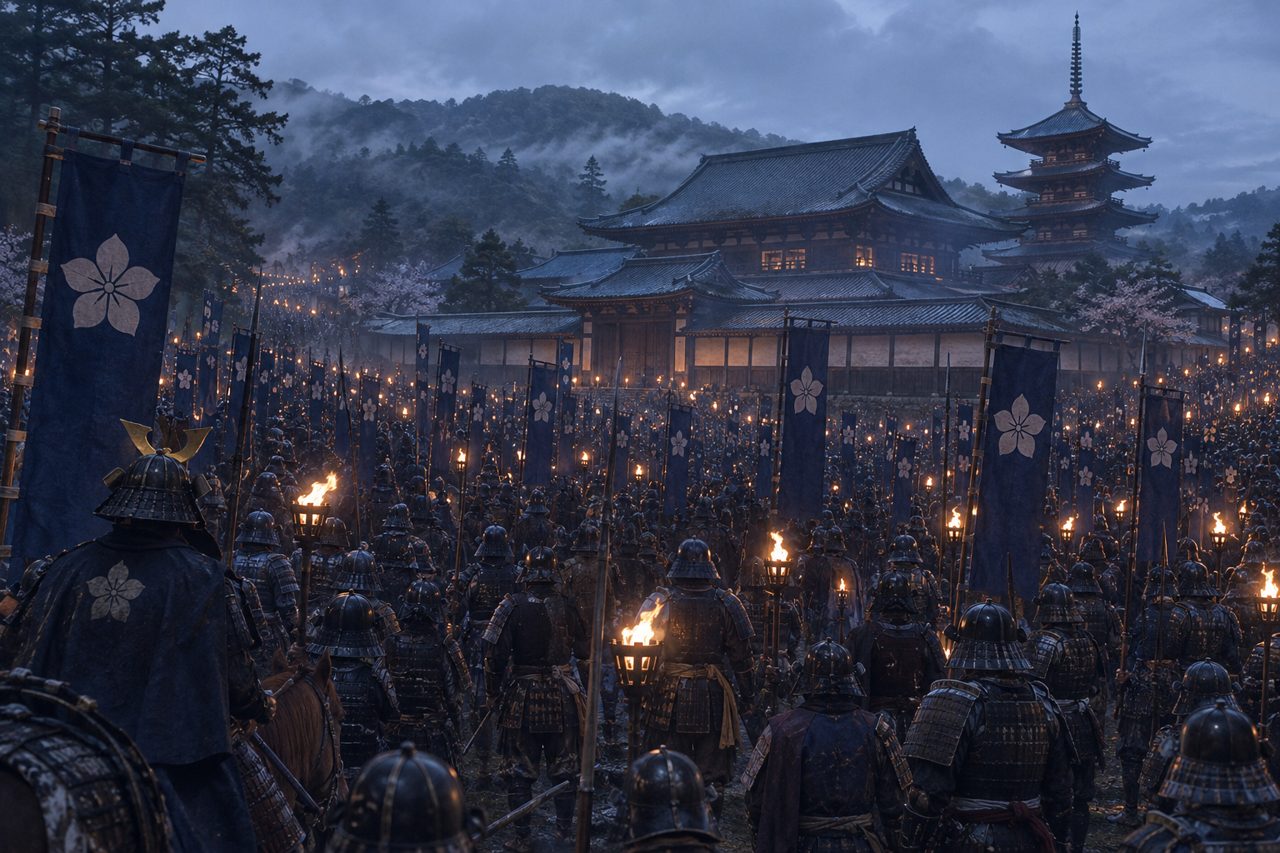
Before dawn on the second day of the sixth month of 1582, soldiers under Akechi Mitsuhide surrounded Honnoji, a temple in Kyoto. Inside was Oda Nobunaga, the most powerful warlord in Japan. Tradition says that only about a hundred attendants were with him that night.
According to Shincho Koki, a chronicle written by his retainer Ota Gyuichi, Nobunaga learned that the attackers were Akechi men and replied that nothing could be done. He fought with bow and spear, withdrew as the temple burned, and is said to have taken his own life. He was forty-nine by Japanese count. His body was never found.
A young heir once mocked as a great fool had risen in about thirty years to the center of power in Japan. Why was he killed, on the verge of unifying the country, by a vassal he had trusted with great responsibility? This article follows his life to approach that question.
Chapter 1
The boy called a fool
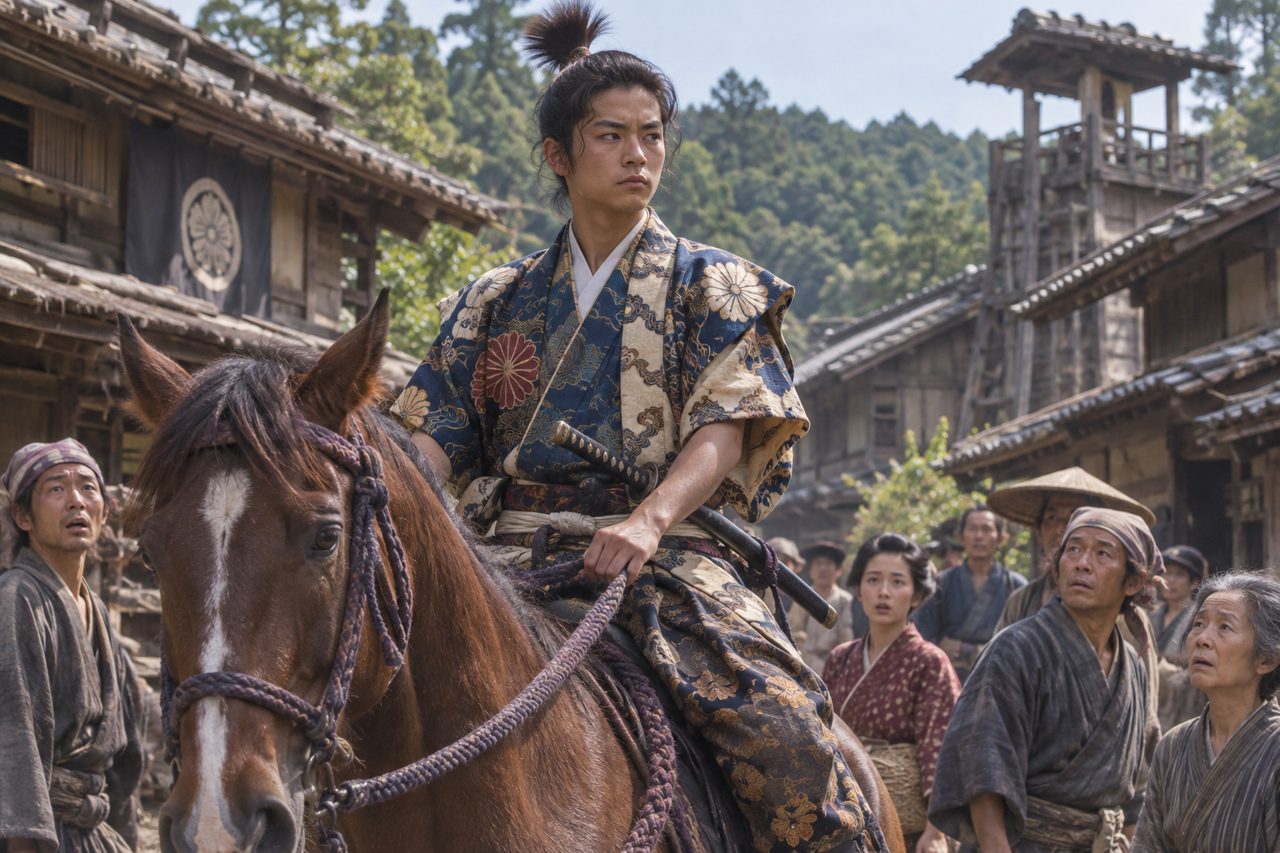
Nobunaga was born in 1534 as the heir of Oda Nobuhide in Owari Province, near present-day Nagoya. His father held only a modest office, yet he controlled the port of Tsushima and the shrine town of Atsuta, grew wealthy, and even sent donations to the imperial court. Military strength, urban money and ties to the capital were already in place.
Shincho Koki describes the young Nobunaga walking through town in a robe with the sleeves removed, his hair tied up like a tea whisk and gourds hanging from his belt. People called him the great fool of Owari.
The same chronicle also records a different side. He rode morning and evening, swam in rivers, trained with bows, firearms and tactics, and had his troops' spears standardized at an unusual length. Whether his behavior was deliberate is unknown, because no source records his own reasoning.
Chapter 2
Uniting Owari
At his father's funeral, usually dated to 1552, Nobunaga is said to have thrown incense at the altar and left. Some retainers began to favor his younger brother, Nobukatsu, as the family's heir.
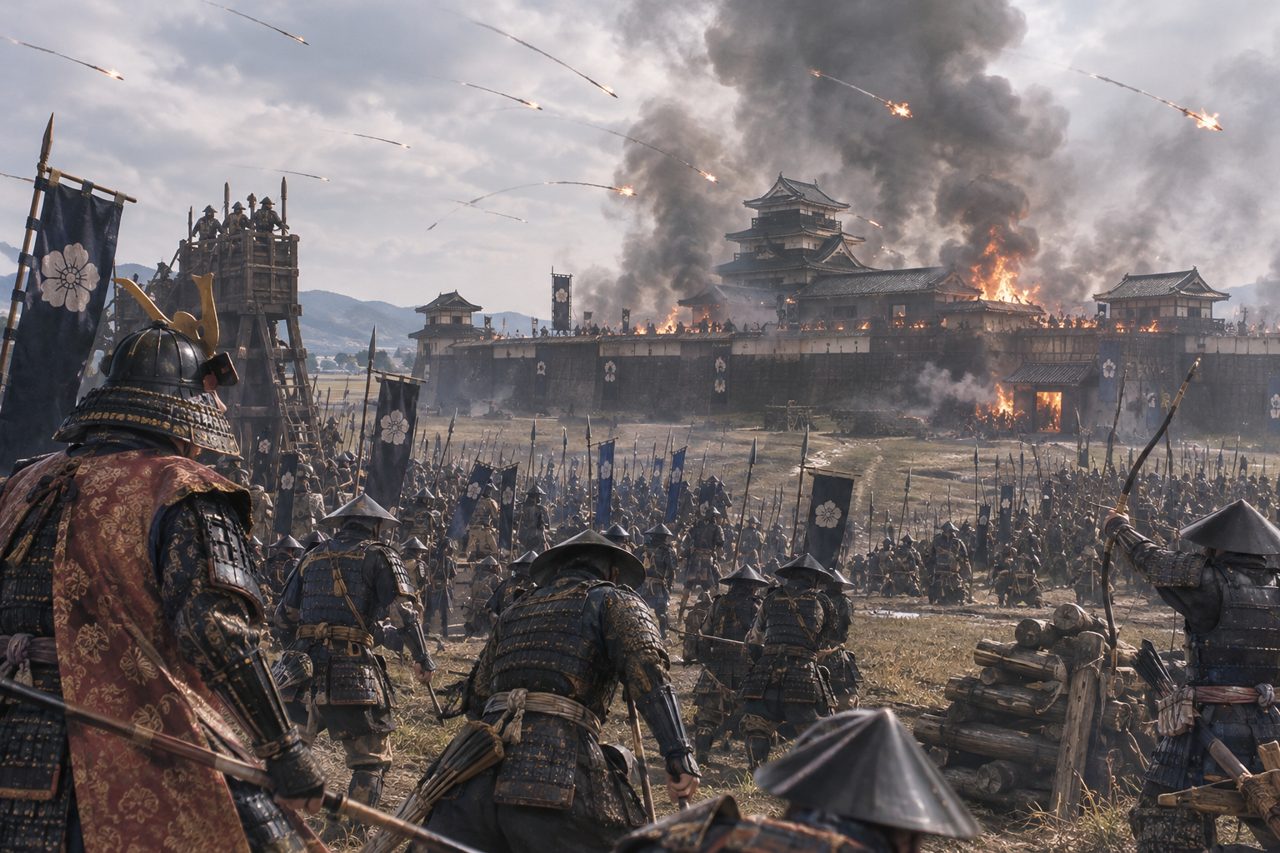
In 1553 he met his father-in-law, Saito Dosan, at Shotokuji Temple and surprised Dosan's men by appearing in formal dress. He later took Kiyosu Castle, defeated his brother's supporters at Inō in 1556, and in the following year had Nobukatsu killed after summoning him to Kiyosu.
By 1559, after taking Iwakura Castle, Nobunaga controlled almost all of Owari. In the same year he travelled to Kyoto and met the shogun, Ashikaga Yoshiteru. The new master of Owari was already looking toward the capital.
Chapter 3
The Battle of Okehazama
In the fifth month of 1560, Imagawa Yoshimoto led a large army toward Owari. An older view held that he aimed to march on Kyoto and seize the realm. Many historians now think he intended to secure frontier castles and expand his territory.
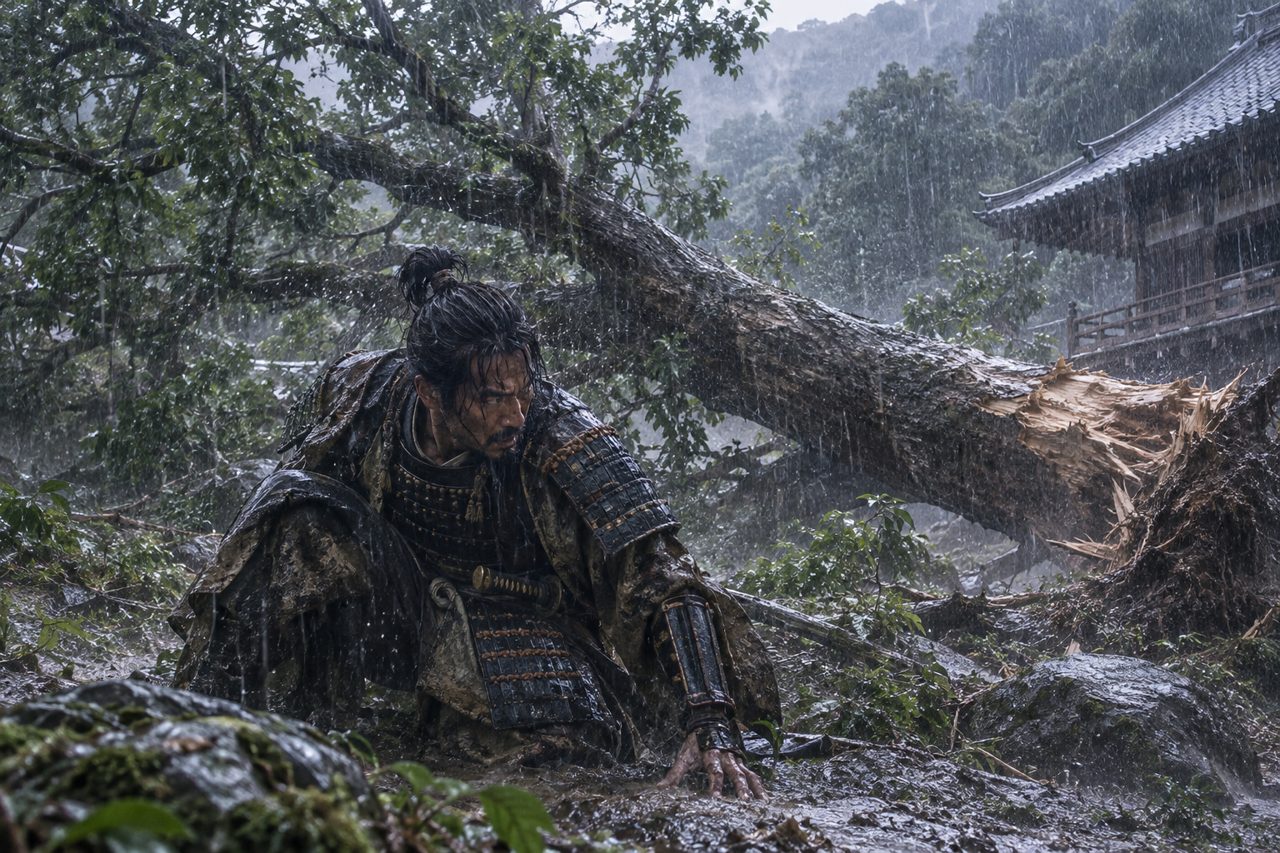
On the nineteenth, after hearing that his forts were under attack, Nobunaga is said to have danced a passage from the play Atsumori before riding out. When a violent afternoon storm cleared, he ordered the assault, and Yoshimoto was killed.
The famous picture of a hidden flank attack around the back of the hills comes mainly from Shinchoki, a more literary account by Oze Hoan written in the early Edo period. The older Shincho Koki can be read as describing a direct advance from the front. Either way, the attack drove straight at Yoshimoto's headquarters.
Chapter 4
Mino and the seal Tenka Fubu
Nobunaga allied with Matsudaira Motoyasu, later Tokugawa Ieyasu, who had broken away from the Imagawa. Around 1563 he moved his base to Mount Komaki, where excavations have found stone walls built with large rocks.
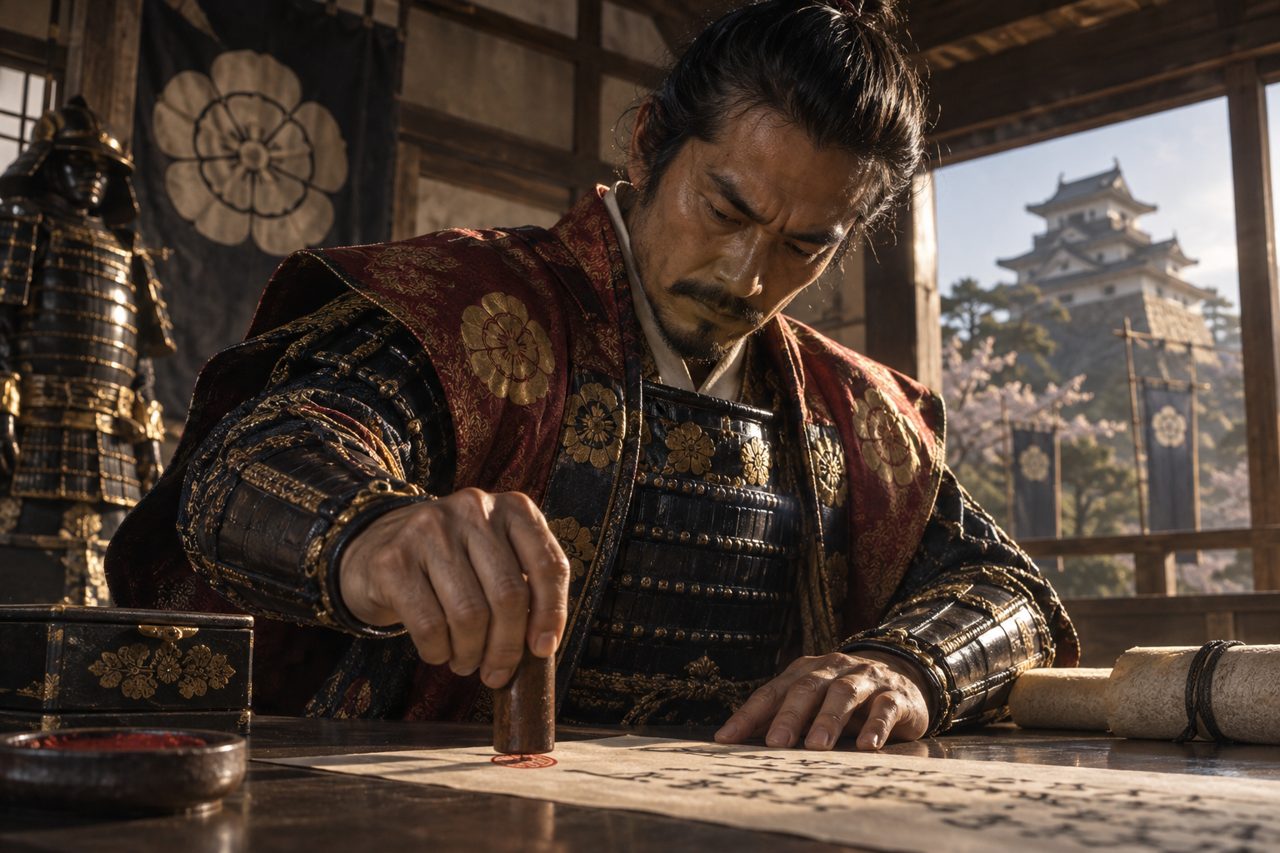
After capturing Inabayama Castle in 1567, he renamed the place Gifu and began to use a seal reading Tenka Fubu. The phrase was long explained as a declaration that he would conquer all of Japan by force.
Recent research often reads the word tenka, the realm, as the capital region around Kyoto and the order associated with the shogun, rather than the whole country. Read that way, the seal may express restoring order in the capital. Whether it announced nationwide conquest remains a question to handle carefully.
Chapter 5
Entering Kyoto with Ashikaga Yoshiaki
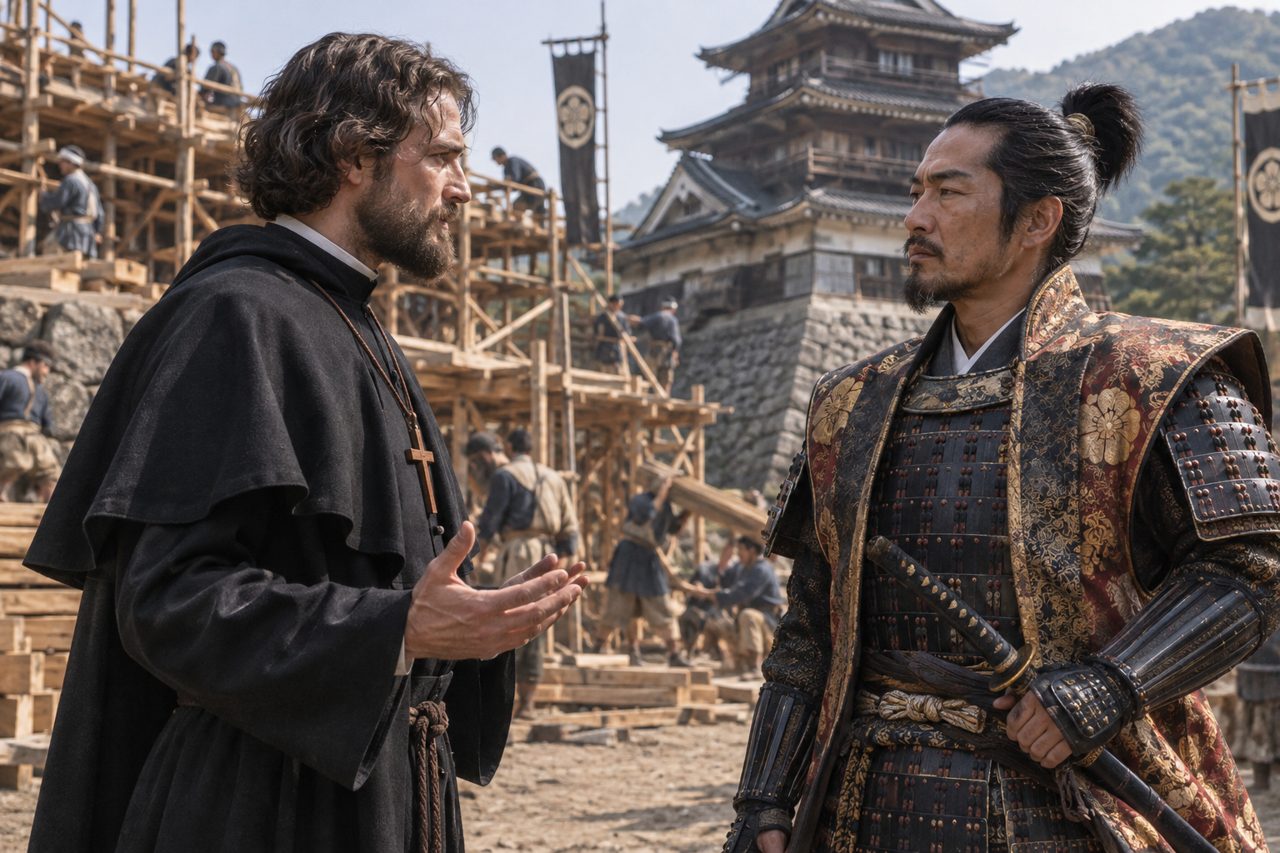
In 1568 Nobunaga escorted Ashikaga Yoshiaki into Kyoto, and Yoshiaki was appointed shogun. Nobunaga declined high titles, but asked to place his own deputies in the trading cities of Sakai, Otsu and Kusatsu.
Regulations issued for the shogun's palace in 1569 have often been described as rules that restrained Yoshiaki. Yet Yoshiaki added his own signature mark to them, and some historians see the two men as jointly rebuilding the shogunate. Coin regulations and the removal of toll barriers also had earlier precedents.
At the start of 1570, Nobunaga sent Yoshiaki five written conditions. From this point, a gap slowly opened between the shogun and the warlord who had brought him to power.
Chapter 6
Encirclement and Mount Hiei
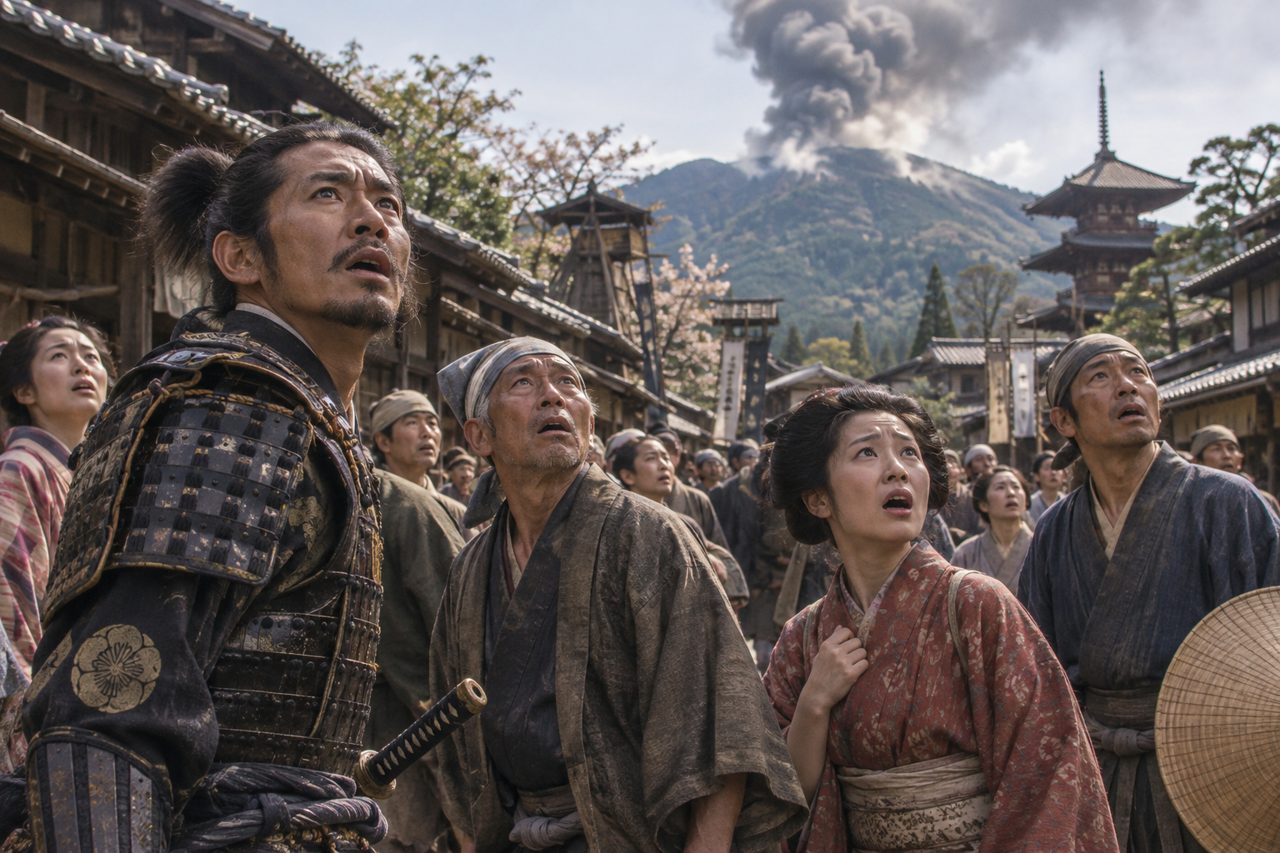
In 1570, during a campaign against the Asakura, Nobunaga's brother-in-law Azai Nagamasa turned against him, and Nobunaga escaped to Kyoto through the Kutsuki valley. Despite a victory at the Anegawa River, the Azai and Asakura survived, the Honganji temple took up arms, and a situation later called the encirclement of Nobunaga took shape.
Of the attack on Enryakuji on Mount Hiei in 1571, Shincho Koki says that temple buildings were burned and thousands were killed. Excavations, however, have confirmed burnt layers from this period in only some locations, and some researchers suggest the scale was smaller than the chronicle states.
In 1573 the death of Takeda Shingen removed a major threat. Nobunaga drove Yoshiaki out of Kyoto and destroyed the Asakura and Azai. Yoshiaki, however, continued to call on other lords to oppose him.
Chapter 7
Nagashino and Azuchi Castle
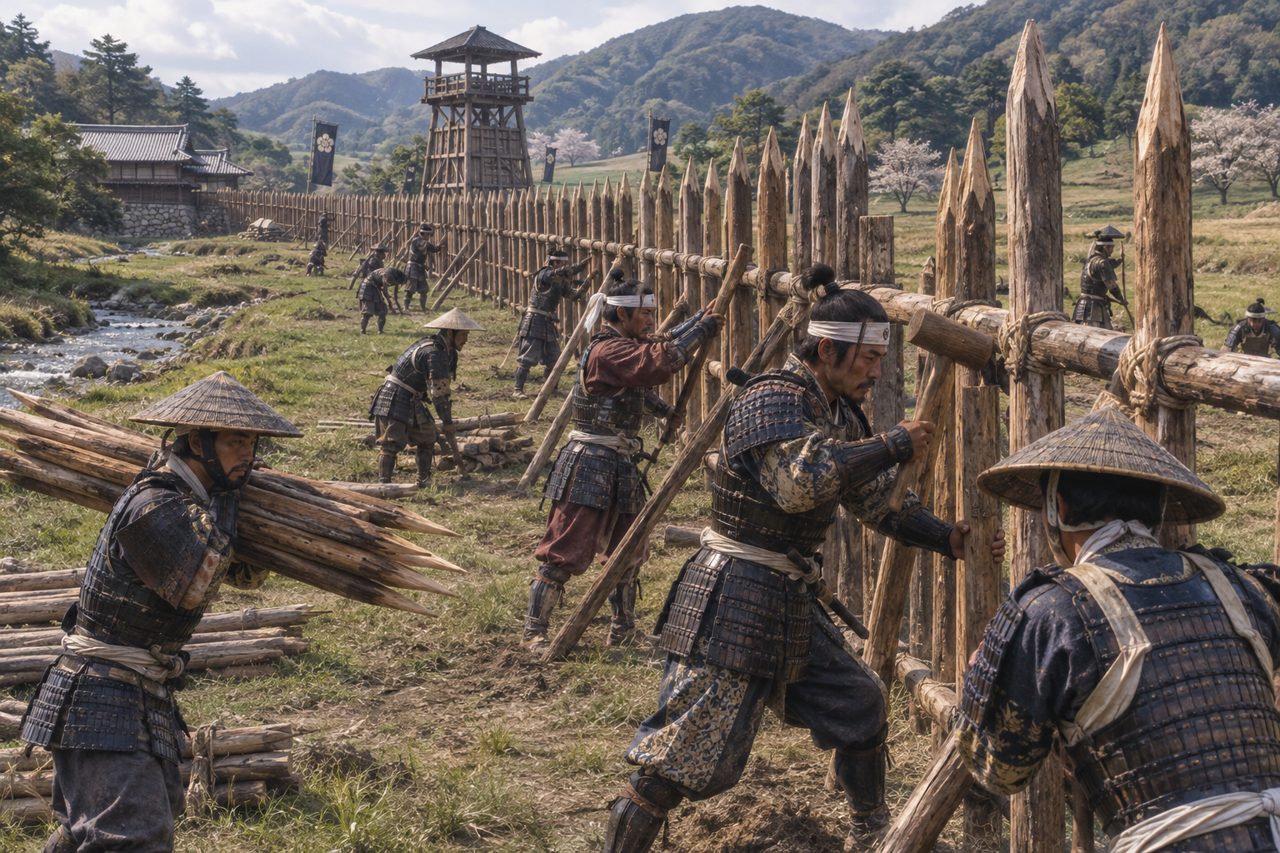
In 1575 the armies of Nobunaga and Ieyasu built fences at Shitaragahara and defeated Takeda Katsuyori. Senior Takeda commanders who had served since Shingen's time fell in the battle.
A popular story claims that three thousand guns fired in three rotating ranks. Shincho Koki gives a figure of about one thousand guns. The three thousand and the rotating volleys spread later through Edo-period works such as Shinchoki, so an orderly three-rank system cannot be confirmed.
Construction of Azuchi Castle began in 1576, and its main tower was completed in 1579. It burned only three years later and no plans survive. Shiga Prefecture is still excavating around the tower base, and the building's exact appearance remains uncertain.
Chapter 8
The Honganji war and his commanders
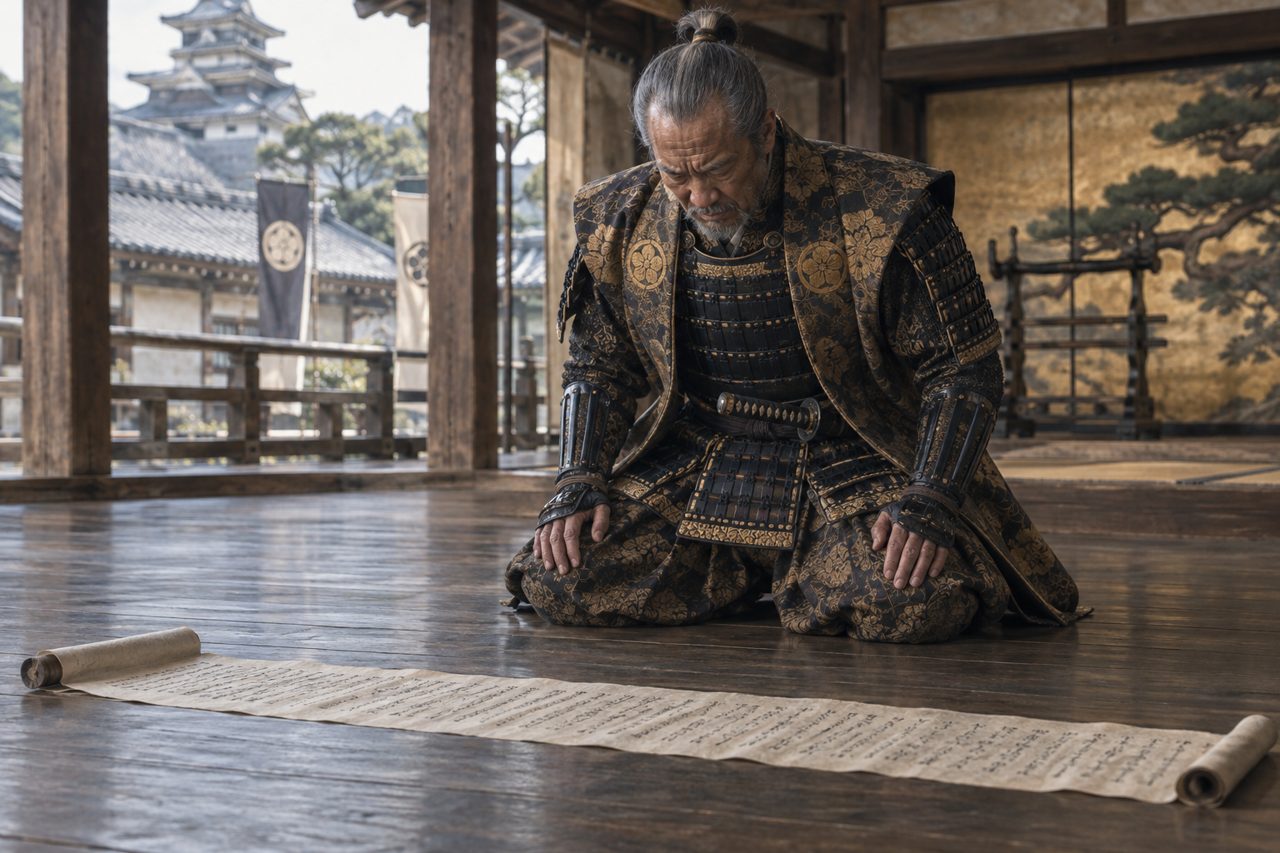
Nobunaga's longest opponent was the Honganji temple in Osaka. Supported in part by the Mori navy, it resisted for about ten years until a settlement in 1580 mediated by Emperor Ogimachi.
During this decade Nobunaga placed regional commanders over wide areas: Shibata Katsuie in Hokuriku, Hashiba Hideyoshi in the west and Akechi Mitsuhide in Tanba. After pacifying Tanba in 1579, Mitsuhide held positions on both sides of Kyoto.
In 1580 Nobunaga sent his senior retainer Sakuma Nobumori a letter of reprimand in nineteen articles and expelled him. Long service did not protect someone who failed to deliver results. Historians have suggested that this severity placed heavy pressure on other vassals.
Chapter 9
The road to the realm
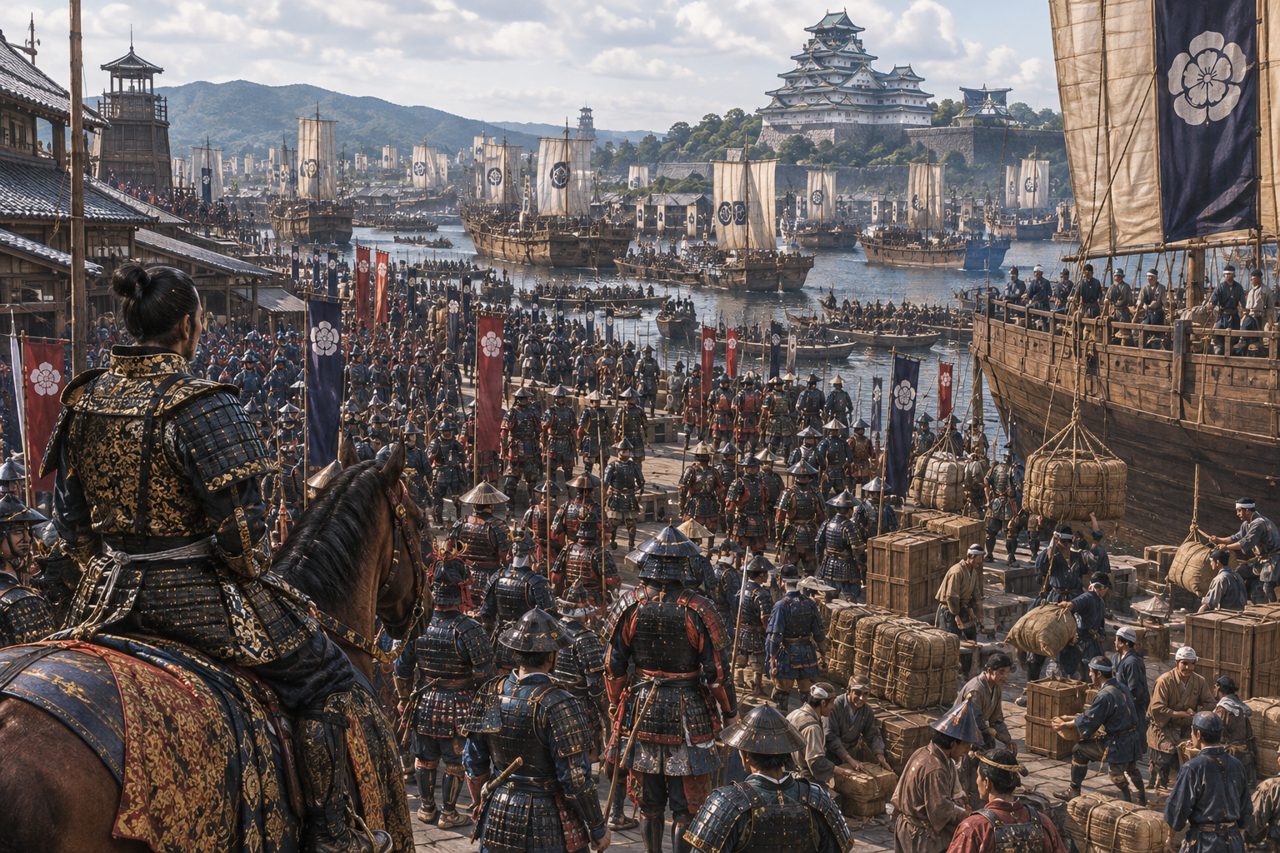
In the third month of 1582, Takeda Katsuyori took his own life and the Takeda house came to an end. That spring, the court discussed recommending Nobunaga as chancellor, regent or shogun, but his answer is not recorded.
On Shikoku, Nobunaga changed his policy toward Chosokabe Motochika, for whom Mitsuhide had acted as intermediary, and moved to take provinces away from him. An army under his son Nobutaka was due to cross to Shikoku in early sixth month.
The Ishigai family documents, made public in 2014, include a letter dated the twenty-first of the fifth month in which Motochika told Mitsuhide's retainer Saito Toshimitsu that he would accept part of Nobunaga's demands. Negotiations over Shikoku were still moving just before the incident.
Chapter 10
The Honnoji incident
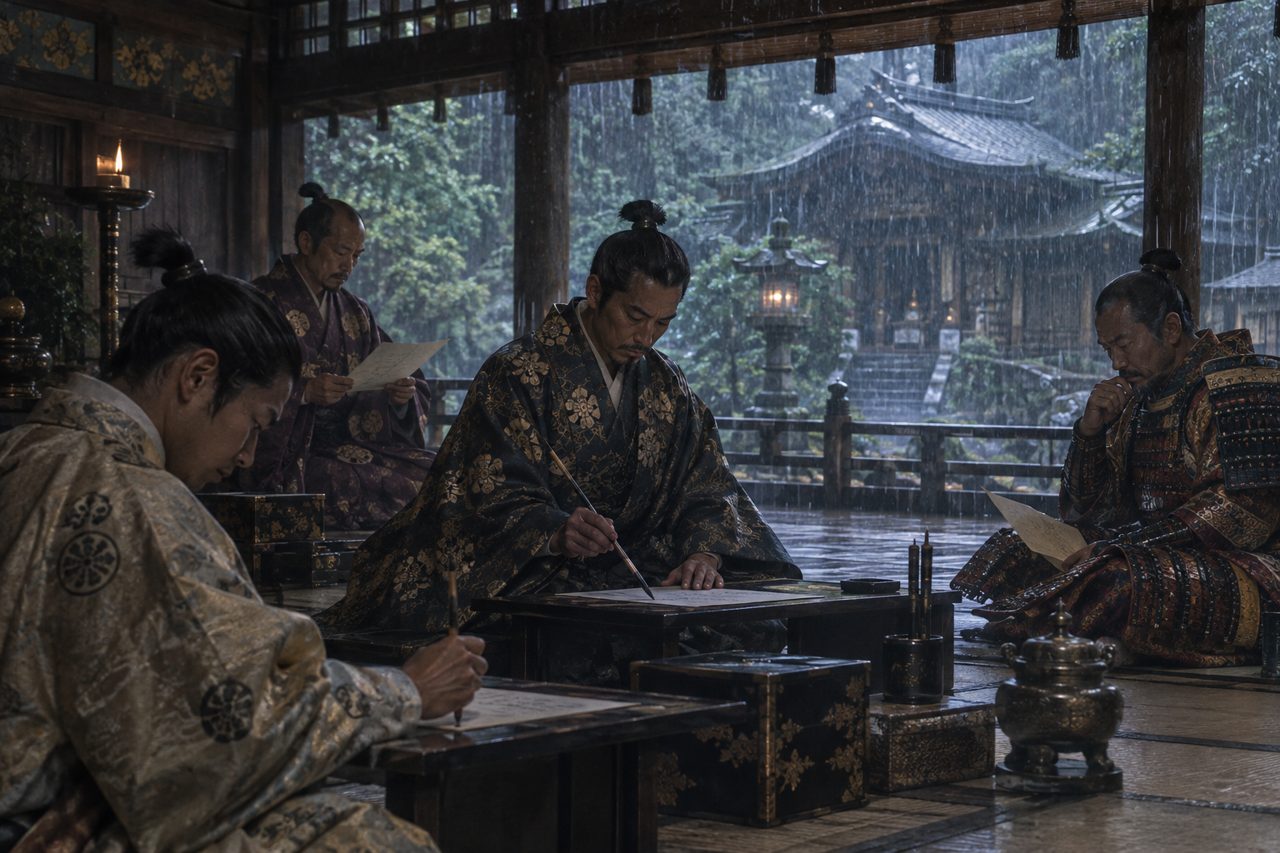
In the fifth month, Mitsuhide was released from hosting Ieyasu at Azuchi and ordered to support Hideyoshi in the west. The well-known tale that Nobunaga scolded him over spoiled fish appears in later books and cannot be confirmed in contemporary records.
On the night of the first day of the sixth month, Mitsuhide left Kameyama and turned toward Kyoto. The phrase usually given as his order, that the enemy was at Honnoji, also spread through Edo-period books. One participating warrior later wrote that he thought they were going to attack Ieyasu.
Explanations of Mitsuhide's motive include personal grievance, ambition, the Shikoku problem and a hidden mastermind. The Shikoku theory gained attention after the Ishigai documents but is not decisive, and most mastermind theories lack firm evidence. Mitsuhide was defeated by Hideyoshi at Yamazaki on the thirteenth and died soon after.
Chapter 11
How the image of Nobunaga was made
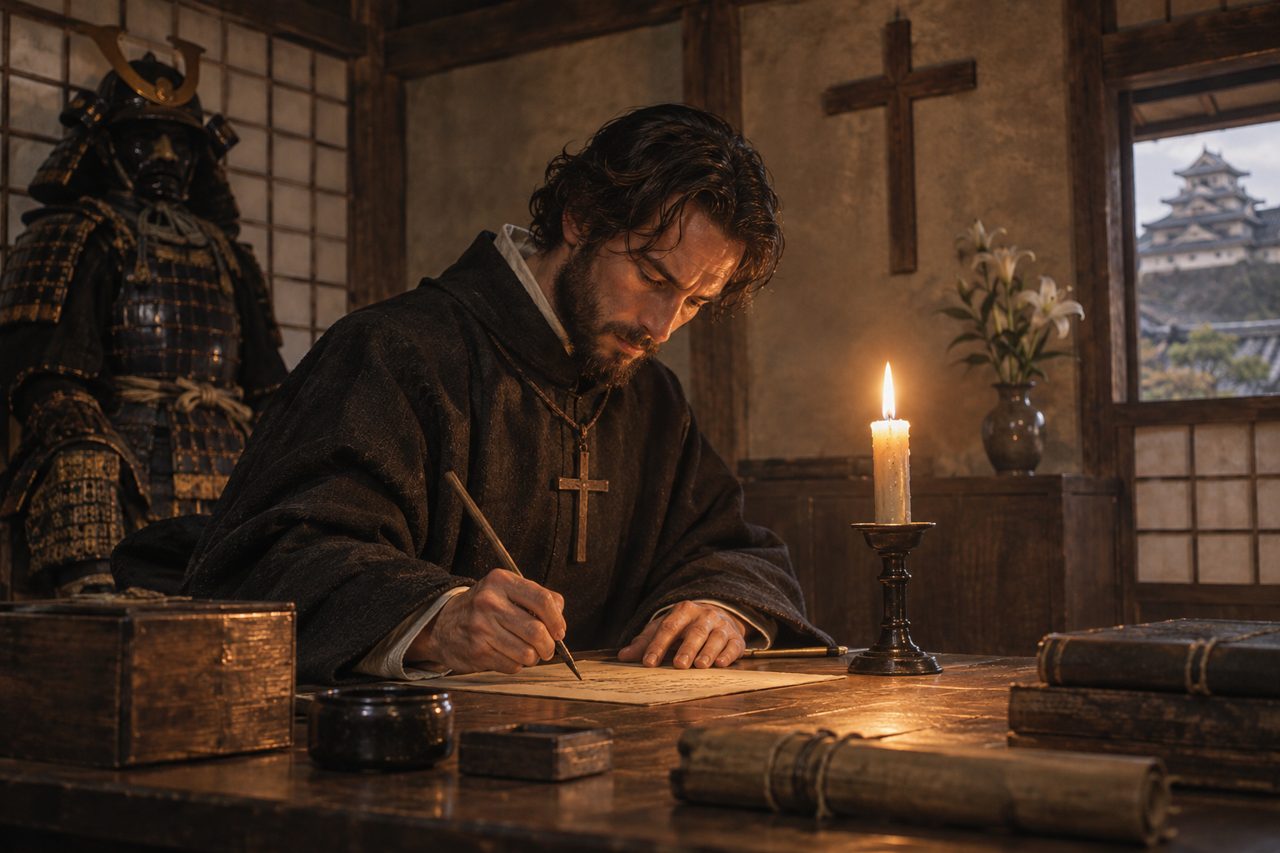
The image of Nobunaga rests mainly on Shincho Koki and the writings of the Jesuit Luis Frois. The first was written by a retainer about his lord; the second reflects a missionary's concerns. Even the title demon king of the sixth heaven comes from a letter by Frois and is hard to confirm in Japanese sources.
In the Edo period, Oze Hoan's Shinchoki spread as entertaining reading. In 1869 Kenkun Shrine was founded at the command of Emperor Meiji to honor Nobunaga as a supporter of the court. After the war, novels and television fixed the picture of a revolutionary who smashed old authority.
Recent research instead stresses how Nobunaga supported a shogun, respected the court and tried to restore order. Free markets also had precedents. He appears as a ruler who used existing systems and drove them forward with his own power.
Conclusion
Why was he killed at Honnoji?
The first factor was his exposure in Kyoto. With his senior commanders far away in Hokuriku, the west, the east and Shikoku, Nobunaga stayed at Honnoji with only a small escort. Mitsuhide was the one general with a large army nearby.
The second was the pressure on vassals; the third was Mitsuhide's changing position after losing his role in Shikoku and being sent to assist Hideyoshi. Few sources reveal his inner thoughts, so no single theory is decisive.
This article suggests that the very system that let Nobunaga expand so quickly also created an empty space around his base and anxiety among his vassals, giving Mitsuhide a single chance. What do you think moved Mitsuhide most?
How to read this work
History, interpretation, and reconstruction
The system that let Nobunaga expand so quickly also left his base exposed and placed heavy pressure on his vassals, giving Mitsuhide a single opportunity.
This work is grounded in published sources and historical research. Interior thoughts, dialogue, and some visual details are cinematic reconstructions. Where historians disagree, the article presents the point as debated rather than settled fact.
Timeline
The story in time
People & terms
A guide for new readers
Glossary
- Shincho Koki 信長公記
- Chronicle of Nobunaga's career written by his retainer Ota Gyuichi; the main narrative source.
- Shinchoki 信長記
- Early Edo-period account by Oze Hoan, more literary and the source of several popular episodes.
- Tenka Fubu 天下布武
- Phrase on a seal Nobunaga used from 1567; its meaning of tenka is debated.
- Tenka 天下
- The realm; in this period often the capital region around Kyoto rather than all of Japan.
- Shogun 将軍
- Military ruler appointed by the emperor; the Ashikaga held the office until Yoshiaki.
- Honnoji incident 本能寺の変
- Akechi Mitsuhide's attack on Nobunaga at Honnoji Temple in Kyoto in 1582.
- Ishigai family documents 石谷家文書
- Letters made public in 2014 that shed light on the Shikoku negotiations before Honnoji.
Sources & method
How this article was built
The narrative follows Shincho Koki for events and dates, while noting that it was written by a retainer about his lord. Episodes that appear only in later works such as Shinchoki are identified as later traditions.
Modern scholarship is used for interpretation, including the meaning of tenka, the scale of the Mount Hiei attack and the theories about Mitsuhide's motive. Where scholars disagree, the article presents the main positions rather than choosing one as fact.
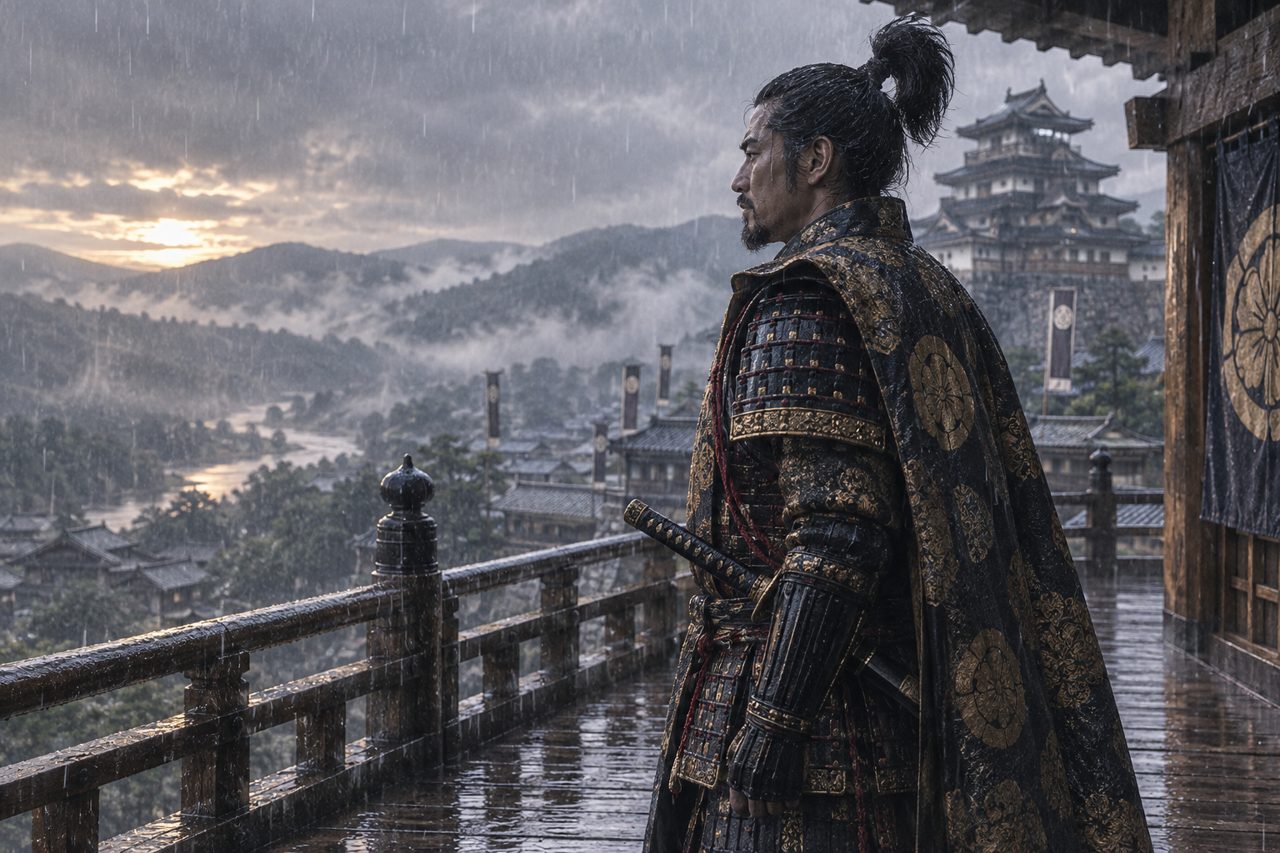
Images are generated conceptual scenes, labeled as such, and do not depict real people or exact historical places.
Sources
References and further reading
- Shincho Koki by Ota Gyuichi (1881 edition record) 太田牛一『信長公記』 Title translated editorially for reader convenience. National Diet Library 国立国会図書館(我自刊我本、1881年刊の書誌) Chronicle by Nobunaga's retainer. Detailed on dates and names but written about his own lord. Used for Okehazama, Nagashino and Honnoji. Accessed 2026-11-12
- Oda Nobunaga (Chikuma Shinsho) by Kanda Chisato 神田千里『織田信長』(ちくま新書) Title translated editorially for reader convenience. Chikumashobo 筑摩書房 Used for relations with the shogun and court, the meaning of Tenka Fubu and the revision of the revolutionary image. Accessed 2026-11-12
- Oda Nobunaga: The Reality of a Ruler of the Realm by Kaneko Hiraku 金子拓『織田信長〈天下人〉の実像』 Title translated editorially for reader convenience. Kodansha 講談社(講談社現代新書) Used for the meaning of tenka, relations with shogun and court, and the reassessment of Nobunaga's image. Accessed 2026-11-12
- Ishigai Family Documents, edited by Asari Hisatami and Uchiike Hideki 浅利尚民・内池英樹編『石谷家文書 将軍側近のみた戦国乱世』 Title translated editorially for reader convenience. Yoshikawa Kobunkan 吉川弘文館 Used for the letter of the twenty-first of the fifth month from Chosokabe Motochika to Saito Toshimitsu and the Shikoku negotiations. Accessed 2026-11-12
- Conspiracies in Medieval Japanese History by Goza Yuichi 呉座勇一『陰謀の日本中世史』 Title translated editorially for reader convenience. KADOKAWA KADOKAWA(角川新書) Used for the assessment of theories about Mitsuhide's motive, including mastermind theories. Accessed 2026-11-12
- Azuchi Castle Site: Excavation Around the Main Tower Base 「幻の安土城」復元プロジェクト・特別史跡安土城跡 天主台周辺地区発掘調査概要 Title translated editorially for reader convenience. Shiga Prefectural Board of Cultural Properties Protection 滋賀県文化スポーツ部文化財保護課 Summary of ongoing excavation; used to confirm that the tower's appearance is not settled. Accessed 2026-11-12
- Komakiyama Castle: Site Briefing for the Seventh Excavation 史跡小牧山 主郭地区第7次発掘調査 現地説明会資料 Title translated editorially for reader convenience. Komaki City Board of Education 小牧市教育委員会 Results for the castle built by Nobunaga in 1563; used for the discovery of stone walls. Accessed 2026-11-12
- Kenkun Shrine official website 建勲神社 公式サイト Title translated editorially for reader convenience. Kenkun Shrine 建勲神社 Confirms founding in 1869 by command of Emperor Meiji with Nobunaga as the enshrined deity. Accessed 2026-11-12
Continue reading
More stories from Shigeki
Shigeki English
The Second Choshu Expedition: Four Fronts and a Negotiated Withdrawal
Read weapons together with terrain, training, command and support.
- When 1866, distinct from the first expedition in 1864; the process of ending extended into January 1867
- Where Oshima, the Aki border, Iwami and the Kanmon Strait facing Kokura
Shigeki English
Hasedo: Why Fighting Continued after Sekigahara
Separate the siege, the arrival of news, and withdrawal under pursuit.
- When 1600; month and day references use the calendar of the time
- Where Hasedo and Yamagata in Dewa, connected with Aizu and distant Sekigahara