
SHIGEKI ENGLISH STORYEN
Japanese history in English
Hoshina Masayuki: Edo's Unrebuilt Keep and Aizu's Preparations
Relief after the Great Fire, grain reserves in Aizu, and the dates of the records that tell the story.
Follow Hoshina Masayuki from Takato and Yamagata to Aizu and the government of Shogun Ietsuna. Edo's recovery after the 1657 fire, the stone platform rebuilt in 1658, an unrealized 1712 design and an 1828 collection of anecdotes illuminate different parts of his legacy.
At a glance
Before you enter the story
- When
- Seventeenth-century government and the 1657 fire, with later records from 1712 and 1828
- Where
- Takato, Yamagata, Aizu and Edo, the city later called Tokyo
- Key figures
- Hoshina Masayuki, Tokugawa Iemitsu, Tokugawa Ietsuna
- What was at stake
- What does the unrebuilt castle keep reveal about reconstruction, public relief and the resources assigned to sustaining people?
Why this story matters
The larger history behind the turning point
A missing building can become an entry into the history of an inhabited city. The keep is absent, but the rebuilding of its stone platform, the need for relief and the creation of spaces to limit fire spread all leave different questions to follow. Reconstruction involved choices about people and resources as well as architectural form.
Masayuki's reputation also shows why the date of a source matters. A collection assembled in 1828 may transmit an important anecdote, yet it is not a transcript of deliberations in 1657. Reading the career, the urban measures and the later record together produces a fuller account than a solitary heroic decision.
Historical context
What an international reader needs to know
Shogun, daimyo and domain
The shogun headed the Tokugawa military government. A daimyo governed a domain, a territorial and administrative unit under a lord. Masayuki held that position in several places and also assisted Ietsuna in Edo. His responsibilities in Aizu should therefore be distinguished from the institutions of the shogunate.
A koku is a unit associated with rice, used here in assessments of domain holdings. The figures of 200,000 and 230,000 koku describe the assessments given in the cited accounts. They are not a count of sacks distributed in relief or a directly comparable modern cash budget.
A castle keep, its platform and its records
The tenshu, translated as keep, was the castle's prominent tower. Tenshudai refers to the stone platform supporting it. Rebuilding the latter did not reconstruct the former, and the castle could continue as a place of government without its keep. These terms explain why an empty platform is central to this story.
Dates by month and day in the seventeenth-century Japanese setting belong to the calendar used at the time. The article avoids converting its first month into modern January. It also distinguishes the date of a historical event from the date when a later writer collected an anecdote about it.
Watch the film
See the story in motion
The film currently uses Japanese audio. This English article provides the context and source trail; it does not imply that an English subtitle track is available.
Scene 01
Edo Castle without a keep
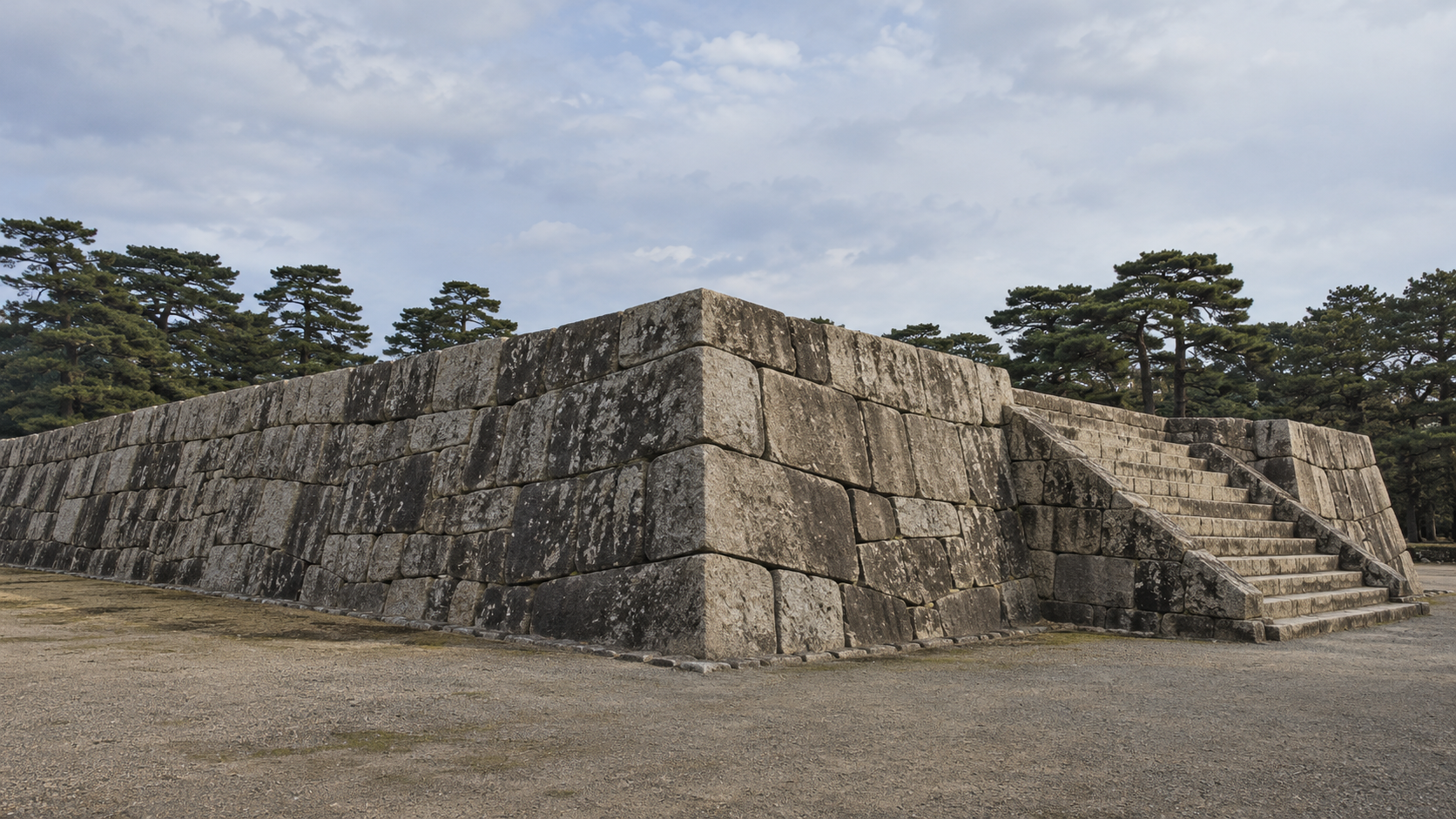
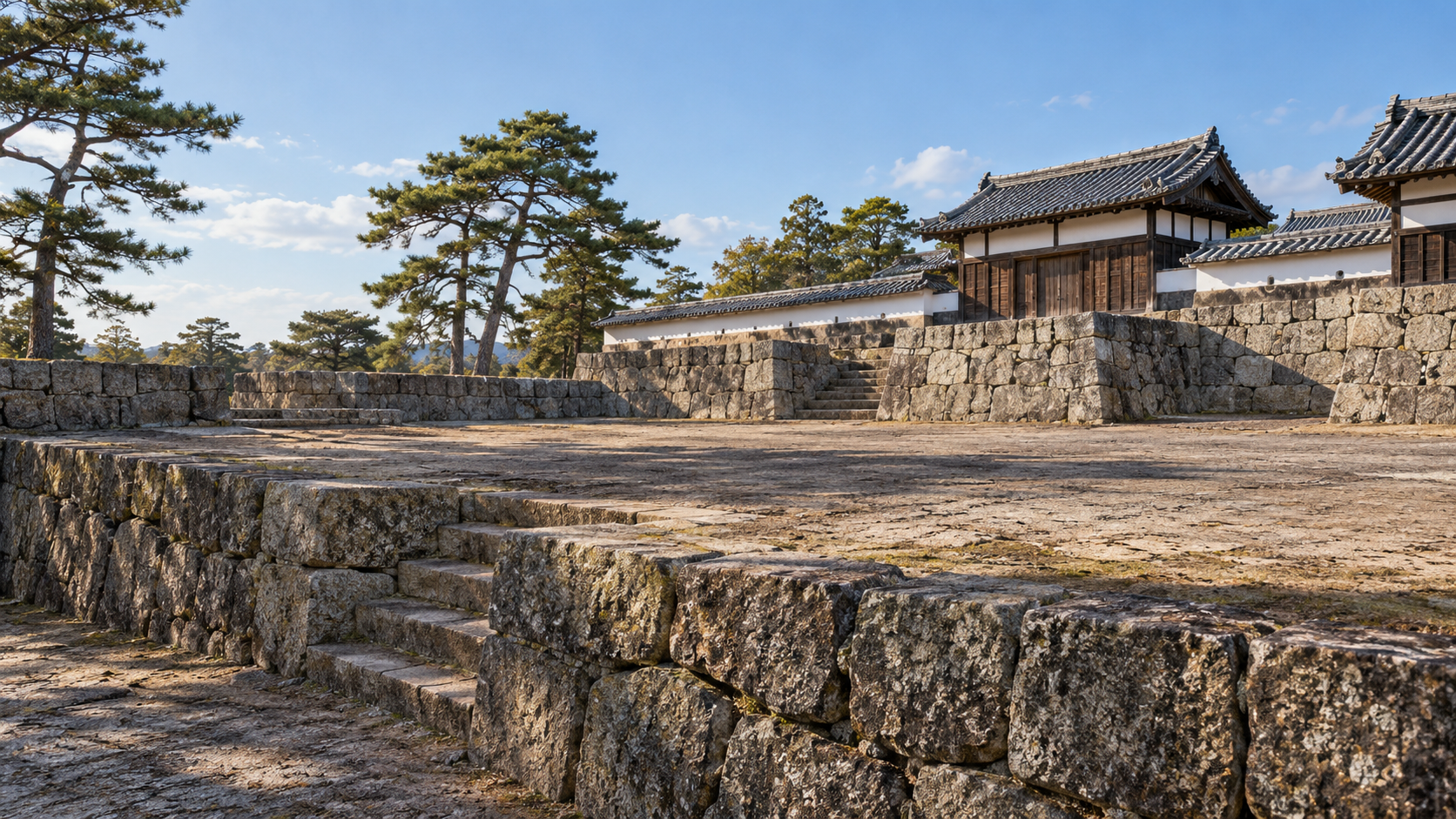
At the centre of Edo Castle, a large stone platform survives without the tall keep it was built to support. The absence is part of the site's history. The keep burned in the Great Fire of Meireki in 1657; the following year, the stone base was rebuilt.
Rebuilding the base was different from rebuilding the tower. That distinction leads to a question associated with Hoshina Masayuki, lord of Aizu and a supporter of the fourth Tokugawa shogun, Ietsuna. Why was the castle's prominent tower left unbuilt?
The answer requires more than a story about one ruler's good judgment. Edo's recovery involved helping residents, arranging urban space and preparing for future fires. Masayuki also governed a domain with its own concerns and resources.
Following his career before returning to the fire helps distinguish those two roles: assisting the shogunal government and governing Aizu. Their connection is the subject of this article, while their institutions remain distinct.
Scene 02
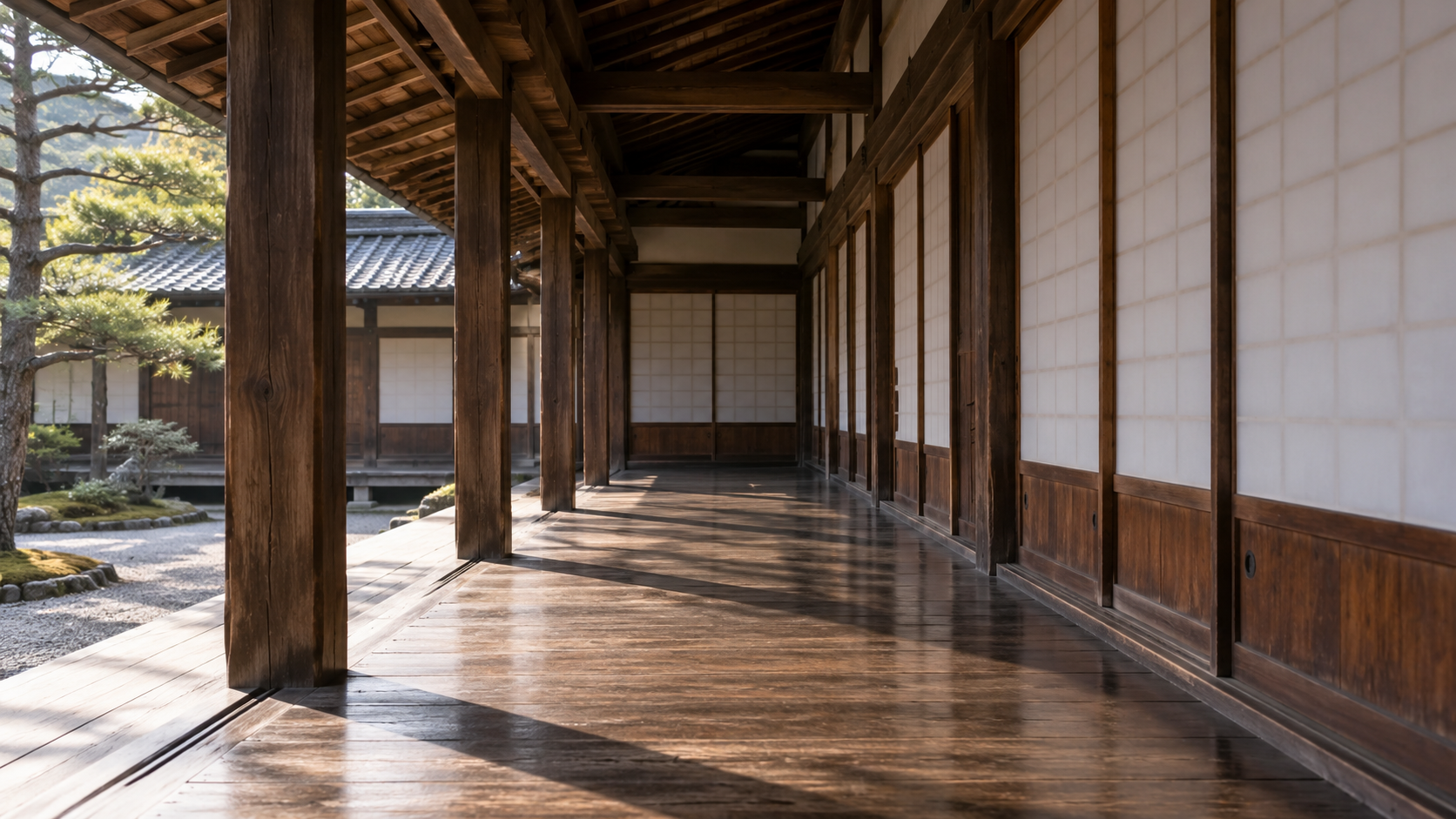
A shogun's son adopted into the Hoshina house
Masayuki's father was Tokugawa Hidetada, the second shogun. He was a half-brother of the third shogun, Iemitsu. His connection with the ruling family forms one part of his biography.
The National Archives of Japan explains that he was raised under Kensho-in's care and then adopted by Hoshina Masamitsu, lord of Takato in Shinano Province. Adoption placed him within a different ruling house even as his Tokugawa family connection remained.
Ina City's account associates his childhood and youth with Takato. The place matters as an earlier stage in his life, before the later work in Aizu and Edo for which he became known.
These biographical facts do not supply private conversations or the feelings of family members. They establish relationships and a succession through which Masayuki came to govern territory. His later reputation should be read alongside that concrete career.
Scene 03
From Takato to Yamagata
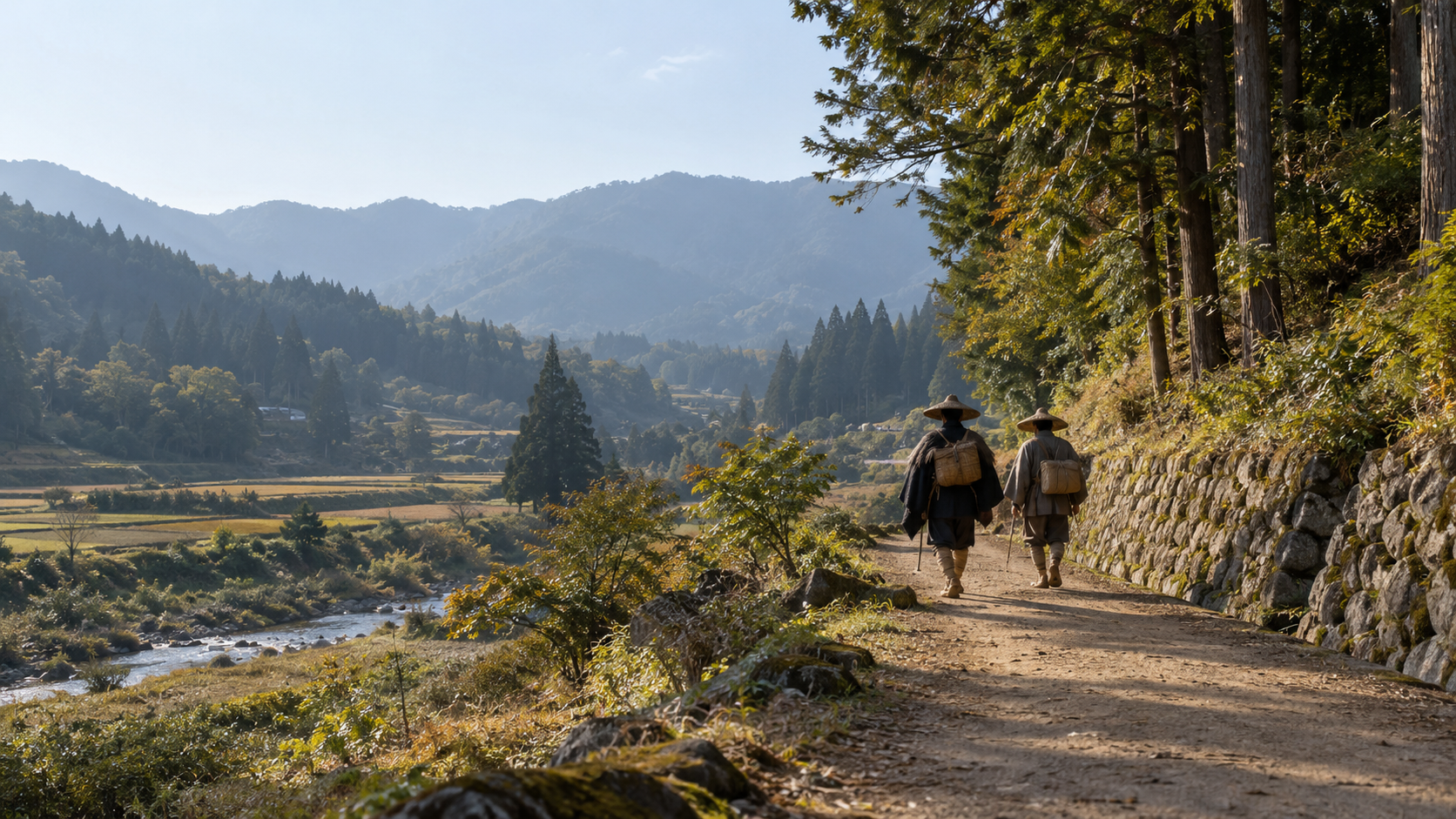
Masayuki became lord of Takato in 1631 and moved to Yamagata in 1636. Yamagata City describes his territory there as assessed at 200,000 koku and his rule as lasting seven years.
The city's account names land surveys, improvements to distribution networks and responses to damage from broken river banks. Governing a domain involved matters affecting fields, movement of goods and the consequences of water damage.
These activities were not tasks a lord could carry out single-handedly. The Japanese article treats officials and local communities as part of the administrative setting, without inventing the details of particular works or measurements of their effects.
Yamagata supplies an intermediate stage between inheriting a house and assisting a shogun. It broadens a career often remembered through the single question of Edo Castle's keep. Local government and the management of resources were already part of his experience.
Scene 04
Becoming lord of Aizu
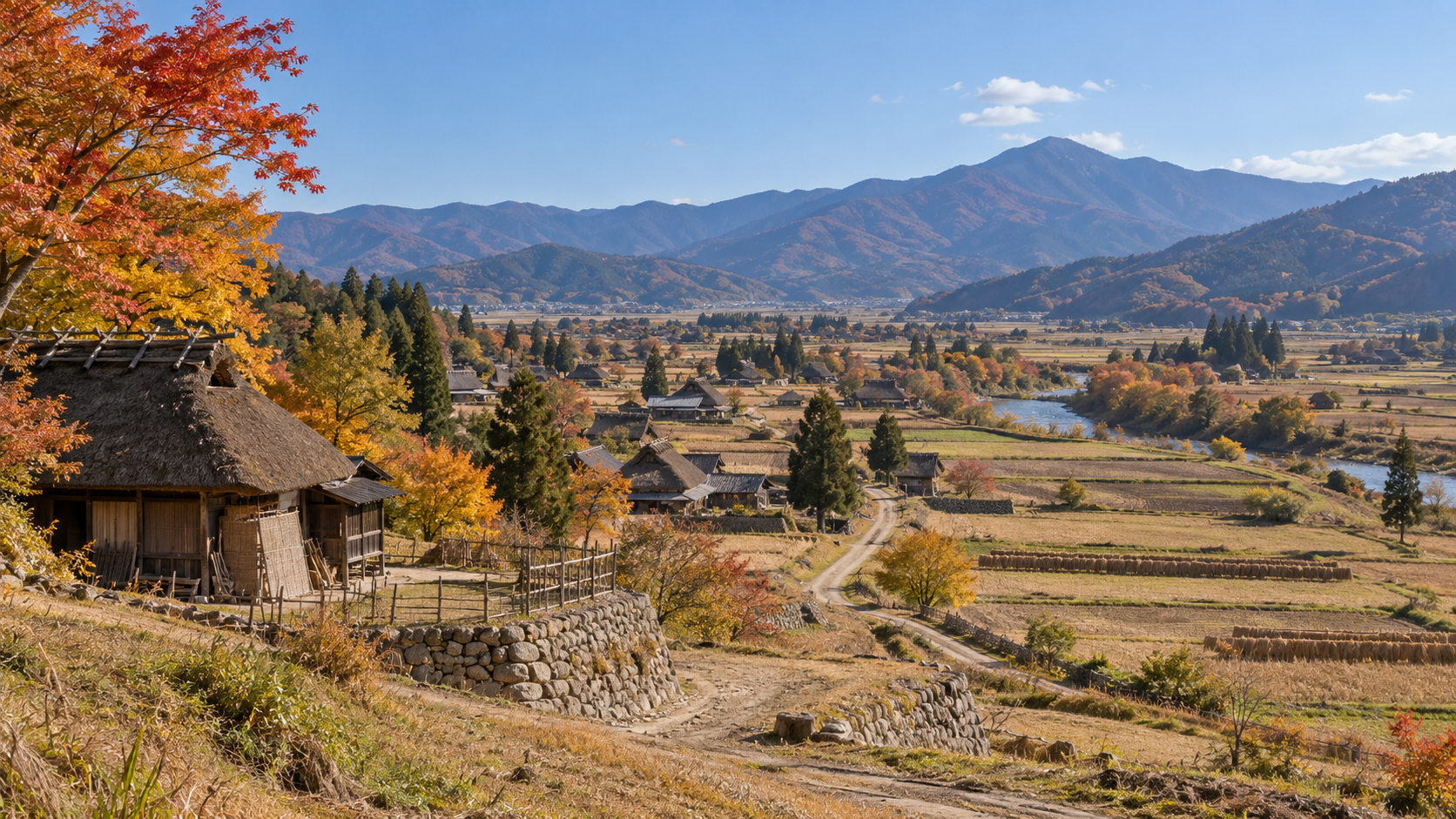
In 1643, Masayuki moved from Yamagata to Aizu, a domain assessed at 230,000 koku. The Aizu historical account also refers to his custody of some shogunate territory. That entrusted land should be distinguished from the domain's own assessed holding.
His responsibilities consequently cannot be described only in terms of a family relationship with the shoguns. He also had territory to govern, institutions to maintain and the task of keeping local life stable.
At the same time, a daimyo related to the Tokugawa house could play a role in supporting the shogunal government. Aizu administration and the government in Edo nevertheless remained different organizations.
Questions about storing grain in a domain and assisting a shogun in relations with other lords were not identical. Keeping them distinct gives Masayuki's career more substance than a single account of a wise decision.
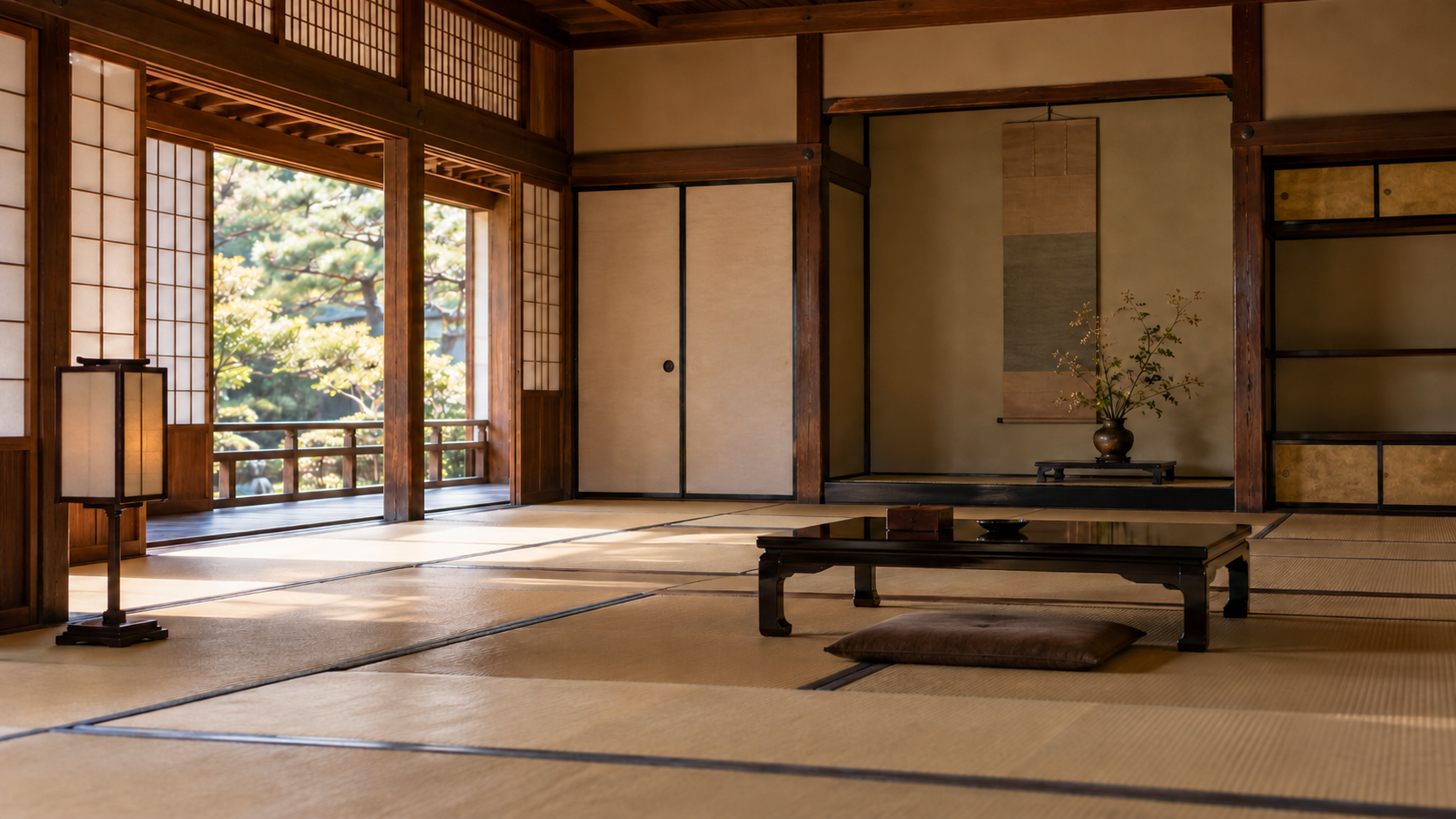
Scene 05
Supporting the young Ietsuna
The third shogun, Iemitsu, died in 1651. His successor Ietsuna was still young. Masayuki assisted Ietsuna and supported shogunal government, in accordance with Iemitsu's wishes as described by the sources.
For Ietsuna, Masayuki was an uncle: the half-brother of his father. Family proximity and experience as a domain lord came together in that supporting position.
Assisting the shogun does not mean personally directing every action of the government. Officials in different posts and the people carrying out administrative work remained part of the governing structure.
This distinction becomes particularly important in the account of the Great Fire. Measures described as actions of the shogunate should not all become Masayuki's individual orders merely because he occupied an influential supporting role.
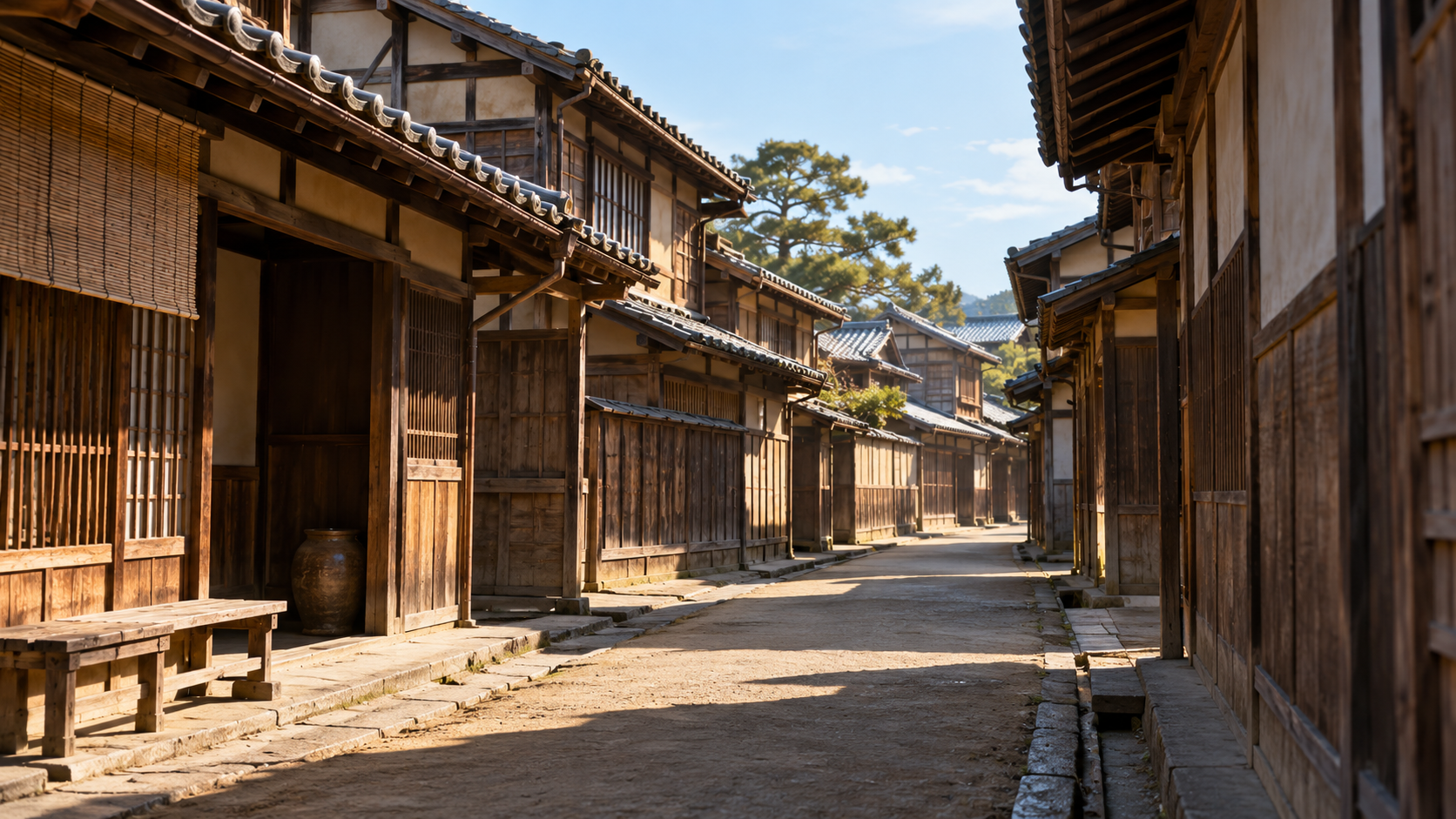
Scene 06
The Great Fire of Meireki
In 1657, Edo suffered the disaster known as the Great Fire of Meireki. The government disaster-history summary describes it as three large fires that spread in strong winds. A single familiar name thus covers more than one outbreak.
The event occurred in the first month of the calendar then used in Japan. That month must not be silently treated as modern January. This edition retains the year and the historical calendar distinction without adding a converted month and day.
The castle keep, daimyo residences and urban neighbourhoods burned. Many people lost places to live and work. Edo had expanded rapidly after the establishment of the shogunate, while its firefighting equipment and techniques could not adequately control fire spreading over a large area.
Relief and prevention became simultaneous problems. People needed help with immediate survival, while the authorities faced the question of how a rebuilt city might be made less vulnerable. The article does not adopt a definitive casualty figure or assign the entire disaster response to one person.
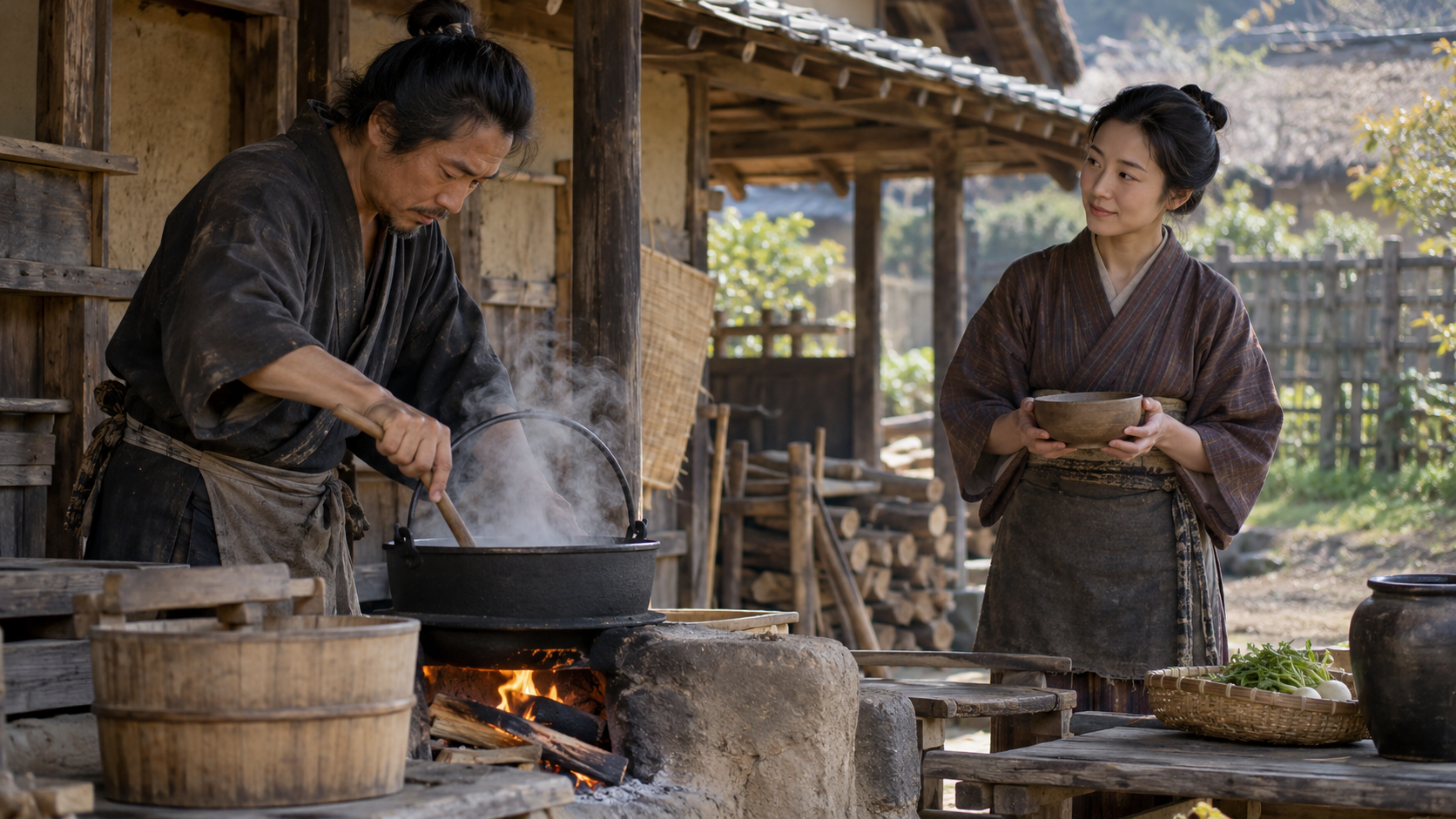
Scene 07
Relief for people who had lost their homes
For people whose homes and workplaces had burned, recovery began with getting through the next day. The disaster-history summary describes the shogunate providing meals, releasing fire-damaged grain and distributing financial assistance.
The financial recipients included townspeople as well as daimyo, hatamoto and other shogunal retainers. Food distribution and money grants addressed different needs rather than constituting one uniform form of help.
These actions show why reconstruction cannot be measured only in replacement buildings. The people using those buildings needed sustenance and means to resume their lives. Relief belongs within the account of recovery itself.
The source identifies these as shogunal measures. The article does not recast them all as Masayuki's personal initiatives or claim that the generated image shows a documented relief station. The distinction preserves the role of the institution and those carrying out its work.
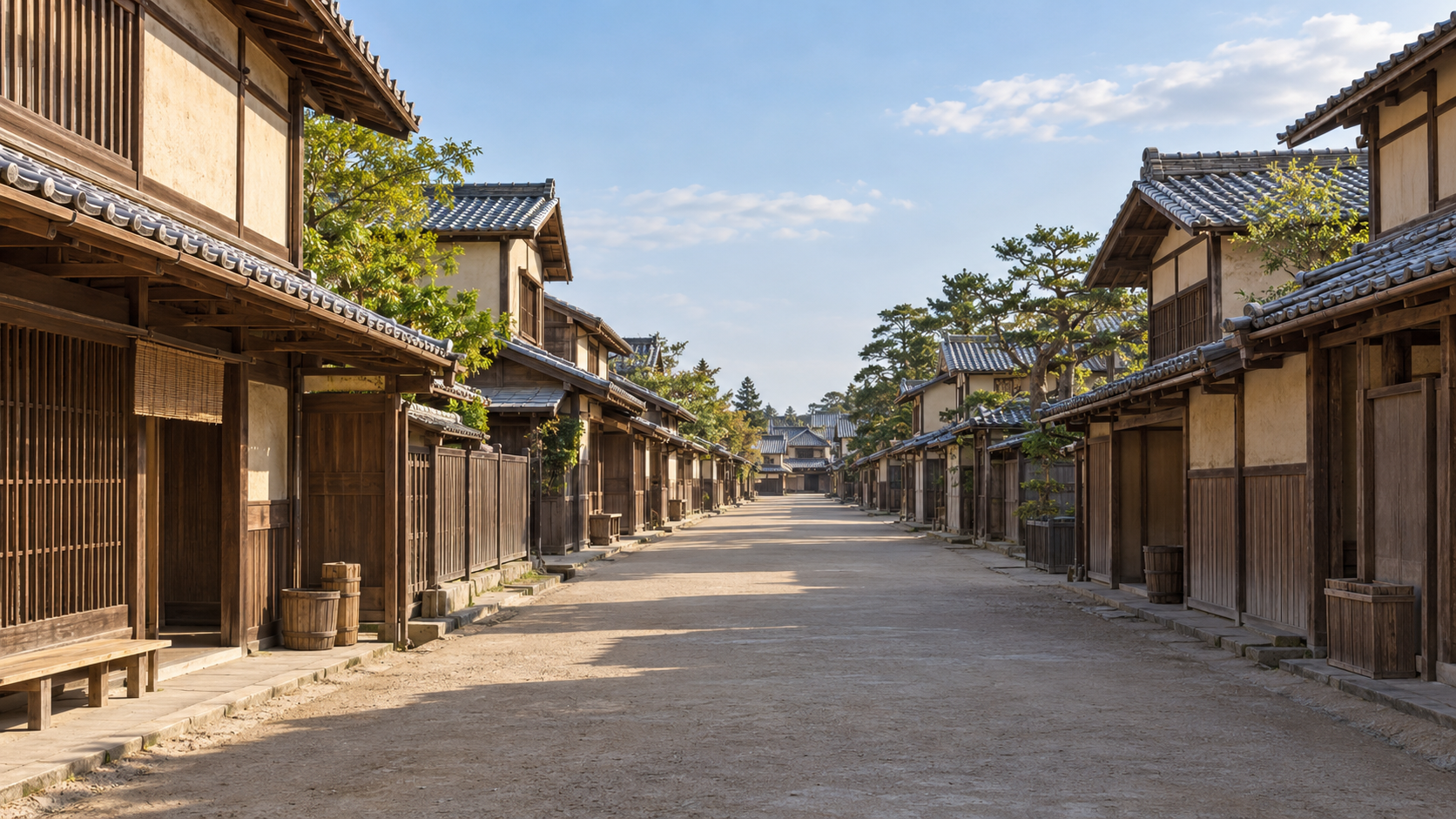
Scene 08
Changing the shape of the city
Reconstruction also involved reorganizing urban space. The disaster-history summary describes moving residences of the three Tokugawa branch houses out of the castle and using the sites for spaces including a riding ground and medicinal garden.
Other measures included relocating temples, shrines and townspeople's districts beyond the outer moat or to newly developed land, widening roads and providing open areas intended to interrupt the spread of fire.
The shogunate established a standing firefighting system, while townspeople also formed voluntary arrangements for fire prevention. Spatial changes and organizational measures both appear in the account.
These actions did not put an end to fire. They show a city altering its preparations after a major disaster. The accompanying conceptual streetscape is not a measured before-and-after plan, and the article does not add unverified road widths or numerical claims about effectiveness.
Scene 09
The stone base and the tower
Returning to the castle clarifies the original question. The Imperial Household Agency explains that the keep's stone platform was rebuilt in 1658, the year after the fire, while the keep itself was not reconstructed.
Its account introduces Masayuki's opinion that a keep was unnecessary in a time of peace. That attributed judgment belongs in the discussion, but a short institutional explanation cannot supply a complete record of expenditure or every stage of the decision.
A keep is not the whole castle. The absence of the tower did not mean that Edo Castle stopped serving as a place of government. The question concerned the reconstruction of a particularly prominent structure within a larger complex.
It can be considered beside the needs of the damaged city. Their connection gives the decision context, while leaving detailed administrative and financial claims to evidence that could actually establish them.
Scene 10
The time between an event and its recorded anecdote
The records transmitting Masayuki's judgment also have dates of their own. The National Archives introduces Chitose no Matsu, a collection of his words and deeds compiled by an Aizu retainer in 1828.
The story of his opposition to rebuilding the keep is among its anecdotes. A collection assembled in a later period has a different evidential character from minutes written during deliberations immediately after the fire.
The Tokyo Metropolitan Library also introduces a design for rebuilding the keep in 1712, during the time of Shogun Ienobu. The proposal was associated with Arai Hakuseki but was not realized.
That later proposal matters. The outcome that no keep was rebuilt should not be rewritten as an everlasting prohibition issued by Masayuki. The 1657 fire, the later unrealized plan and the 1828 compilation belong to different moments in the history of the missing tower.
Scene 11
Stored grain and the Aizu house precepts
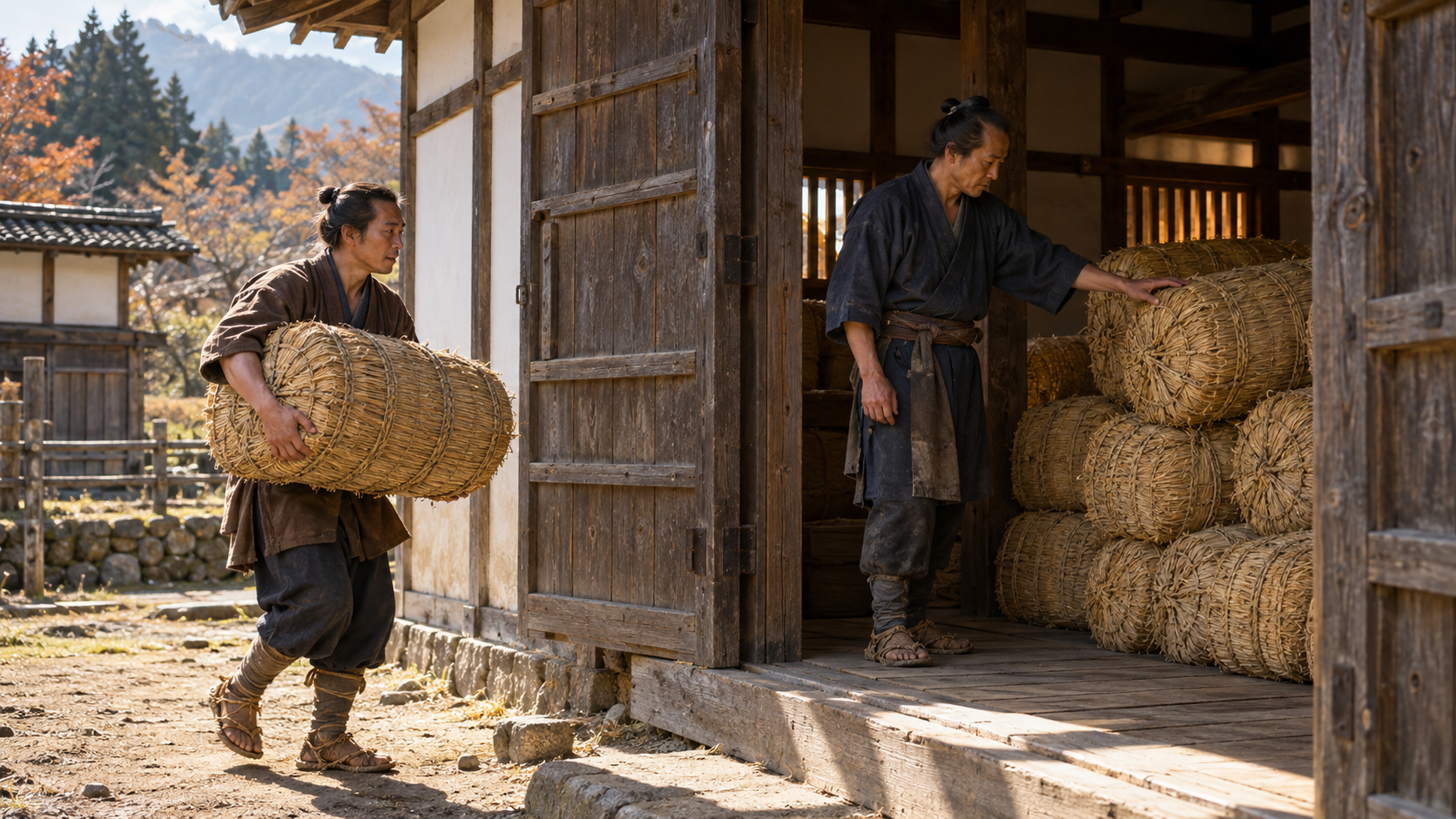
In Aizu, everyday government and preparation for future hardship also met. Masayuki is associated with the shaso system: stores of rice intended to help people facing hunger.
The Aizu house precepts include a provision about these stores. Their purpose was relief of the people, with grain released in famine years and not diverted to other uses. The description concerns the stated purpose of the institution, not a newly inspected record of every distribution.
Masayuki established fifteen house precepts in 1668. Alongside service to the shogunal house, they contain instruction relevant to government and people's livelihoods. The date of the precepts should not automatically become the founding date of the grain-store system.
Edo's disaster response and Aizu's grain reserves were different arrangements. Comparing them raises a common question about how resources were assigned to support people, without pretending that the two places operated one institution.
Scene 12
Two roles in one career
Masayuki's career combines assistance to the shogun with the government of a domain. Edo's crisis and Aizu's preparations for hunger belong to those different settings.
The familiar account of the unrebuilt keep gains depth when its parts are separated: the tower destroyed by fire, the rebuilt stone base, relief and prevention measures, and a later collection that transmitted an anecdote about his judgment.
One decision by one man cannot stand for every task through which Edo recovered. The work of government and the efforts of people rebuilding their lives remain part of the account.
Looking at the empty platform, consider both the tower that was not reconstructed and the inhabited city beyond it. Masayuki's story offers a way to ask what political resources were intended to sustain, while the dates and kinds of evidence keep that interpretation grounded.
How to read this work
History, interpretation, and reconstruction
Masayuki's career is best understood by distinguishing Edo's recovery, Aizu's government and the later records through which his judgment was remembered.
This work is grounded in published sources and historical research. Interior thoughts, dialogue, and some visual details are cinematic reconstructions. Where historians disagree, the article presents the point as debated rather than settled fact.
Timeline
The story in time
-
After Iemitsu's death, Masayuki assists Ietsuna.
Sources: s04 -
The stone keep platform is rebuilt; this is distinct from rebuilding the keep itself.
Sources: s02 -
Fifteen house precepts are established; this date is not assigned to the founding of the grain-store system.
Sources: s04 -
An unrealized keep-rebuilding proposal is planned during Ienobu's time.
Sources: s08 -
An Aizu retainer compiles Chitose no Matsu, a collection of Masayuki's words and deeds.
Sources: s01
People & terms
A guide for new readers
Glossary
- Shogun 将軍
- The head of the Tokugawa military government; Ietsuna is the fourth shogun in this account.
- Daimyo 大名
- A territorial lord, the position held by Masayuki in Takato, Yamagata and Aizu.
- Domain 藩
- The territory and administrative setting governed by a lord; it is distinct here from the shogunal government.
- Koku 石
- A rice-related unit used in assessments of domain holdings, rather than a count of relief distributions.
- Keep 天守
- A prominent castle tower; its absence did not mean that the whole castle ceased to function.
- Keep platform 天守台
- The stone base supporting a keep, rebuilt at Edo Castle in 1658 without reconstructing the tower.
- Shaso 社倉
- Grain reserves described as intended for relief during years of hunger.
- House precepts 家訓
- Rules or instructions for a ruling house; Masayuki's fifteen precepts are dated 1668.
- Chitose no Matsu 千年の松
- A collection of Masayuki's words and deeds compiled in 1828, later than the events of the Great Fire.
Sources & method
How this article was built
This edition follows the Japanese article, its eight source identifiers and its chronology. English source titles are editorial translations. Institutional explanations are used within the limits recorded by the Japanese research; a complete reading of the original anecdote collection or contemporary administrative files is not claimed.
The fire, reconstruction of the platform, later unrealized design and compilation of anecdotes retain their separate dates. Domain administration is distinguished from shogunal measures. The account supplies no invented speech, private emotions, spending totals, exact relief-site scenes or definitive casualty figure.
The images are generated conceptual illustrations. They are not authenticated portraits, original documents, measured reconstructions or views of actual relief operations. The interpretation compares the use of resources in two institutional settings without treating all measures as Masayuki's individual acts.
Sources
References and further reading
- Chitose no Matsu: Daimyo exhibition 国立公文書館 大名・千年の松 Title translated editorially for reader convenience. National Archives of Japan 国立公文書館 Institutional description of Masayuki's biography and a collection of anecdotes compiled in 1828. The keep-rebuilding story is identified as a later recorded anecdote, not contemporary meeting minutes. Accessed 2026-10-27
- East Gardens of the Imperial Palace: the keep platform 宮内庁 皇居東御苑・天守台 Title translated editorially for reader convenience. Imperial Household Agency 宮内庁 Used for the distinction between the fire in 1657 and rebuilding of the stone platform in 1658. Rebuilding another turret is not treated as rebuilding the keep. Accessed 2026-10-27
- 1657 Great Fire of Meireki: disaster-history report summary 内閣府 1657明暦江戸大火・専門調査会報告書概要 Title translated editorially for reader convenience. Cabinet Office of Japan, disaster-history report 内閣府 The report summary supplies urban growth, fire, relief and prevention context. Measures attributed to the shogunate are not all assigned personally to Masayuki. No definitive casualty figure is adopted. Accessed 2026-10-27
- Aizu history: the Hoshina and Matsudaira period 会津若松観光ビューロー 会津の歴史・保科松平時代 Title translated editorially for reader convenience. Aizuwakamatsu Tourism Bureau 会津若松観光ビューロー The historical account and house-precept explanation support the Aizu transfer, assistance to Ietsuna, the 1668 precepts and the purpose of grain reserves. Accessed 2026-10-27
- Hoshina Masayuki: a noted lord 伊那市 名君・保科正之公 Title translated editorially for reader convenience. Ina City 伊那市 Used for the period at Takato and an introduction to the grain-store system. Superlative claims about being the first in the world are not adopted. Accessed 2026-10-27
- The history of Takato Castle 伊那市 高遠城跡の魅力 Title translated editorially for reader convenience. Ina City 伊那市 The list of Edo-period lords is used for Masayuki's tenure at Takato and transfer to Yamagata. Accessed 2026-10-27
- Successive lords of Yamagata Castle 山形市 歴代山形城主 Title translated editorially for reader convenience. Yamagata City 山形市 Used for the Hoshina tenure and the listed land surveys, distribution arrangements and flood responses. Specific engineering methods and numerical results are not invented. Accessed 2026-10-27
- Proposed front elevation of Edo Castle's keep 東京都立図書館 江戸御城御殿守正面之絵図 Title translated editorially for reader convenience. Tokyo Metropolitan Library 東京都立図書館 The explanation identifies an unrealized rebuilding design planned in 1712. The drawing is not evidence that the building was constructed. Accessed 2026-10-27
Continue reading
More stories from Shigeki
Shigeki English
The Second Choshu Expedition: Four Fronts and a Negotiated Withdrawal
Read weapons together with terrain, training, command and support.
- When 1866, distinct from the first expedition in 1864; the process of ending extended into January 1867
- Where Oshima, the Aki border, Iwami and the Kanmon Strait facing Kokura
Shigeki English
Hasedo: Why Fighting Continued after Sekigahara
Separate the siege, the arrival of news, and withdrawal under pursuit.
- When 1600; month and day references use the calendar of the time
- Where Hasedo and Yamagata in Dewa, connected with Aizu and distant Sekigahara